

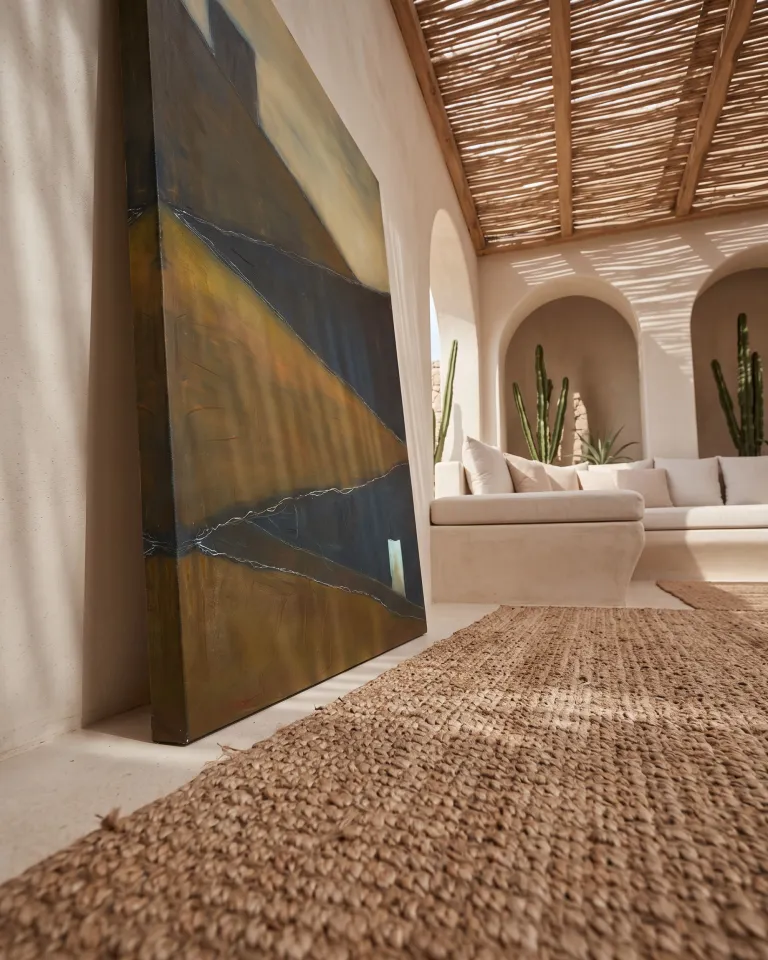
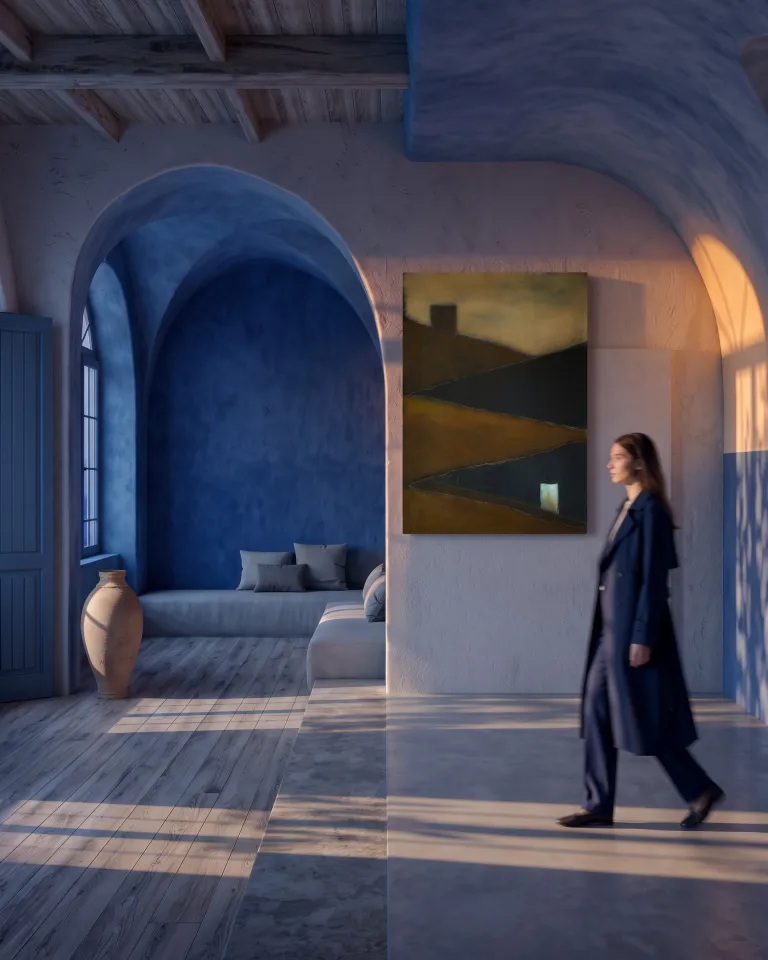
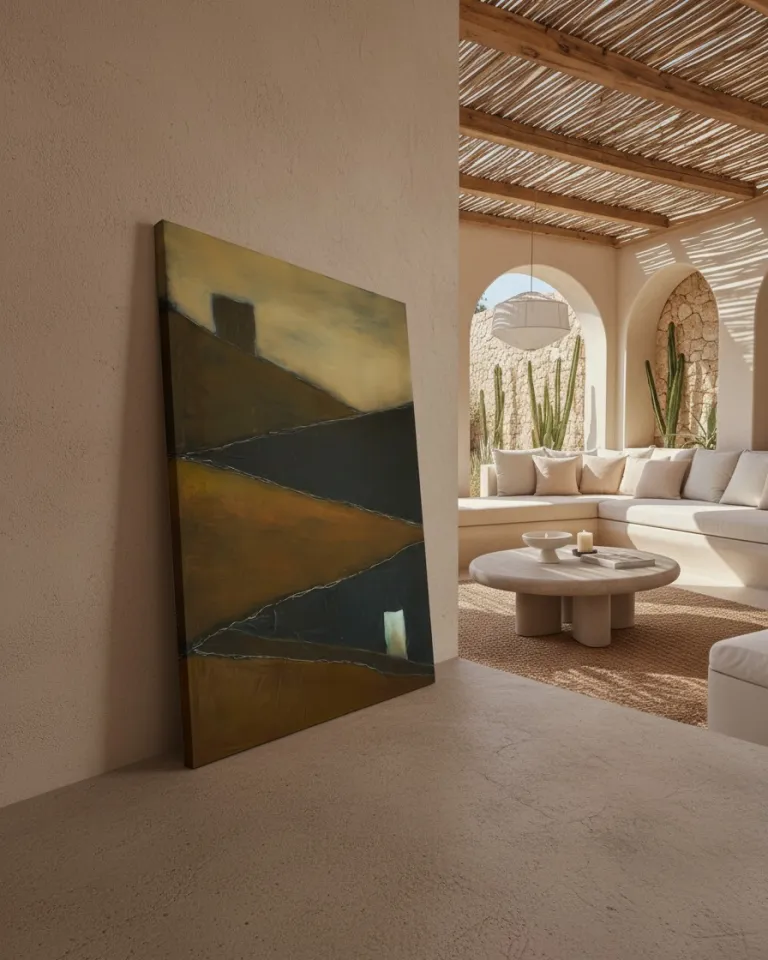
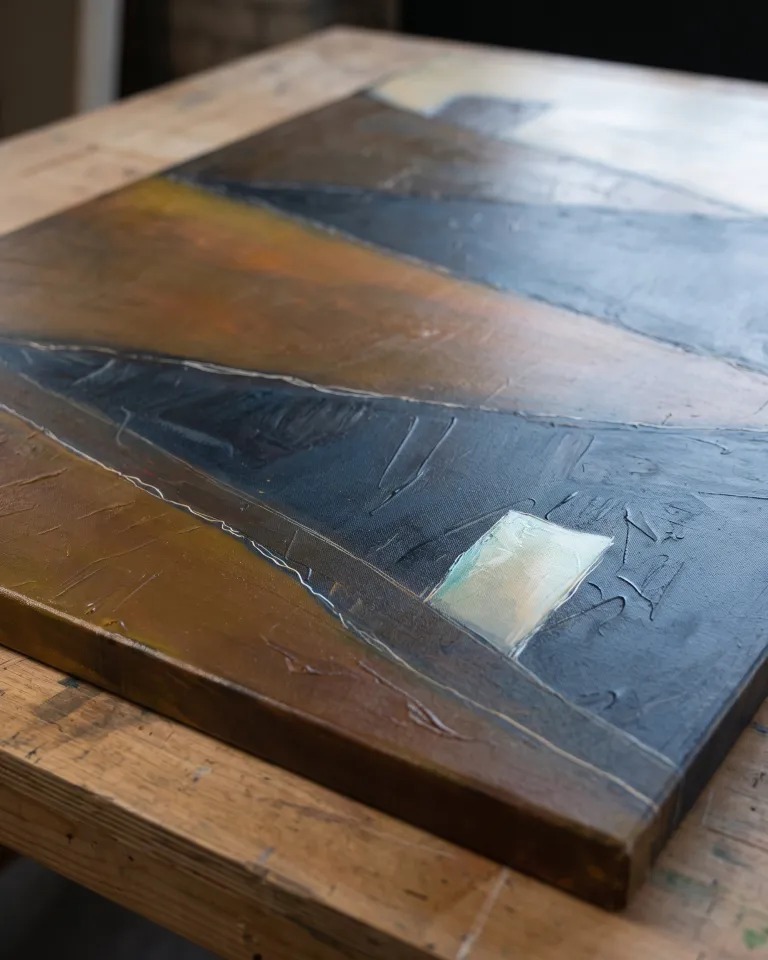
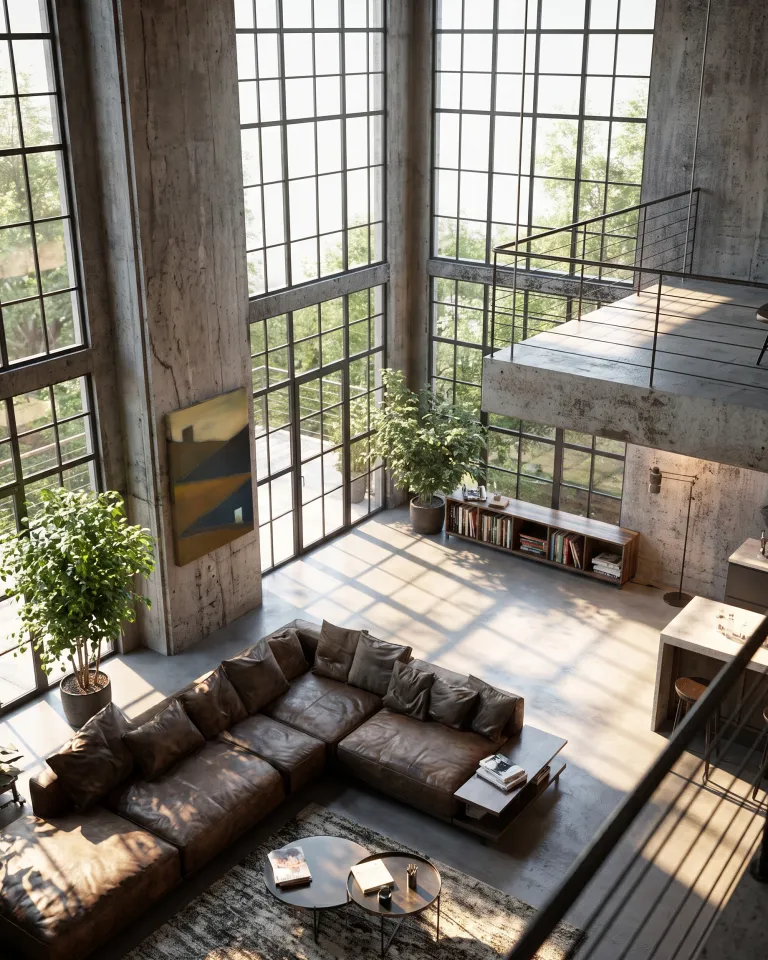
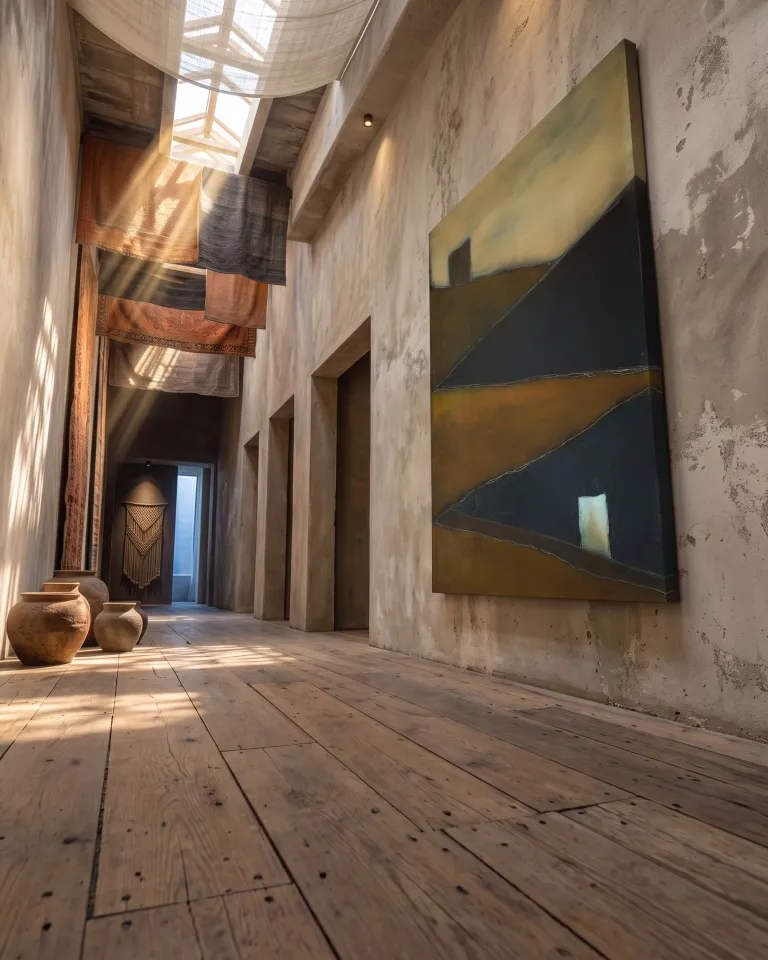
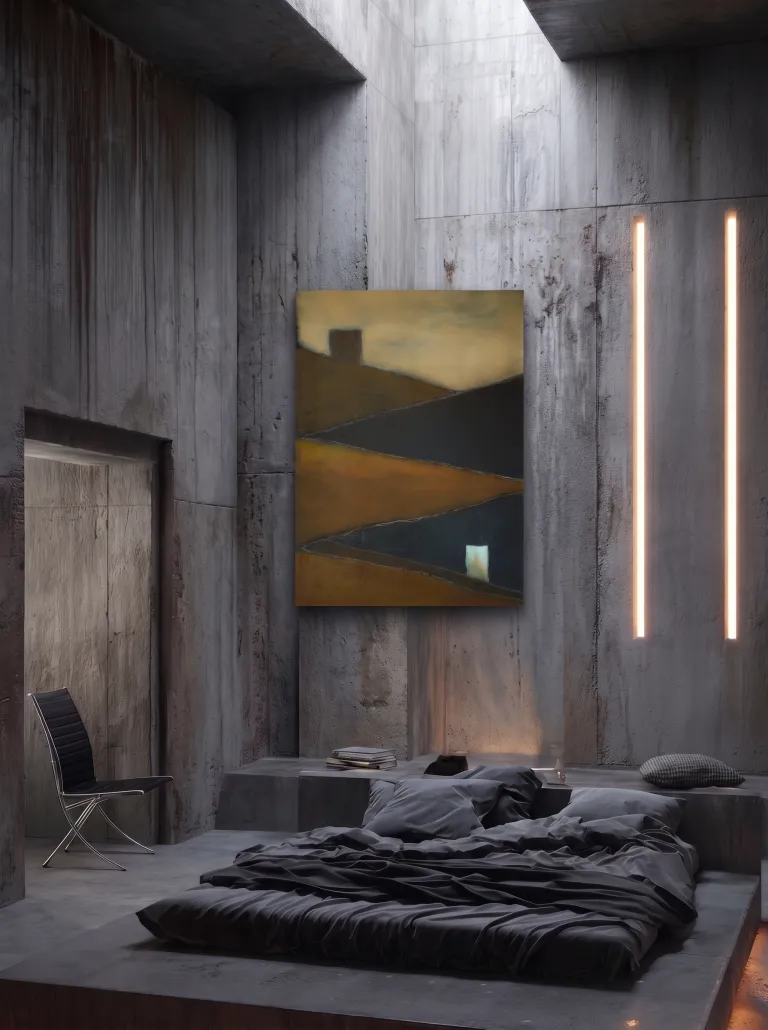
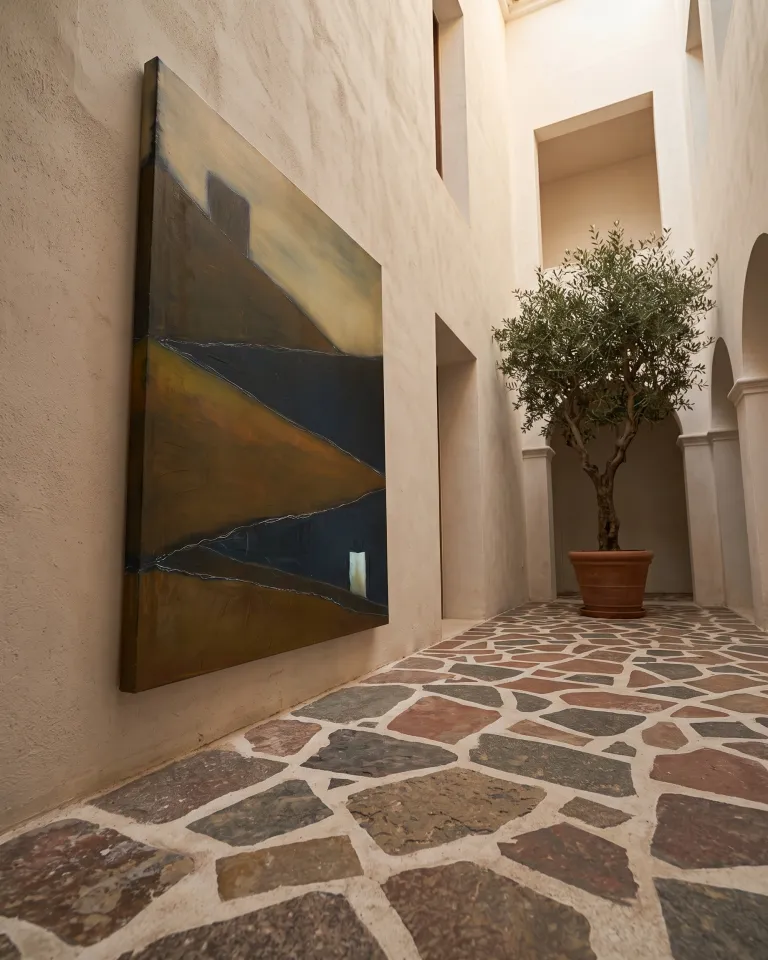


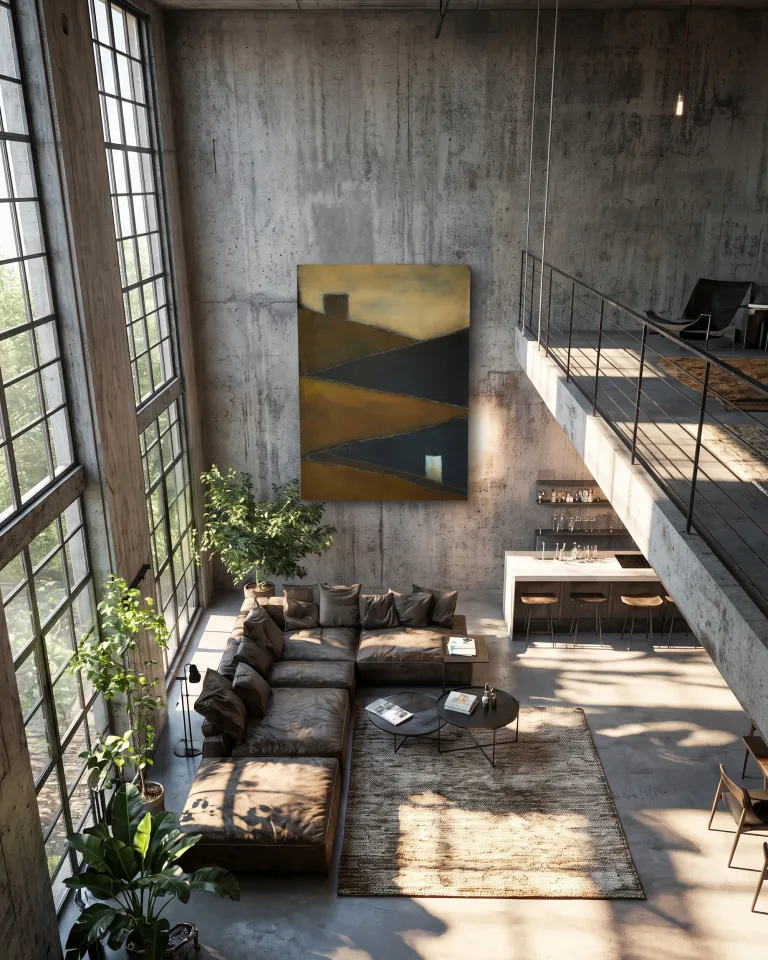
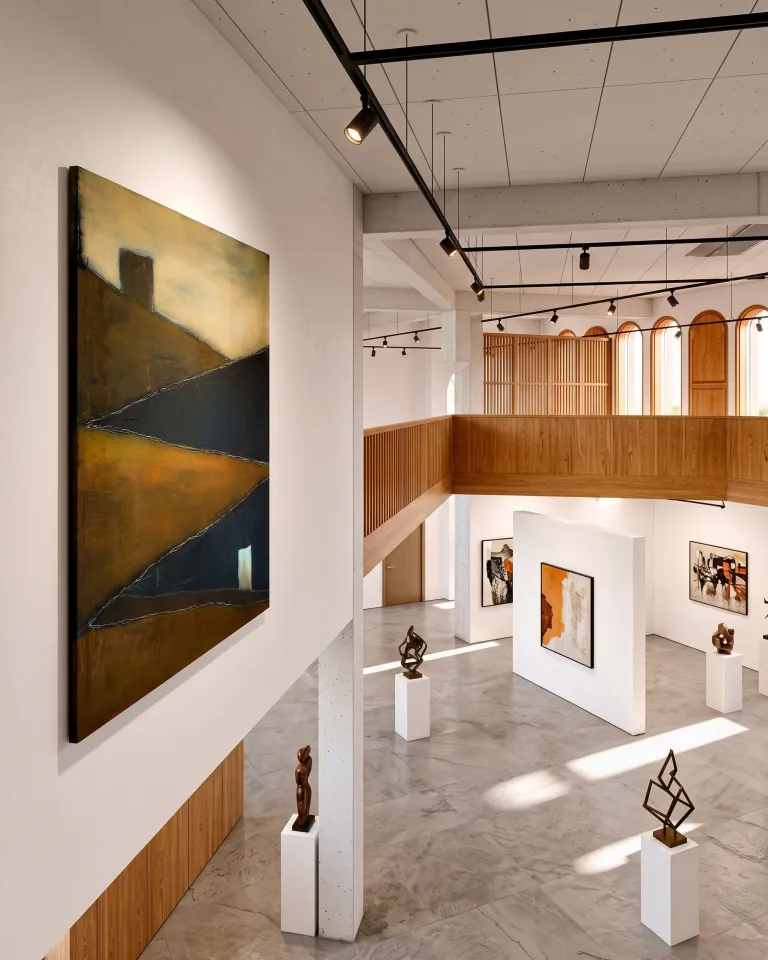
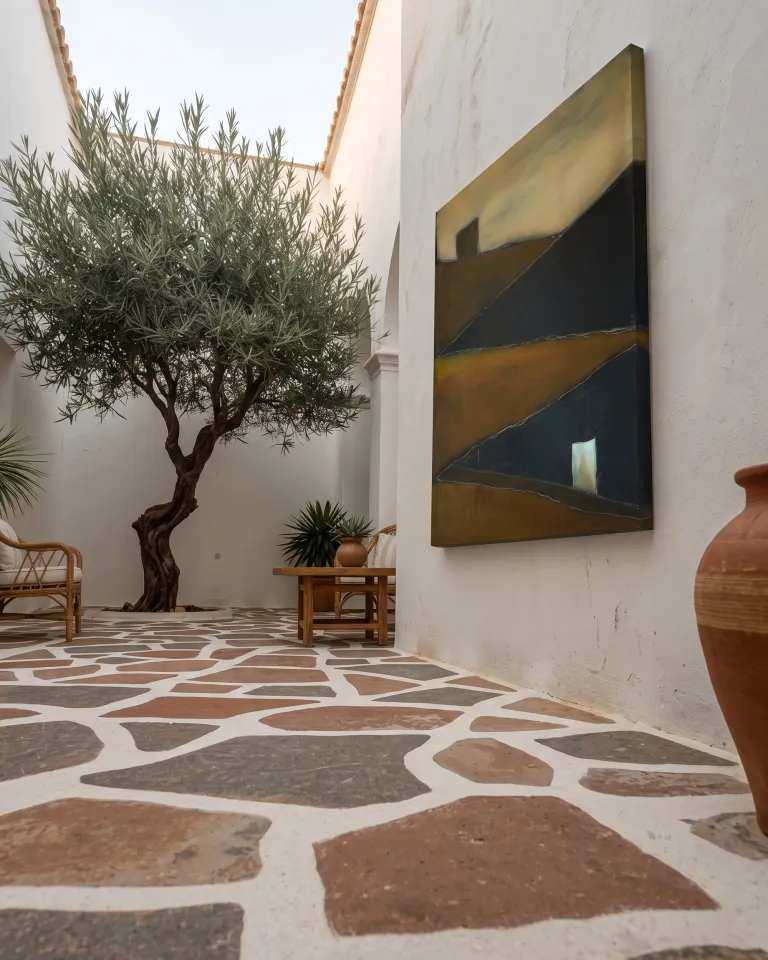
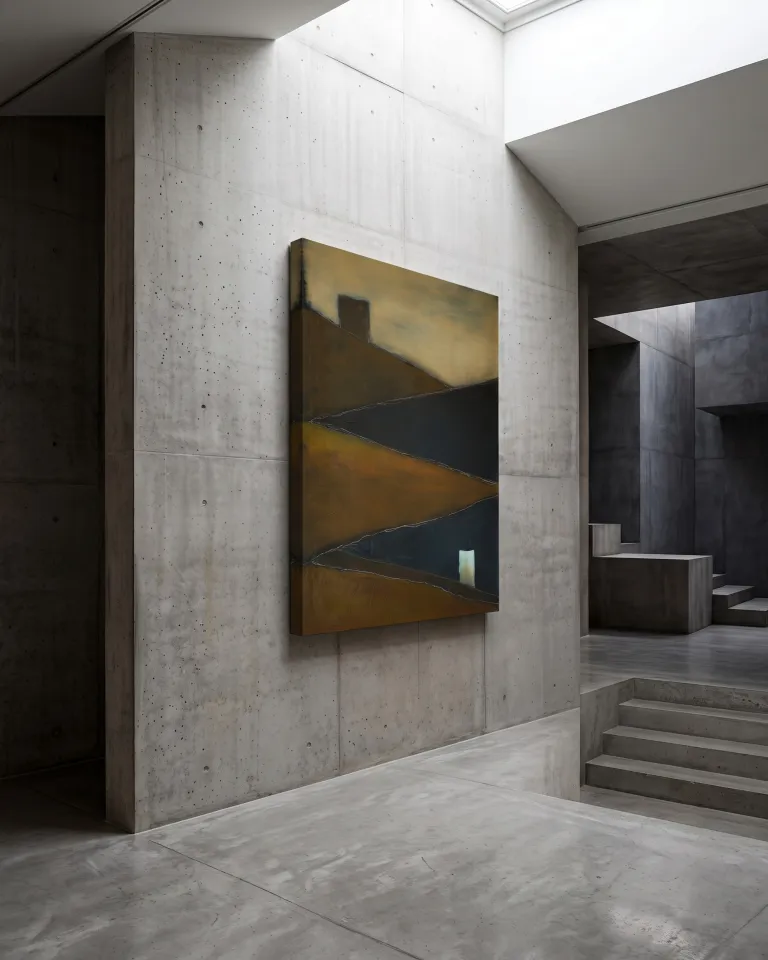

Published work / STRATA
TENSUM
From the STRATA series
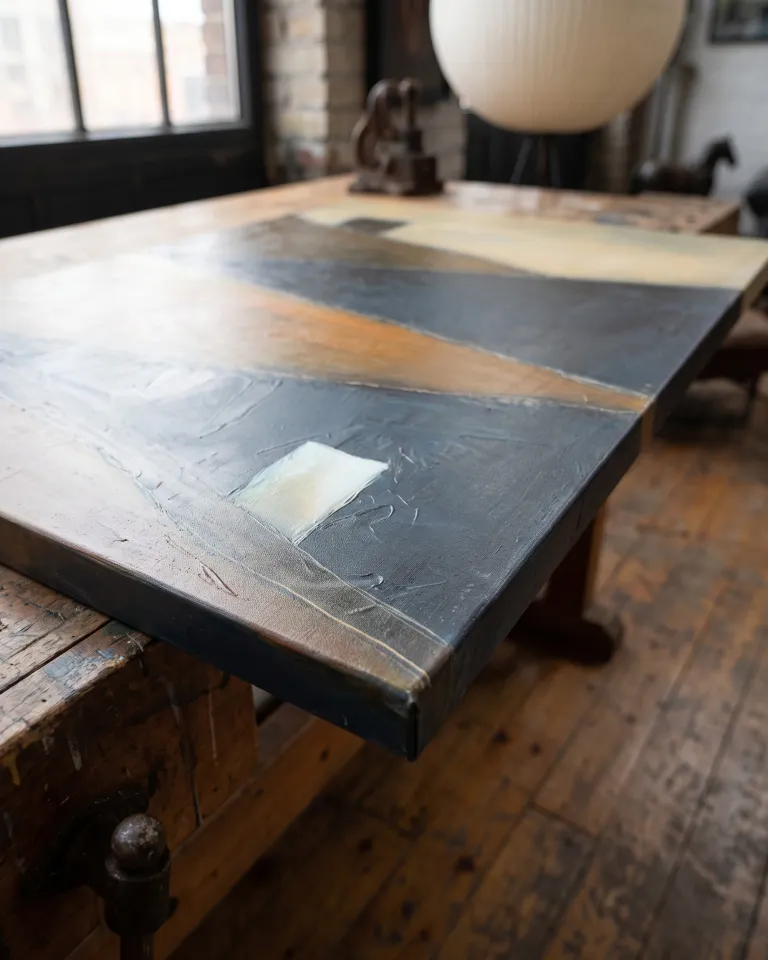
- Medium
- Mixed Media
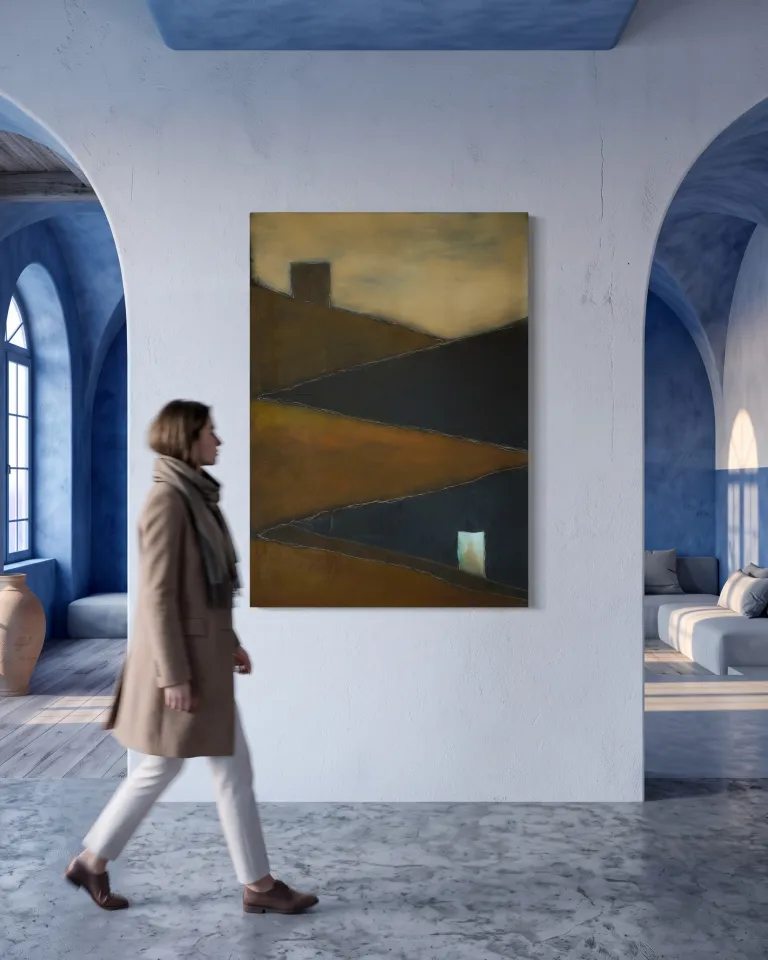
- Size
- 31.5 × 47.2 in / 80 × 120 cm
- Series
-
STRATA
 Painting series
STRATA
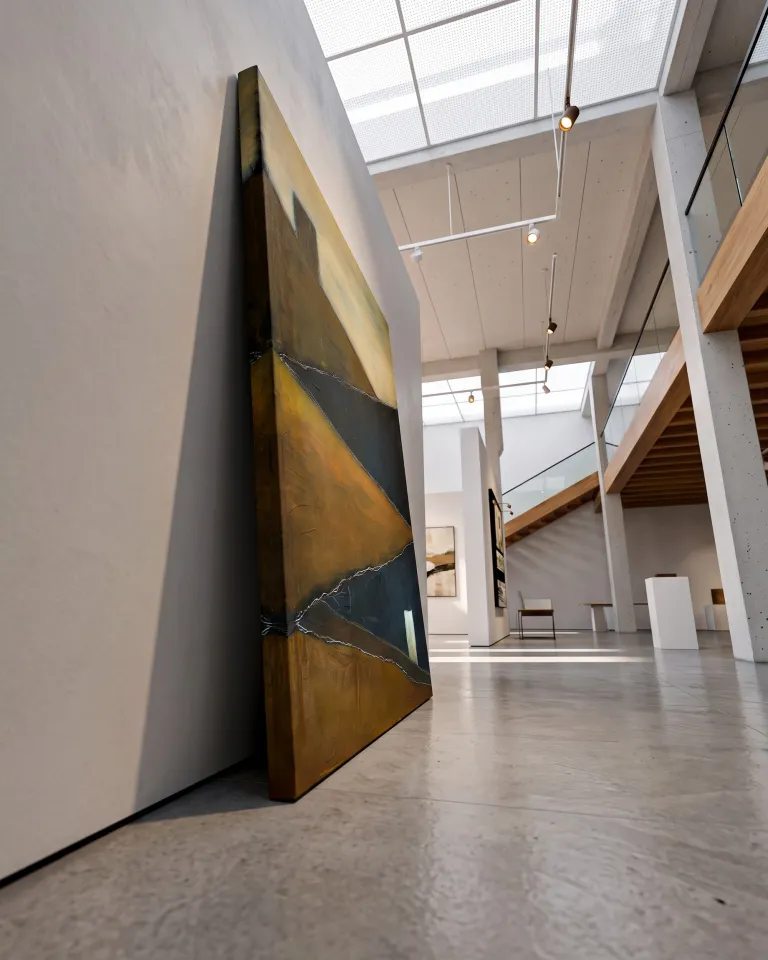
STRATA brings together abstract paintings in which the surface becomes a territory of pressure, cutting and duration. Amid dense chromatic fields, compact blocks and incisions, Maurizio Valch situates memory as a material trace rather than a decipherable narrative. View series
Painting series
STRATA
STRATA brings together abstract paintings in which the surface becomes a territory of pressure, cutting and duration. Amid dense chromatic fields, compact blocks and incisions, Maurizio Valch situates memory as a material trace rather than a decipherable narrative. View series
- Orientation
- Vertical
- Context studies
- 34
Conceptual Note
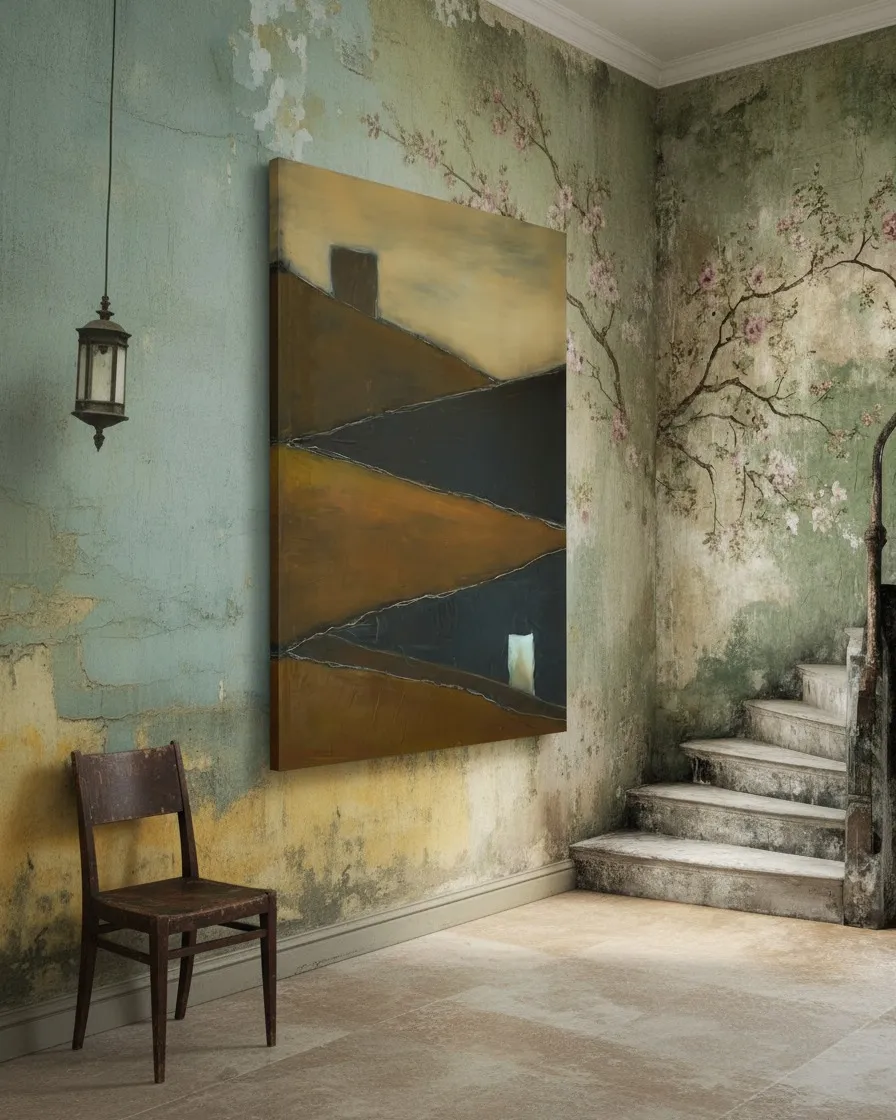
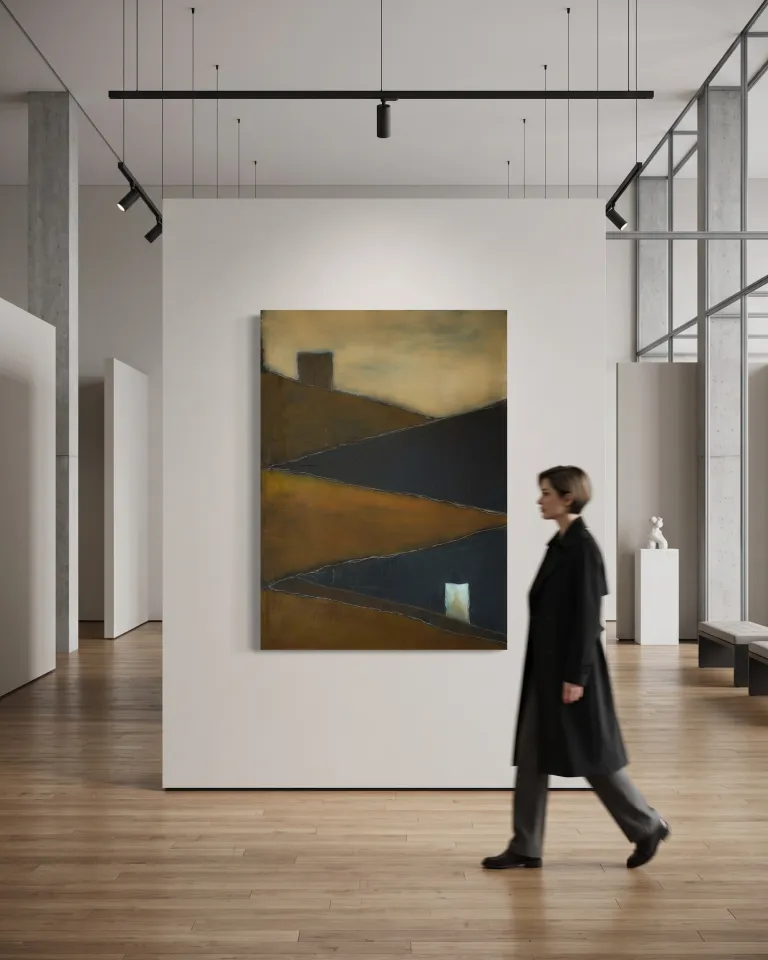
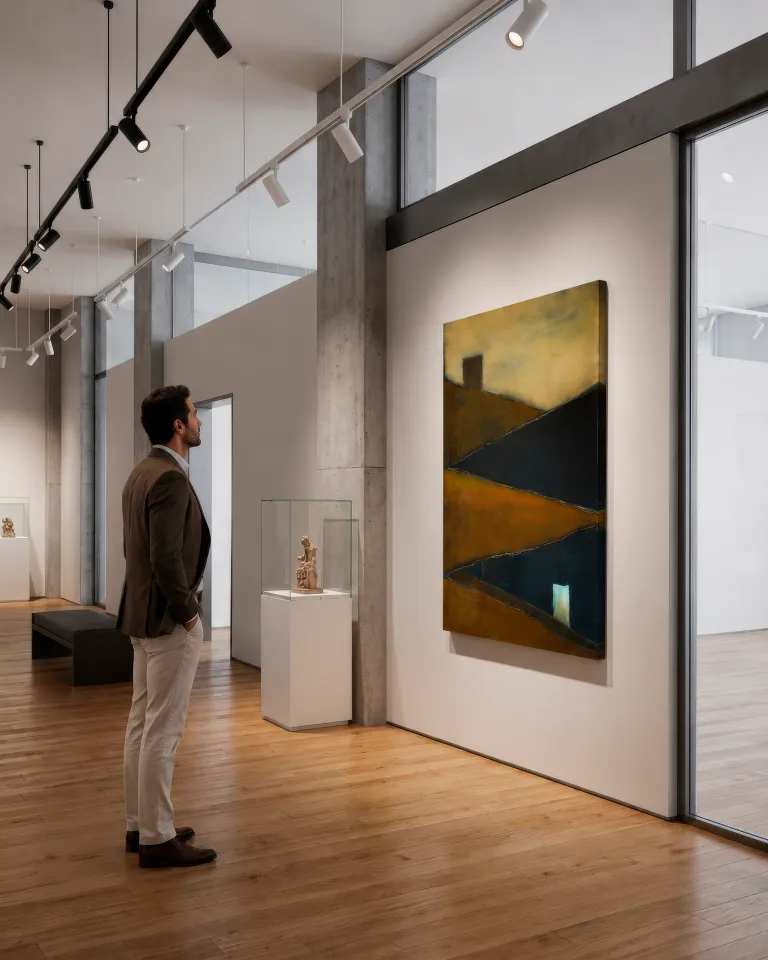
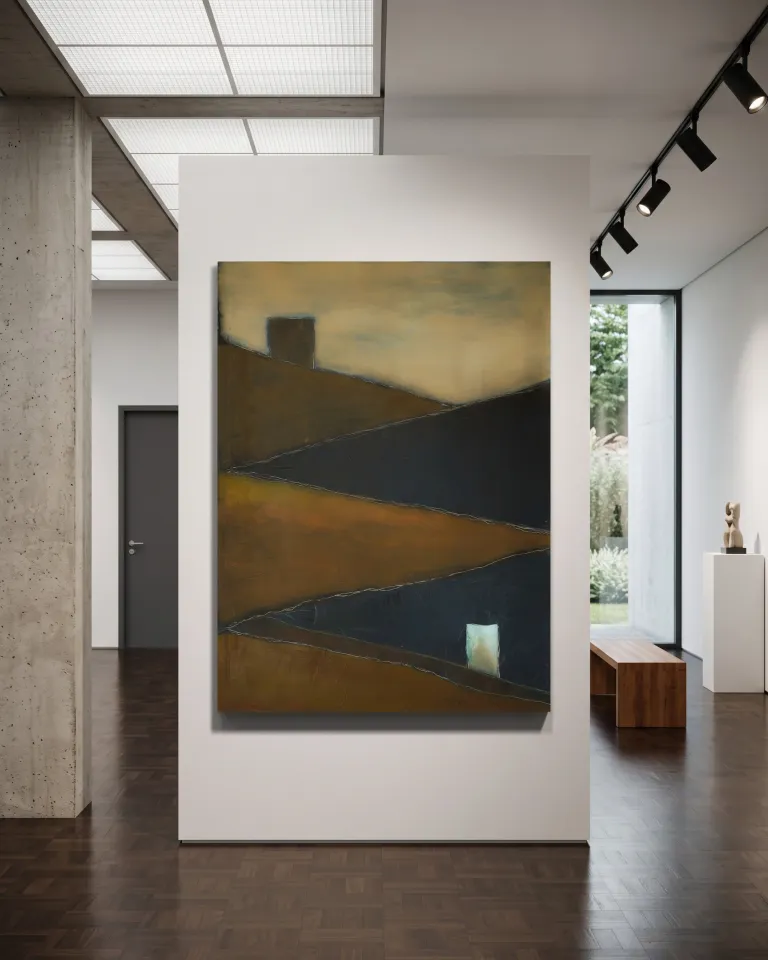
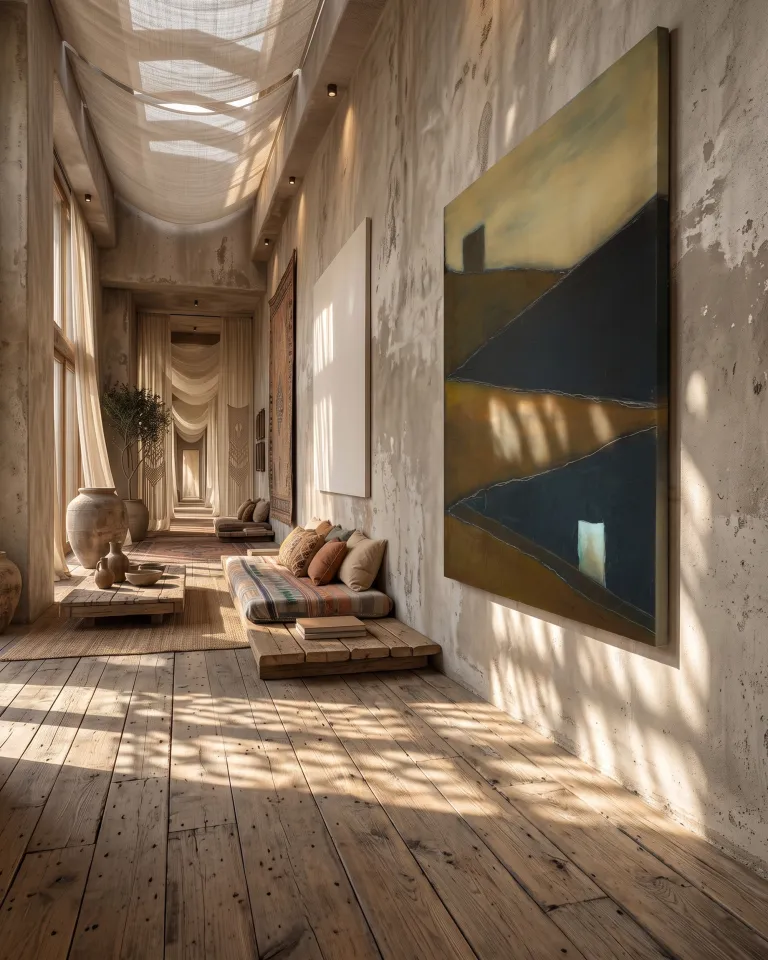
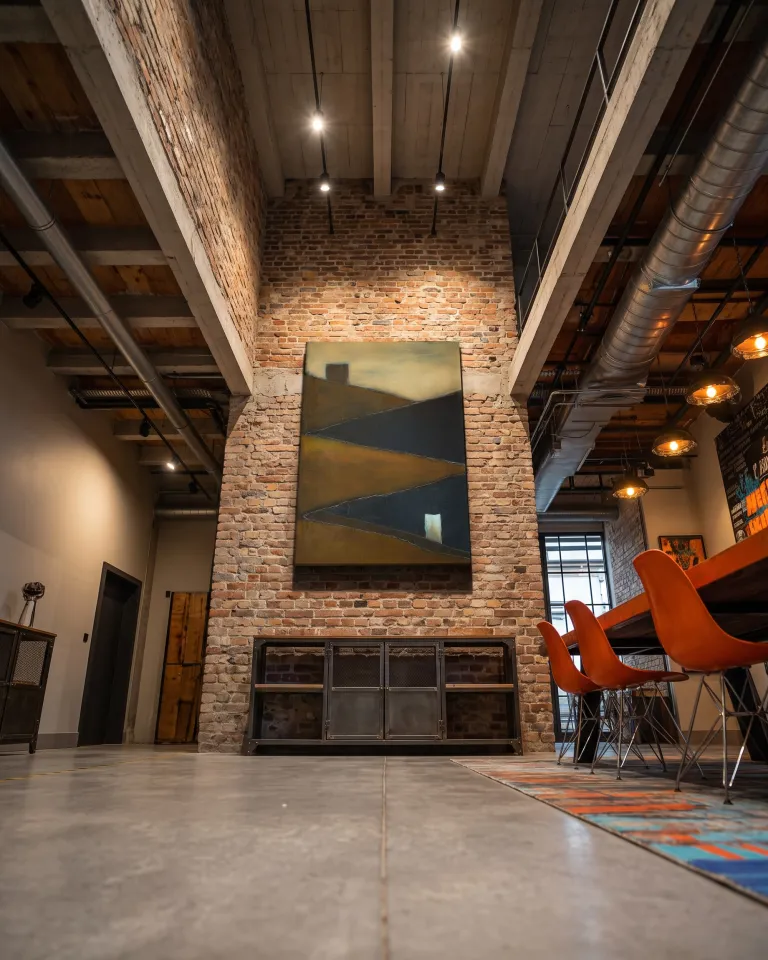
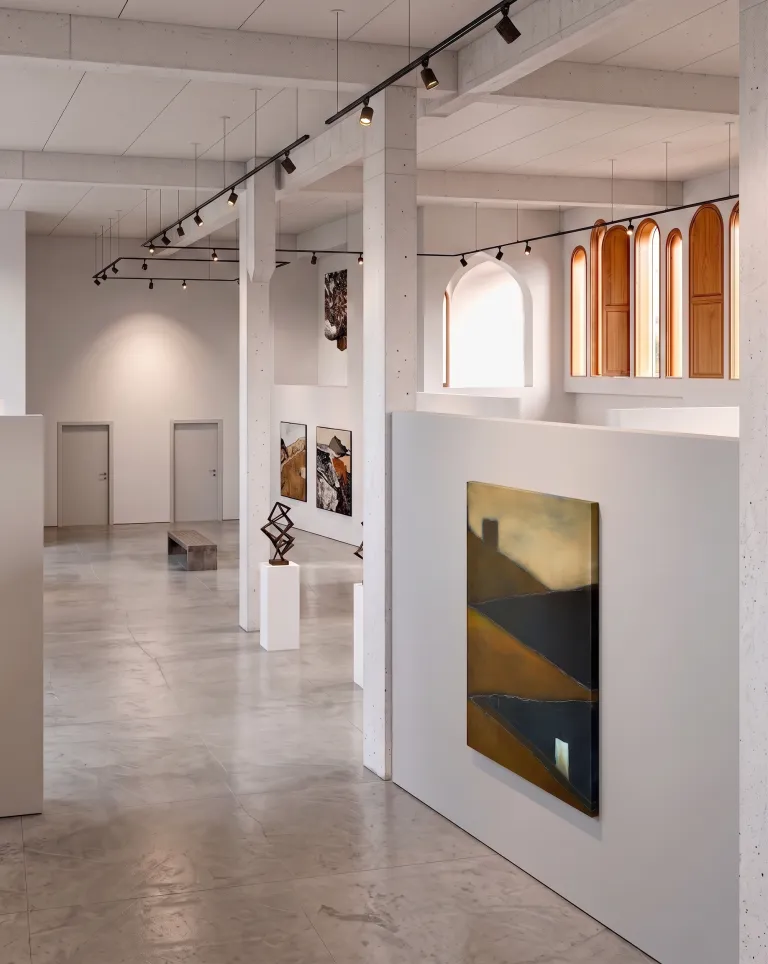
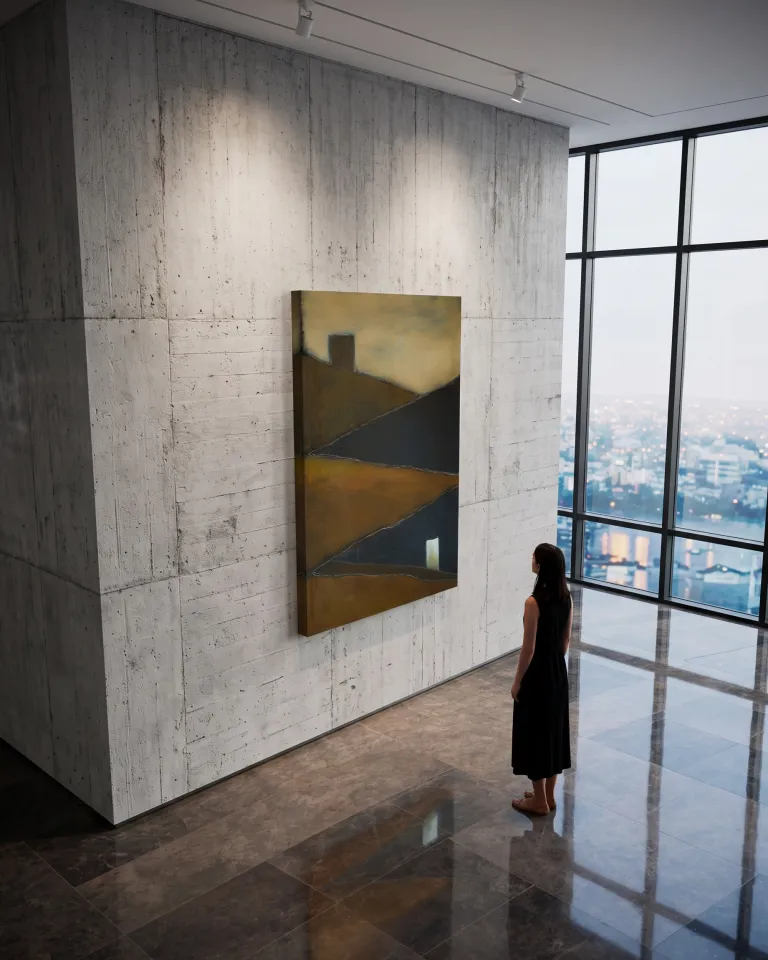
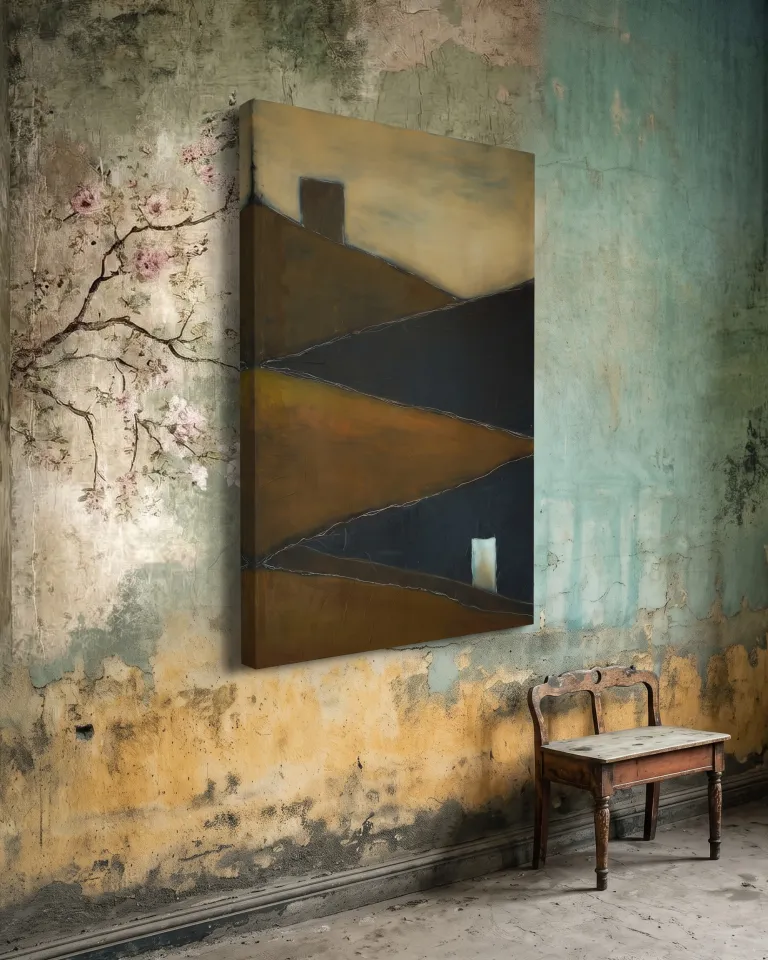
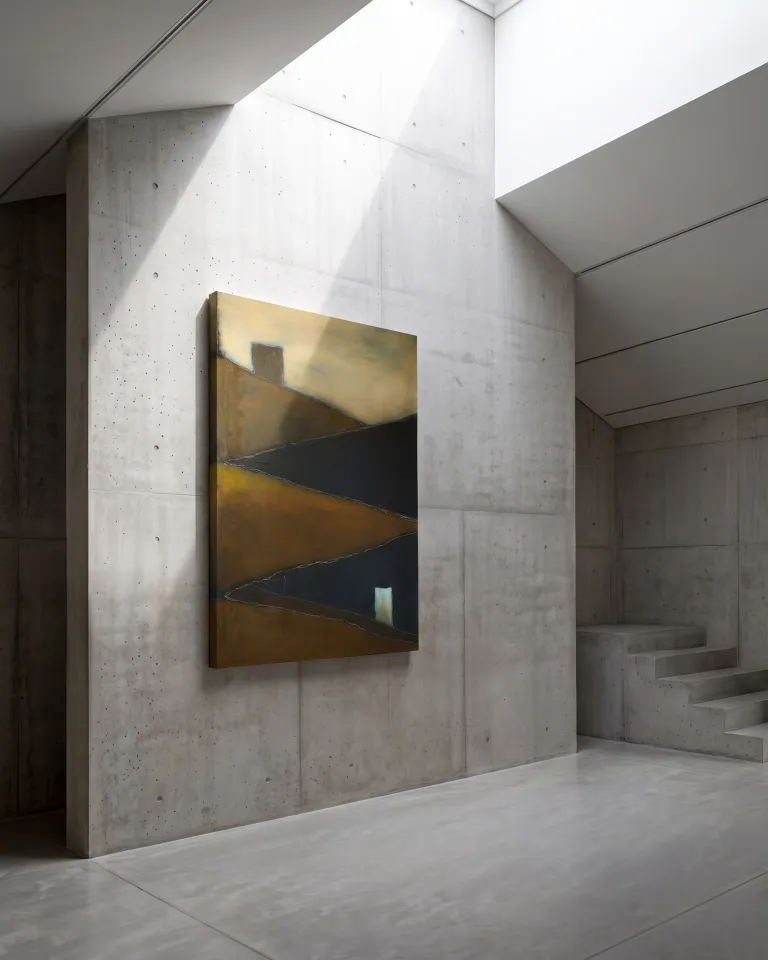
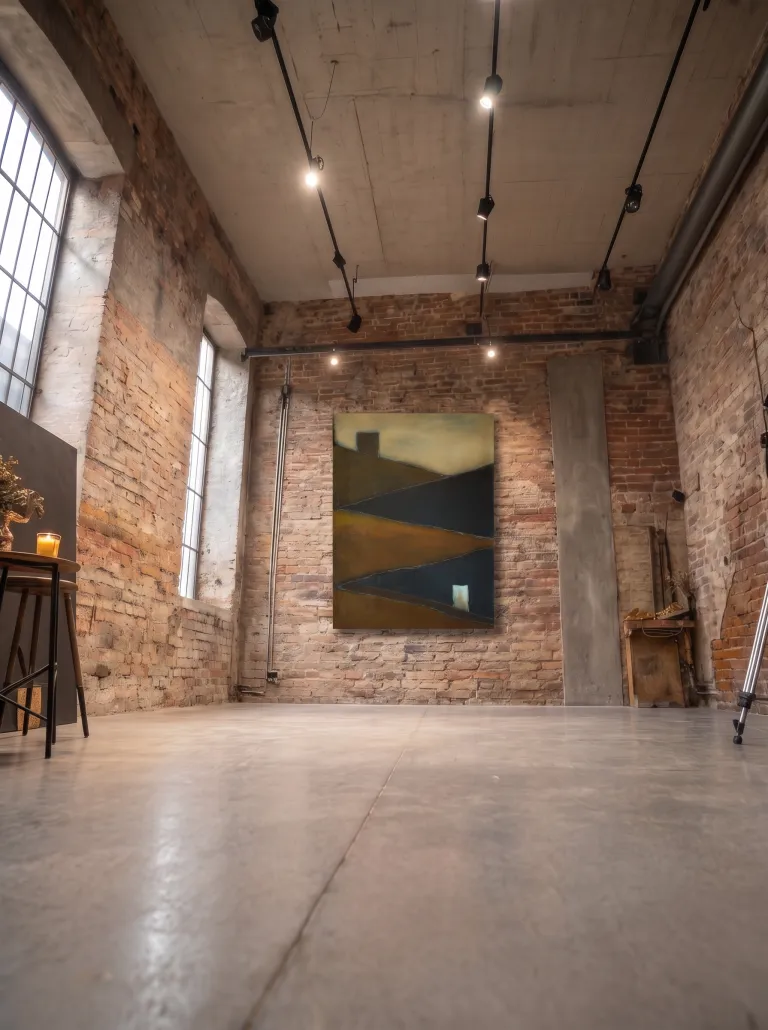
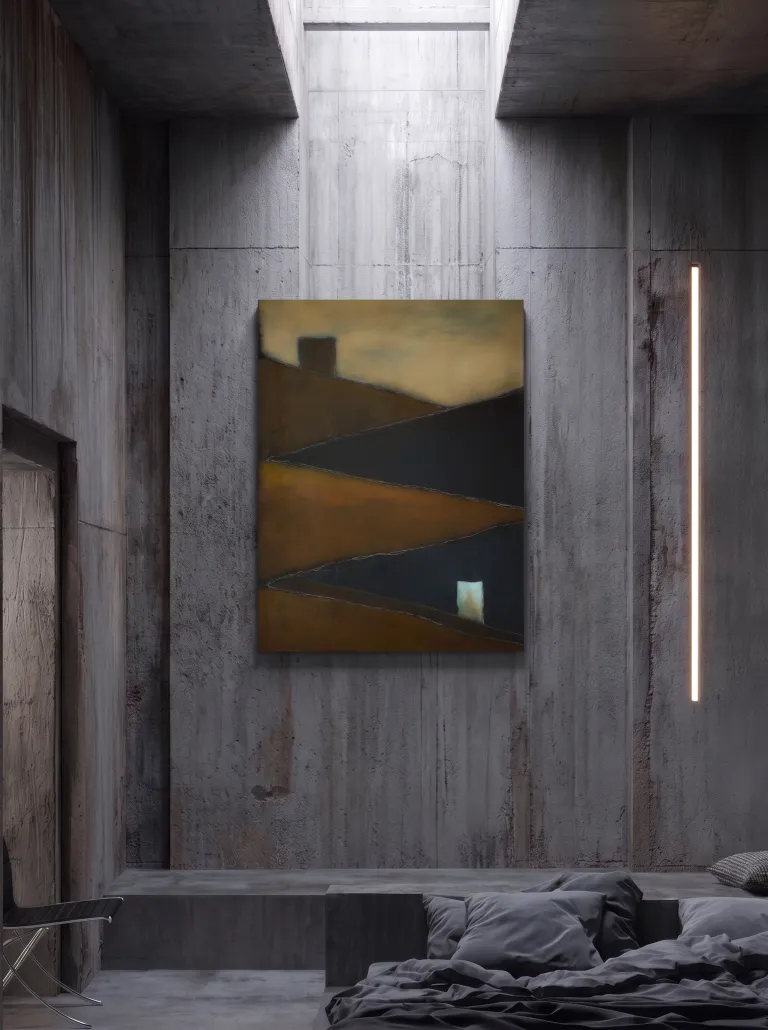
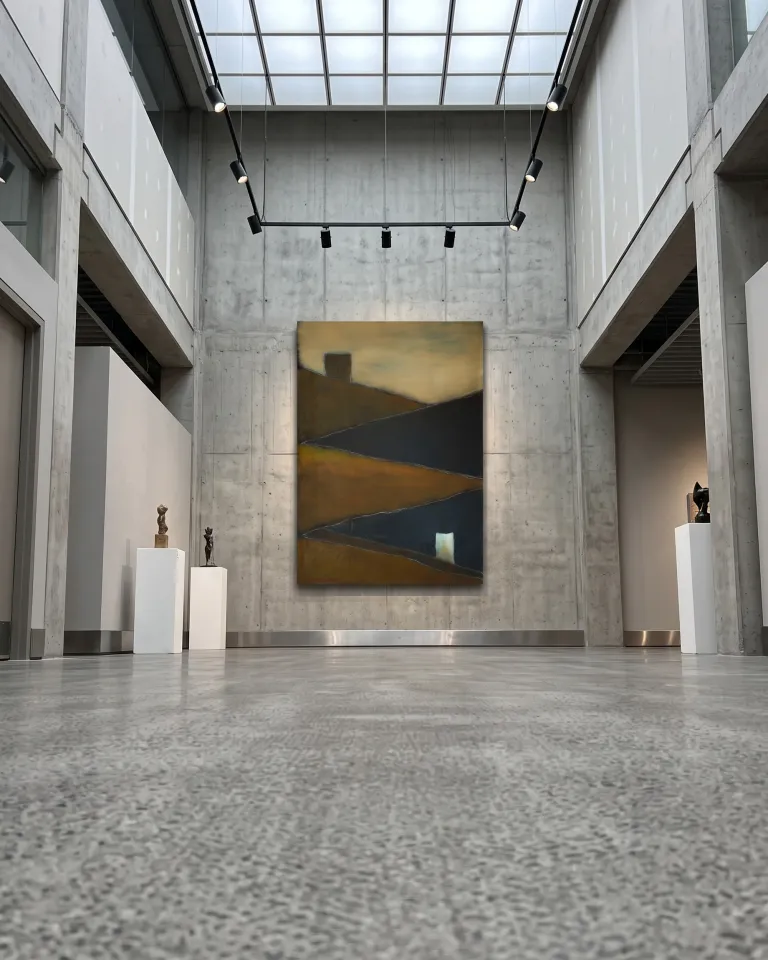
At the beginning, there is no secure up or down. There is a turbid, yellowish expanse that seems to have suspended itself before deciding whether to illuminate or to go out. The gaze enters it carefully: it is not a background, for it seems to breathe; nor is it an open surface, because something at its margins keeps it contained. The clarity widens, yet it does not liberate. One would say it occupies a great deal of air and, at the same time, that someone has closed a door somewhere outside the frame.
First rest your weight on the leg you cannot see.
The upper area forces one to lift their breath a little. Its vastness offers no rest: it is traversed by changes in temperature, glazes that seem to recede and return, and patches of color that never quite settle. Below, an ochre band ascends from left to right like land that has forgotten to level itself. It is best not to call it a hill just yet. It could also be a tilting table, a wall falling forward, a memory too large to find its correct position. The body wants to straighten it; the knees, however, accept before the head does that the ground will not cooperate.
Now follow the light edge, but do not trust it.
Between the ochre and the dark mass runs a pale, irregular line, too alive to be a peaceful division. It looks like a seam made by someone trying to join two surfaces that do not wish to touch. In some sections it tightens; in others it opens, trembles, breaks off, returns with an almost domestic precision, and then loses it like someone sewing while looking out the window. It does not separate entirely. Each time it borders a dark band, it forces a reconsideration of the preceding ochre: what seemed like earth becomes weight; what seemed like weight becomes a sheet ready to slip.
I look at that line and feel it lets me neither enter nor leave. If I follow it, the shape below shifts; if I look away, it reoccupies a place that does not belong to it. I need to maintain distance, but the distance is not stable either: the image seems to approach when I try to measure it and recede when I think I have understood it. There are forms that do not ask to be named; they demand, simply, that one does not push them too quickly toward an answer.
Now move your other foot: the ground has already begun to give way.
In the upper left, a dark, tall rectangle appears, almost stationary against the turbid breath above. Lower down, near the bottom right edge, another rectangle, smaller and light, stands with a slightly ridiculous obstinacy: it seems like a small thing refusing to fall even though everything around it has given it sufficient reason. Neither clarifies what it is. They could be bodies that have forgotten their size. They could be weights securing the terrain. They could be holes that have learned to emit light. They could be two notes outside a score that, nevertheless, force one to listen to all the bands anew.
Natalia Ginzburg, the Italian writer who knew how to find immense moral and affective intensity in domestic gestures, incomplete conversations, and small familiar phrases, approaches the dark rectangle as if the painting were a room someone has just left, though there is no one to imagine nor an anecdote to reconstruct. She does not search for an occupant: she perceives a coexistence of silences. To her, the brown and black bands seem like boundaries shared for too long; wearinesses that have learned not to explain themselves; affections that cannot find the right phrase and so remain tilted.
Alexander Calder, the American artist who made gravity, balance, void, and motion a form of visible thought, rejects that room from the outset: the masses do not keep silent or remember, he corrects; they negotiate. If the bands were mobile plates, the dark one would press upon the ochre, the ochre would respond by shifting its light edge, and the rectangles would be obstinate counterweights. The upper one would prevent the light expanse from rising too high; the lower one would support—or threaten to support—the falling black band. But the painting does not grant the expected movement. Everything seems poised to slide and yet remains.
Try looking as a child looks when discovering a strange rule.
Why does something so small change something so big?
The question disarms the upper expanse. Without the dark rectangle, the light zone would be just another expanse; with it, it becomes a surface that must measure its own scale. Without the light rectangle below, the black mass would be a compact band of shadow; with it, that band acquires depth, edge, resistance, even a kind of physical awkwardness. Each rectangle modifies the painting without dominating it: it does not command, but neither does it obey. It is like a poorly sewn button that forces one to remember that the entire shirt has weight.
Ginzburg then accepts that not all intimacy belongs to a house or a family. There is an intimacy of surfaces that remain together without ever belonging to the same place. The upper rectangle does not need to be a room to produce the sensation of a recent absence; it is enough for it to interrupt the clarity and leave around it a space that can no longer be innocent. Calder, meanwhile, discovers that the gravity of TENSUM produces neither fall nor dance. It produces an exhausted stillness: the moment after a force, when something has resisted so much that it no longer seems motionless due to balance, but due to weariness.
The objection of one contaminates the other. Calder can no longer treat the bands as pure plates, because the light line joining them holds something of friction, of insistence, of failed contact. Ginzburg can no longer turn them into a silent coexistence without recognizing that coexistence has weight, tilt, and tension at the edges. The central black band is not merely dark: it pushes back the preceding ochre, making it less of a ground and more of a material that has had to withstand a thrust. And the next pale line, instead of repairing that pressure, leaves it visible.
I have come to recognize that there is something in the work I can no longer accompany to the end. I see it separating from me in the way one band seems to hold another while simultaneously letting it fall. I would like to think the rectangles anchor the space, but sometimes it is they that seem on the verge of losing it. The contradiction is not resolved when I look at it: it becomes more precise, as if the painting preserved a doubt that does not entirely belong to me.
Do not straighten the painting just yet.
There remains a detail that seemed secondary: the trembling border between the middle ochre band and the darkness descending to the right. There, the separation does not quite finish its work. It announces itself as a boundary but frays; it seems to contain the fall, yet also accompanies it. Ginzburg notices in that edge a form of proximity that cannot be transformed into a narrative: two things can touch without understanding each other and remain inseparable. Calder detects something else, a minimal tension that admits no equilibrium: the line does not support the masses; it barely registers that both continue to push.
Look again at that border, just where the clarity becomes an uncertain seam upon the ochre, and let stability shift places.