Contemporary abstract painting with a territorial, minimalist, structural and Brutalist sensibility. The visual language is built through broad chromatic fields, stratified surfaces, horizons, spatial divisions, incisions, monolithic forms and suspended elements. The composition often holds a tension between stillness and transformation, depth and surface, order and fracture. Space should not automatically be read as an exterior landscape or psychological representation: it can operate simultaneously as territory, matter, body, memory or a place of emergence. Valch resists assigning fixed symbols to elements that remain visually ambiguous. Meaning begins in the material and spatial evidence of each painting.
Artist profile
Maurizio Valch
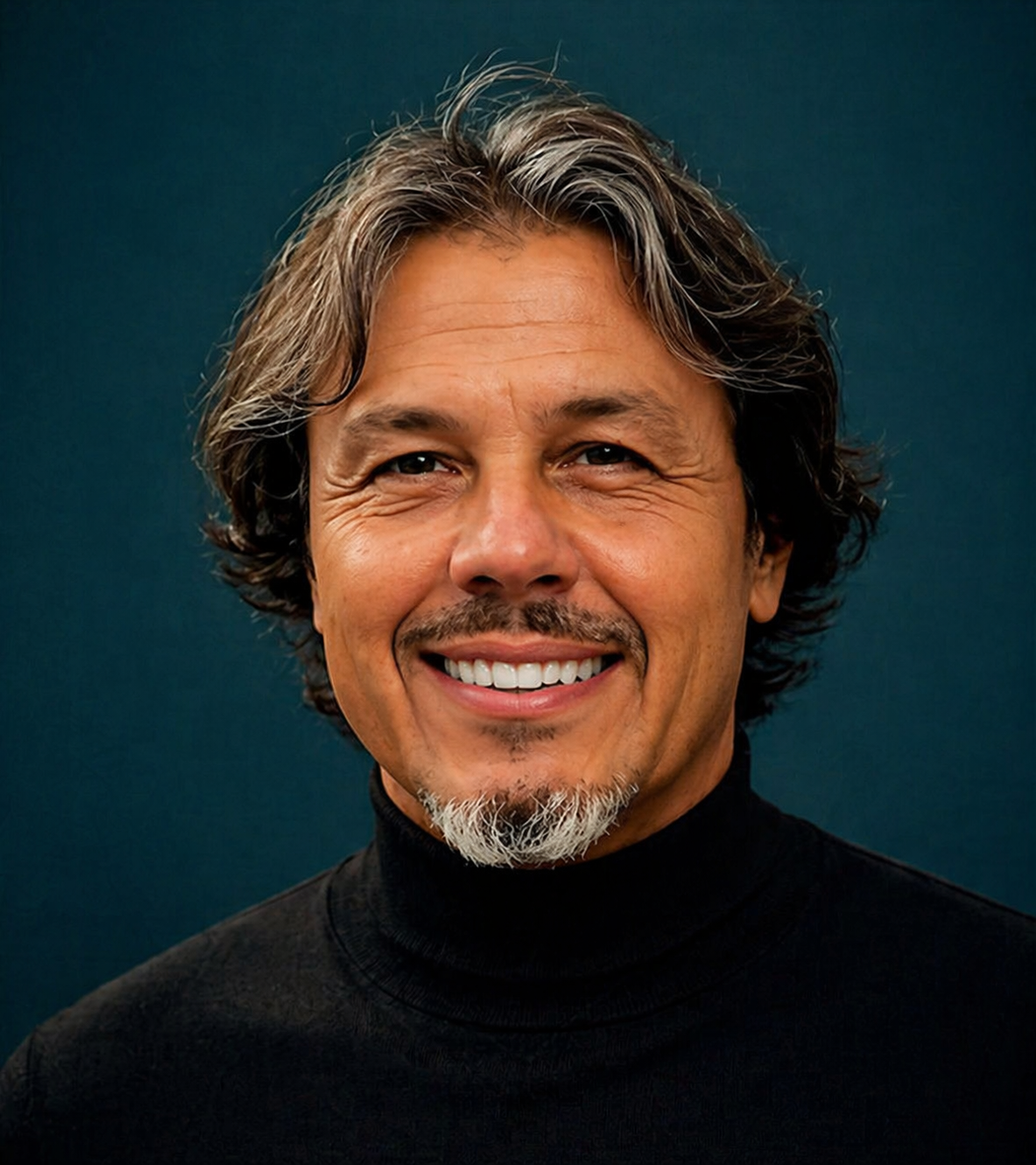
Maurizio Valch is a visual artist and writer whose painting develops through abstract territories, worked surfaces and structures suspended between landscape and matter. His works combine color fields, incisions, territorial divisions, monolithic forms and contained horizons.
His production is organized into series representing different states of a shared inquiry: dream, originating territory, the emergence of form, the appearance of the face, inner movement and the stratified depth of experience.
Rather than representing recognizable places, his paintings construct spaces where matter, memory and thought appear to emerge from a shared ground.
Artist statement
Statement Excerpt
My painting begins with territory understood not only as landscape, but as a surface of origin, memory and transformation.
I work with color fields, layers, incisions, divisions, horizons and elemental forms. These elements do not function as a closed symbolism, but as presences within pictorial space.
Each series explores a different state. Some works belong to dream; others to primordial ground, emergence, the face, movement or a deeper and more stratified matter.
I do not seek to illustrate a prior idea or explain a psychological experience. I construct territories where form appears, erodes, divides, remains or begins to transform.
Artistic Process & Language
I work primarily with acrylic and oil on canvas. The process combines layers of color, glazes, impasto, brushwork, palette-knife application, scraping, incisions and successive reductions. The surface may be constructed through sedimentation, pressure, cutting, erosion or superimposition. In some works matter becomes concentrated and acquires an almost geological or bodily presence; in others, color opens into quieter, dreamlike or atmospheric spaces. The process does not seek to accumulate effects, but to find the essential structure of each territory.
Divided territories, horizons, monoliths, blocks, incisions, strata, thresholds, portals, small ascending stairways, suspended forms, tectonic lines, skin- or leather-like surfaces, fragmented faces and circular or centrifugal movements. These elements do not possess a fixed meaning. Their function changes according to each series and work. Form and presence take precedence over illustrative symbols, keeping each element grounded in its spatial function.
Quiet, sober, contained, contemplative and slightly melancholic. Atmosphere should arise from color, surface, scale, distance and the spatial organization of the work. A sense of stillness, depth, isolation, waiting or transformation may be present, but it must be supported by visible elements. Although the paintings may evoke inner or metaphysical states, their atmosphere remains grounded in color, material, scale and spatial structure.
Affinities
Abstract planes that retain a memory of landscape through oblique horizons, distance, and territorial structure.
The surface understood as wall or skin, built through layers, scraping, incisions, and traces of erosion.
Matter transformed through cracks, seams, and ruptures, holding accident and structural order in tension.
Dense chromatic masses poised between abstract block, landscape, and architecture.
Expansive and enveloping fields of color; relevant only when color becomes the dominant emotional atmosphere, not simply because rectangular forms appear.
Minimal linear interventions that organize broad fields and create decisive spatial tension.
Small geometric forms acting as signs, elemental architectures, or measures of scale within the pictorial territory.