Artist profile

Maurizio Valch

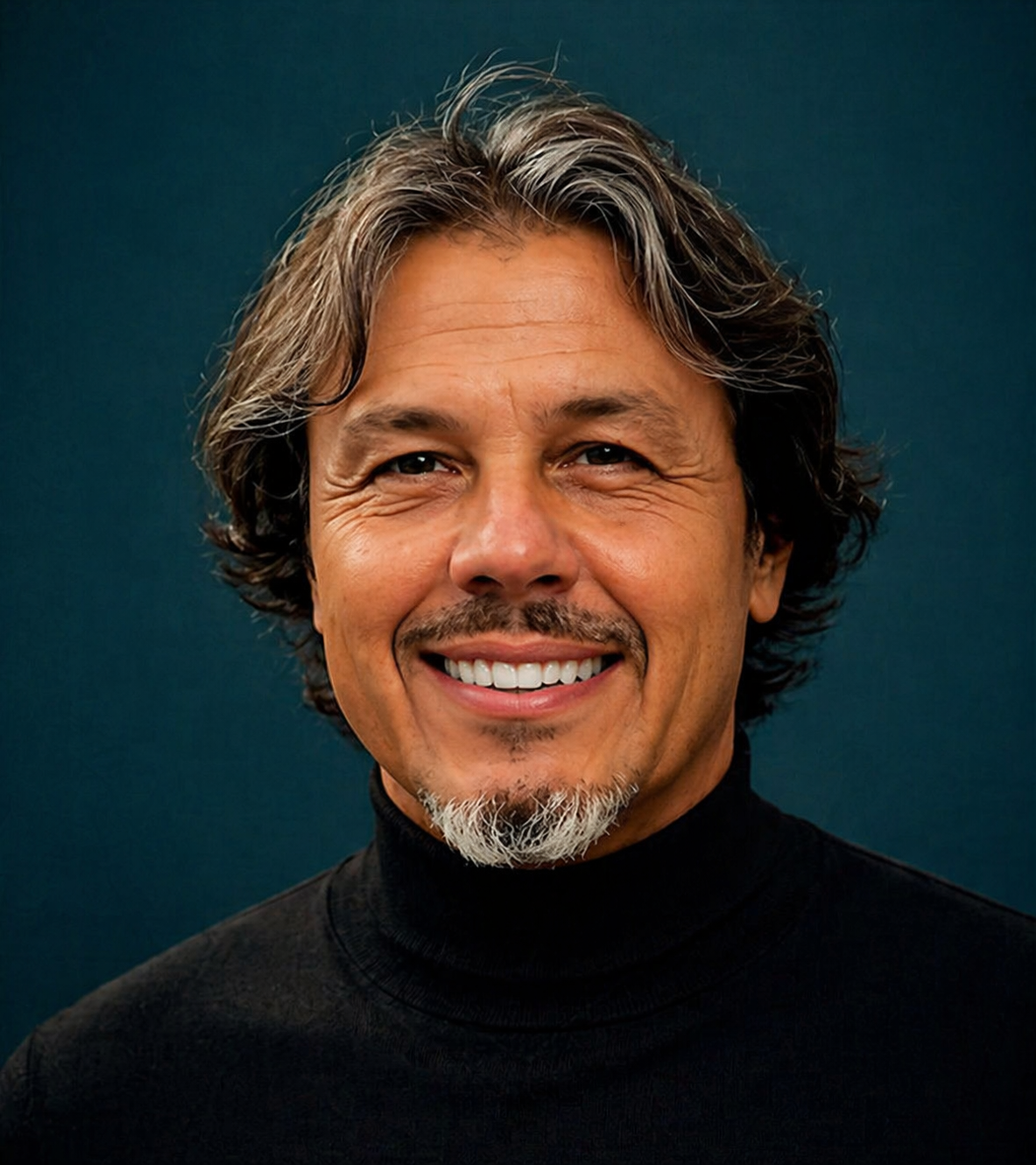
Portrait of Maurizio Valch

Visual language

Maurizio Valch’s painting inhabits an abstract world where territory, architecture, and the physical substance of paint become inseparable. Tilting horizons, expansive fields of color, monumental blocks, fractured surfaces, and incisions establish intricate relationships of depth, scale, and tension. These spaces may retain something familiar about the landscape without belonging to any recognizable place. Geometry plays a role in their construction, but it is never an end in itself. The forms develop a presence that reaches beyond their arrangement.

Incisions are among the defining forces of this visual language. These are not simply lines drawn across a painted image, but actual cuts that penetrate the material and physically disrupt the continuity of its surface. They gather in clusters, break off, change direction, and vary in depth. Their rhythm, frequency, and proximity create visual vibrations capable of travelling across vast areas of a painting, even when the marks themselves occupy relatively little space. At times, they seem to establish an invisible tension between distant forms. Elsewhere, they move through a single territory like fault lines, unsettling what initially appeared stable.

Their relationship with blocks and monoliths is particularly significant. A seemingly impenetrable form may be crossed by incisions that interrupt its continuity, expose fragments of earlier layers, or introduce an unexpected sense of movement into its stillness. The weight and solidity of these volumes coexist with an activity that seems to challenge their very nature. Much of the painting’s visual tension emerges from this encounter: solidity and fracture, stillness and vibration, permanence and the possibility of change.

The removal of paint introduces another kind of depth. Scraped passages may uncover colors, marks, and surfaces belonging to entirely different stages of a painting’s development. Depth is no longer created solely through the illusion of pictorial space; it also exists physically, within the accumulated strata of paint. What we see carries evidence of what has been concealed, altered, or partially brought back into view. The surface becomes a place where different moments of the painting’s history remain present at once.

Color operates with equal force. Large chromatic expanses may establish the underlying balance of a composition, while a small intervention can profoundly disturb it. Contrasts, transitions, and variations in density generate distance, proximity, and presence. A painting that initially appears austere may reveal an extraordinary degree of visual activity, where every interruption, interval, and shift in scale contributes to the experience of the whole.

Monoliths occupy a distinctive place within this pictorial world. Their architectural character, their isolation, or their gathering into groups may evoke endurance, resistance, or the emergence of a presence from its surroundings. Their scale often remains ambiguous. At times, they resemble monumental constructions; at others, they appear as small remnants within immense territories. Their existence within the painting is shaped as much by the spaces between them, the surrounding horizons, and the distances they establish as by their own physical forms.

Fragmentation and the tension between forms take on different energies throughout Valch’s work. In VORTEX, displacement and directional forces convey an intensity associated with the emotional and psychological movements of individuals and societies. In FACIES, fragmentation reaches the human face, opening possibilities of recognition, multiplicity, and estrangement. In MARE SOMNIORUM, the Mediterranean landscape drifts toward dreams and imagined architecture. Other investigations, including PRIMORDIUM, EMERSIO, and LIMINA, explore different relationships between territory, emergence, and passage. In STRATA, monoliths, accumulated layers, and incisions create a visual tension between forms that appear firmly established and the forces that continue to transform them.

Although these investigations develop distinct visual identities, they share an underlying relationship with materiality, depth, fracture, and the creation of spaces that need not reproduce any recognizable reality. Recurring elements are never confined to a single expressive possibility. A monolith, an incision, or a horizon does not carry a predetermined meaning. Its significance may shift from one painting to another, emerging through relationships that even the artist may not have anticipated.

Except in FACIES, the human figure remains outside direct representation. Yet these territories may retain traces of construction, intervention, or the passage of an unknown presence. INCARNATE offers a retrospective way of approaching this possibility: that painting may give an existence its own pictorial reality without reproducing its outward appearance or claiming to explain its nature.

Between the tangible substance of the painted surface and the imagined depth of the territory, a tension remains that belongs to the painting itself. What becomes visible may reveal something of how the work came into being, while leaving open other possibilities of experience, discovery, and interpretation.

Materials and process

Maurizio Valch works primarily with acrylic on canvas, incorporating oil paint into selected works. The interplay of these materials allows him to explore different densities, transparencies, and depths of color. Brushes and palette knives contribute to the construction of surfaces where glazes, impasto, dragged paint, scraped passages, and exposed layers coexist.

His approach to painting often enters sculptural territory. The palette knife does more than spread pigment: it presses, displaces, removes, and cuts into accumulated layers. The painted surface can be worked almost as a relief, through interventions that reshape both its physical substance and the spatial relationships between forms. Building and subtracting are inseparable aspects of a process in which the material itself offers resistance and responds in ways that cannot always be anticipated.

Incisions introduce a distinctive physical dimension. Cutting through successive layers, they leave grooves of varying depth, irregular edges, and interruptions that break the continuity of the surface. Their spacing, frequency, and direction can generate visual vibrations across the composition. A minimal intervention may shift the balance of an expansive field of color, while deeper scraping can uncover fragments from the painting's earliest stages.

Each painting retains something of its own making. One layer may conceal another without erasing it entirely. Beneath an apparently solid block, the earliest touches on the canvas may reappear, along with variations in color and remnants of previous forms. These traces contribute to the material richness of the work: something seemingly lost may acquire a new presence when brought back into view.

The process brings together painterly knowledge, aesthetic judgment, and unforeseen discoveries. Methods vary across individual works and series, and a single intervention may change the direction of a composition. Depth, fragmentation, and the relationships between matter and space emerge through this continuous exchange between what the artist constructs, what he transforms, and what the painting itself allows him to discover.

Atmospheres

I am drawn to atmospheres that can alter our habitual perception of reality. Spaces in which the visible does not exhaust what we experience, in which matter acquires a presence beyond its appearance, and time seems to break free from its everyday continuity. I do not seek to depict supernatural worlds or manufacture mystery. I am interested in discovering the extraordinary in the very fact of existing.

Silence has an important place in my sensibility, but I do not understand it as absence. It can hold extraordinary intensity, an unresolved tension, an energy that needs no movement to make itself felt. I am drawn to deep contemplation, melancholy without sentimentality, strangeness, uncertainty, and that particular feeling of encountering something we recognize intimately yet cannot fully identify.

My universe, however, is not governed by darkness, solemnity or introspection. It also holds luminosity, desire, vitality, beauty, wonder and affection. A luminous atmosphere may contain a profound mystery; a monumental presence may convey fragility; an apparently motionless composition may harbor a transformation. Intensity does not require drama, just as depth does not require darkness.

The physical dimension is inseparable from this experience. Color, light, geometric relationships, distances, scale, material density, incisions and depth construct spatial realities of their own. I do not regard these elements as a vocabulary for translating emotions or philosophical concepts. Their relationships can produce experiences that no single interpretation can fully explain.

I am particularly interested in the possibility of presence without representation: an existence that need not offer a recognizable identity to establish a relationship with the person contemplating it. I find a deeply metaphysical dimension in this experience: painting can make us aware of the mystery of BEING without attempting to resolve it. The point is not to understand what a presence means, but to experience that it is there, with its own complexity, contradictions and what remains unknown.

There is also an emotional dimension that I consider inseparable from my relationship with art. A painting can bring us closer to an encounter that asks for neither possession, identification nor understanding. It can awaken an unexpected intimacy with something unknown to us. In this openness I find one of the most extraordinary possibilities of artistic experience: art as a doorway to love.

I do not seek a uniform emotional atmosphere. Each painting has its own nature and can awaken different, even contradictory, experiences. I want to preserve that singularity, to allow the work to establish its own relationships with the viewer, and to let what remains inexplicable retain its force despite our need to understand it.

Artist statement

I paint, then I wound my paintings.

There is something profoundly sculptural about the way I paint. I build surfaces through successive layers of material, but the act of removing matter is just as essential to my work. The palette knife is more than a tool for spreading paint. I use it to press, drag, scrape, carve into the surface, and uncover what lies beneath. Sometimes, beneath an apparently solid form, I discover the very first marks I made on the canvas, remnants of a construction I thought had vanished. There is something deeply compelling about encountering a trace of my own making that I no longer remember. The painting seems to hold a history that even its creator cannot fully recover.

There are moments when a form appears to have found its balance, and yet I return to it. I drive the palette knife into the layers I have built. An incision may cut through several strata, reveal an unexpected depth, or disturb the relationship between forms. Sometimes it barely changes the surface; at other times, it transforms the painting so completely that I must begin building again over what I have removed. I am drawn to the contradiction within this gesture: creating something and then being willing to put that very construction at risk. I do not always know what I will uncover, or how the intervention will affect the painting as a whole.

In this way, the painting develops a material history of its own. Successive layers of acrylic and the depth afforded by oil coexist with scraped passages, displaced matter, accumulations, and areas brought back into view. Incisions introduce irregularities, interruptions, and rhythms of proximity that create a visual vibration across the surface. What has been concealed may reappear; what once seemed definitive may be transformed again. I am fascinated by the coexistence of different moments within a single painting, by everything that remains visible and everything that continues to exist beneath it.

I find something unsettlingly familiar about this process. We, too, accumulate experiences. We build upon what we have lived, covering some things with others. Certain events seem to disappear, yet they continue to shape how we perceive and relate to the world. They do not always survive as recognizable memories. Sometimes they remain as an alteration, a resistance, a different way of receiving whatever comes next. I think of memory, of the wounds left by certain experiences, and sometimes of trauma. Yet these associations do not necessarily precede the act of painting. More often, they emerge afterward, as I look at what the work has become.

Blocks and monoliths appear throughout several of my series, participating in these same transformations. Their apparent solidity may conceal the earliest traces left on the canvas, previous interventions, fragments of a construction buried within the painting. The weight of these forms, and the grooves that connect, separate, or contain them, bring to mind ideas, ideologies, and deeply rooted beliefs. There are ways of thinking that acquire substance over time, accumulating experience, becoming firmly established, and eventually shaping everything around them. Yet within the painting, this solidity exists alongside sloping terrain, unstable horizons, fractures, and distances that continually alter the relationships between forms.

At times, the monoliths also suggest the moment when something begins to distinguish itself from its surroundings, as though thought itself were emerging from the earth. I am not interested in assigning these forms a fixed identity, but in remaining attentive to the possibilities their presence opens up. In STRATA, the stillness of the blocks and the vibration of the incisions sustain a tension between what appears to become fixed and what remains in motion. The openness of the territory, its inclines and horizons, becomes part of that tension.

Fracture and fragmentation run through my entire body of work, although their character and intensity change from one series to another. In VORTEX, they emerge with particular force, resonating with the emotional and psychological movements of individuals and societies. This remains an open field of investigation, one in which I am beginning to recognize possible connections with STRATA. In FACIES, also an ongoing series, fragmentation reaches the human face, allowing different facets of identity to coexist within a dimension that approaches the mystical. In MARE SOMNIORUM, my experience of the Mediterranean drifts toward dreams and a certain surreal strangeness. Staircases introduce the possibility of passage, ascent, and solitude. In STRATA, that sense of ascent may survive in the incline of the land, even after the staircase itself has disappeared.

With the exception of FACIES, the human figure is not directly represented in my paintings. Its existence may be suggested through traces of civilization, structures, or signs of passage. I am interested in this absence: the possibility that a territory may preserve evidence of a presence without revealing who left it behind. There is something profoundly human about spaces that seem to endure after we have gone, or perhaps existed long before we arrived.

My relationship with painting does not begin with a theory I intend to prove. Knowledge, intention, and aesthetic judgment are always present in the process, but so are discoveries I could not have anticipated. A form may reveal connections I was unaware of while constructing it. Sometimes I need time before I can recognize what I have found. Painting can lead me toward thoughts I did not possess when I began, and that possibility is part of what keeps me working.

Over time, I have found a way to express something that had already been taking place in my work:

“We do not seek to explain that multiplicity. We seek to bring it into being through painting.”

This perspective, which I also recognize in INCARNATE, did not emerge as a program for paintings yet to come. It arose as a different way of looking at what I had already painted. A work may constitute an artistic reality for an existence, preserving its contradictions, its tensions, and whatever remains unknown. I do not need to resolve everything that appears within it, or turn every form into an explanation.

The poems and essays that sometimes accompany my paintings extend this exploration. At times, I find words for something the work has allowed me to discover. At others, the painting seems to come closer to what I am trying to understand than anything I could write about it.

What matters to me is that the painting retains this freedom: the possibility of continuing to reveal something, even long after I have stopped working on it.

Symbolic universe

THE SYMBOLIC AND METAPHYSICAL WORLD OF MAURIZIO VALCH

Certain forms return throughout my paintings, yet they never return quite the same. Monoliths, incisions, horizons, stairways, thresholds, and fractured territories move across different periods of my work, acquiring new relationships each time. I do not regard them as elements of a symbolic code waiting to be deciphered. Their presence arises first from the demands of the painting itself. The meanings I later discover may deepen those relationships, challenge them, or reveal possibilities I had never considered.

The series offer different ways of approaching this ongoing investigation. Some emerged from particular experiences; others were named only after a body of paintings had already taken shape. Their boundaries are not always clear. A single work may bring together questions, tensions, and sensibilities that once seemed to belong to separate investigations.

VORTEX — MOVEMENT AND PSYCHOLOGICAL TENSION

In VORTEX, forms seem caught within forces that pull them apart, draw them together, or set them against one another. Circular configurations, radial tensions, fractures, and incisions give rise to pictorial spaces where movement can feel almost physical.

I find something of the emotional and psychological life of individuals and societies in these relationships. The pressures acting upon a structure may bring to mind collective tensions, conflicting impulses, or transformations whose nature only becomes apparent after they have begun.

VORTEX remains an open field of investigation. Over time, I have started to recognize unexpected connections with STRATA, particularly where an apparently stable form is crossed, challenged, or altered by forces that seem to emerge from within it.

FACIES — THE MANY FACETS OF EXISTENCE

FACIES approaches the human face through fragmentation. Planes shift, separate, interrupt one another, and come together again, creating presences in which recognition and estrangement can exist side by side.

The face holds a particular fascination for me. We believe we recognize someone through their appearance, although no outward image could ever contain the entirety of a person's existence. In painting, fragmentation allows different facets to inhabit the same space without demanding that they resolve into a single, coherent identity.

There is also something approaching the mystical in this investigation. A face may remain recognizable while becoming a presence whose nature seems to extend beyond what can be seen.

FACIES remains an ongoing exploration.

MARE SOMNIORUM — TERRITORIES OF DREAMS

MARE SOMNIORUM is closely connected to my experience of the Mediterranean. Its horizons, architectural forms, pathways, and staircases carry traces of places I have known, yet painting releases them from their geographical origins. They begin to inhabit a reality of their own.

Ascending stairways introduce a sense of direction without necessarily promising arrival. They may lead towards an unknown space, disappear behind a structure, or end within a territory whose scale remains uncertain. At times, I recognize in them something of passage, solitude, and the possibility of transformation.

What draws me to these paintings is the peculiar strangeness of dreams: the experience of encountering familiar things while sensing that the world holding them together follows an entirely different order.

PRIMORDIUM, EMERSIO AND LIMINA — ORIGINS, EMERGENCE AND PASSAGE

These names distinguish particular sensibilities within a broader exploration of pictorial territory. They are not intended to divide the work into entirely separate worlds.

In PRIMORDIUM, expansive fields of color, horizons, and elemental masses may evoke a territory that seems to exist before it has acquired a recognizable identity. Not necessarily an ancient or distant landscape, but a reality for which we have yet to find a name.

EMERSIO explores the delicate threshold between what remains absorbed within a surface and what begins to acquire a distinct presence. A subtle change in color, depth, or spatial arrangement may transform our perception, until something appears to rise out of the very territory to which it belongs.

LIMINA is concerned with the experience of standing at a threshold. Distances, interruptions, and spatial constructions may place us before the possibility of passage. The painting need not reveal what lies beyond; the sense of an opening may be enough.

STRATA — MATTER, MEMORY AND THOUGHT

In STRATA, monoliths assume a particular presence within territories built from accumulated layers, chromatic fields, sloping ground, and physically altered surfaces. Their stillness can feel monumental, yet they are never entirely separate from the forces at work around them.

Incisions pass through these relationships with an intensity that can seem at odds with the stability of the composition. Their varying rhythms, interruptions, and proximity generate vibrations that extend far beyond the grooves themselves. Beneath an apparently solid form, the earliest marks of its making may come back into view. What seemed complete still bears the evidence of what came before.

These encounters with the material bring me towards questions of memory and thought. Ideas, ideologies, and deeply held beliefs can also acquire a kind of solidity. They accumulate experience, become entrenched, and begin to shape the way we encounter the world.

At times, a monolith may evoke the instant when something first distinguishes itself from its surroundings, as though thought were taking shape within the territory itself. At others, its apparent certainty is unsettled by a slope, a fracture, or the slightest shift in space.

I am interested in allowing these possibilities to coexist without resolving their contradictions.

INCARNATE — PICTORIAL EXISTENCE

With INCARNATE, I have found a way of looking back at something that was already taking place in my paintings.

No existence can be reduced to its outward appearance. Each of us carries a multiplicity of experiences, contradictions, memories, desires, and dimensions that may remain unknown even to ourselves. Yet I have no need to describe that multiplicity or assign a psychological meaning to every element within a painting.

An incision may leave an actual wound in the painted surface without necessarily standing for psychological trauma. A monolith may call to mind a deeply rooted belief while retaining a presence that cannot be exhausted by that interpretation.

This way of looking at painting need not be confined to human existence. A work may approach the particular way a person, another living being, or an imagined presence exists, without reproducing its physical appearance or claiming to explain its nature.

A painting can come to possess an artistic existence of its own. Through its material, chromatic, and spatial relationships, it may bring into being a reality that was never fully anticipated before the work began.

INCARNATE does not prescribe how I should paint, nor does it establish a program for what I might create next. It has allowed me to recognize a possibility already present in my practice: that painting can give rise to a reality capable of holding the multiplicity, contradictions, and mystery of an existence without reducing them to an explanation.

And that possibility does not belong to the artist alone. It also belongs to the person standing before the painting, to the relationships they discover within it, and to everything the work may continue to reveal beyond my own understanding.
Artistic affinities

About these affinities

ARTISTIC INFLUENCES AND AFFINITIES

Maurizio Valch — Artistic Affinities and Pictorial Inquiry

INTRODUCTION — AN ARTISTIC UNIVERSE IN DIALOGUE

My painting is part of a tradition of artistic inquiry into materiality, space, abstraction, and the possibilities of moving beyond representation. I recognize affinities with artists who have explored the autonomy of the image, the construction of pictorial realities, the presence of color, and the relationship between the visible and what remains unknown.

These relationships do not constitute a closed genealogy or explain the origins of my visual language. Some are rooted in my artistic education and sensibility; others emerge retrospectively, as I discover related concerns in the work and thought of different artists.

Four areas of investigation are particularly significant to me: spatial construction and the abstraction of landscape; matter as an autonomous artistic reality; the metaphysical dimension of existence; and painting's capacity to generate experiences beyond representation and conceptual knowledge.

ISPACE, GEOMETRY AND PICTORIAL CONSTRUCTION

Richard Diebenkorn

The Spatial Memory of Territory

Diebenkorn's Ocean Park series is particularly significant for its transformation of experiences of place and architecture into abstract relationships between planes, lines, and color fields.

Read full note

His geometric structures retain a spatial memory that does not depend on depicting a recognizable landscape. Overlapping planes, visible revisions, transparencies, and displacements create complex spatial relationships in which surface and depth coexist.

I am particularly interested in the possibility of territory remaining present within a painting after losing its geographical identity.

His work also offers an important reference for the construction of space through chromatic and structural decisions that preserve traces of the painting process itself.

Nicolas de Staël

The Materiality of Color and the Architecture of Masses

De Staël's work explores the capacity of color to acquire weight, volume, and physical presence.

Read full note

His dense masses of color, frequently constructed through substantial applications of paint, generate structures that move between landscape, architecture, and abstraction without belonging exclusively to any of them.

I am interested in how individual blocks retain their identity while participating in a larger spatial organization.

The boundaries between masses establish relationships of proximity, depth, density, and tension rather than merely dividing geometric areas.

Painting can construct a monumental reality through relatively simple elements without relying on descriptive representation.

Sean Scully

Chromatic Architecture and Material Depth

Scully's investigations, particularly his Wall of Light series, demonstrate how rectangular structures, bands, and relationships between blocks can acquire an intensity that exceeds their apparent geometric simplicity.

Read full note

Layers of color, irregular edges, and intervals between forms create visual structures in which matter, light, and depth operate together.

I am interested in the possibility of a wall-like structure ceasing to function as architectural representation and acquiring an exclusively pictorial existence.

Geometry need not be impersonal or mechanically precise. It can preserve the variations of gesture, the density of matter, and the tensions emerging from the coexistence of forms.

Eduardo Chillida

The Existence of Space Between Forms

Although Chillida developed his investigations primarily through sculpture, I find important conceptual affinities in his understanding of matter, volume, boundaries, and space.

Read full note

In his work, emptiness is not simply what remains around a structure. It participates actively in its existence.

Masses and interruptions establish relationships that transform our perception of dimension, scale, and depth.

This perspective expands my reflection on pictorial space: the distance between volumes may be as significant as the volumes themselves.

The connection does not involve translating sculptural techniques into painting, but recognizing that space can constitute an artistic reality rather than merely the location in which forms appear.

IIMATTER, SURFACE AND TRANSFORMATION

Antoni Tàpies

Surface as Material Reality and Memory

Tàpies is an essential reference for his ability to transform the pictorial surface into an autonomous material territory.

Read full note

Accumulations, scraping, incisions, marks, and interventions into paint layers make matter an essential component of the artistic event.

His surfaces can resemble walls transformed by time and successive human interventions. Yet their significance extends beyond these associations: matter possesses a physical presence that exceeds the represented image.

I am particularly interested in this autonomy of the surface and in the possibility of preserving traces of the creative process within the work.

Painting can contain its own material history without illustrating an external narrative.

Alberto Burri

Transformation, Rupture and the Autonomy of Matter

Burri's investigations are particularly significant for transforming physical processes into pictorial events.

Read full note

Across his different series, materials are stretched, assembled, burned, or subjected to processes that radically alter their original condition.

The sutures, cracked surfaces of the Cretti, burnings, and ruptures introduce complex relationships between material transformation and compositional organization.

I am interested in the tension between the properties of matter and deliberate artistic construction.

The surface does not necessarily need to represent deterioration, fracture, or transformation: it can undergo these processes materially and acquire a new reality through them.

Lucio Fontana

Intervening in the Surface and Opening Space

Fontana introduces a decisive question: the possibility of painting moving beyond the closed pictorial plane through a real material intervention.

Read full note

His perforations and cuts do not represent openings. They physically transform the support and establish a relationship between the visible surface and the space beyond it.

This investigation is particularly relevant to the consideration of my incisions, although our material procedures differ.

The connection does not involve reproducing Fontana's cuts, but exploring the importance of interventions that transform the physical condition of painting.

The surface can cease to be merely the site of representation and participate directly in the spatial existence of the artwork.

Pierre Soulages

Matter, Light and Presence

Soulages demonstrates how the physical characteristics of a surface can profoundly transform our experience of light.

Read full note

In his Outrenoir paintings, variations in texture and relief respond differently to light.

Black ceases to function exclusively as color and participates in an experience where actual light, surface, and the viewer's position become essential.

I am particularly interested in this relationship between material density and perception.

Light does not necessarily need to be represented through pictorial illusion. It can emerge from the physical properties of matter.

This perspective expands the possibilities of understanding contrast, texture, and three-dimensionality as physical and perceptual events rather than exclusively compositional devices.

IIIMETAPHYSICS, EXISTENCE AND PICTORIAL AUTONOMY

Roberto Aizenberg

The Metaphysical Presence of Architecture

I find a particularly significant affinity between Aizenberg's painting and my inquiry into pictorial existence.

Read full note

His towers, geometric constructions, isolated structures, and silent spaces acquire a presence whose intensity does not depend on recognizable narratives or events.

Architecture can appear as a reality independent of any human function.

Proportions, horizons, distances, and relationships between volumes create situations in which the apparently familiar becomes enigmatic.

I am particularly interested in the capacity of a structure to manifest its own existence without requiring an explanation of what it represents or why it is there.

The affinity lies not in reproducing his architecture, but in recognizing the possibility that the very existence of a form may be the pictorial event itself.

Giorgio de Chirico

The Metaphysical Questioning of Space

De Chirico is a particularly important conceptual reference for his ability to transform recognizable settings into experiences of metaphysical estrangement.

Read full note

His squares, architectural structures, altered perspectives, and relationships between light and shadow create spaces in which familiar references seem to lose their stability.

The sense of strangeness does not necessarily emerge from what happens within the scene, but from the existence of the space itself and the relationships organizing it.

His work opens the possibility of considering how painting can question our perception of reality through seemingly ordinary elements.

My interest lies not in reproducing De Chirico's figurative settings, but in the broader possibility of pictorial construction generating a metaphysical experience without illustrating a philosophical concept.

Kazimir Malevich

The Autonomous Reality of Abstraction

Malevich's Suprematist investigations raise one of the fundamental questions of modern painting: its capacity to move beyond the representation of objects and constitute an artistic reality through its own elements.

Read full note

Geometric forms, color fields, and spatial relationships no longer depend on external references to acquire an autonomous organization.

I recognize a conceptual affinity with the possibility of conceiving an existence pictorially without reproducing its appearance or describing its attributes.

However, my investigation does not adopt the Suprematist program or seek to establish a philosophical system of creation.

I am particularly interested in a question his work leaves open: can painting constitute a reality that does not need to exist outside itself beforehand?

IVCONTEMPLATION, COLOR, PERCEPTION AND EXPERIENCE

Mark Rothko

Color as Existential Experience

Rothko's significance extends far beyond the use of large color fields or rectangular forms.

Read full note

His investigations demonstrate how color, scale, soft boundaries, and relationships between surfaces can construct an experience that profoundly involves the viewer.

Transparent layers and luminous variations create chromatic presences that seem to expand, recede, or remain suspended.

I am particularly interested in painting's capacity to generate an existential experience without relying on narrative representation.

Color can acquire an intensity beyond its decorative or descriptive function.

However, this affinity becomes relevant only when a painting develops such a contemplative dimension, not simply because extensive color fields are present.

Barnett Newman

Presence and the Transformation of the Pictorial Field

Newman's work demonstrates how extremely reduced formal interventions can radically transform the experience of space.

Read full note

His vertical bands, known as zips, do not function merely as geometric divisions.

They modify the internal relationships of the color field, introduce scale, and establish a spatial experience that also depends on the viewer's position.

I am particularly interested in the capacity of a minimal intervention to reorganize an entire painting.

The connection with my work does not involve identifying my incisions with Newman's bands, but recognizing how a linear event can profoundly transform the presence of a pictorial field.

Paul Klee

Geometry as a Possibility for Creating Worlds

Klee is an important reference for his freedom in connecting geometry, thought, imagination, and sensory experience.

Read full note

His structures, signs, divisions of color, and small painted architectures construct universes that do not need to reproduce the organization of the visible world.

I am particularly interested in how seemingly elementary components can participate in complex relationships of scale, rhythm, balance, and transformation.

Geometry does not merely organize a composition. It can become a language capable of generating imaginary realities whose nature remains open.

This affinity also concerns the freedom of creation from representational systems and the possibility of developing a pictorial reality governed by its own internal logic.

Agnes Martin

Geometry, Silence and Contemplative Experience

Agnes Martin's painting provides a complementary reference for the relationship between formal reduction, sensitivity, and perceptual experience.

Read full note

Her grids, lines, and bands of color produce extremely subtle variations within apparently stable structures.

I am interested in the possibility of rigorous geometric organization without reducing artistic experience to a rational exercise.

Repetition and continuity can generate perceptual intensities that are difficult to describe conceptually.

This affinity does not require adopting her formal economy or visual language.

It allows us to investigate how an abstract structure can sustain a contemplative experience that exceeds the information provided by its visible elements.

Josef Albers

The Perceptual Relativity of Color

Albers's studies of color interaction demonstrate how a color changes its appearance according to its relationships with other colors.

Read full note

His geometric compositions reveal that perception does not depend exclusively on the isolated properties of each surface, but on relationships involving proximity, contrast, luminosity, and proportion.

I am particularly interested in painting's ability to transform spatial experience through relationships between colors.

A single field may appear to advance, recede, or change intensity depending on its surroundings.

Albers's significance lies not in reproducing his square structures, but in understanding color as an active element in the construction of depth and perception.

ARTISTIC PRACTICE

2001–Present | Independent Painting Practice

A sustained painting practice developed across different periods of residence and artistic activity in the United States, Italy, Spain, and Argentina.

His work encompasses investigations into territorial abstraction, materiality, fragmentation, and the physical intervention of painted surfaces.

SELECTED EXHIBITIONS AND ARTISTIC ACTIVITIES

2025–2026 | Córdoba, Argentina

Independent exhibitions and private presentations of original paintings during his current period of artistic activity in Córdoba.

2024–2025 | Valencia, Spain

Travelling exhibitions and private studio presentations of original paintings.

2023 | Seville, Spain

Private exhibition of original paintings at the artist's studio.

2021–2022 | León, Spain

Independent exhibitions and artistic presentations of original works.

April 2019 | MACBA — Museu d'Art Contemporani de Barcelona, Spain

Chalk-based artistic performance associated with the VORTEX series.

2017–2019 | Reial Cercle Artístic — Barcelona, Spain

Regular participation in weekly art exhibitions.

2017 | Gran Teatre del Liceu — Barcelona, Spain

Participation in an art exhibition associated with the opera L’Elisir d’Amore, organized in collaboration with the Reial Cercle Artístic de Barcelona.

2012–2019 | Atelier Maurizio Valch — Barcelona, Spain

Independent painting studio and exhibition space at Carrer de Mallorca 174.

The studio welcomed international visitors and hosted artistic encounters, private presentations, and cultural exchanges.

2007–2011 | MIA-AR — Miami, United States

Independent gallery and exhibition space operating outside the conventional commercial gallery circuit.

CULTURAL ACTIVITIES

Barcelona, Spain | Art and Catalan Modernism

During his association with the Reial Cercle Artístic, Valch organized informal cultural gatherings focused on art and Catalan Modernism, including visits exploring Antoni Gaudí's architecture and Barcelona's galleries, with discussions on art, architecture, and cultural heritage.

EDUCATION

2007–2011 | Universidad Blas Pascal — Córdoba, Argentina

University studies in Institutional Communication, completing approximately two academic years within this period.

Areas of study included semiotics, philosophy, sociology, psychology, propaganda, and institutional communication.

1987/1988–1992 | Arts and Design Education — Córdoba, Argentina

Visual Arts
Escuela de Artes Lino Enea Spilimbergo.

Graphic Design and Visual Communication
Escuela Superior de Diseño Aguas de la Cañada.

PUBLICATIONS

2025 | 36 Poemas: Nocturno de Compañía

Poetry collection published as an audiobook.

2024 | 41 Poemas: Al morir has de entregarme a la tierra

Printed poetry collection, followed by an audiobook edition in 2025.

Essays on Art and Thought

Published writings examining painting, consciousness, freedom, and human interiority. Several essays engage directly with individual paintings and the artist's evolving investigations.

Essays Archive — Studio Notes

EDITORIAL SELECTIONS

2026 | Saatchi Art — New This Week

Artwork featured in Saatchi Art's curated New This Week collection, July 2026.

ARTWORK ARCHIVE

Constellations of Works

An archive of paintings spanning different periods of Valch's practice, documenting the international circulation of his work and selected destinations across Europe and the Americas.

Explore Constellations of Works

Contact

For artwork availability, catalog documentation, curatorial questions, commissions or professional inquiries.

Send Message

Collector Notes

Works are original paintings. Documentation, certificates of authenticity and professional shipping from Spain can be arranged for each acquisition.