Published work / FACIES
SIMULACRUM
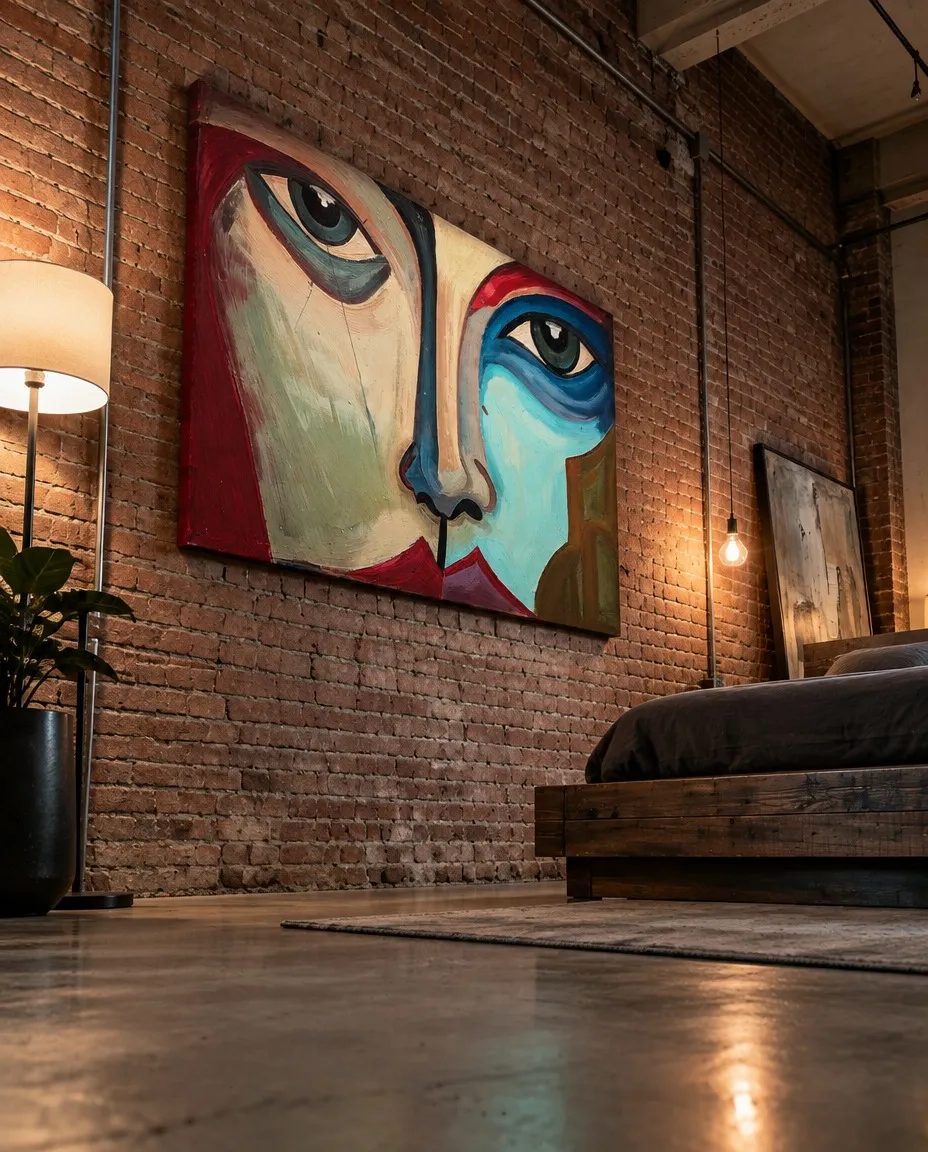
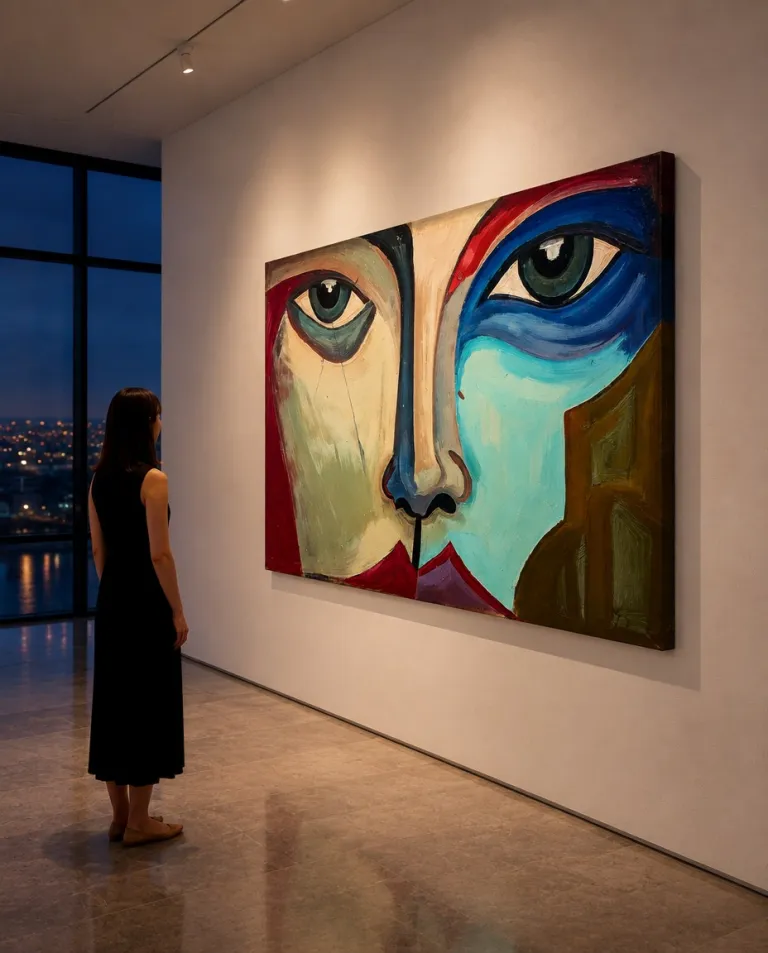
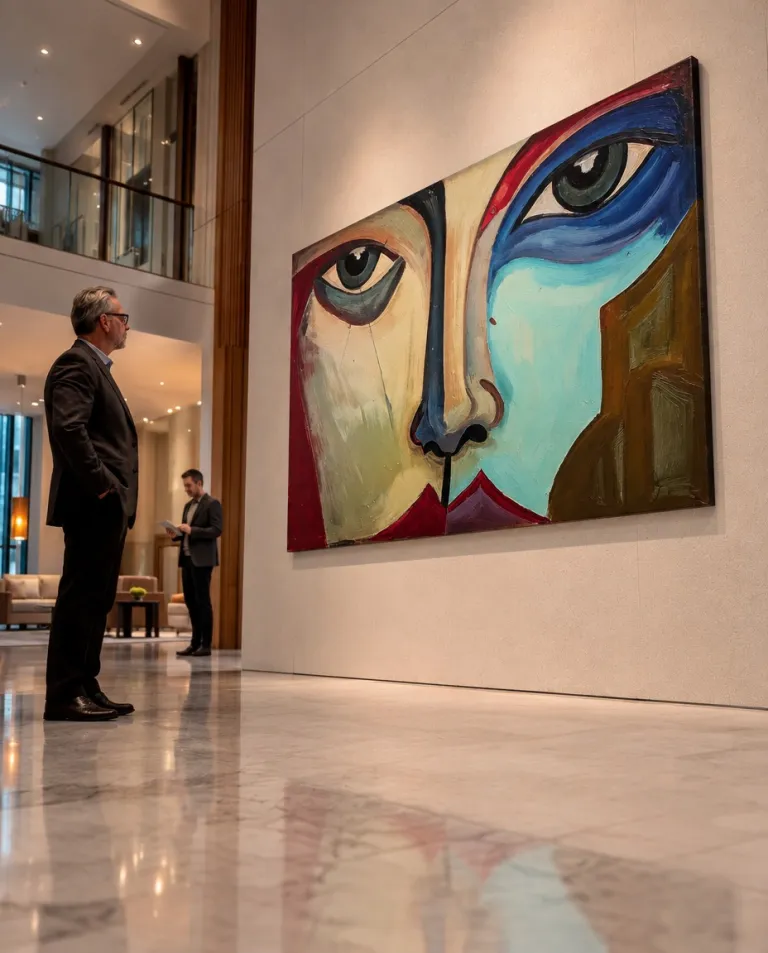
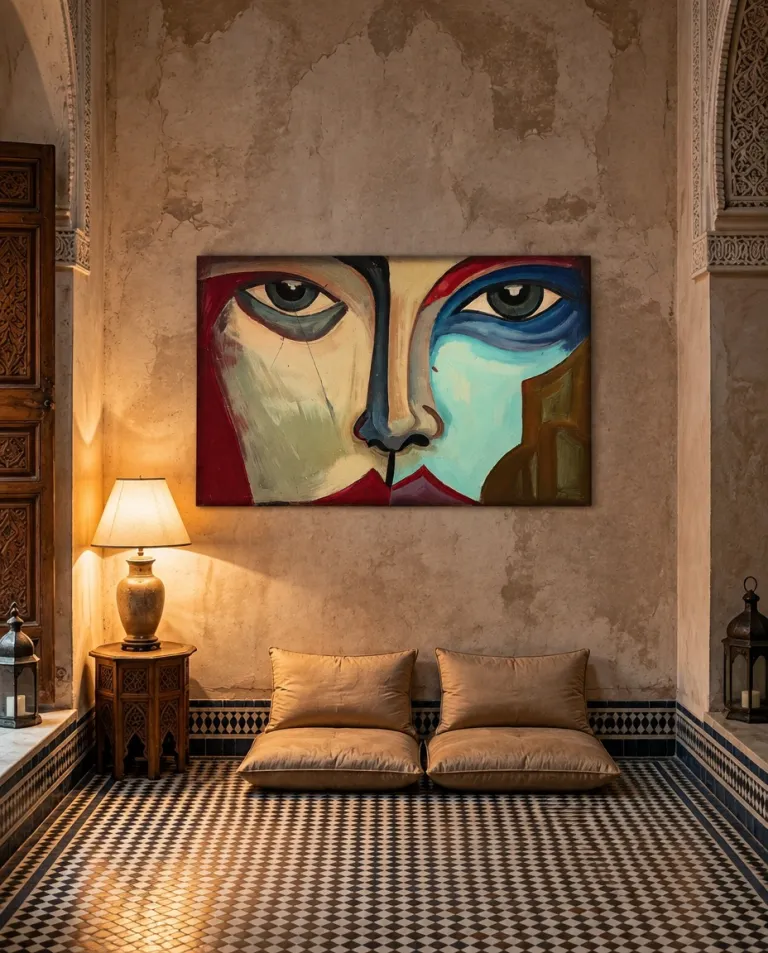
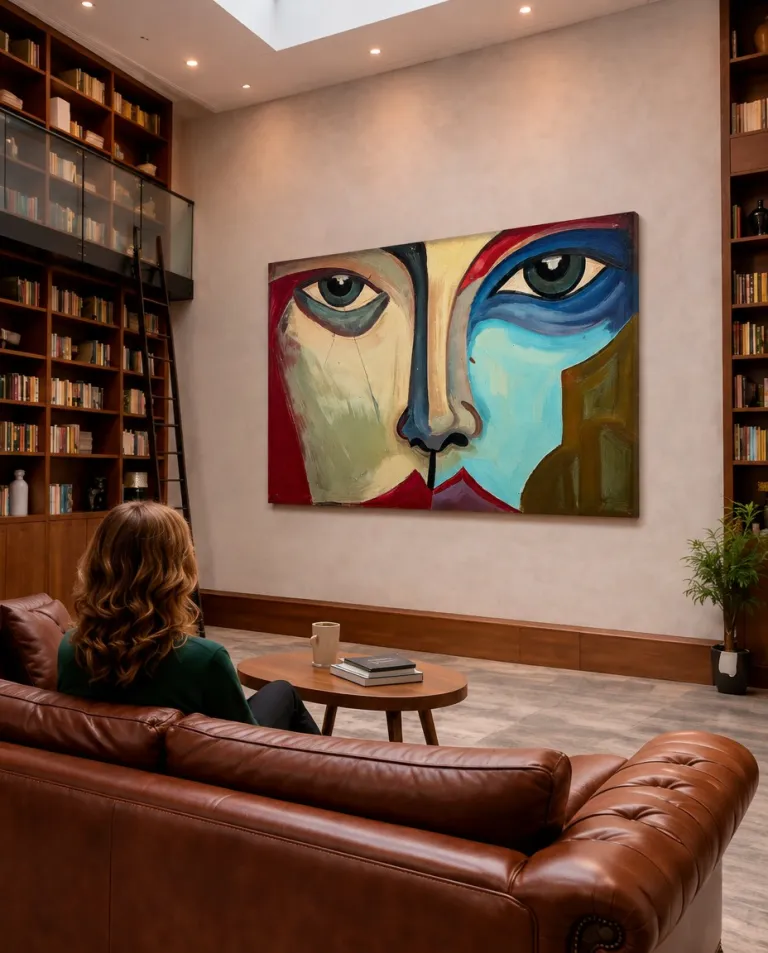
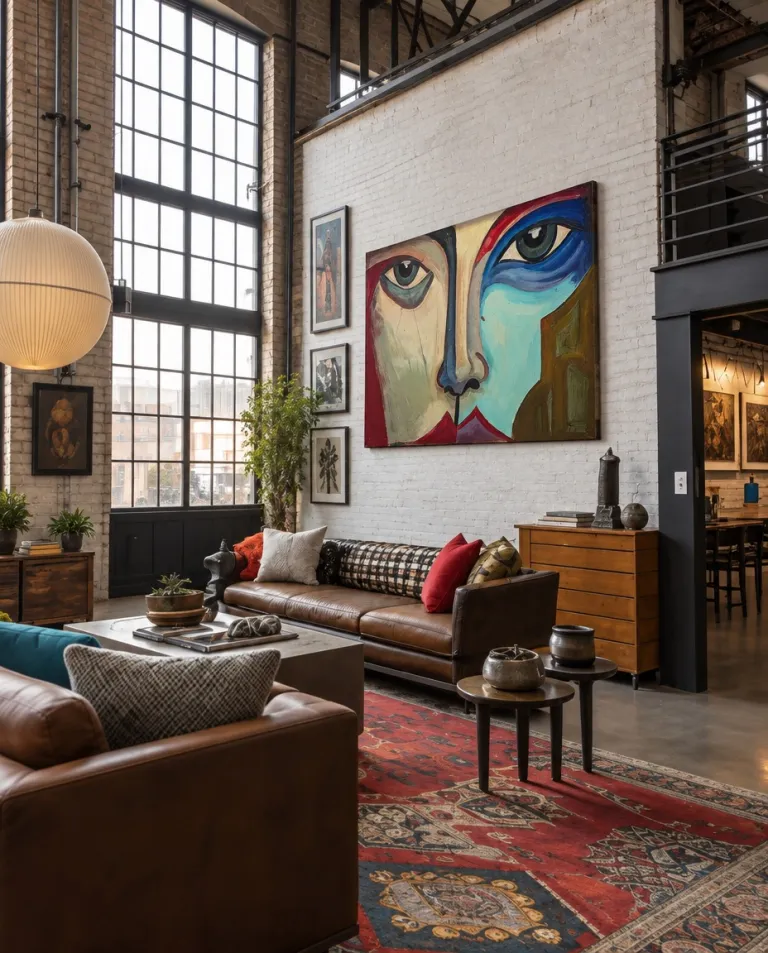
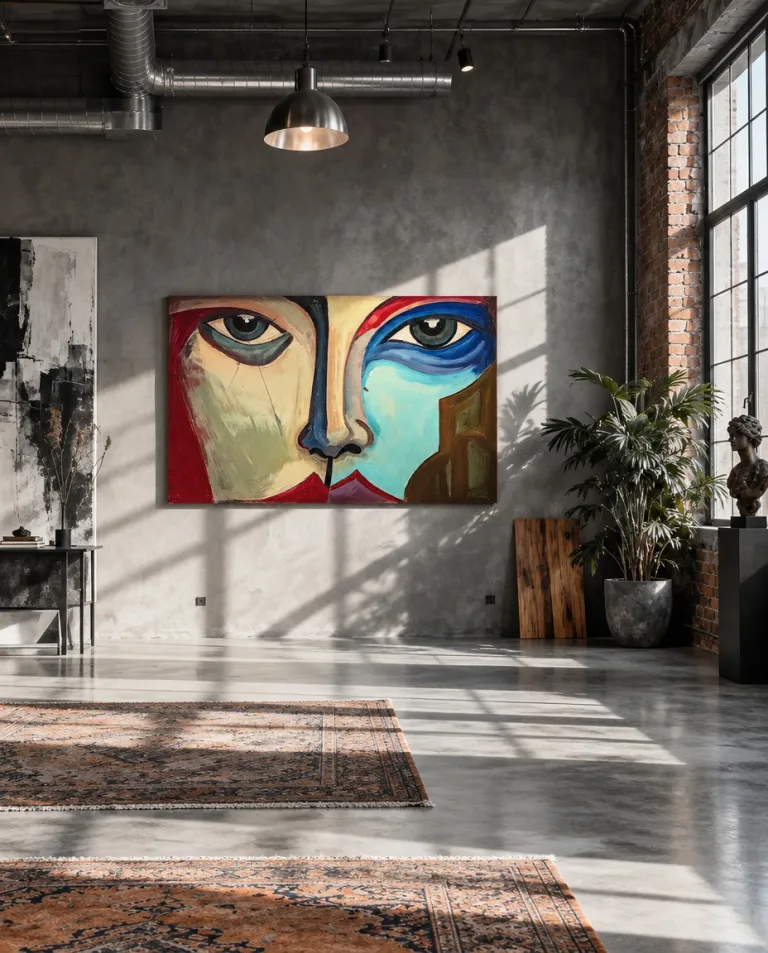
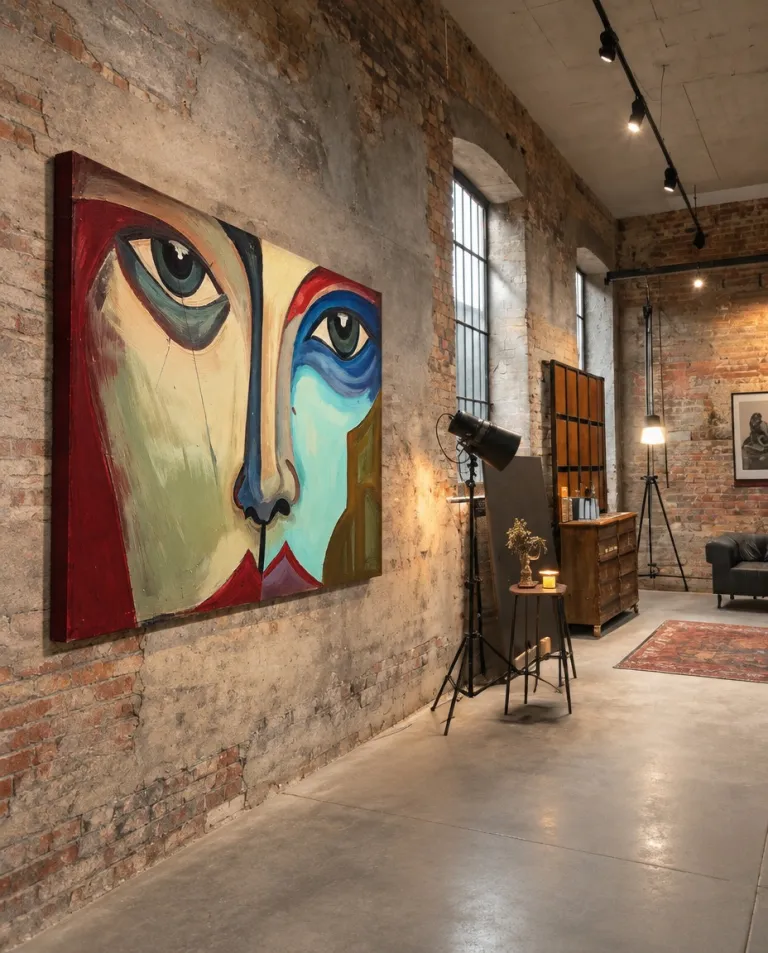
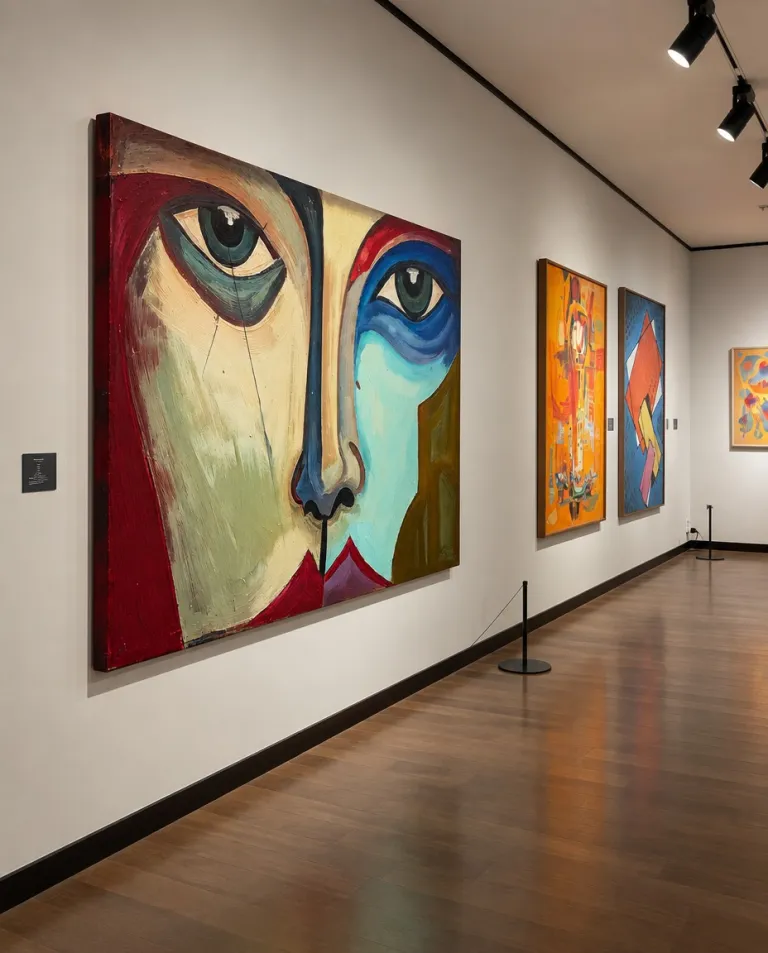
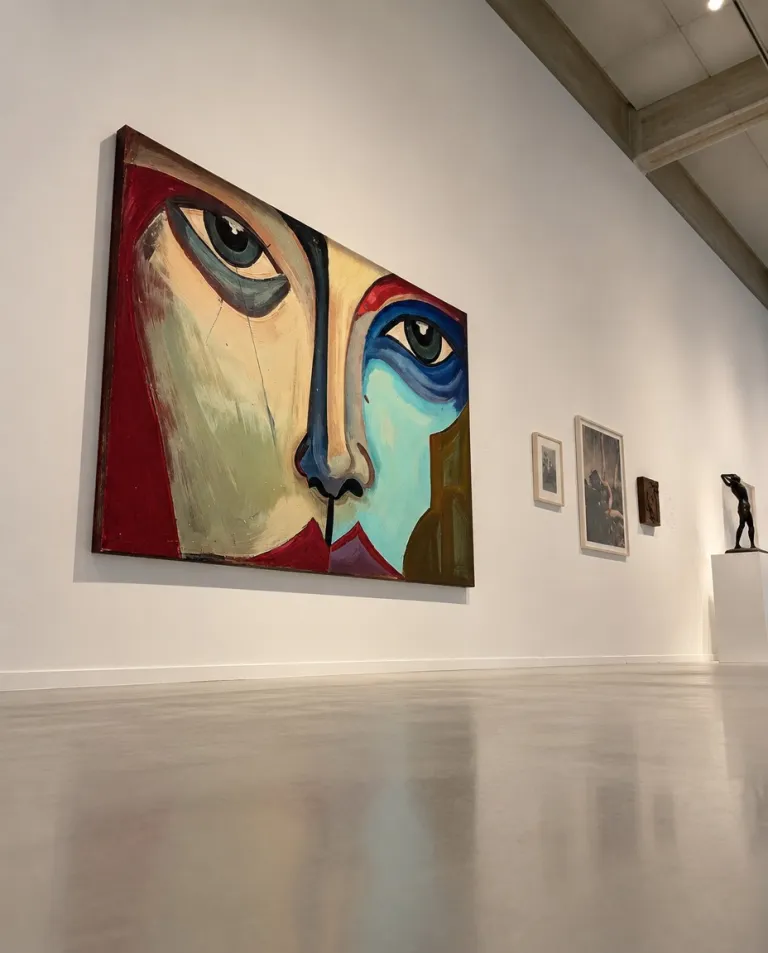
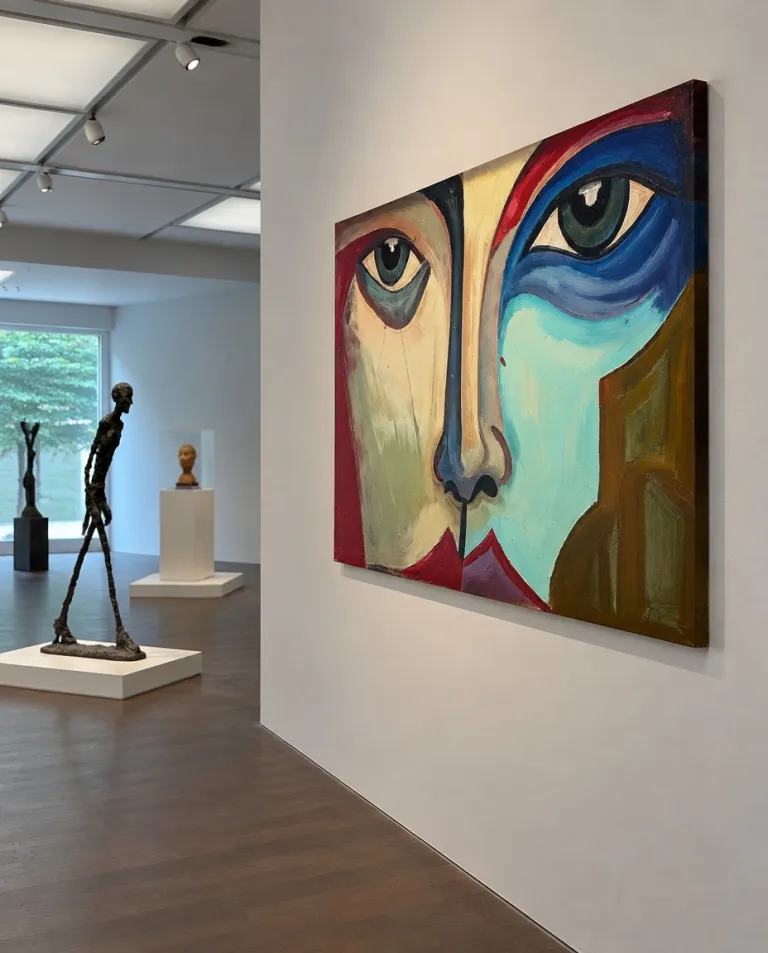
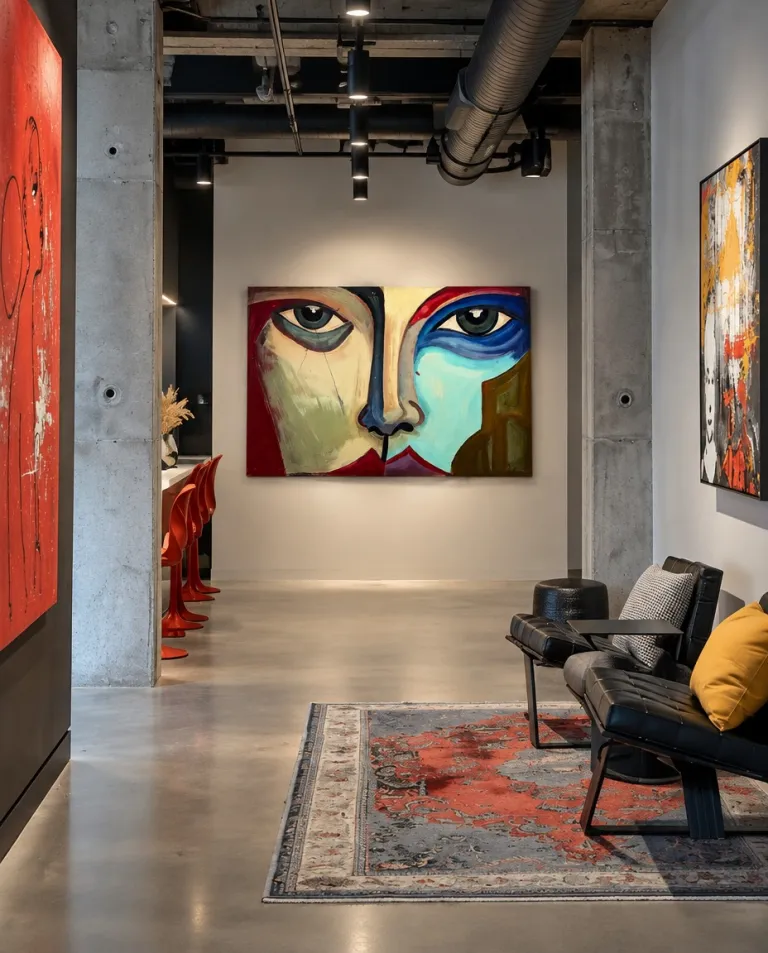
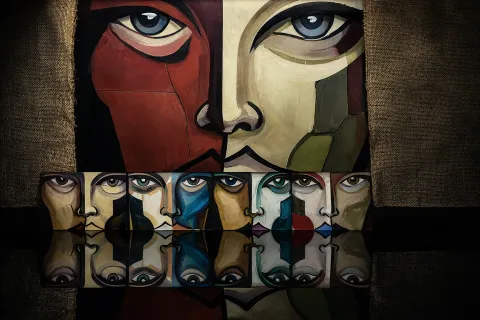
Fragmented face between two fields of colour
- Size
- 82.7 × 55.1 in / 210 × 140 cm
- Series
-
FACIES
 Painting series
FACIES
The «FACIES» series by Maurizio Valch explores contemporary abstract face painting. These works, realized in acrylic and oil on canvas, present structural art of fragmented faces, where identity emerges as an evolving surface – a visual coexistence of forms, gazes, and silences. View series
Painting series
FACIES
The «FACIES» series by Maurizio Valch explores contemporary abstract face painting. These works, realized in acrylic and oil on canvas, present structural art of fragmented faces, where identity emerges as an evolving surface – a visual coexistence of forms, gazes, and silences. View series
- Context studies
- 12
Conceptual Note
Uneven blinking experiment
Cover the left half of the image with your left hand. Do not hide it entirely: let the edge of your fingers brush against the dark band that descends between the eyes, crosses the nose, and seems to sink into the mouth. Take one breath. Remove your hand and cover the other half. Notice whether your breathing changes, whether your face involuntarily moves closer to the surface, whether the size of the eyes makes you adjust your distance. This is not about deciding which half is more beautiful or more unsettling. It is about testing whether each eye seems to demand a different body in order to be seen. When you uncover the complete image again, a suspicion arises: perhaps you are not only the one looking. Perhaps the face is rehearsing two incompatible ways of attending to you.
First, the left side. Cover the blue, the turquoise cheek, and the construction at the edge. What remains is dark red, ochres, veiled greenish tones, and the heavy-lidded eye. The painting no longer looks exactly like a face: it looks like a surface that has had to learn to hold a gaze within a zone of friction, accumulation, and murky glazing. The fine diagonal crack does not cut cleanly; it moves forward like a doubt that has found a direction. It descends from near the eye and lingers on the cheek, where the thick surface retains scratches, shifts of pressure, and small visible accidents. This eye does not keep watch. Nor does it rest. It seems to have arrived late to something that occurred within the image itself and is still trying to find out why it remains there.
Paul Klee was an artist capable of treating a line, a colour, or a figure as though they were alive, thinking and playing with one another. From that suspicion, the crack ceases to be a still mark: it rehearses an escape. The red at the left edge seems to lean toward the eye without conquering it; the greenish tone beneath the lid retreats, as if it did not want to be seen; the central dark line has abandoned its duty of separating forehead, nose, and mouth, and attempts to order, divide, or stitch together two worlds that accept no common law. Klee would not allow it to be called merely a contour. He might say that the band has acquired ambition: it does not want to describe a face; it wants to administer the conflict between two faces occupying the same plane.
When I pause before this surface, I do not feel that the face remains where I left it. I try to approach it as someone who recognises an image, but something in the dark axis resists and shifts my attention. Sometimes I think I control the distance; then I discover that the painting is what forces me to step back or lean in. I cannot decide whether the division contains the face or whether the face has formed around a division that no longer obeys me.
Now cover the left side. The change is abrupt. The right eye does not look out from the same kind of time. Its blues accelerate: they trace the eyelid, curve, move from an almost marine darkness into lighter bands, and spill across the turquoise cheek. There, the paint does not settle in the same way as on the opposite side; it seems to extend a quicker, more exposed attention, almost too awake. This eye is larger, or at least it occupies greater authority. Its pupil does not offer a story. It offers presence.
Jane Goodall is a primatologist whose patience in observing non-human lives transformed the idea of what it means to attend to another being. Her discipline requires us to slow down. It is unwise to immediately call what occurs in the blue eye an “expression.” An expression may be a hurried reading by the observer; vigilance may be the habit of possessing through sight; a gaze, by contrast, may be a bodily state that need not become a message. Before this right side, the image seems to learn how to look from a condition different from that of the left eye: with greater openness, less shelter, and a mobility that does not amount to calm.
Goodall would set a limit on Klee. Not every line that seems to act is alive like a creature; not every chromatic inclination has intention; not every form needs a desire in order to demand attention. Before animating the crack, before attributing plans to the blue, one would need to remain beside them. To see whether they truly change, or whether it is the observer’s body that changes while looking at them. But Klee would return the objection: why seek a coherent creature behind appearance? Why ask this face to bring its eyes together under a single behaviour, as though unity were proof that something lives?
A child might ask: if the blue eye blinks, does the brown thing on its cheek remain in darkness, or does it open a gaze we cannot see?
The question takes time to become visible because, at first, that form at the right edge looks like nothing more than an interruption. Then, on closer looking, it resists easy naming. It has brown planes, dark areas, angles that advance and recede. At times it appears as a volume inserted into the face; at times as a part of the face that has closed in upon itself; at times as an arrangement of walls without a building, an interior without an exterior. Its upper edge brushes against the blue, but does not belong to it. Its base touches the mouth and chin without becoming a jaw. It is there like an object that refuses to be an object.
The construction changes the initial question. It is no longer only a matter of what creature appears when a face fails to bring together its two ways of looking. It is also a matter of what kind of observation needs to settle inside a cheek for that division to hold. Klee would want to let the brown mass move: a folded room that has decided to approach the eye, a line that has accumulated shadow until becoming volume. Goodall would call for caution: calling it a room too soon might be a way of domesticating it; calling it shelter, enclosure, house, or door might turn a material resistance into a reassuring story. None of these words manages to remain on its surface for long.
I cannot turn that brown area into an explanation without losing some of its weight. I recognise it as an interruption, and yet I also feel that the face needs it in order not to close completely. Klee might give it too much life; Goodall might demand a behaviour it does not possess. I only notice that, when I look again at the right eye, the construction no longer seems to lie beneath it: it seems to have entered its attention and to return it from a place I had not anticipated.
Open both sides again. The third image does not reconcile the preceding two. Red does not become equivalent to blue; the crack is not healed by the central axis; the red mouth, divided into planes that nearly touch, does not unify the expression. The dark stroke descending across the forehead and narrowing toward the nose now seems less a boundary than a vertical pressure: it sustains the separation and, at the same time, prevents the halves from moving entirely apart. It does not stitch. Nor does it cut completely.
Return to the left eye. The crack is no longer only in its cheek: it seems to have learned to head toward the centre. Then return to the blue eye and the brown mass beside it. That mass neither quite grows nor withdraws. It remains as a small construction that perhaps observes, perhaps obstructs, perhaps slowly learns to have a face without ceasing to be the part of the image that no face can contain.