Published work / VORTEX
HELIX
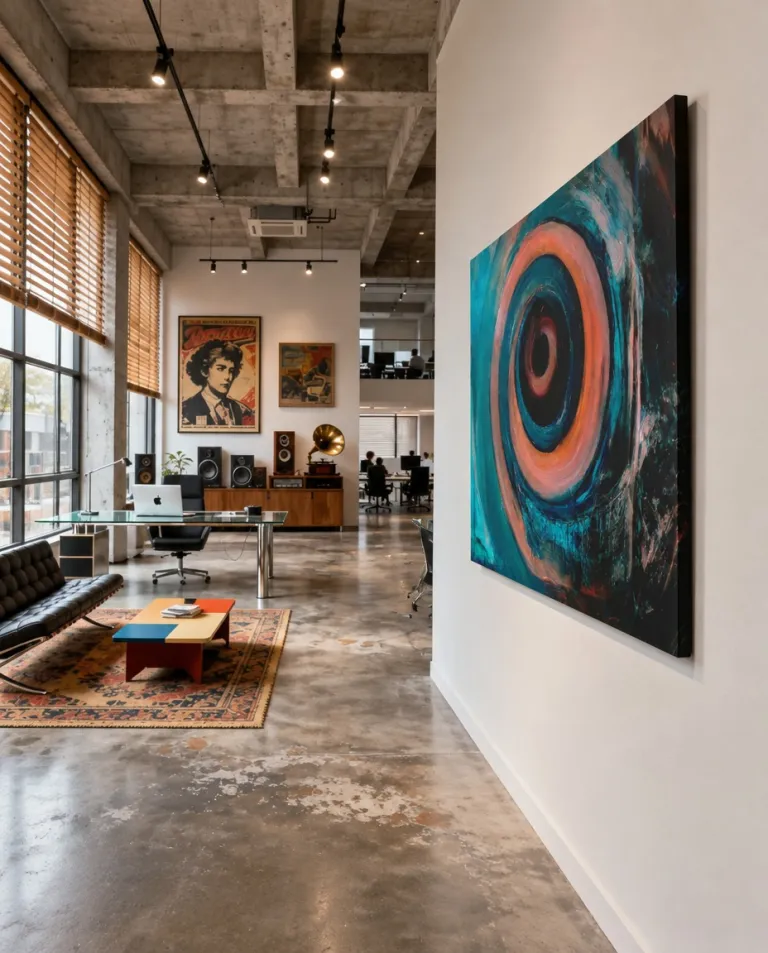
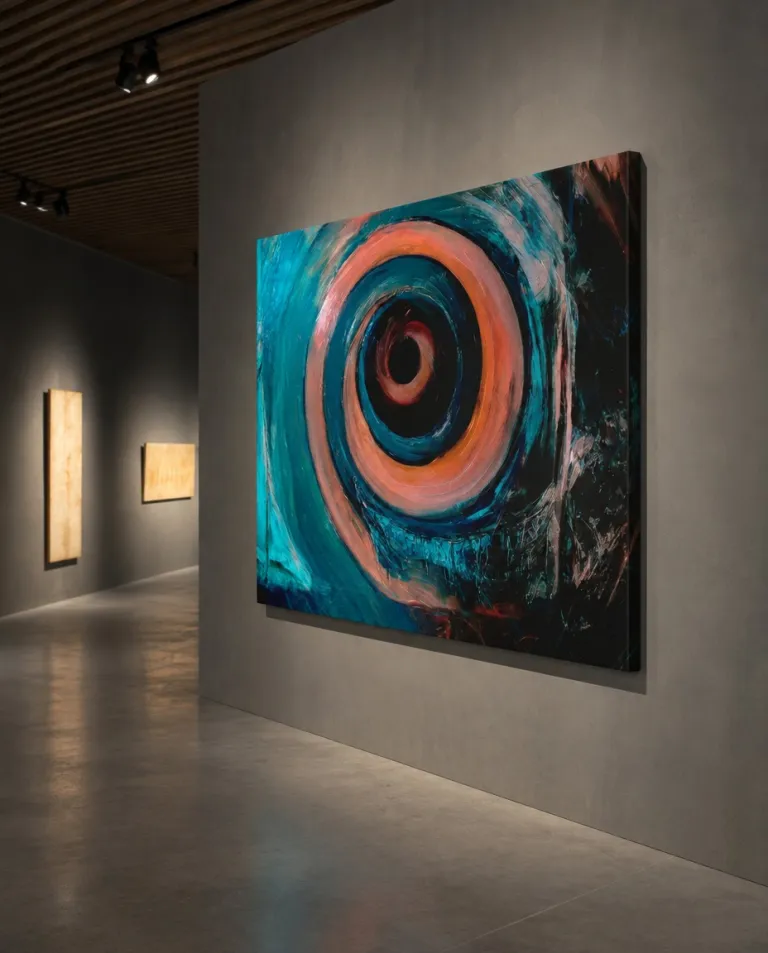
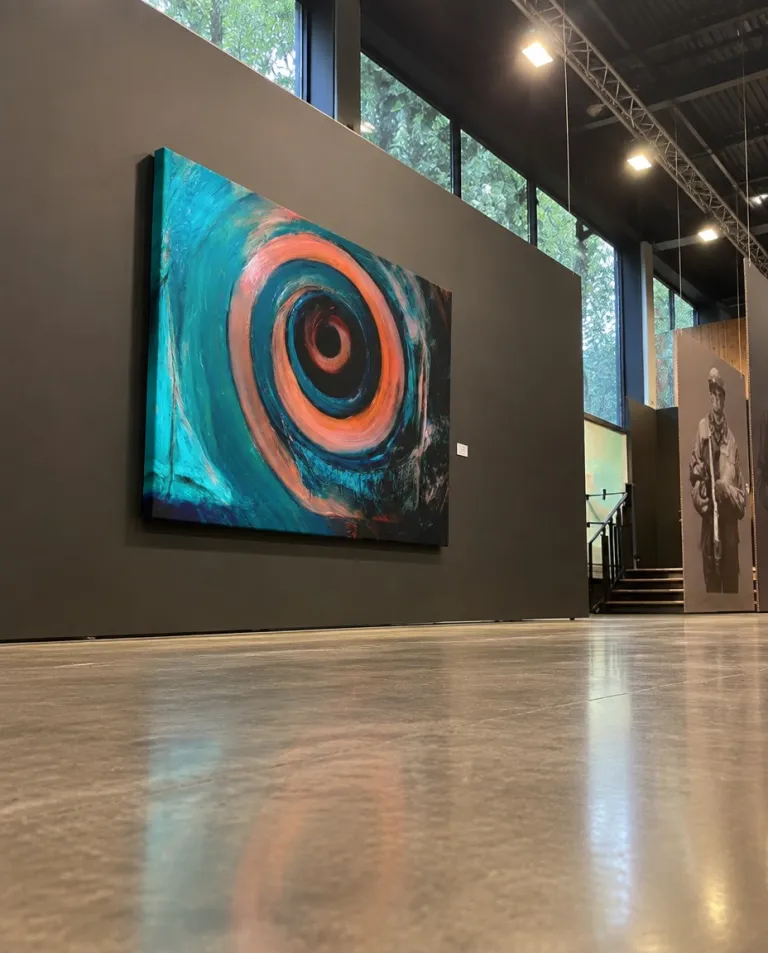
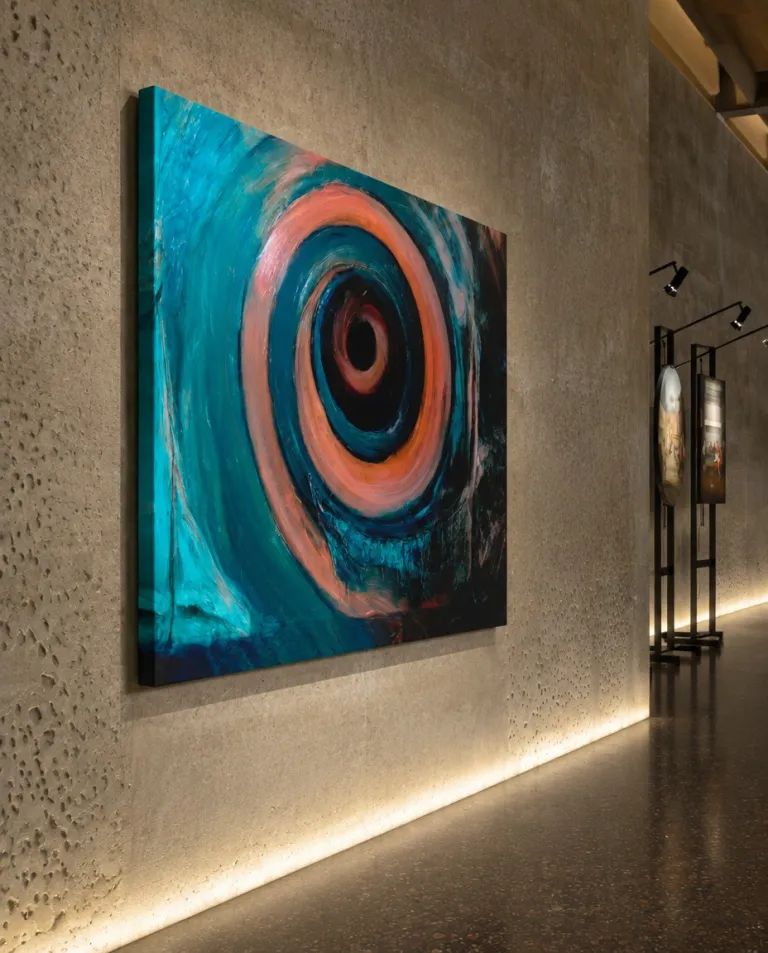
From the VORTEX series: Dynamics of Attraction and Matter
- Size
- 82.7 × 63 in / 210 × 160 cm
- Series
-
VORTEX
 Painting series
VORTEX
The Maurizio Valch VORTEX series presents an original contemporary abstract painting on canvas. These works, executed in acrylic and oil, explore the dynamics of attraction and transformation through concentric forms and distinctive material textures, creating a visually powerful space. View series
Painting series
VORTEX
The Maurizio Valch VORTEX series presents an original contemporary abstract painting on canvas. These works, executed in acrylic and oil, explore the dynamics of attraction and transformation through concentric forms and distinctive material textures, creating a visually powerful space. View series
- Context studies
- 12
Conceptual Note
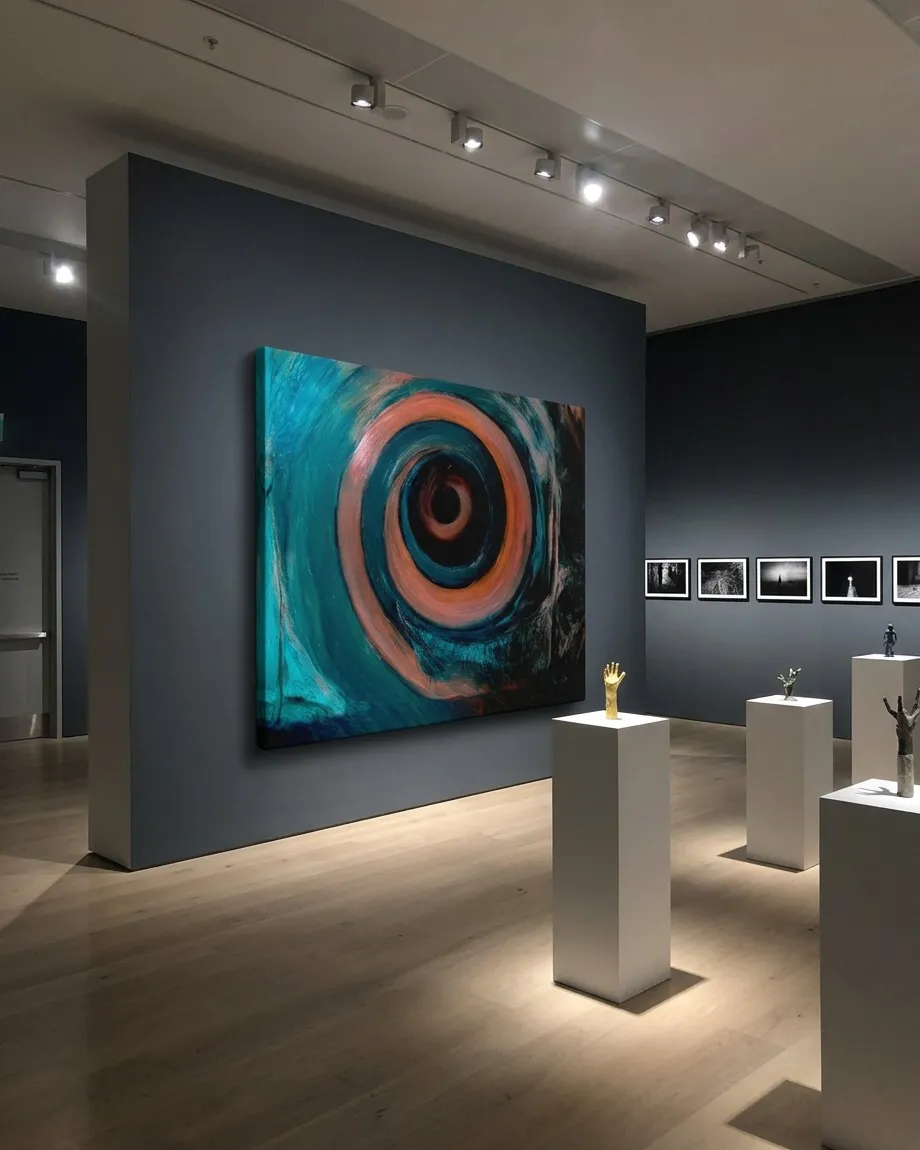
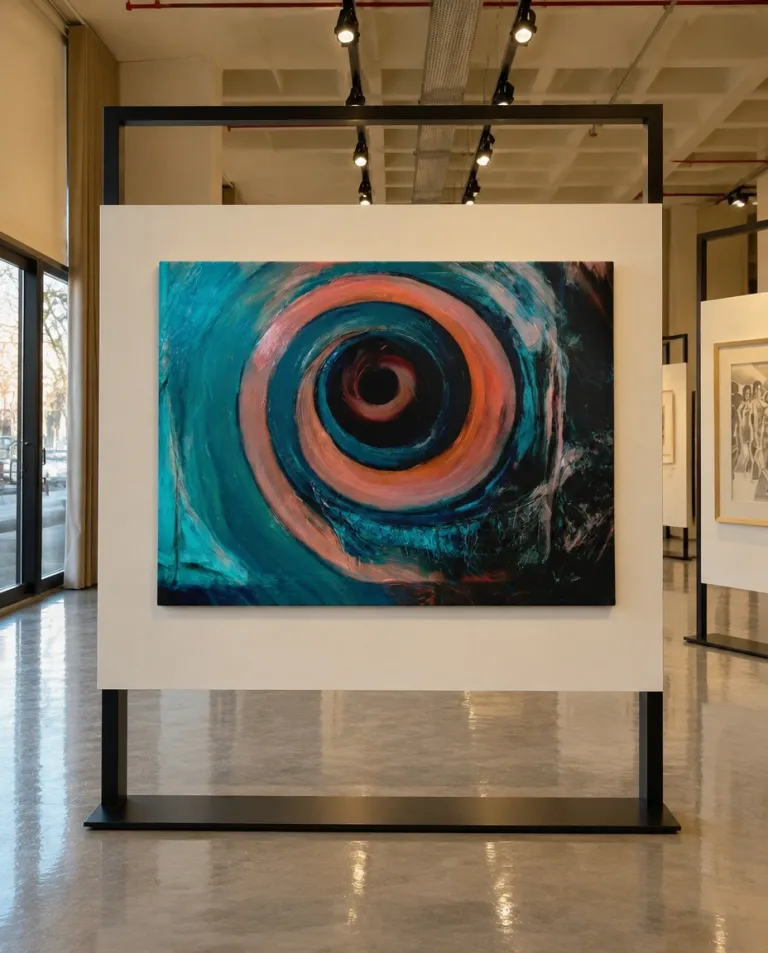
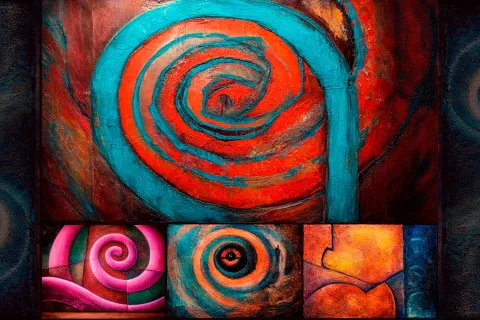
HELIX, a large-format piece belonging to the VORTEX series, marks a decisive turning point in Maurizio Valch’s pictorial practice. While his previous inquiries in series such as PRIMORDIUM or STRATA were organized through stable horizons, orthogonal divisions, and terrestrial sedimentations, this work introduces a circular dynamism that transforms the concept of territory. Here, space no longer functions as a passive or horizontal ground, but as a surface subjected to a centripetal and centrifugal force, where the pictorial matter folds back on itself to question the mechanisms of attraction and change that govern both the outer landscape and the internal structures of experience.
The work poses a fundamental question about the stability of form: at what point does a consolidated territory yield to a force that disorganizes and forces it to reconfigure? HELIX proposes a constant tension between the order of the circular structure and the imminent fracture of its worn edges. By placing a dark void at the core of the rotation, the piece eludes any definitive answer regarding the origin or destination of this movement. We are not witnessing a chaotic scene, but rather a material negotiation where the accumulation of pigment resists the inertia of the spin, turning the canvas into a threshold of transition where what is concentrated is, at the same time, on the verge of dispersing.
This articulation of dynamic forces allows Valch to engage in a critical dialogue with key figures of material abstraction. While the painting of Alberto Burri works the tension of matter through sutures and cracks that halt the accident, in HELIX the accident is absorbed by a continuous rotational structure. Likewise, unlike the blocked chromatic masses of Nicolas de Staël, which define the plane with architectural firmness, Valch's gesture dilutes the boundaries of color to suggest a liquid geography in constant transition, where the boundary between empty space and accumulated matter remains deliberately diffuse.
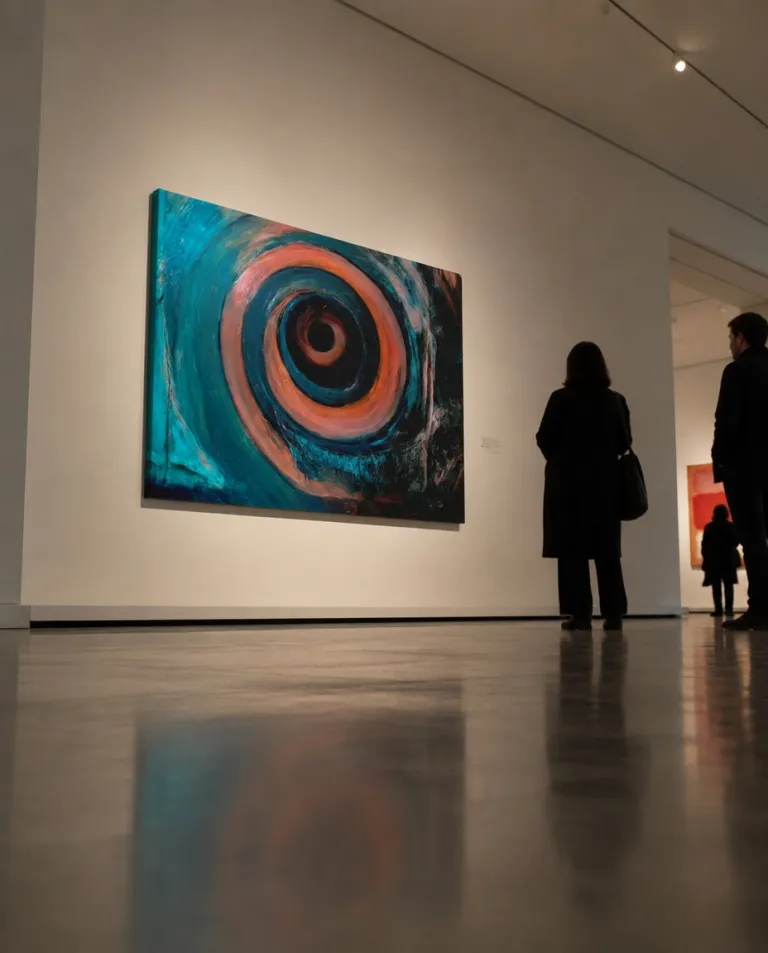
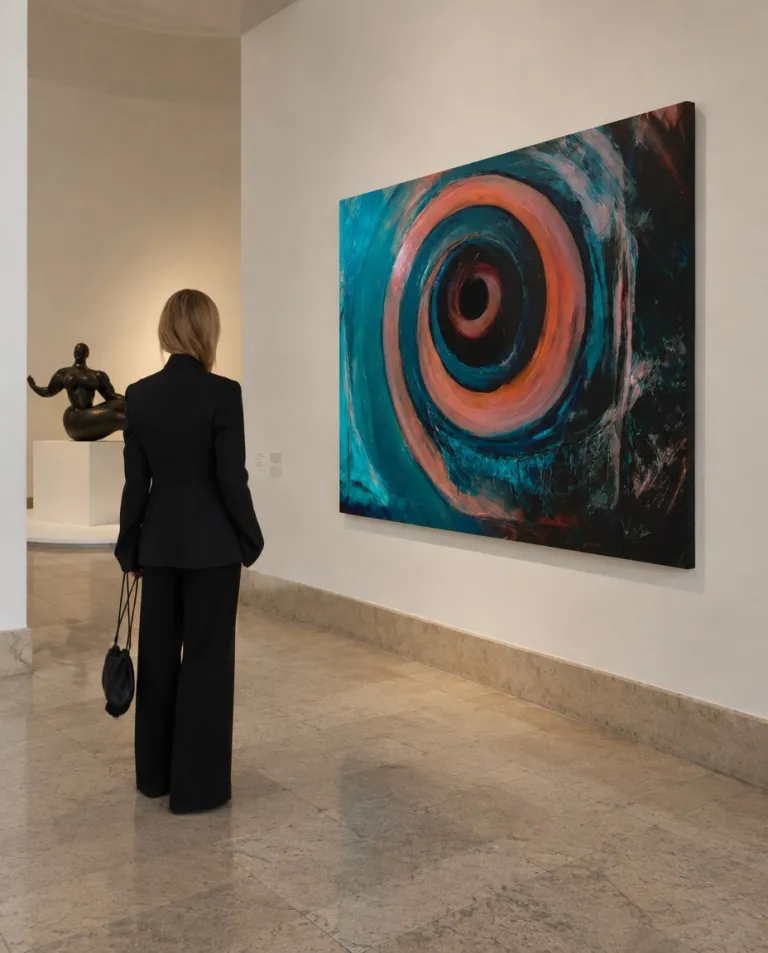
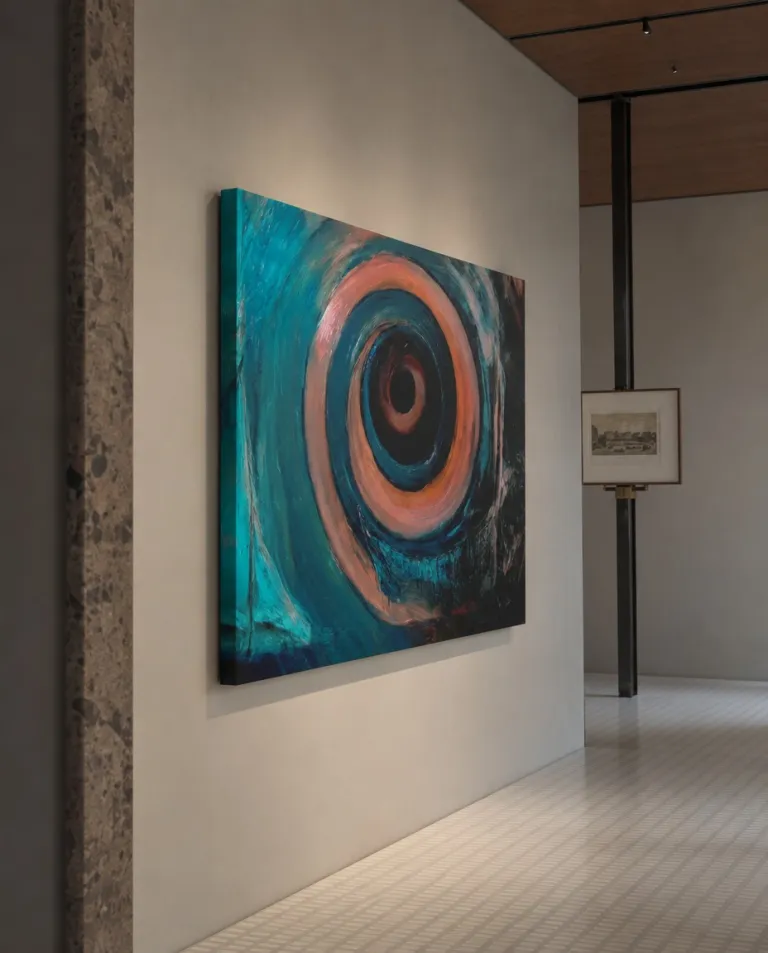
From a visual standpoint, the composition is organized around an imposing spiral that dominates the two-hundred-and-ten-centimeter-wide plane. The intense chromatic contrast between turquoise and coppery tones generates an optical vibration that accentuates the sensation of volume and thickness. The edges of the ellipse reveal the physical sedimentation process of acrylic and oil: scraping, glazes, and impasto accumulations that build up a rough, almost geological texture. The dark mass at the center, far from being an inert plane, functions as a visual magnet that sucks in the surrounding layers of color, demonstrating that in this painting, the void possesses the same structural weight as the densest matter.
Working on this canvas, I understood that my pictorial search could no longer be sustained solely by the firmness of the horizon or the stillness of the strata I used to trace on the ground. With this work, I seek to enter a dimension where matter does not simply remain, but spins, folds, and disorganizes to reveal its own internal energy. I do not intend to illustrate a storm or an intimate conflict; I am interested in the tension of sustaining a stroke that curves toward the center, stopping just before being absorbed by the void. It is a way of testing the resistance of painting, of seeing how color and texture move across the surface to find an order that does not depend on straightness, but on the honesty of its own movement.