Published work / FACIES
ASPECTUS
Surfaces of Identity
- Size
- 82.7 × 63 in / 210 × 160 cm
- Series
-
FACIES
 Painting series
FACIES
The «FACIES» series by Maurizio Valch explores contemporary abstract face painting. These works, realized in acrylic and oil on canvas, present structural art of fragmented faces, where identity emerges as an evolving surface – a visual coexistence of forms, gazes, and silences. View series
Painting series
FACIES
The «FACIES» series by Maurizio Valch explores contemporary abstract face painting. These works, realized in acrylic and oil on canvas, present structural art of fragmented faces, where identity emerges as an evolving surface – a visual coexistence of forms, gazes, and silences. View series
- Context studies
- 12
Conceptual Note
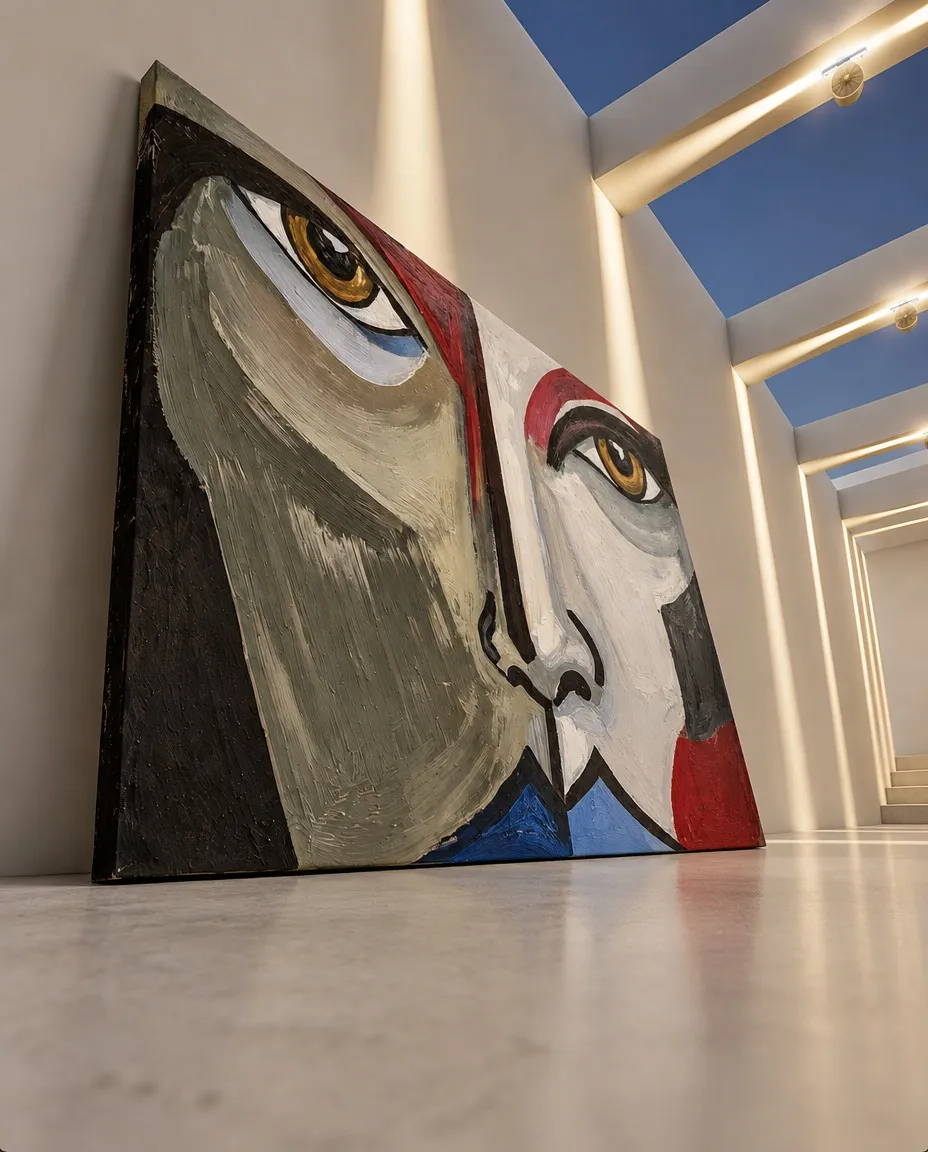
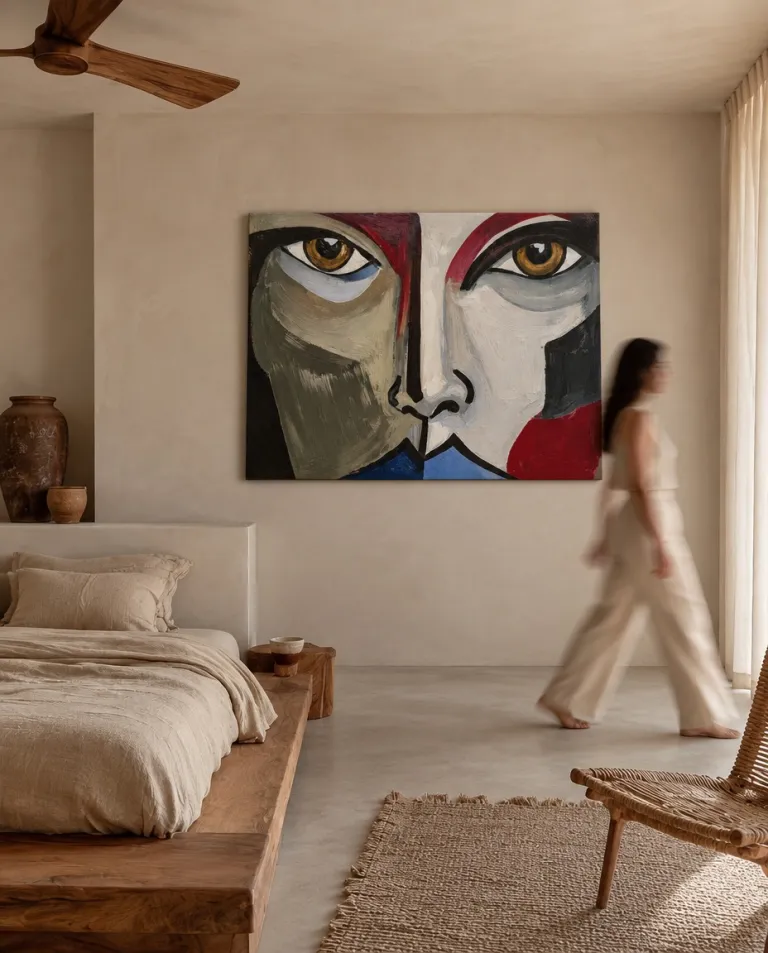
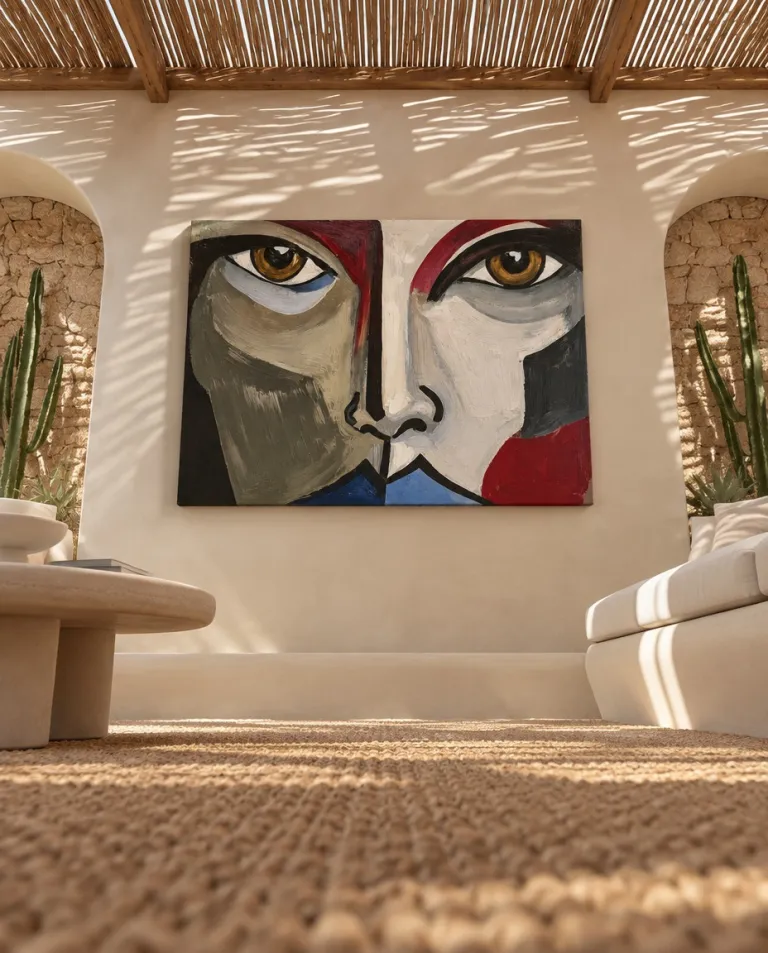
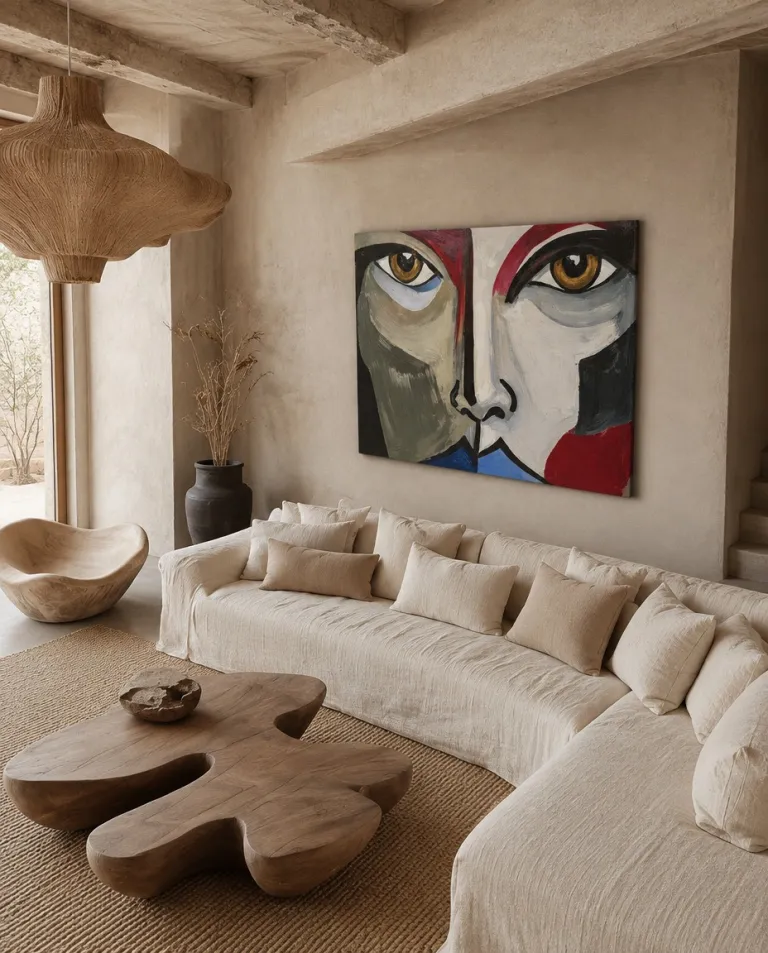
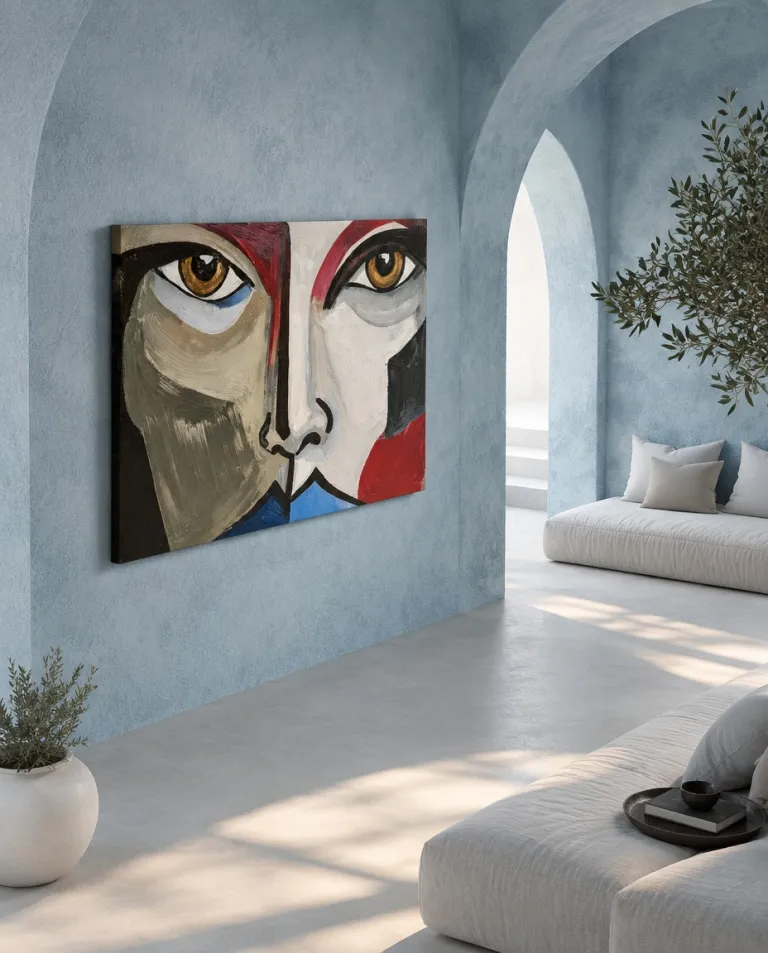
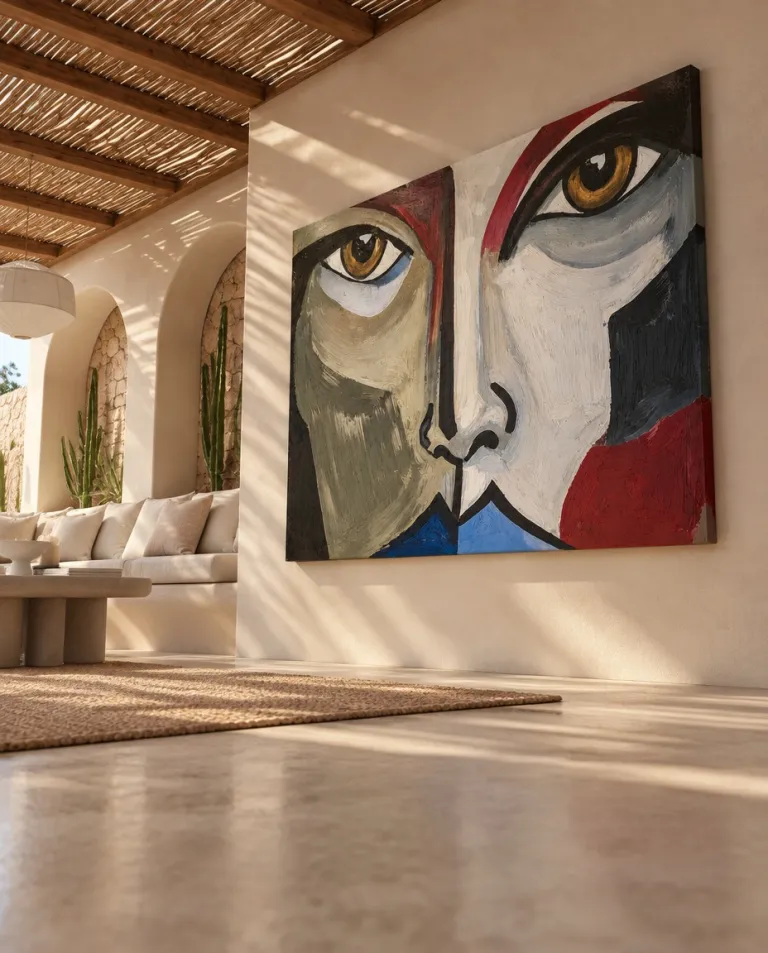
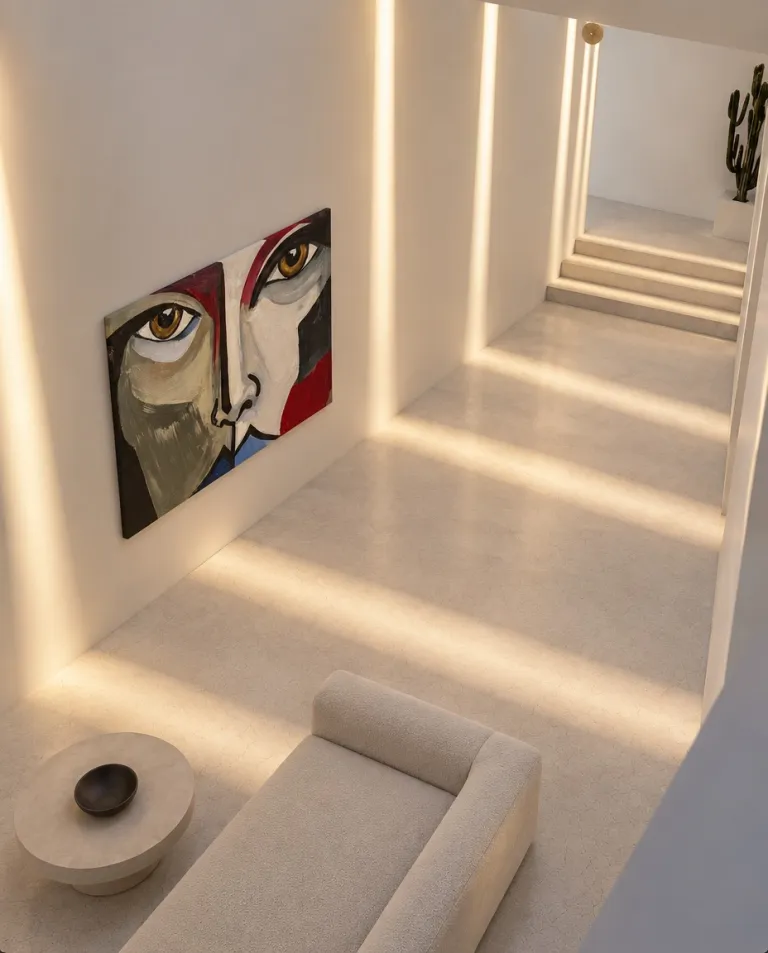
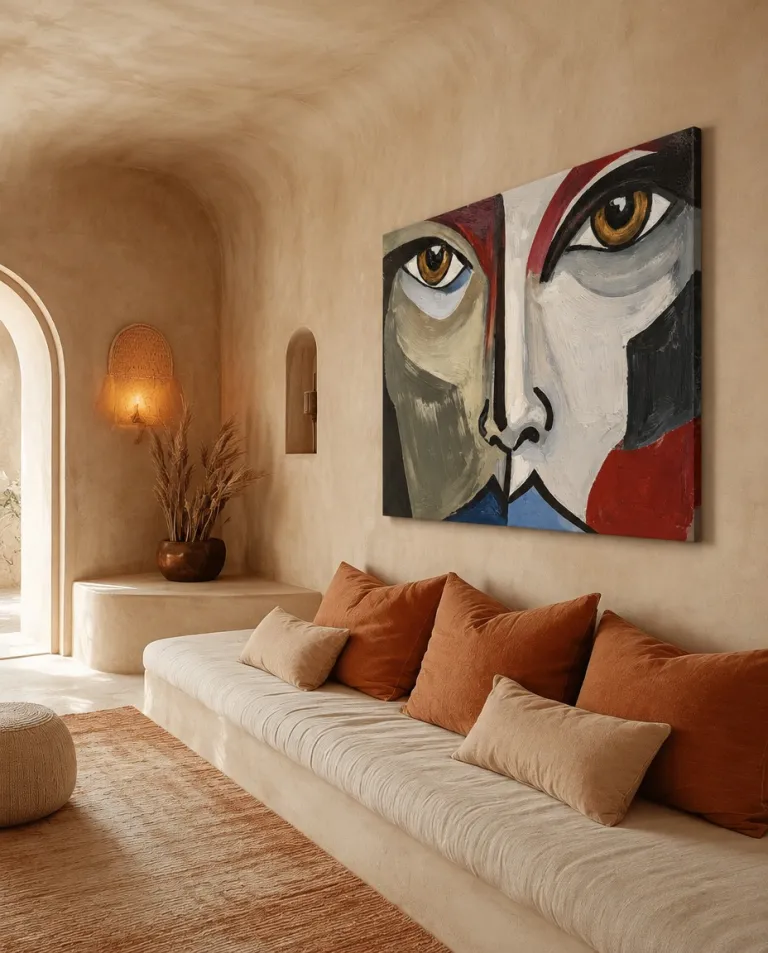
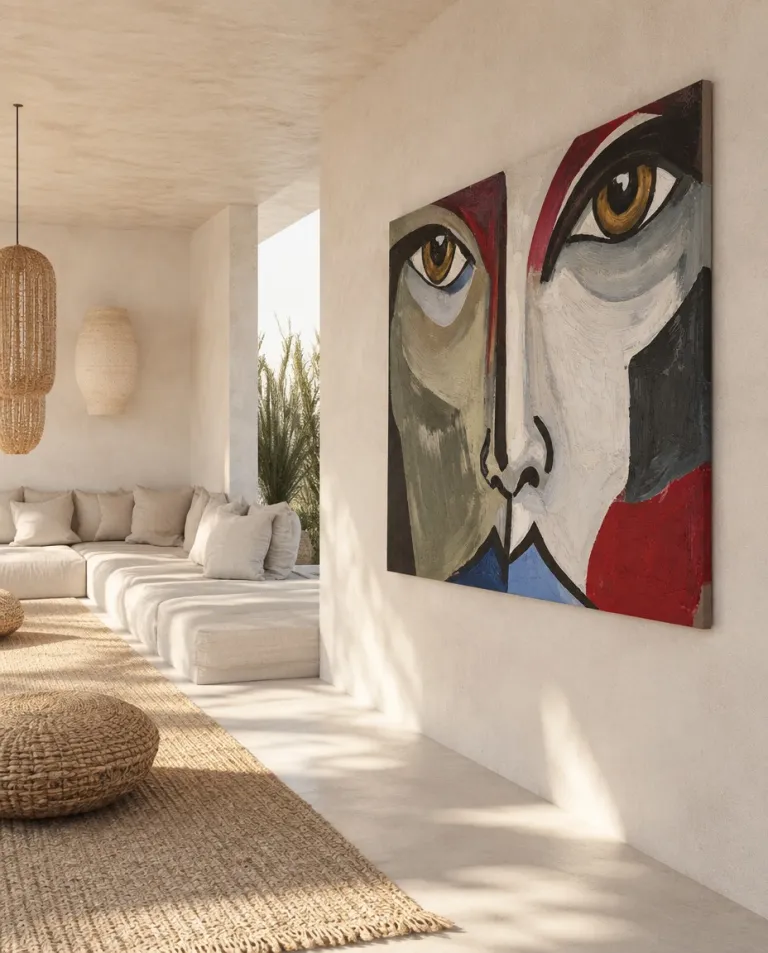
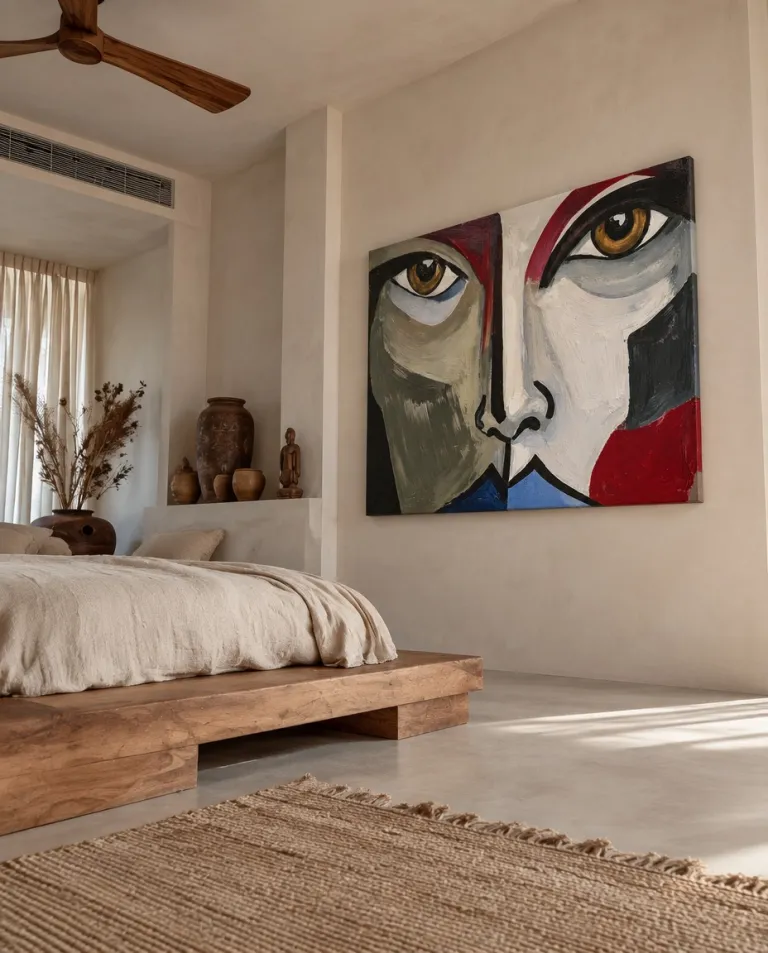
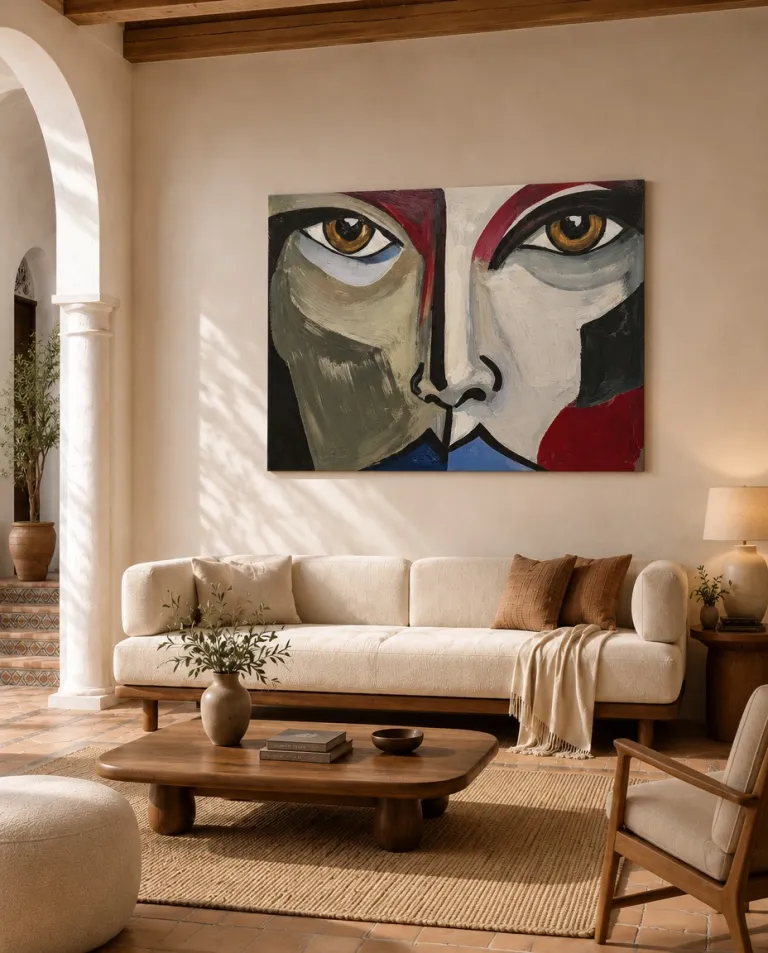
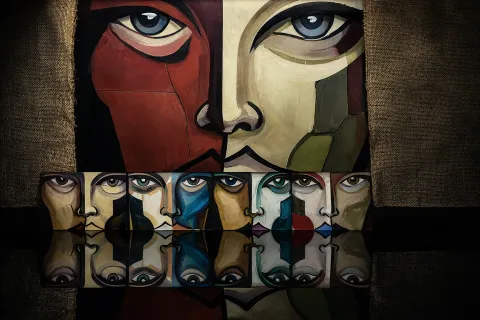
The monumental scale of “ASPECTUS,” measuring 210 by 160 centimetres, asserts a physical presence that exceeds mere two-dimensional representation to become an impassable visual wall. The composition presents a two-sided face dominated by a violent vertical scar that fractures its physiognomy symmetrically yet conflictually. On the left, a shadowed cheek in earthy, greenish tones evokes the density of organic matter or wet stone; on the right, a cold, marble-like pallor rises beneath the severity of a crimson arch crowning the brow like a mark of contained tension. This formal fracture directly recalls the concepts of the Double and the Persona formulated by the Swiss psychiatrist Carl Gustav Jung, who explored the deep images and structures of the psyche that recur across cultures. Through this lens, the painting’s division is offered not as a mere aesthetic partition but as a fundamental psychological dilemma: it asks whether the central wound acts as a retaining wall intended to keep different facets of the self apart, or whether it is the unstable threshold where two opposing forces coexist, needing one another yet refusing outright to merge.
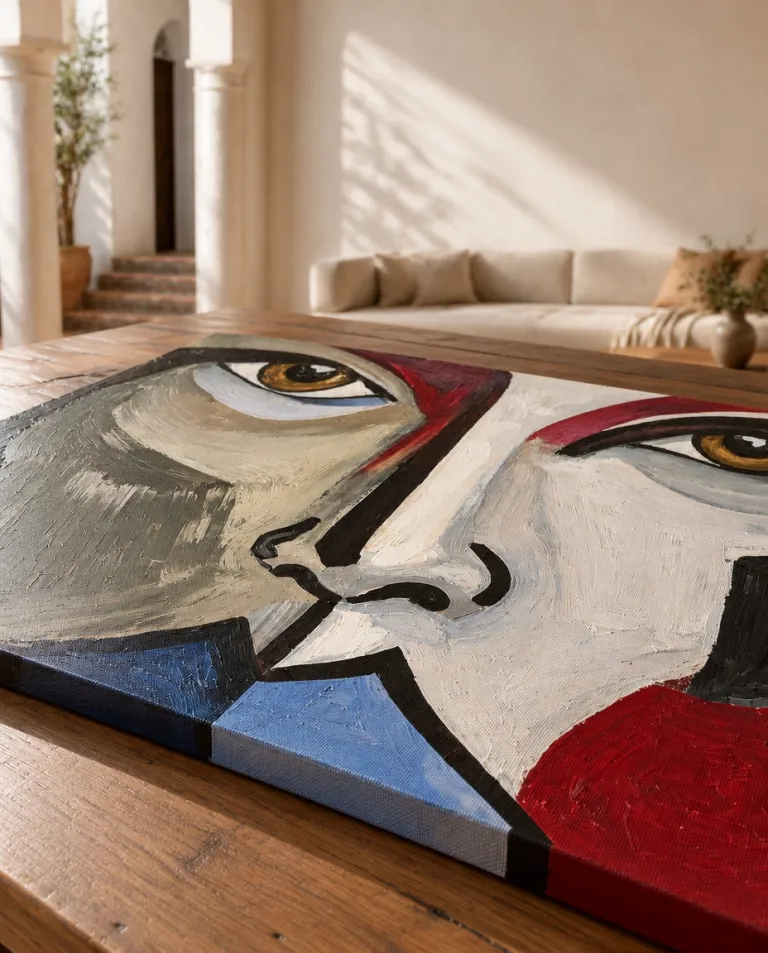
When I face the canvas to construct this face, my interest lies neither in mimesis nor in the pleasing refinement of drawing, but in the accumulation and weight of the painting material itself. The density of oil and the plasticity of acrylic become the tools of an excavation in which each stroke seeks to consolidate a tactile architecture across the surface. The central incision dividing the nose does not arise from a descriptively calculated brushstroke, but from a tectonic intervention: a dry cut that fractures the plane and exposes the painting’s substrate. In my “FACIES” series, I conceive the human face not as the vehicle of an individual or sentimental psychology, but as a Brutalist territory—an abrupt geography in which the palette knife drags pigment to superimpose strata of matter. Each accumulated layer acts as the sediment of a mineral and prehistoric memory, an archaeology of gesture in which colour does not decorate but instead solidifies the existence of a purely physical, weighty structure.
The fixed gaze of “ASPECTUS,” defined by two large amber eyes, halts the viewer’s contemplative drift and compels an unavoidable confrontation. This severe, watchful stillness enters into tense dialogue with the thought of the mystic George Gurdjieff, who questioned the automatism of everyday life and proposed “self-remembering” as a path towards waking from daily inertia. One might ask whether these fixed pupils capture the precise instant in which consciousness abruptly awakens amid its own mechanical functioning, or whether they are the rigid mask imposed by social structure to sustain the fiction of a coherent identity. This latter interpretation resonates with Osho’s perspective on collective repression: a contained tension made visible at the base of the canvas, where geometric blocks of dense blue and muted red exert a constant upward pressure, threatening to overflow and crack the formal rigidity of the upper face that seeks to contain them.
I designed these ochre eyes so that they would not function as the customary window onto a lyrical interiority, but as corporeal volumes that return the gaze with the same material force with which they were painted. Here, the gaze is not a transparent reflection but a physical, volumetric presence within the painting that actively questions the space occupied by whoever pauses before it. In the working process, I seek for the painting to contend between the absolute stillness of stone and the latent threat of an imminent transformation—a collapse on the verge of occurring, yet suspended on the canvas. The silence surrounding this monumental face is the same bare silence I encountered while travelling through the arid Mediterranean landscape, where rock formations and ancient stones seem to observe the passage of time with monumental, incorruptible indifference.
Ultimately, “ASPECTUS” is firmly embedded in Europe’s cultural memory, establishing a formal bridge with the earliest manifestations of Peninsular and Mediterranean figuration. The solidity of its volumes and the schematisation of its features recall both Iberian reliefs carved in stone and the severe funerary masks of Mycenaean civilisation, artefacts conceived not to portray an individual subject but to fix a presence before time and death. By deliberately renouncing realistic, detailed representation, the painting becomes a map of contemporary human fragmentation. The picture ceases to be a window and becomes a broken mirror in which the observer finds not the likeness of a stranger, but the inevitable collision of their own divided identities, reminding them that the unity of the self is only an illusion sustained over an unbridgeable fissure.