Published work / FACIES
La mitad de la mirada
Surfaces of Identity
- Size
- 35.4 × 43.3 in / 90 × 110 cm
- Series
-
FACIES
 Painting series
FACIES
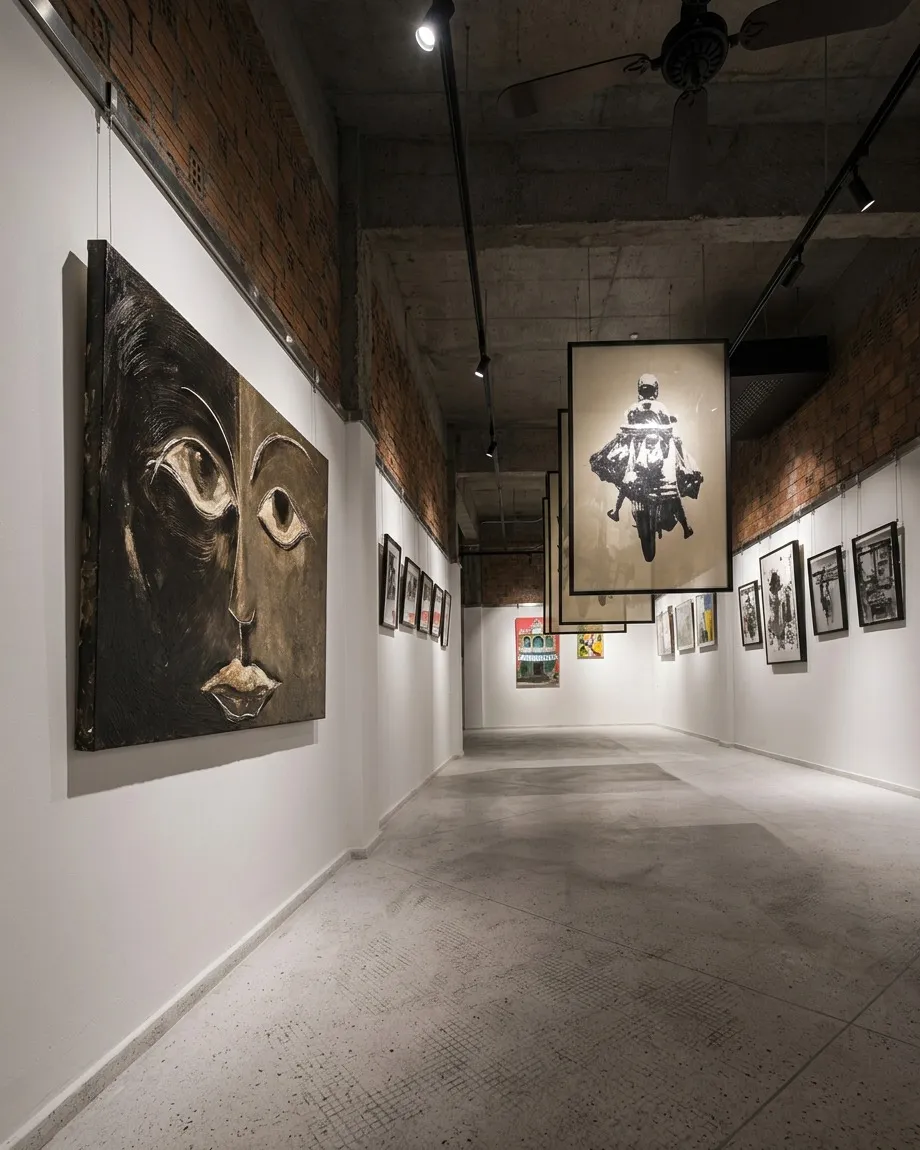
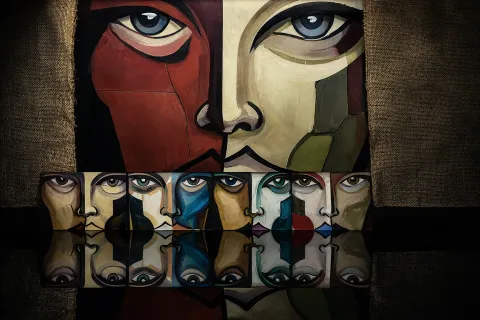
The «FACIES» series by Maurizio Valch explores contemporary abstract face painting. These works, realized in acrylic and oil on canvas, present structural art of fragmented faces, where identity emerges as an evolving surface – a visual coexistence of forms, gazes, and silences. View series
Painting series
FACIES
The «FACIES» series by Maurizio Valch explores contemporary abstract face painting. These works, realized in acrylic and oil on canvas, present structural art of fragmented faces, where identity emerges as an evolving surface – a visual coexistence of forms, gazes, and silences. View series
- Context studies
- 11
Conceptual Note
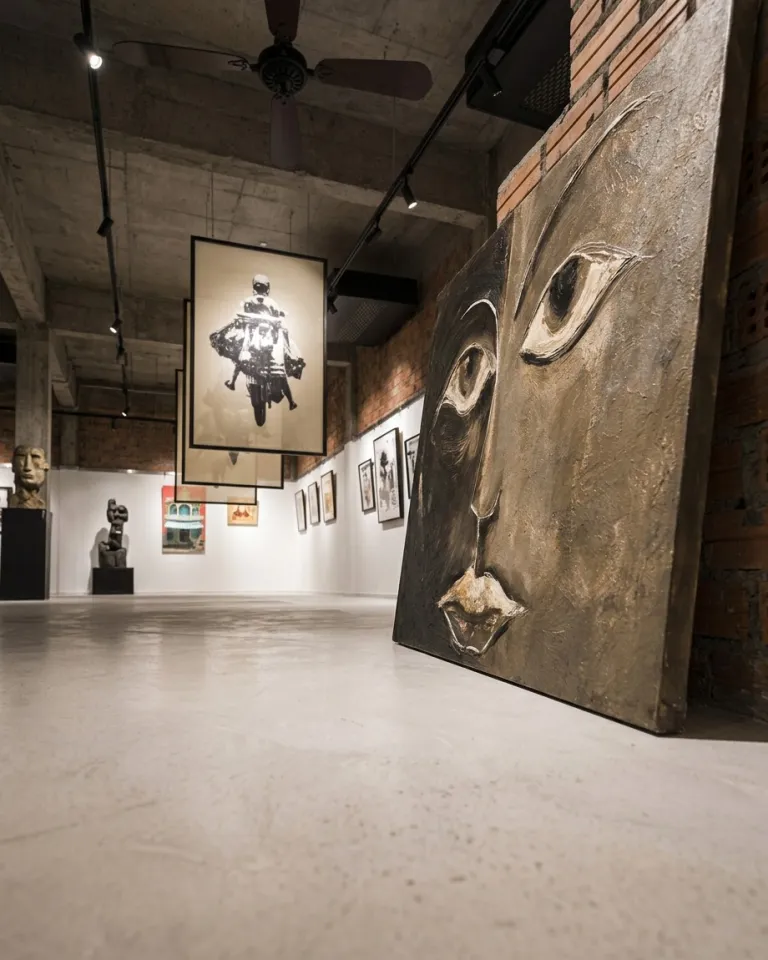
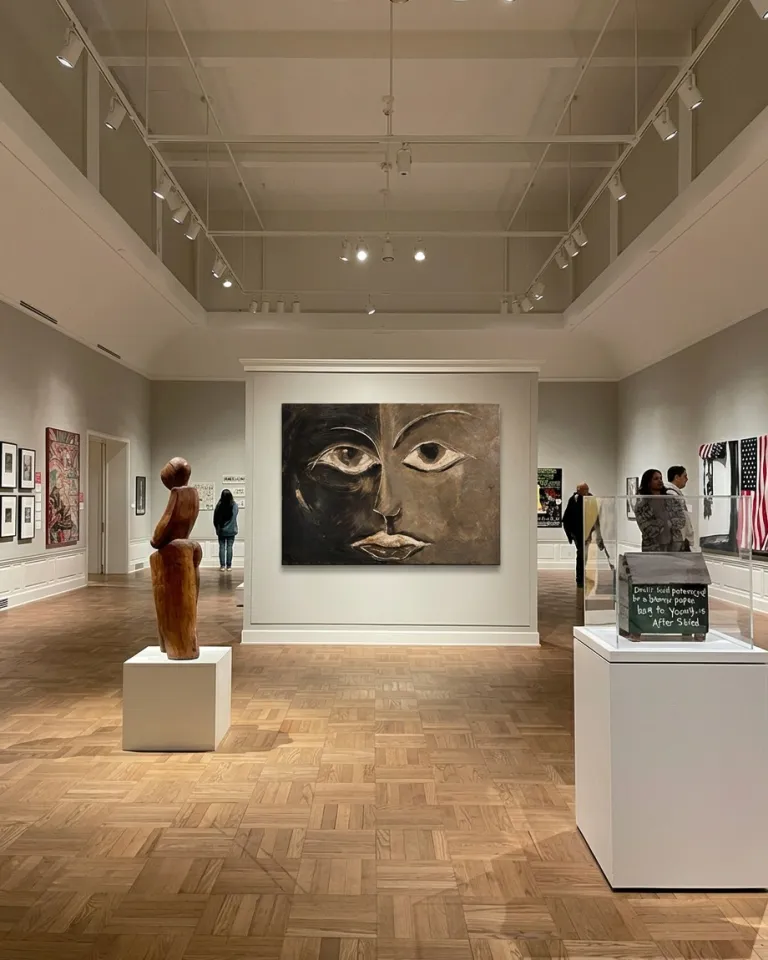
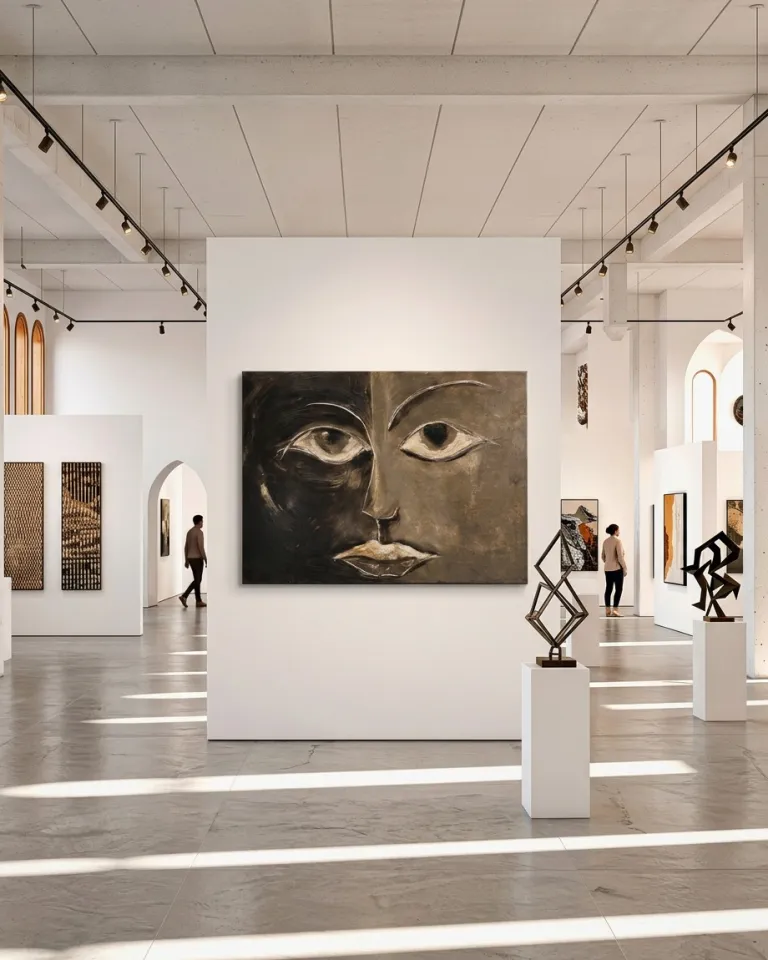
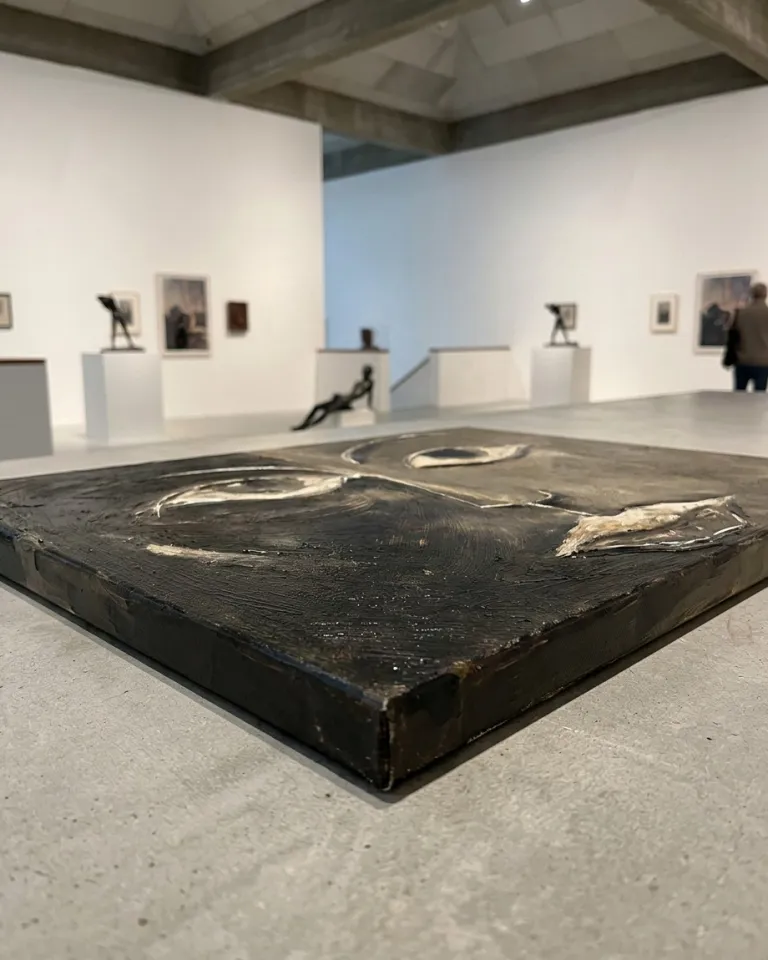
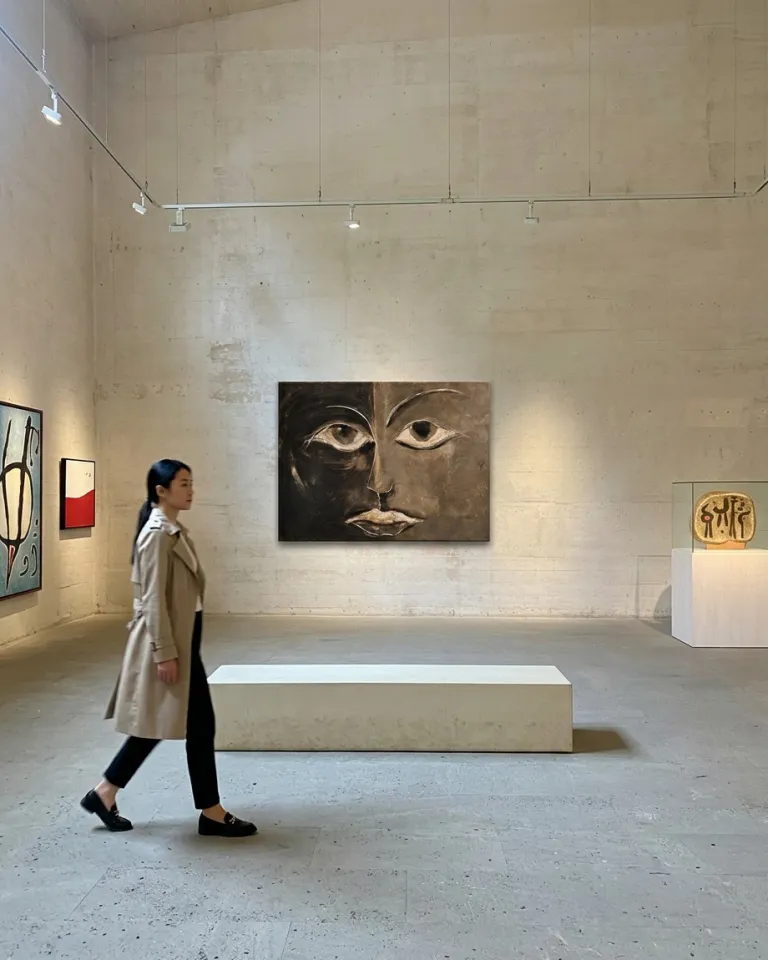
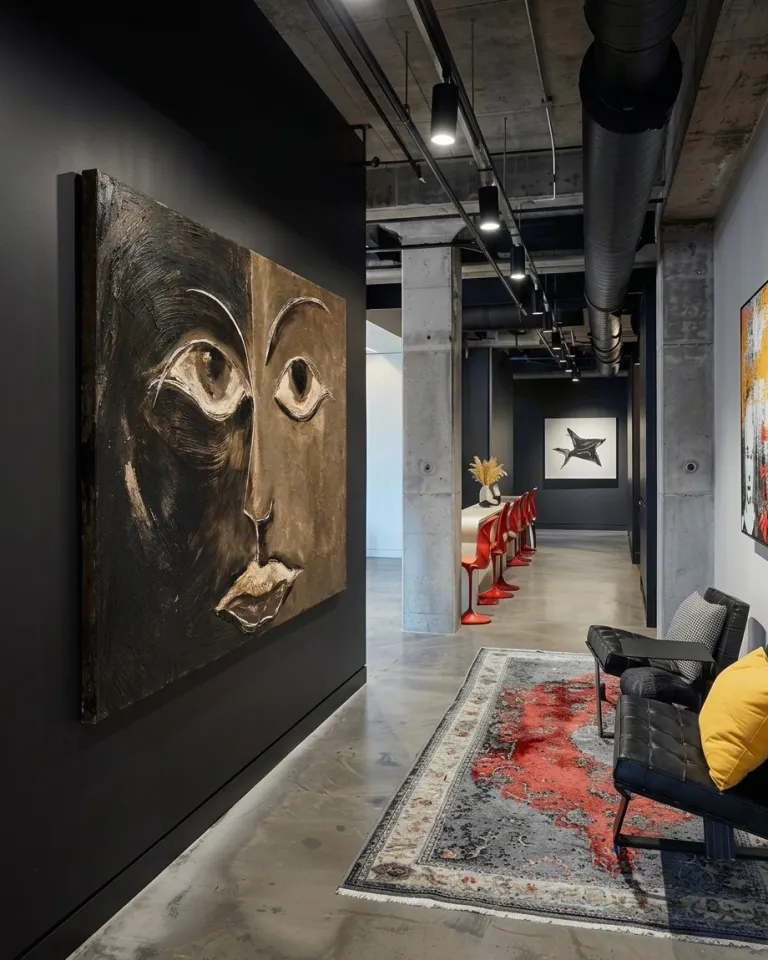
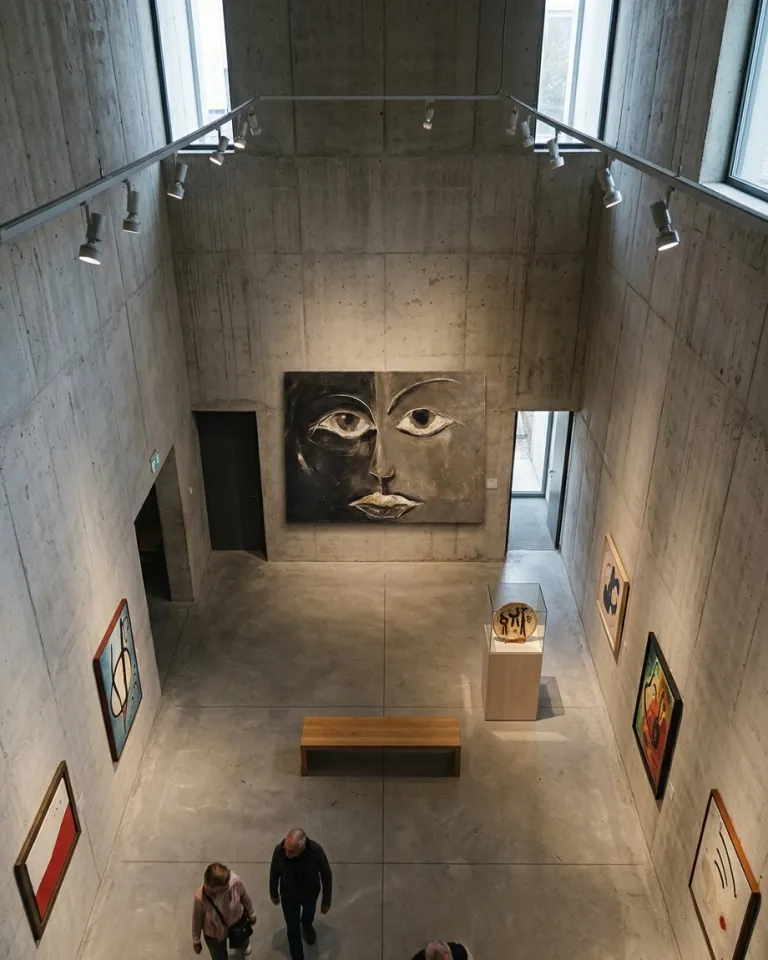
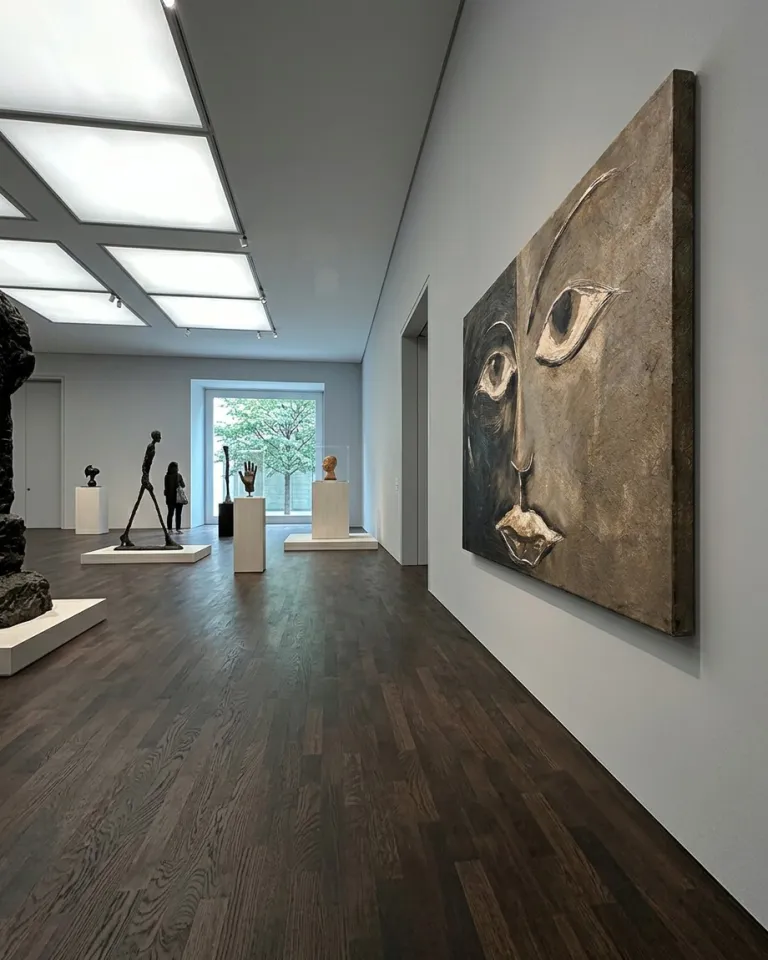
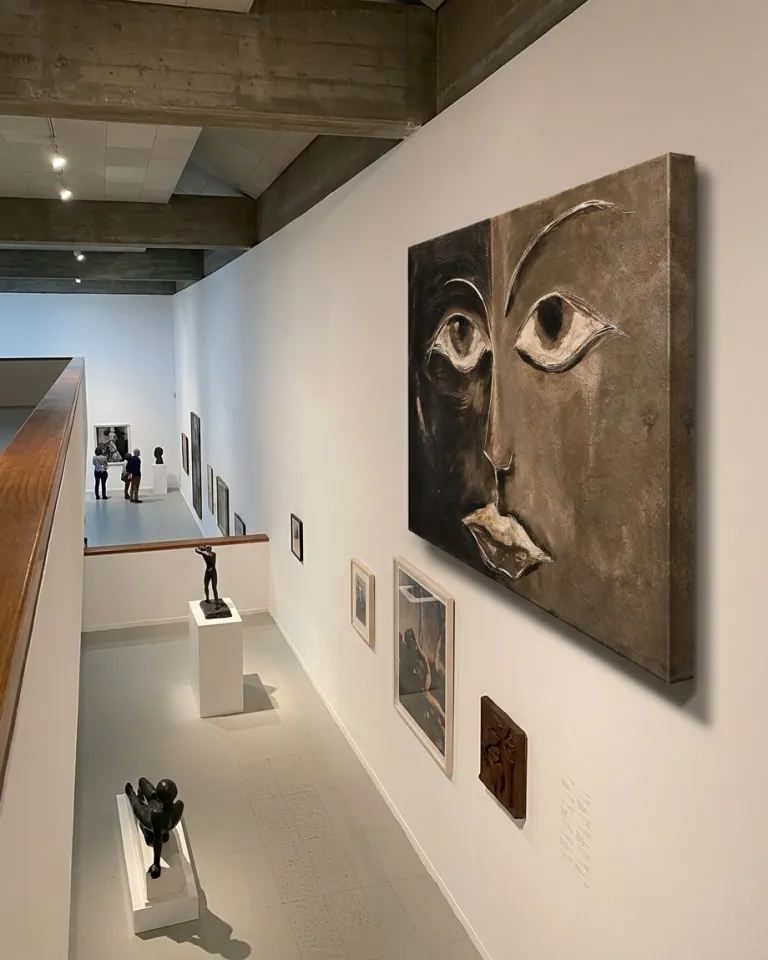
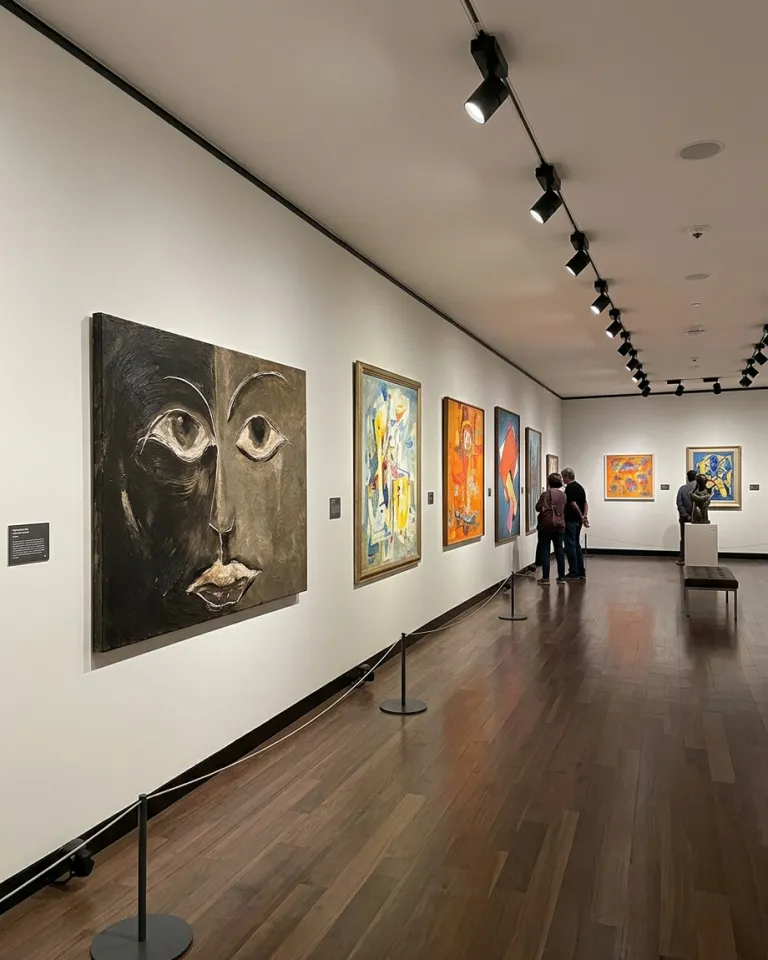
The presence of "La mitad de la mirada" (90 x 110 cm), a work belonging to Maurizio Valch's FACIES series, asserts itself in the space through a severe visual binarism that eludes any immediate attempt at harmonic resolution. The canvas is structured around a face divided vertically into two chromatic and textural halves of identical proportion: the viewer's left side sinks into the opacity of a thick, irregular, material black, while the right side emerges modeled in earth tones, browns, and ochres that evoke the dryness of terracotta or the roughness of weathered limestone. There is no soft transition between these hemispheres; the boundary is a sharp line descending along the axis of facial symmetry, serving as an anchor for a nose and a mouth that are barely roughed out. From this mineral and nocturnal background emerge two almond-shaped eyes whose whitish edges seem to have been sgraffitoed, incised into the pictorial plane with the raw urgency of a Cycladic relief or a Paleolithic incision on cave rock. This sober frontal stillness does not seek a psychological portrait of a contemporary individual; instead, it connects the paint gesture with the material memory of the Mediterranean, presenting us with an archaic mask that could well have been unearthed from an Iberian or Etruscan necropolis.
When I confront the ninety by one hundred and ten centimeter canvas, I do not seek to represent a physiognomy, but to unearth a presence through a physical struggle with the medium. The black pigment, dense and loaded with oil, offers an almost organic resistance under the palette knife, forcing me to apply constant pressure to open grooves and model that half which insists on remaining in the shadow. On the other side, the density of the ochre demands a dry rhythm, a violent scraping that emulates the wind's erosion of clay. The crucial moment of my process occurs when I stop the movement of the palette knife to cut into the fresh paint with the metal tip; it is at that instant, by scraping away the oil crust to reveal the underlying white that outlines the eye socket, that the gaze is truly born. This frontality is not a docile compositional device, but the delimitation of a disputed territory where symmetry acts as a yoke from which I attempt to escape, dividing the face not to break it, but to force two opposing forces to coexist in a unity far older than any notion of order.
This dramatic formal polarity finds a precise echo in the analytical psychology of Carl Gustav Jung, whose conceptual framework on the structure of the unconscious sheds light on the exact division of the canvas. From this perspective, the modeled, ochre half, exposed to a light that mimics the surface of carved stone, operates as the Persona: that social mask, constructed and visible, which the subject builds to interact with the demands of collectivity and external convention. In contrast, the half plunged into absolute, impenetrable black literally embodies the Shadow, that receptacle of the unrecognized, repressed, or primitive aspects of the self that consciousness prefers to ignore due to its destabilizing weight. Far from proposing a pathological split, the bidirectional, fixed gaze that the work directs at the viewer presents the tension prior to the process of individuation; the eyes, opened with the same intensity from the diurnal order of the earth and the nocturnal chaos of the abyss, demand that the observer hold their gaze to reconcile both psychic hemispheres, suggesting that true human integrity is only possible when one integrates their own darkness.
As I sculpt the corners of the lips and define the rigidity of the chin, I am aware that the symmetry of this mask borders on the intolerable, as if the face were trapped in a centuries-old paralysis. While dragging a dry brush to accentuate the contrast of the eyebrows, I perceive the stillness of this gaze not as a serene contemplation, but as the testimony of a mineral lethargy. In my studio, the act of dividing the surface confronts me with the suspicion that our daily face is an automated construction, a static facade hiding a deep internal division. Every scraping on the support seeks to break that inertia; carving the material is, for me, an attempt to awaken the gaze from its stone sleep, forcing it to look at itself in the mirror of its own material fragmentation so that, seeing itself divided, it experiences the urgency of its own reconstruction.
This suspicion regarding the immobility of the face and its internal division can be critically interpreted through the philosophical lens of G. I. Gurdjieff, whose doctrine on human mechanicalness describes the ordinary individual as a "sleeping man", an automaton governed by contradictory impulses and devoid of a real, unified will. The rigid, symmetrical mask presented by Valch in "La mitad de la mirada" thus becomes the visual representation of this inner fragmentation, where multiple "selves" coexist, represented by these two halves that do not communicate directly but are juxtaposed under the same empty structure. The open, fixed eyes, devoid of organic luster but charged with a heavy presence, do not invite aesthetic escapism; rather, they act as a severe reminder of "self-remembering", that conscious effort proposed by Gurdjieff to break the sleep of daily automatism. Confronting this archaic gaze, which seems to have survived the fall of empires and geological wear, the viewer is stripped of intellectual certainties, forced to recognize their own internal division beneath the skin of a painting that behaves like earth, ash, and stone.