Published work / VORTEX
HAUSTUS
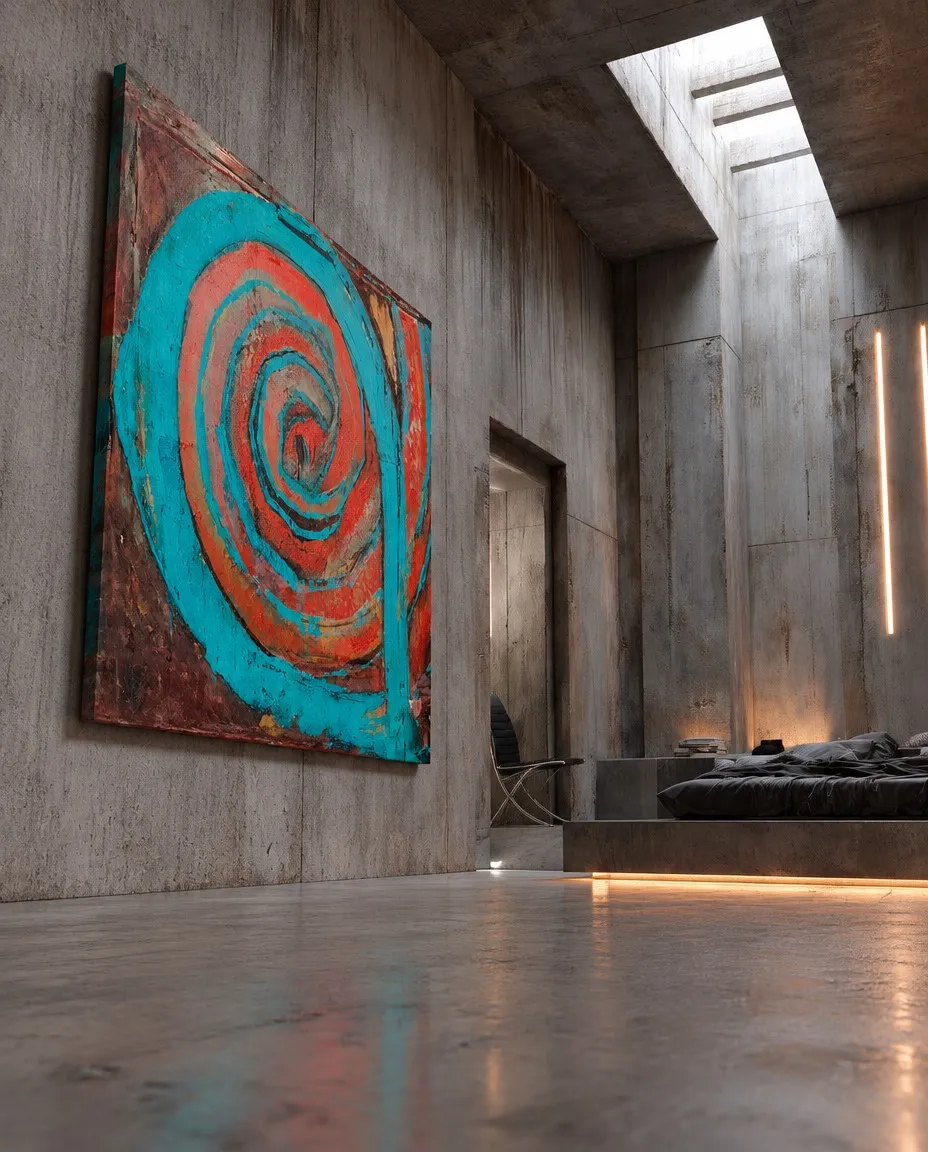
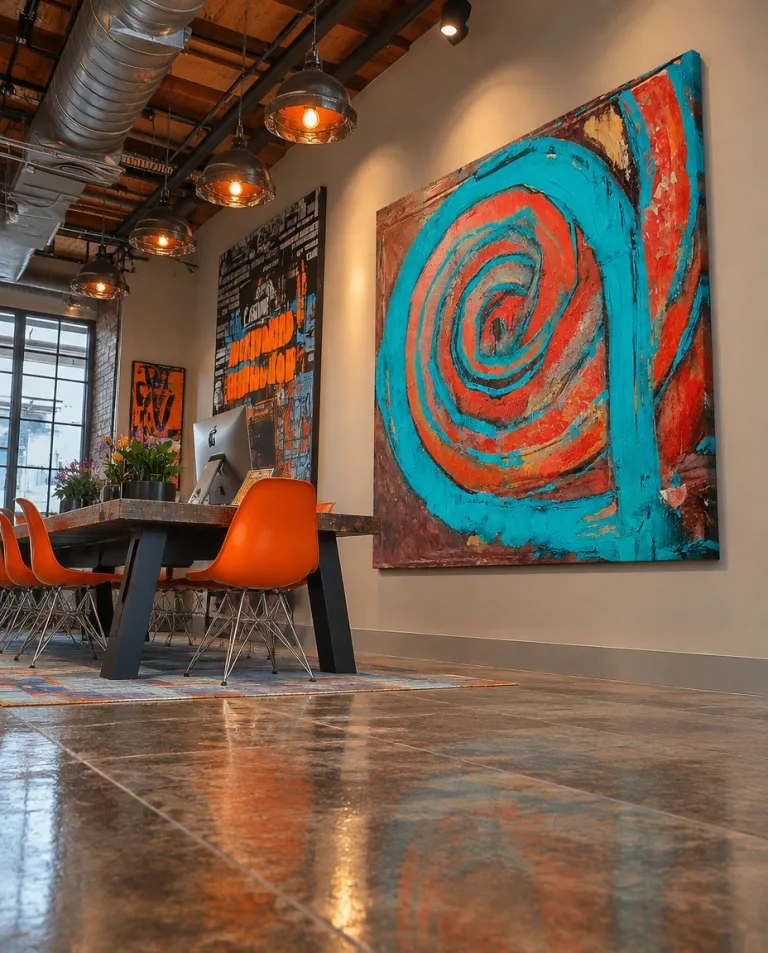
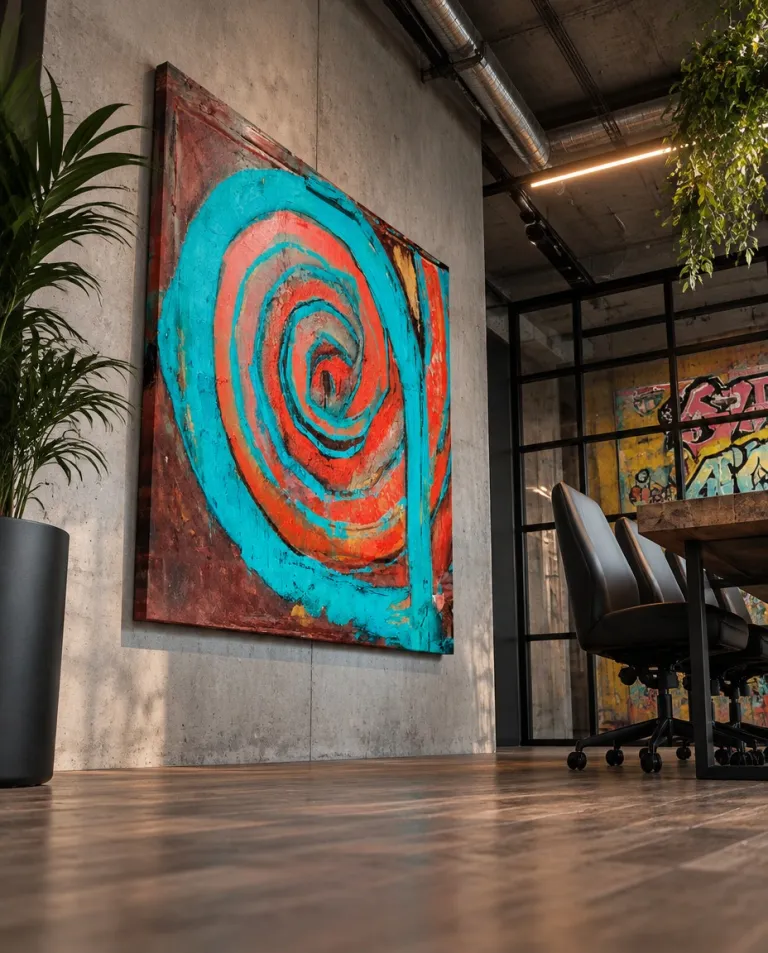
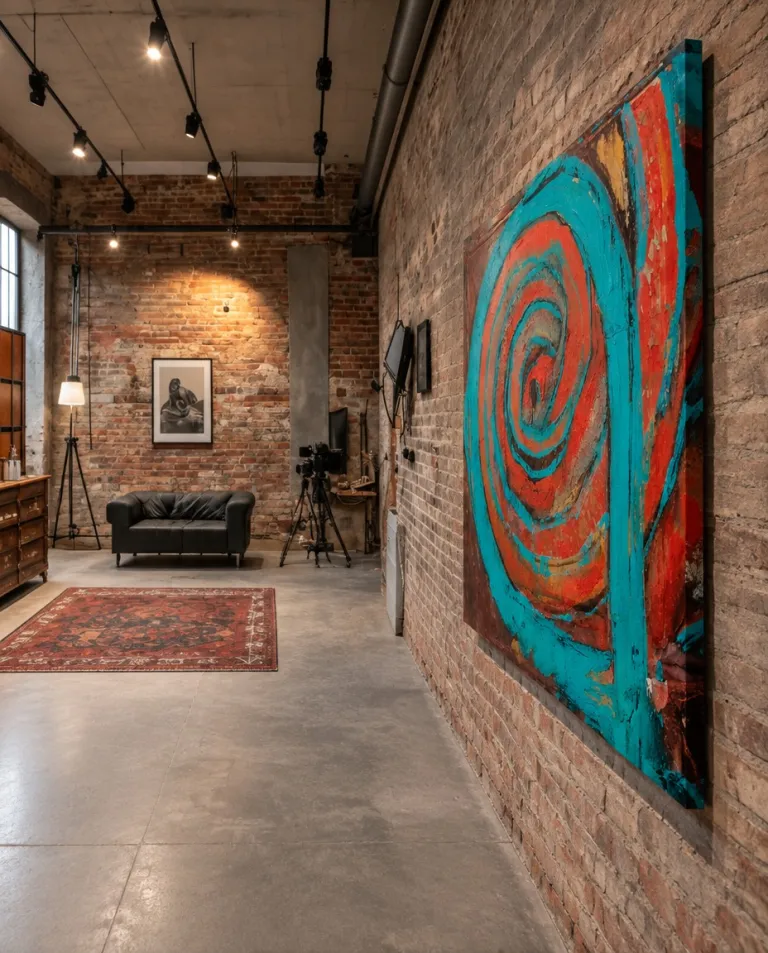
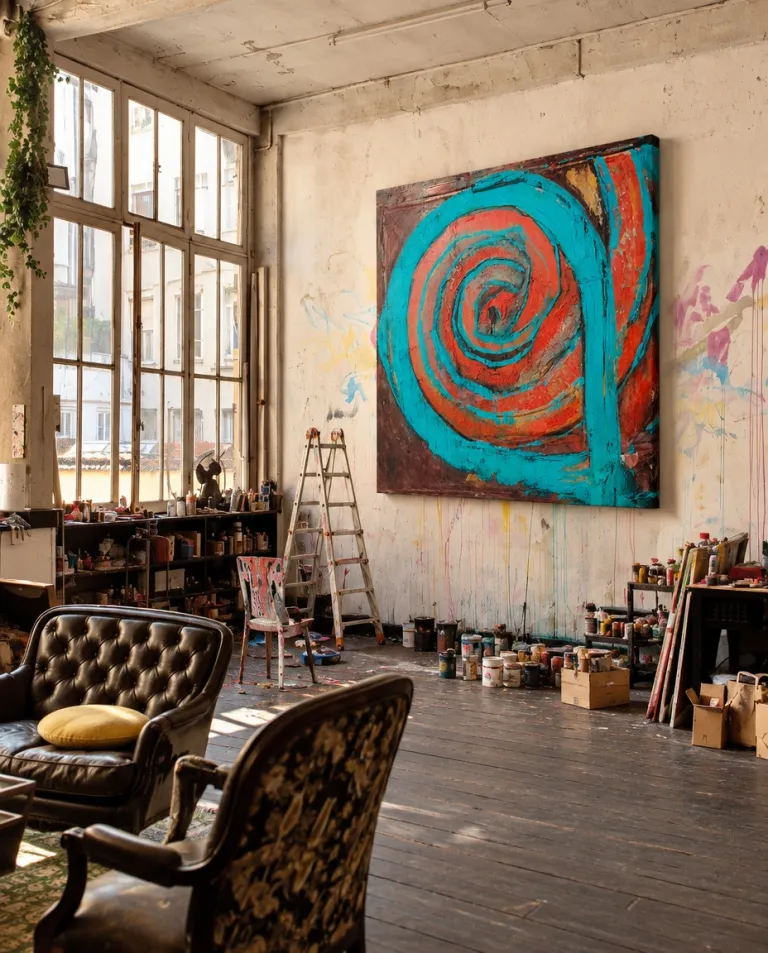
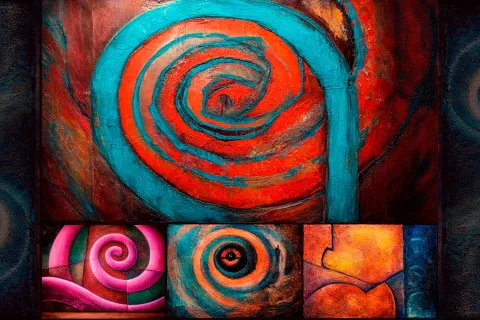
From the VORTEX series: Dynamics of Attraction and Matter
- Size
- 82.7 × 82.7 in / 210 × 210 cm
- Series
-
VORTEX
 Painting series
VORTEX
The Maurizio Valch VORTEX series presents an original contemporary abstract painting on canvas. These works, executed in acrylic and oil, explore the dynamics of attraction and transformation through concentric forms and distinctive material textures, creating a visually powerful space. View series
Painting series
VORTEX
The Maurizio Valch VORTEX series presents an original contemporary abstract painting on canvas. These works, executed in acrylic and oil, explore the dynamics of attraction and transformation through concentric forms and distinctive material textures, creating a visually powerful space. View series
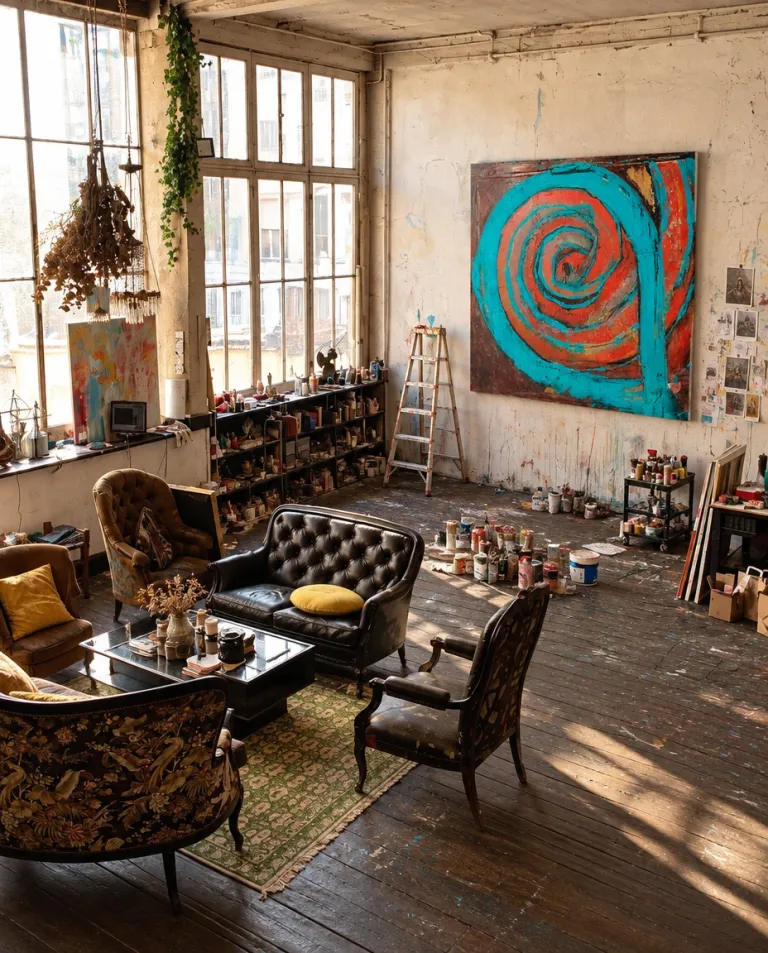
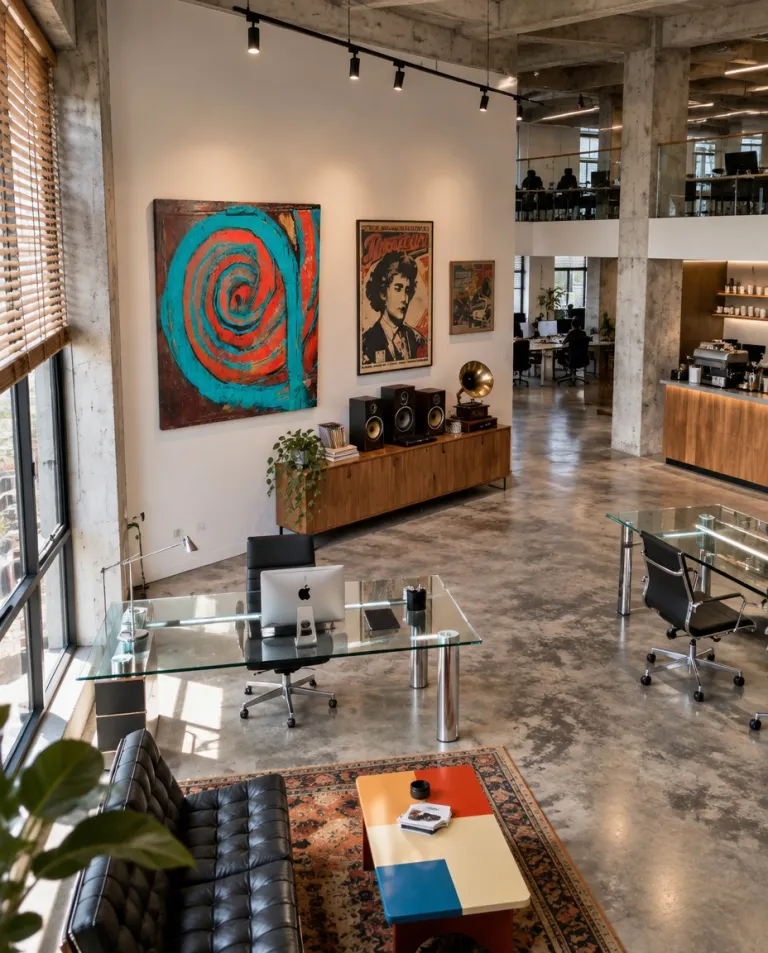
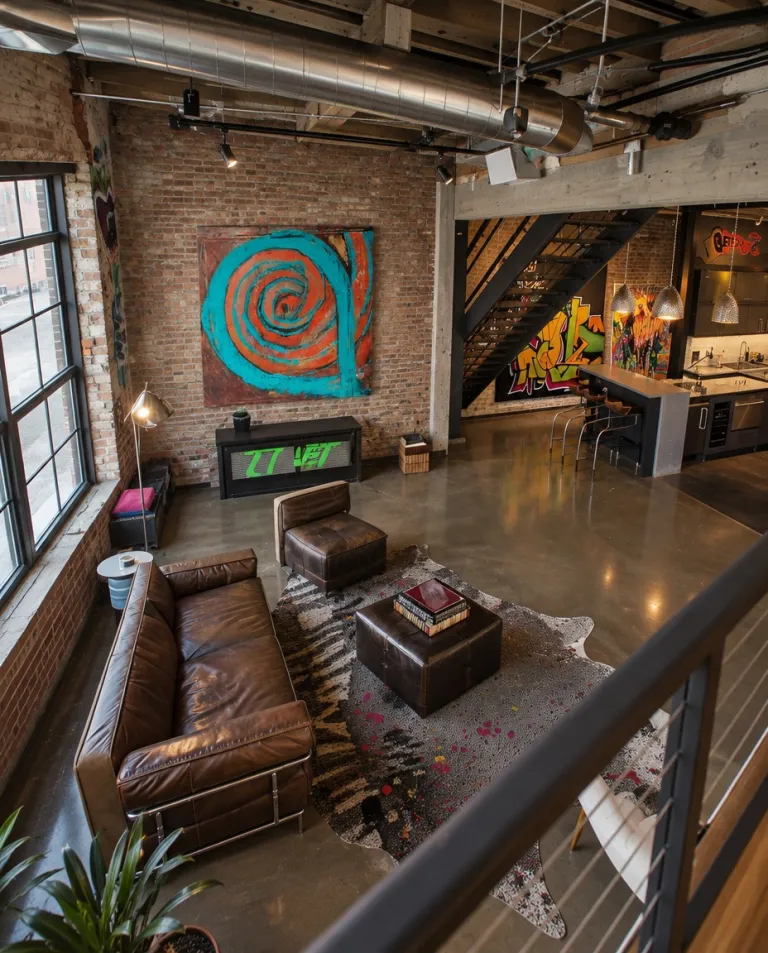
- Context studies
- 12
Conceptual Note
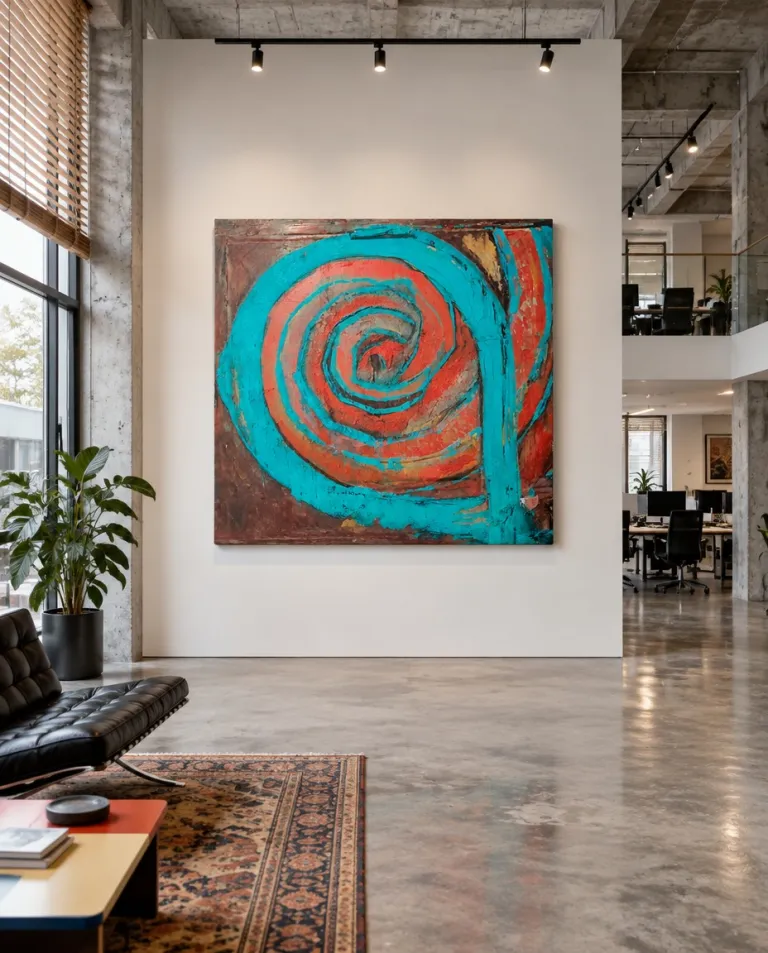
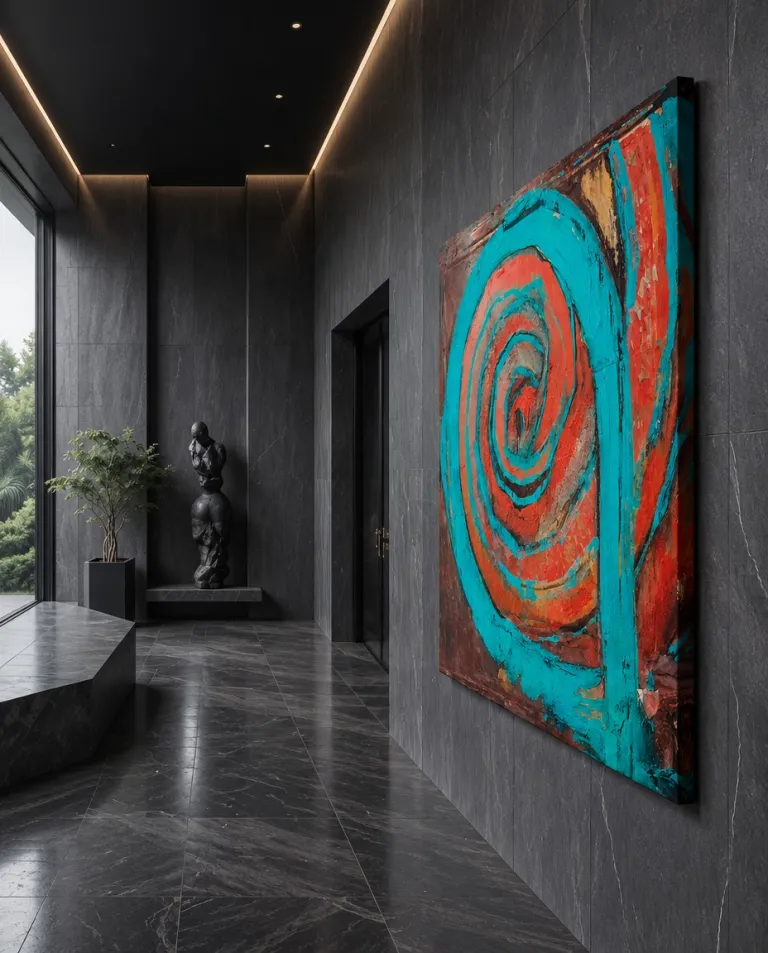
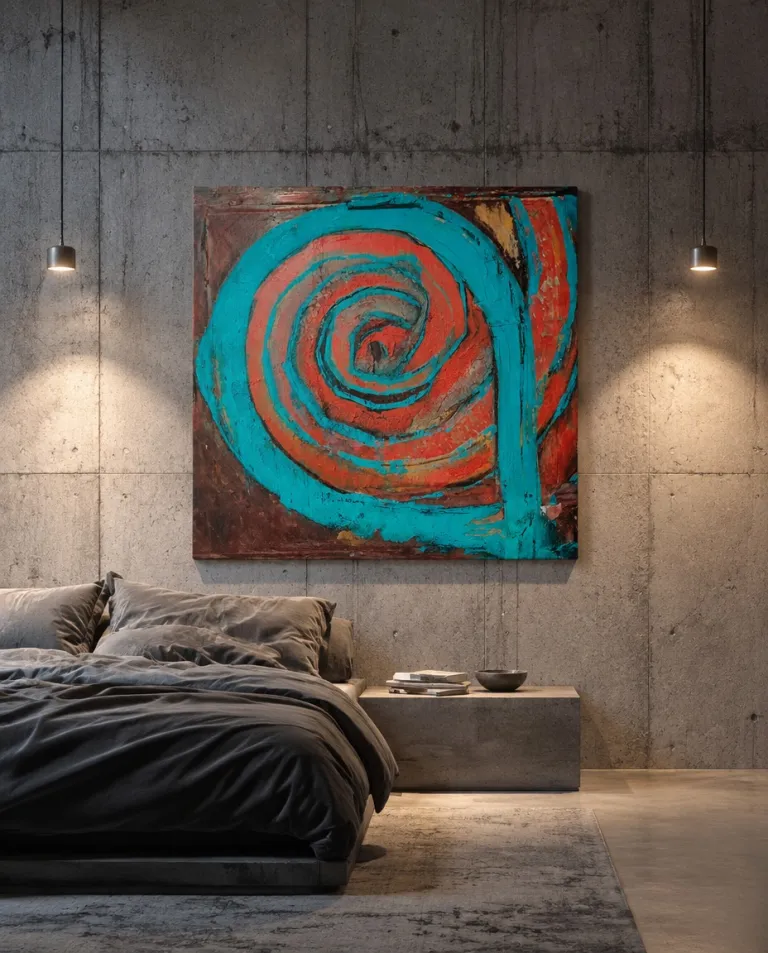
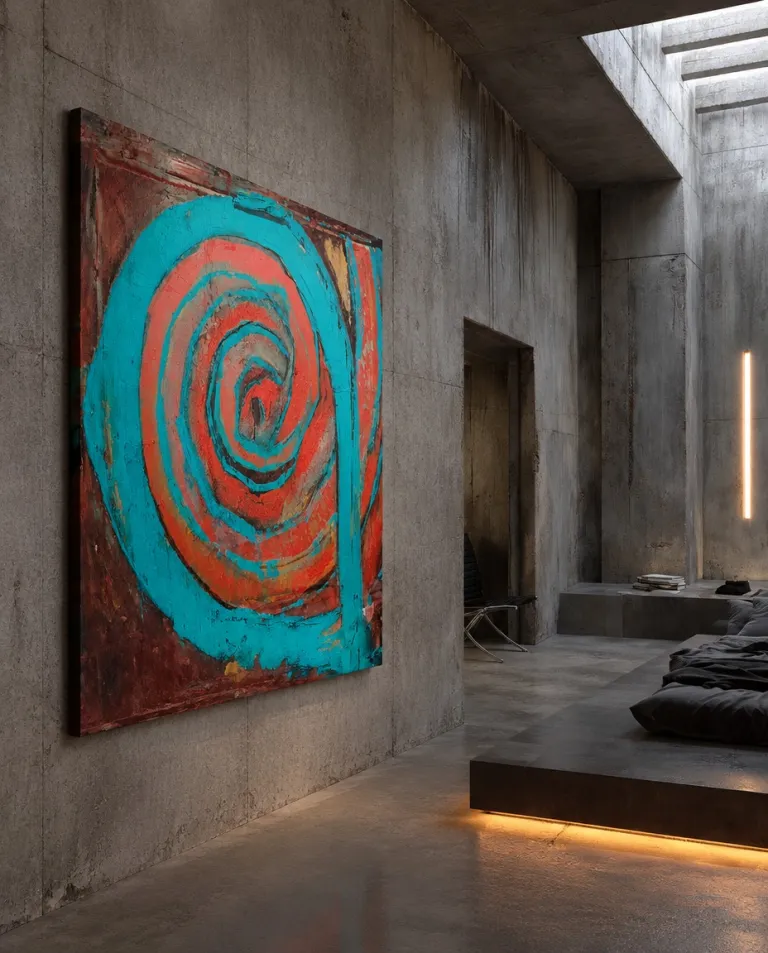
From an impossible height, HAUSTUS might resemble an abandoned sign on ground that doesn’t quite manage to be earth: a 210-centimeter square holding a movement too large for its format. The turquoise is seen first as a route traced by someone who needed to return to the same place and found no way to do so without messing up the edges. It circles, enters, detours, reappears. It does not behave like a line outlining a figure, but like something that has tried to hold down the entire painting and has repeatedly failed. That failure is not a flaw: it is its way of breathing.
At a certain distance, the turquoise path looks like a poorly adjusted belt around a red, earthy, grayish, black mass. But upon closer inspection, it no longer adjusts anything. There are areas where it becomes a frozen river, with thick banks that almost seem to push against one another; others where it falls vertically down the right side like a bandage that does not cover the wound, but rather makes it more visible. At the bottom, it flattens against the boundary of the canvas, giving the impression of wanting to escape from underneath, although the edge reminds it that there is no outside available. What is this surface attempting to expel? A pressure? A word that is too heavy? The gesture of having wanted to wrap something that does not admit wrapping?
The eye wants to follow the turquoise with a finger, without touching it. It follows it along the upper curve, descends toward the whirlpool, loses itself again in a red band, catches on a dark crack, returns to the turquoise like someone returning to a rope in the middle of a current. But the rope does not save: it forces you to turn. The square begins to weigh in a different way. Still against the wall, it seems tilted inward, as if a silent force were rolling it up from the center. The reds do not surrender as a background; they appear, become visually covered, peek out again. The earth tones and grays do not pacify the whole: they make it rougher, closer to a matter that has retained arguments.
Roberto Gómez Bolaños was a Mexican creator who knew how to find tenderness and intelligence in the stumbling of bodies. Here, he might stand before the solemnity of the whirlpool and see it make a minor accident. The spiral wants to be majestic, but something interrupts it: the great turquoise flow arrives late to its own exit, crosses itself, becomes tangled, collapses down the right side with the absurd dignity of someone pretending to make a heroic entrance only to get stuck in too narrow a doorway. There is no mockery in this vision. There is a physical delicacy: an enormous shape trying to organize itself while its own turns step on its heels.
Laughter, if it appears, does not last long. Because Roberto would also detect that the center is not the end of a fall, but its gravity. There, within the red and turquoise turns, is a small, dark, almost physical zone. It does not offer itself as a clean hole or a recognizable figure. It looks like an opening that has regretted opening itself. It also seems like a tiny presence sitting in the midst of the noise, unaware that the noise exists. A childish question imposes itself, without asking permission from the vocabulary of art: is there someone inside waiting for the blue to finish passing?
I do not know when a shape stops obeying and begins to sustain itself. I wanted to bring closer, turn, contain, let one area cover another, but the surface always seemed to hold a decision that was not mine. Looking toward that center, I feel that I am not arriving at a place, but running out of edges. There are moments when I would like to close the path, and others when I understand that closing it would be to strip it of its air.
The first approach to the center changes then. It no longer seems only the point around which everything turns; it seems to be that which the entire painting avoids touching head-on. The turquoise passes around, brushes it, thins, thickens again. The reds crowd near it, but they do not name it either. Even the black, which could harden the opening and make it definitive, wavers between being shadow, residue, or gathered matter. The painting has swallowed a question and cannot digest it. Each turn tries to carry it outward; each turn returns it more compressed.
William Kentridge is a South African artist attentive to traces, erasures, and images that preserve what they tried to change. At first, he would want to read that dark nucleus as a remnant: a mark that has survived beneath the shifts of color, a memory that did not manage to disappear. But standing in front of HAUSTUS, that hypothesis begins to be insufficient. The center does not behave like something left behind. It has too much presence to be merely a residue; it seems to be still working, pushing from within the turns that surround it.
Kentridge forces Roberto to distrust the initial joke. The absurd choreography would not simply be that of a stumbling shape, but of an image trying to correct itself without managing to abandon its mistakes. Each return of the spiral lets something previous breathe: a red edge beneath the turquoise, a gray band that insists under a more vivid passage, a dark line that reappears as if it had found a crack through which to survive. But Roberto, in turn, forces Kentridge to look at the clumsiness of that process: not every correction is wise; some are desperate movements of a material trying to cover its mouth, only to show more.
If the turquoise stopped for a second, there would be no rest. What it keeps in circulation until then would become visible: that the whirlpool does not turn on its own. The flow gives it a resistance, an interruption, a sort of delay. Without it, the reds and earth tones could sink into a more closed image, more obedient to its own center. With it, the painting retains an exit that does not entirely work. The turquoise is escape, yes, but an escape that remains trapped in the room; it is a slow animal, but an animal that drags along the wall to which it is tied; it is a bandage, but a bandage that pulses.
Now the dark spot stops being small. It does not grow physically, but it alters the scale of everything else. The great path of the edge can be seen as an exaggerated response to that minimal area: so much matter to surround something that cannot be surrounded. Roberto perceives there a sadness without spectacle, that of someone who wants to help and only succeeds in going around in circles. Kentridge finds an image that does not erase, but does not preserve intact either: it transforms what it touches and is transformed by it. Between the two, the center loses its status as a decorative enigma. It becomes a mute, almost tender resistance, as if it could not speak because every color had spoken over it.
The painting knows something I cannot retain. Before, I believed the center was an area toward which everything directed itself; now it seems that it is the center itself that refuses to be possessed by the turns surrounding it. It is neither empty nor filled with a figure that can be named. It remains foreign, even when I look closely, and perhaps that is why the painting never fully closes in on itself.
Returning to the edge, the turquoise is no longer that first sign seen from afar. It has passed through the center without entering it; or it has entered and come out changed, without it being possible to prove it. In the bottom corner, where it accumulates with apparent heaviness, it does not look like a fallen mass but a reserve of movement. Its irregular edge retains something of the central darkness: a minimal roughness, a black interruption, the memory of that which it failed to absorb. The gaze can return to the great upper curve and trace it again, more slowly, as if that blue were sustaining not the spiral, but the small area that refuses to let itself be wrapped.