Published work / VORTEX
VERSUM
VORTEX Series
- Size
- 39.4 × 47.2 in / 100 × 120 cm
- Series
-
VORTEX
 Painting series
VORTEX
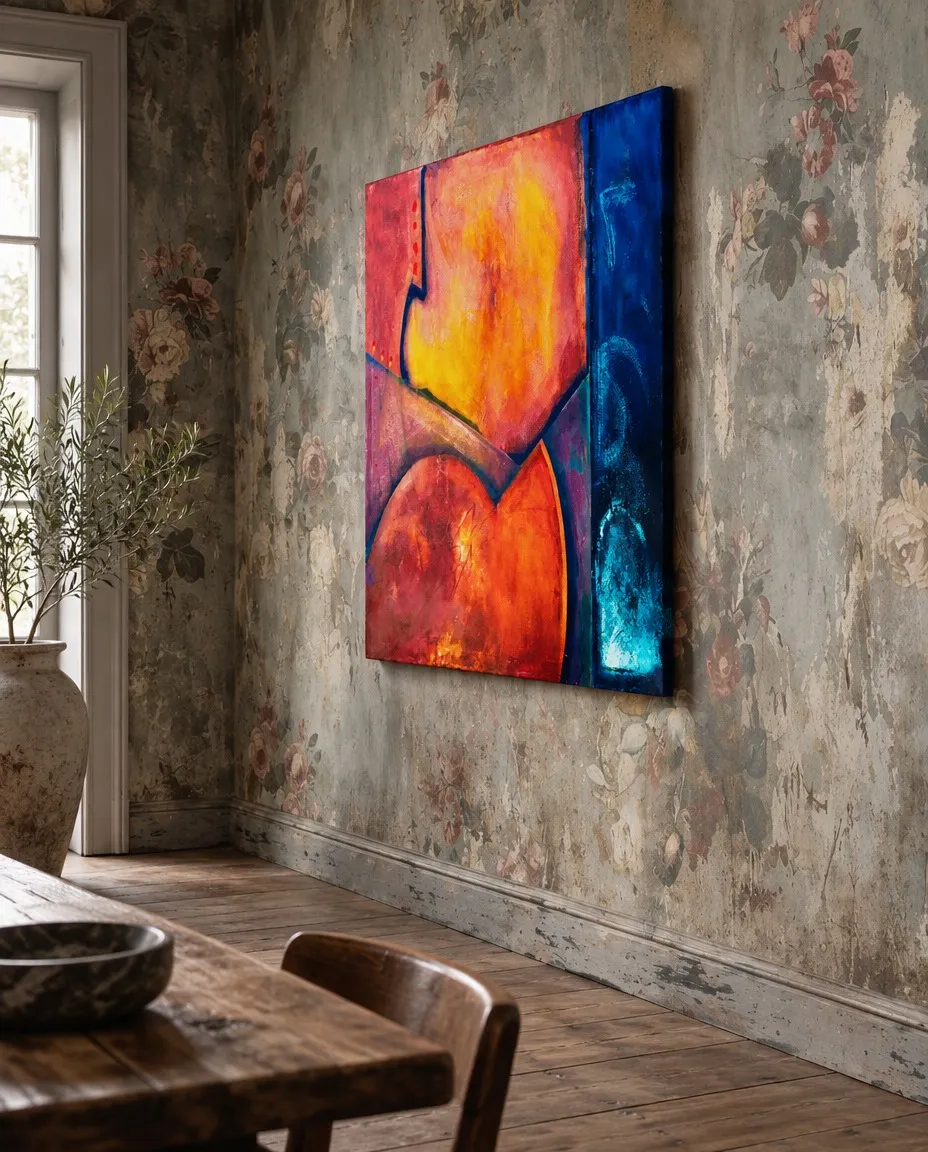
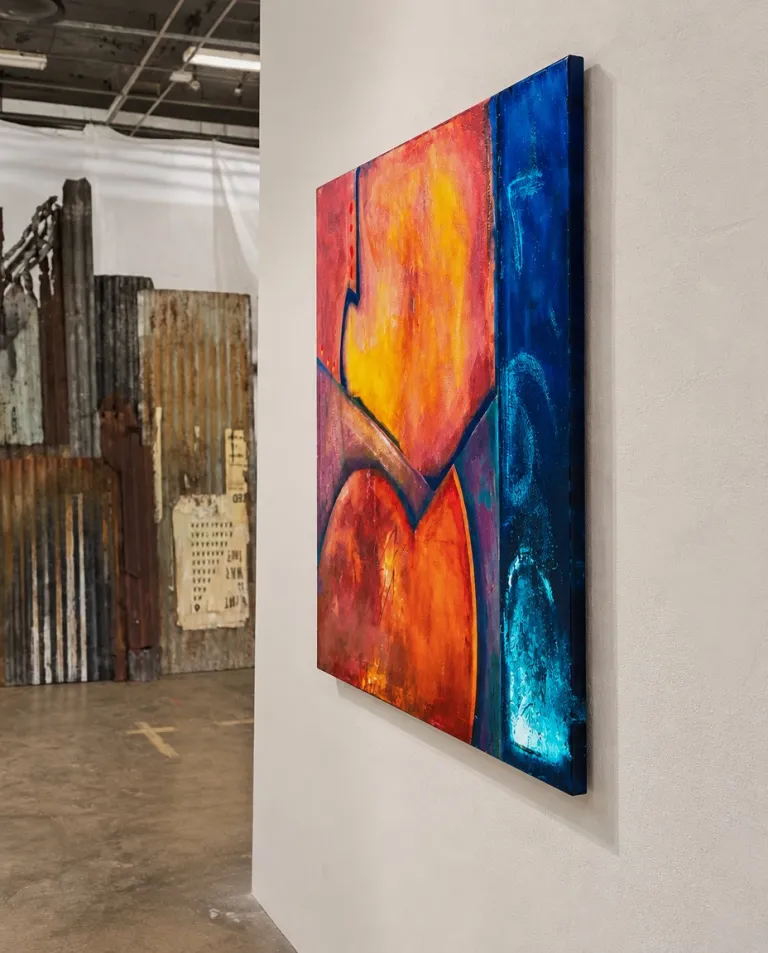
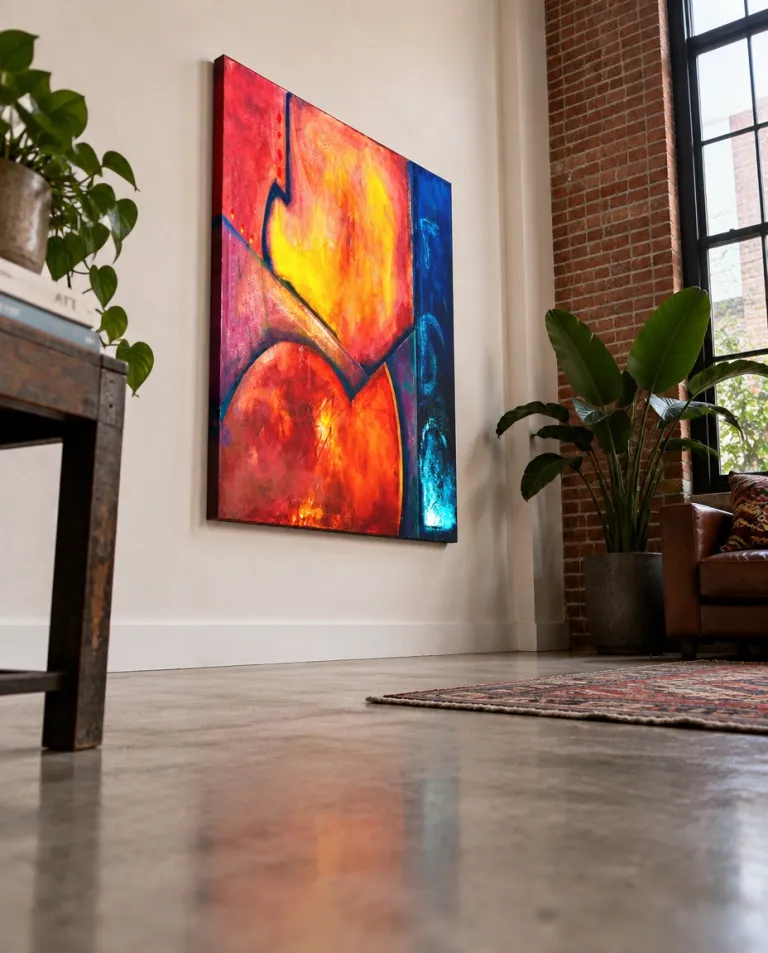
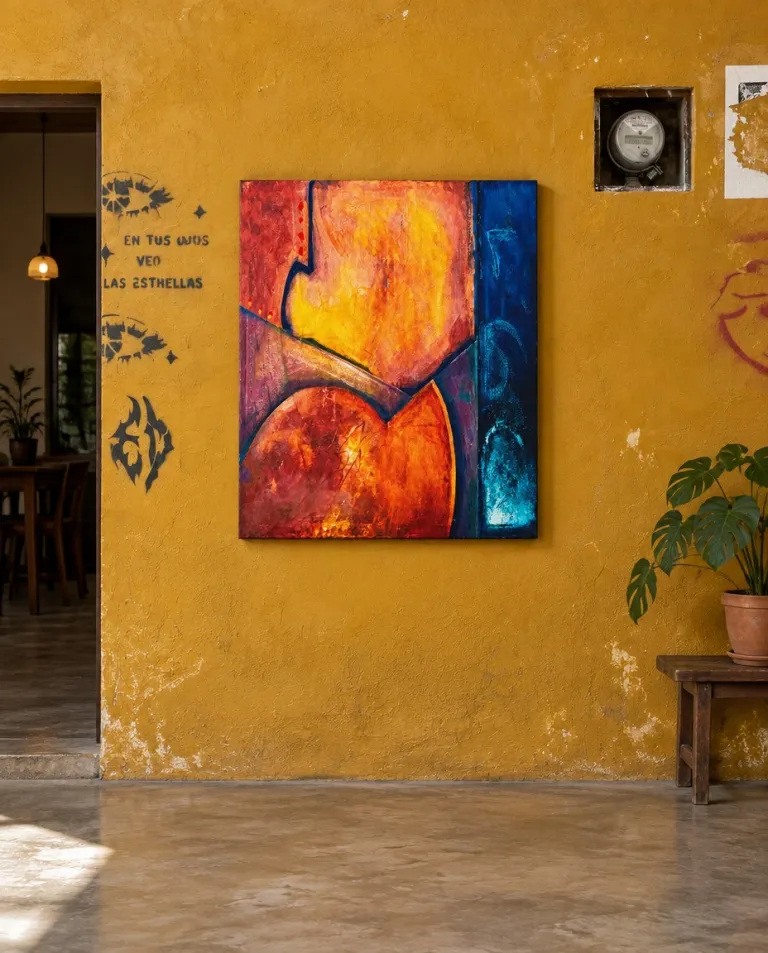
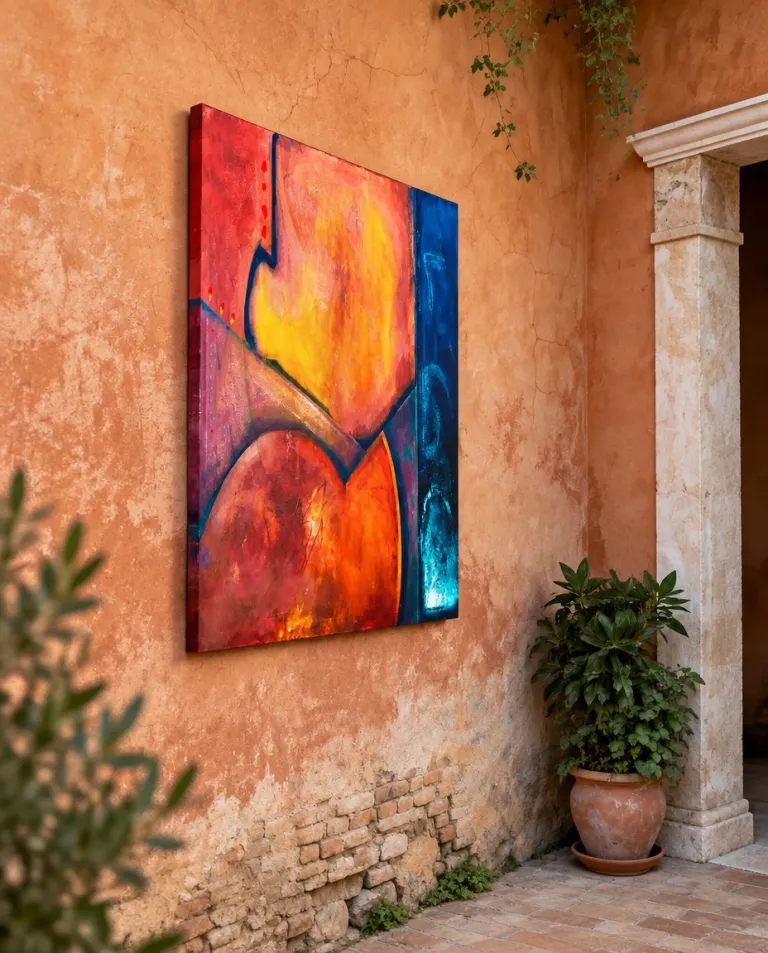
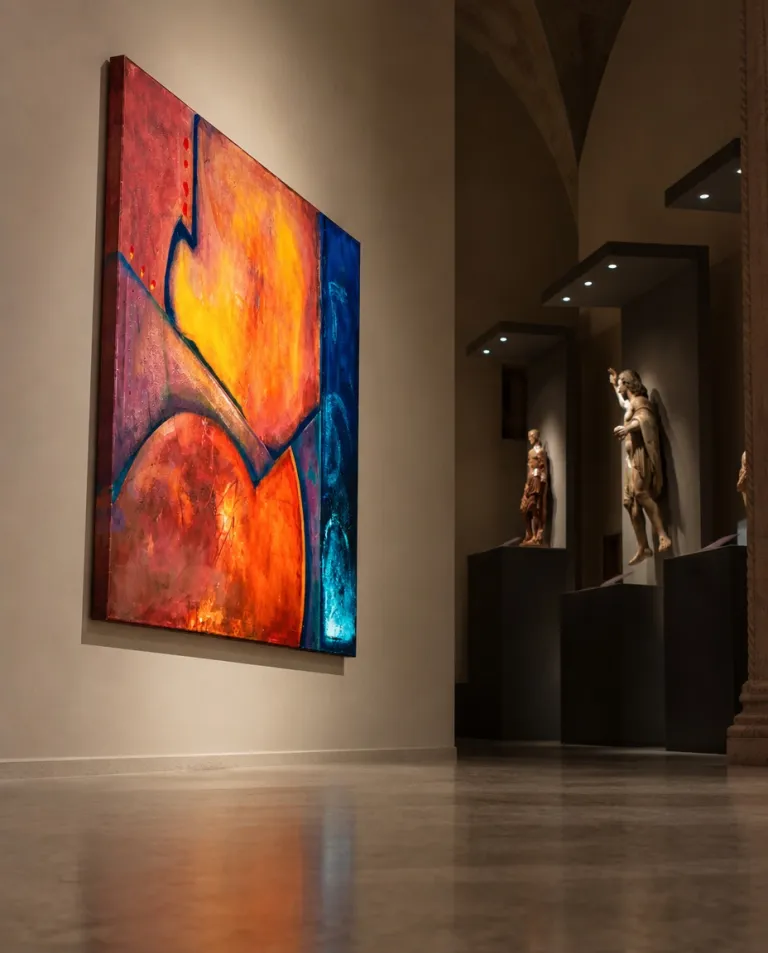
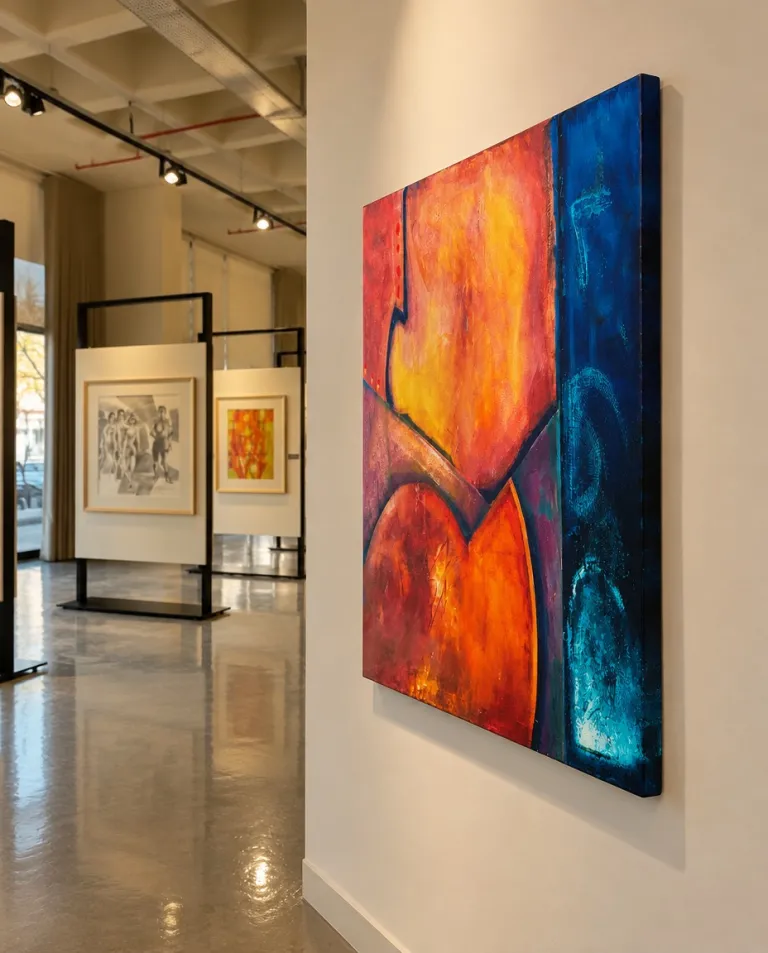
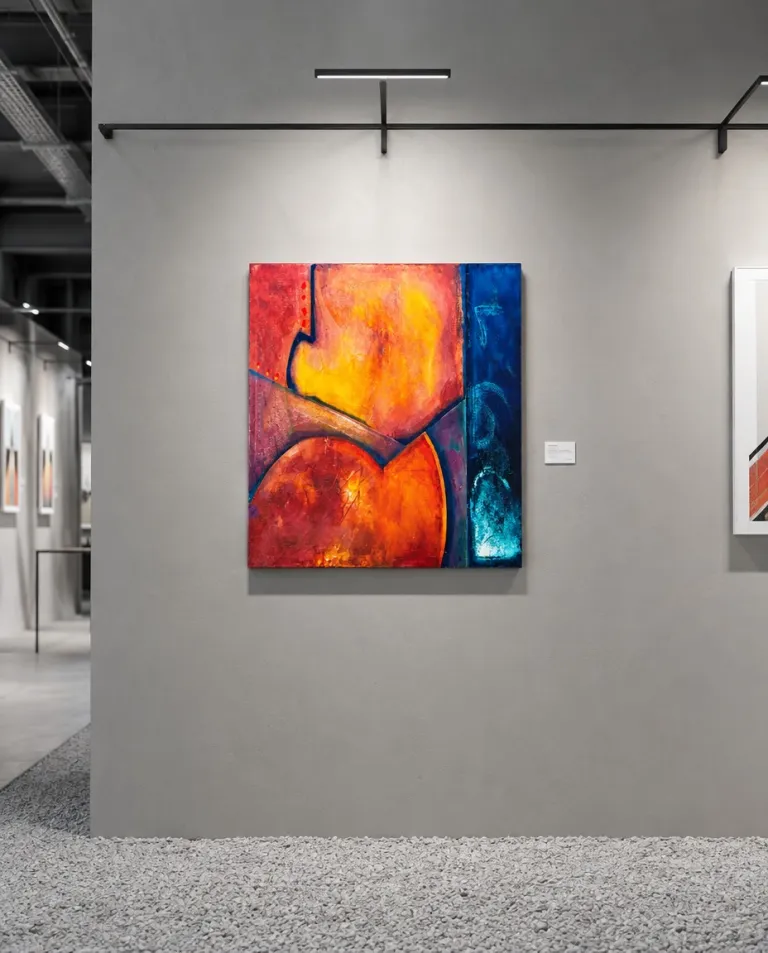
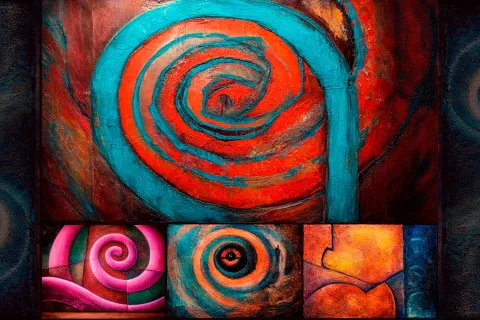
The Maurizio Valch VORTEX series presents an original contemporary abstract painting on canvas. These works, executed in acrylic and oil, explore the dynamics of attraction and transformation through concentric forms and distinctive material textures, creating a visually powerful space. View series
Painting series
VORTEX
The Maurizio Valch VORTEX series presents an original contemporary abstract painting on canvas. These works, executed in acrylic and oil, explore the dynamics of attraction and transformation through concentric forms and distinctive material textures, creating a visually powerful space. View series
- Context studies
- 11
Conceptual Note
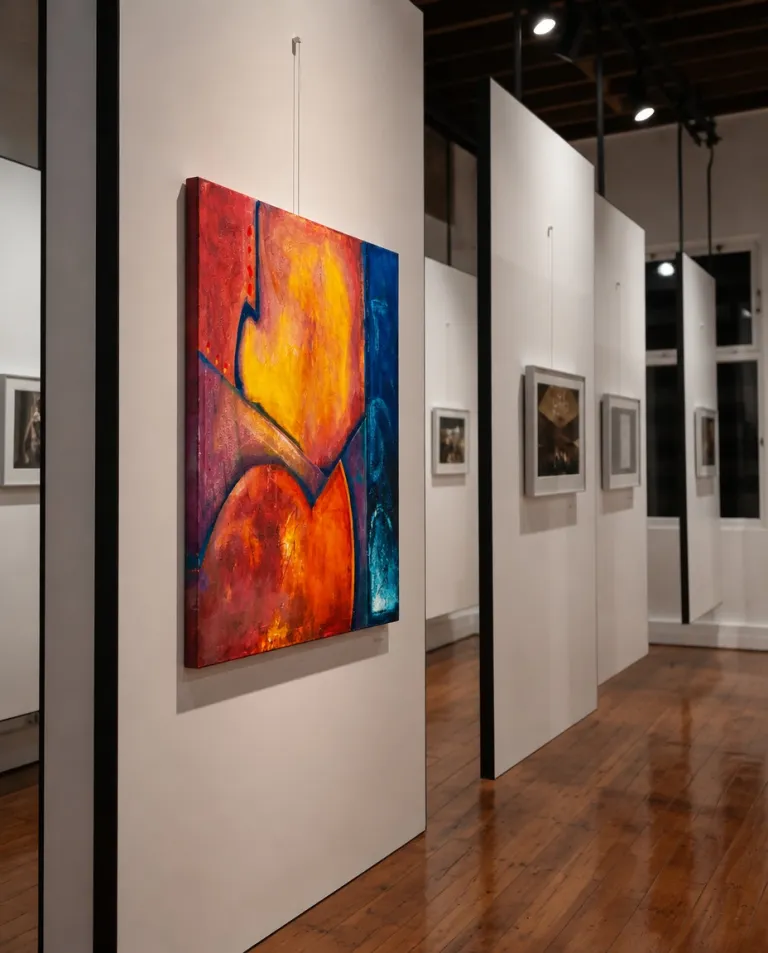
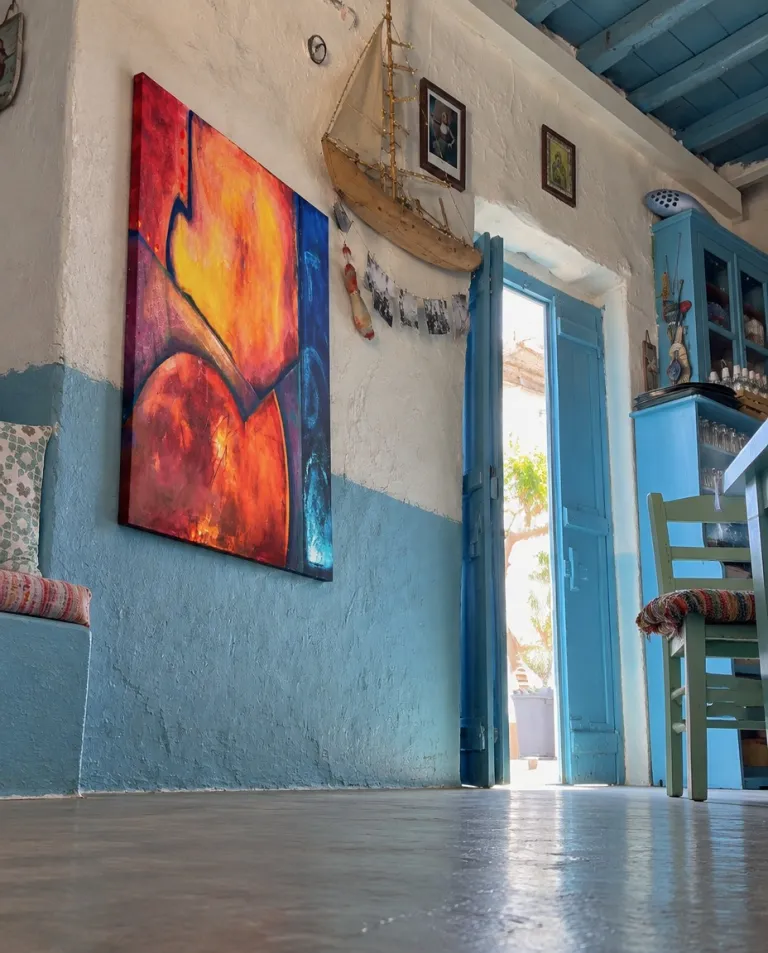
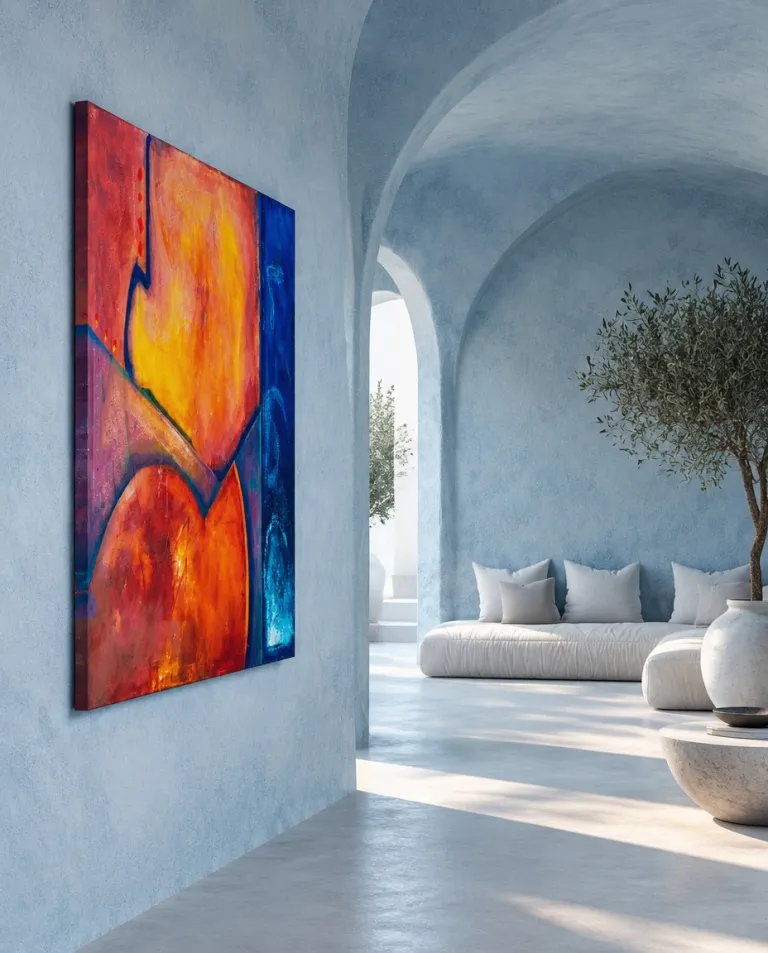
The painting begins before the eye knows where to set foot. There is a warm expansion: compressed reds, oranges that seem to weigh more than they illuminate, yellows that do not brighten but rather push from within, pinks that become almost the flesh of a wall. The curved forms lean against one another, yet none seem to rest. Above, a yellow and orange mass advances as if it had found a limit too late; below, two semicircular bodies, one reddish and the other orange, graze each other without quite fitting together. Between them run dark lines—thick at times, thin at others—not as calm contours but as cuts keeping apart things that perhaps have already begun to blend.
From a distance, the blue of the right edge looks like a side band, a reserve of shadow, a margin left so that the rest might burn. But the longer one looks, the less it accepts that role. It does not behave like a background. It has optical volume, a rough depth, spots of cold brightness, areas where the blue turns almost black, and others where it seems to emit a damp, retained light. The gaze arrives there after crossing the heat and does not enter immediately: it is held at the vertical junction, at that dark edge that separates and connects. A wall. A seam. A closed door. None of that quite suffices.
Diogenes of Sinope was a Cynic philosopher who turned necessity, disobedience, and a life reduced to the essential into a radical way of thinking. He looks at the painting like someone inspecting an overcrowded room and asks, without politeness: what could be lost without this painting losing its hunger? At first, he is suspicious of the blue. It is narrow, cornered, occupying a smaller portion than the reds and oranges. "Does it pay rent for the whole painting?" he might growl. Perhaps it is redundant, he thinks; perhaps the heat would be enough with its pressures, its folds, its collisions of colored bodies.
But then the upper yellow loses its firmness. Without the blue strip, imagined as absent, that warm zone begins to look like a decoration too satisfied with itself: an abundance without resistance, a party no one can leave because there is no door. The philosopher reluctantly corrects his calculation. The blue is not there to embellish the edge. It is that against which the rest acquires weight. The warm zone does not expand freely: it is being measured, watched, perhaps cooled by proximity. The vertical boundary does not just divide two climates; it forces the oranges to accept that they are not all the available air.
I watch how the heat occupies more surface than I expected and stops obeying me. One form displaces another, a curve claims a distance I did not know it needed, a yellow becomes too physical to remain above. I cannot reduce it to a luminous zone: it weighs, it pushes, it approaches. When I try to look at it as a unit, I find cracks, friction, small interruptions that make it unstable. The surface seems to hold its own temperature, and that temperature does not always match what I thought I had placed before my eyes.
—
Anna Halprin was a choreographer who made the everyday body, improvisation, and the relationship with the environment a form of knowledge. She does not answer the question of what the blue means. She turns it into a postural difficulty. Before the painting, the torso would want to lean toward the lower orange, following the wide curve that swells from the center to the edge; the shoulders would accompany the movement, the weight falling forward. But the back of the neck would pull back upon reaching the dark strip. Not out of fear: because there the body stops knowing how much space it has.
She proposes a score impossible to fully fulfill in front of the canvas. First, approach with the chest toward the great yellow mass, without lifting the heels. Then, let a hand follow in the air the dark line that descends near the far-left edge and curves toward the central area. Then stop the gesture just before touching the blue seam on the right side. Breathe toward that strip without shifting the body. Finally, try to turn the head toward the blue while the sternum remains oriented toward the orange. The movement fails for a simple reason: the body wants to resolve what the painting keeps unresolved.
Diogenes is suspicious. He says that this choreography adds furniture to a room that was already enough to look at. If the painting needs someone to twist their neck, he suspects, perhaps it has lost the precision of a necessity. Halprin does not argue with a theory: she makes him repeat the pause. The philosopher wants to remove the blue to leave only what is indispensable; she shows him that his austerity has impoverished perception. Because indispensable is not what occupies the most space. It can also be a strip that forces weight to declare itself. It can also be an area that does not let the eye settle.
Then a child's question appears, so concrete that neither of the two minds can sweep it away: "Why does the blue at the bottom look lit up if the orange fire doesn't reach it?" The question changes the pressure of the painting. It is no longer enough to say that the blue contains or cools. In its lower part, near the edge, something turquoise concentrates and reverberates as if the darkness had its own lamp. It does not illuminate outward; it seems to light up against itself. The visible strokes, the optical scratches, the smudges suggesting friction or condensation, make that area feel at once closed and porous. Like a room with a window opening onto a different night.
Halprin takes the question and modifies the score: now it is not a matter of moving away from the blue, but of bringing the breath close without invading it. The body must stay half a step from the edge, knees slightly bent, as if in front of an open refrigerator door while the back still retains the sun. Diogenes objects that no one needs so much theater to notice a temperature. But the gesture reveals something his economy did not see: the blue does not cool uniformly. There is a leak at its base. The heat does not conquer it, though something in the contact has altered its density.
The dark lines traversing the painting then stop looking like mere separations. One falls from above, next to the red on the left side, and breaks upon reaching a yellow curve; another crosses the center like a joint that does not finish bending; the vertical one near the blue becomes more severe, more architectural. They do not represent a grate, a wound, or a recognizable figure. They do something else: they force each field of color to behave like a body under pressure. The lower orange seems to push from below. The left red withdraws. The central yellow expands until it almost loses its edge. And the blue waits, not motionless, but concentrated.
I cannot possess that blue strip or translate it into a decision. There the surface becomes foreign to me, as if it had retained a room to which my gaze arrives too late. Diogenes would want to ask what necessity it fulfills; Halprin would want to make the body inhabit it. No operation suffices. The blue does not accept being either reduction or movement. It remains alongside the heat, receives its pressure, lets something shine in its lower part, but does not hand over the key to what it guards.
The junction can no longer be seen as a simple border. On the warm side, the colors are not a liberated crowd: they are masses that have learned to lean against an impediment. On the blue side, the darkness is not an outside: it is a reserve of temperature that makes proximity strange. The eye crosses that border again and again, and each crossing retrospectively modifies what has been seen. The yellow seems less solar when it touches the blue. The blue seems less distant when a turquoise vibration ascends from its lower part. Even the black margin separating them seems to move, to narrow, absorbing a pressure it cannot display.
In the end, at the contact between the burning orange and the blue column, there remains a thin dark line that does not quite close any door: at the top it looks like a wall; further down it looks like a seam; near the base, next to the turquoise glow, it looks like the edge of a room whose light filters from underneath without anyone having managed to open it.