Published work / STRATA
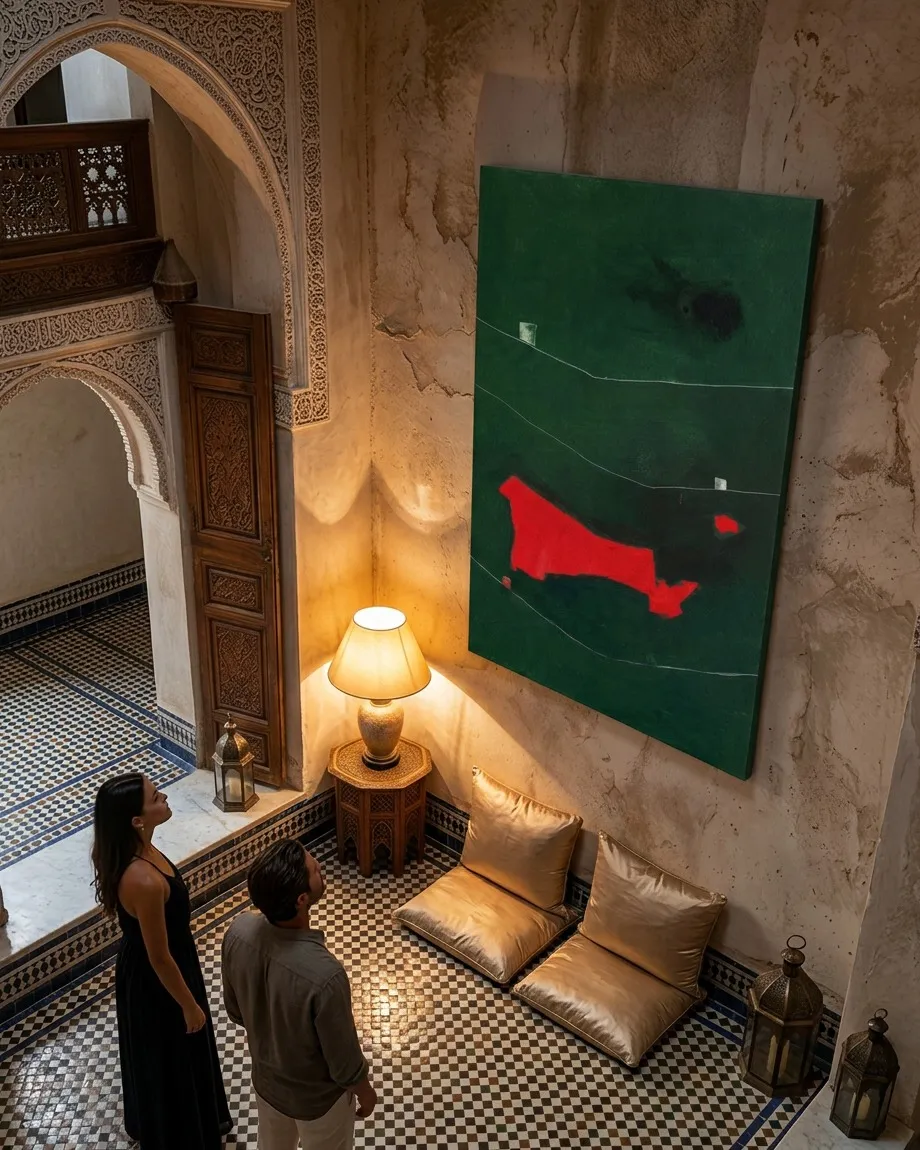
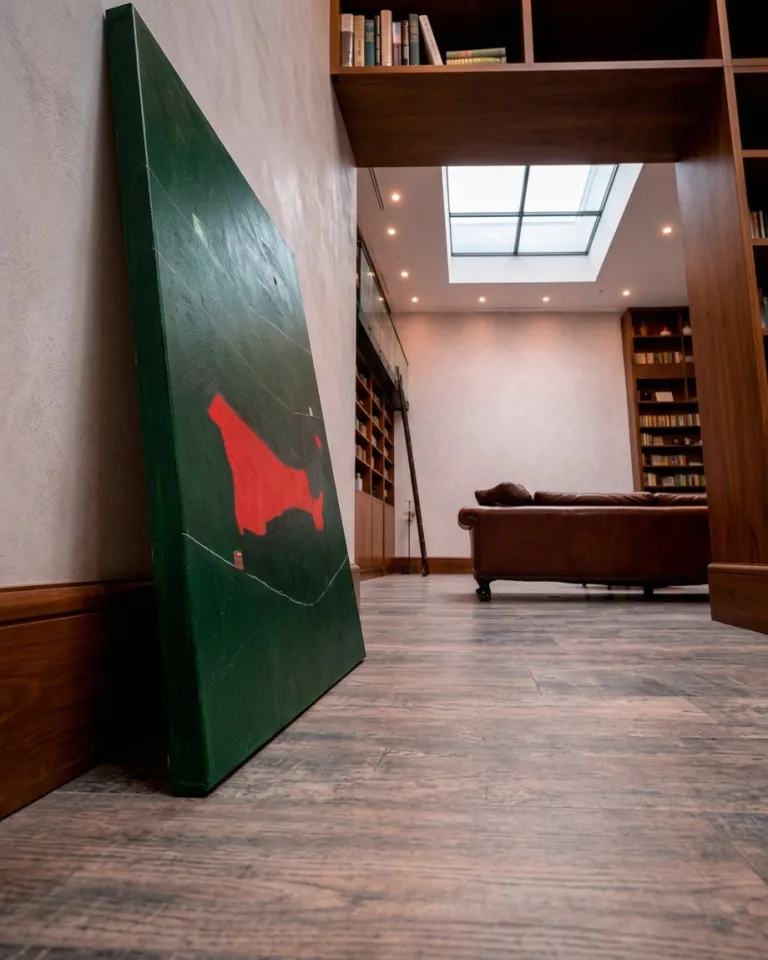
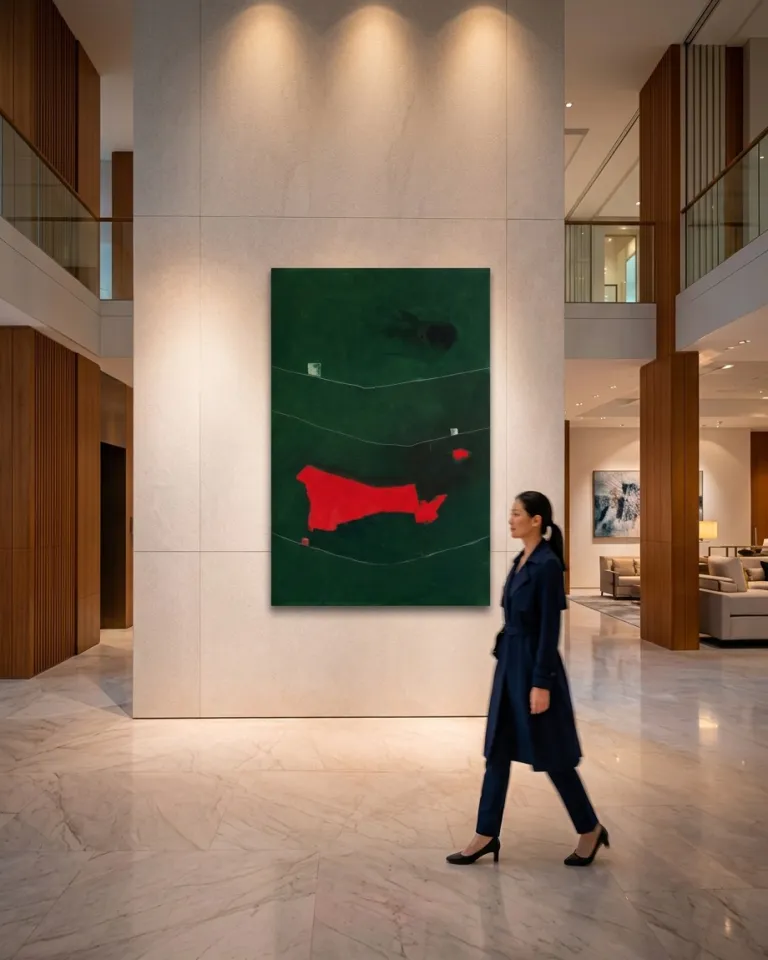
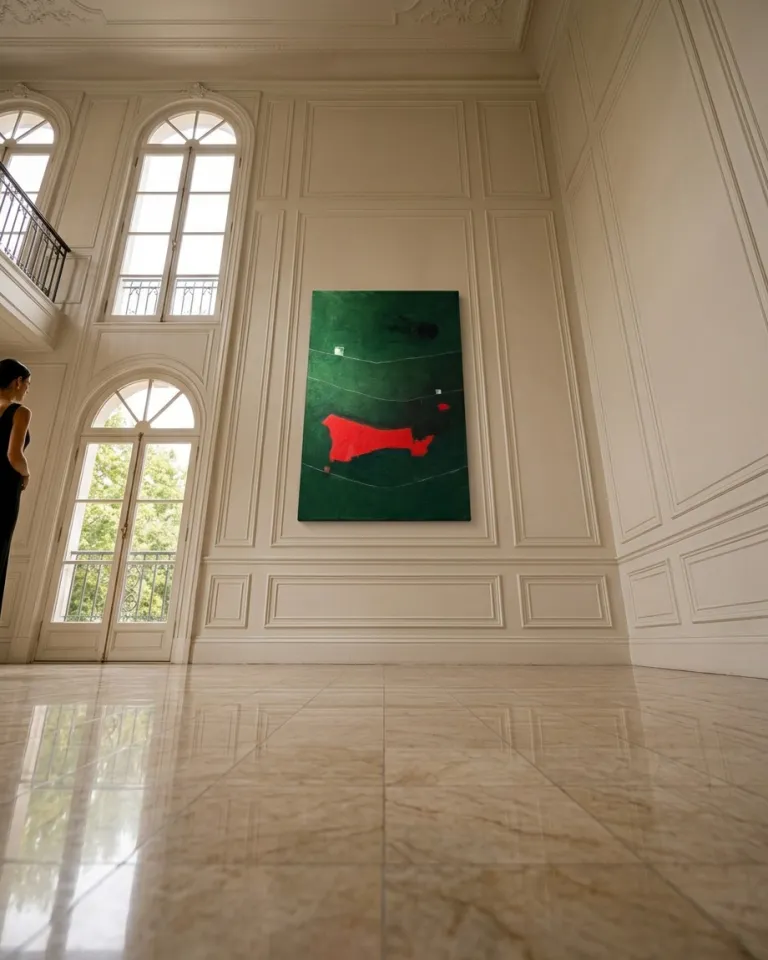
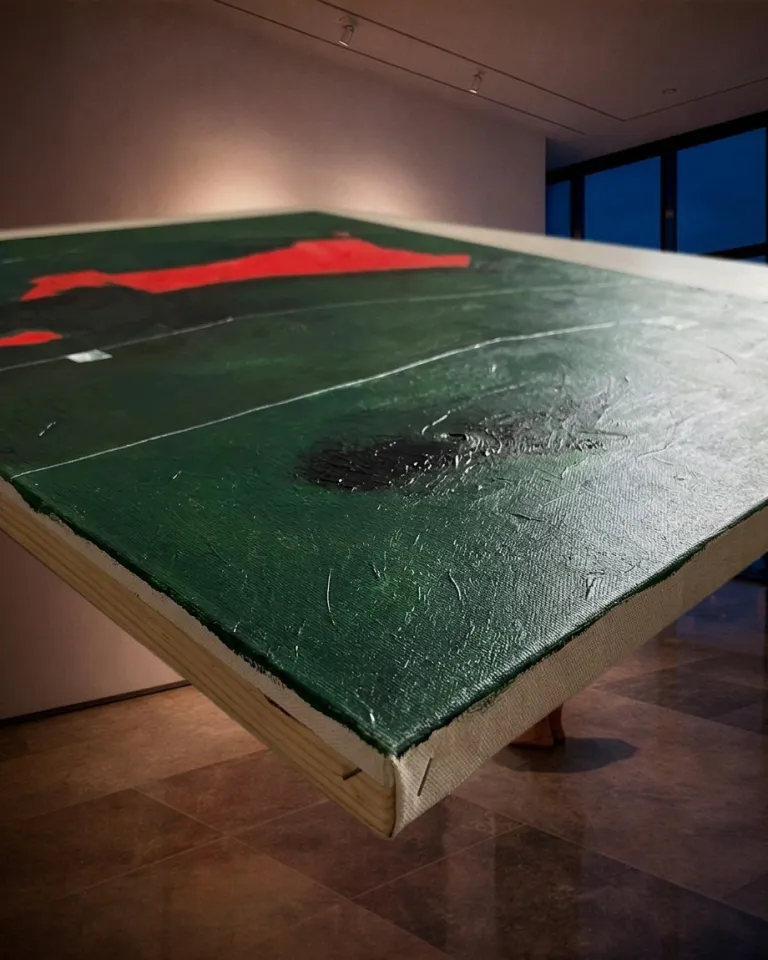
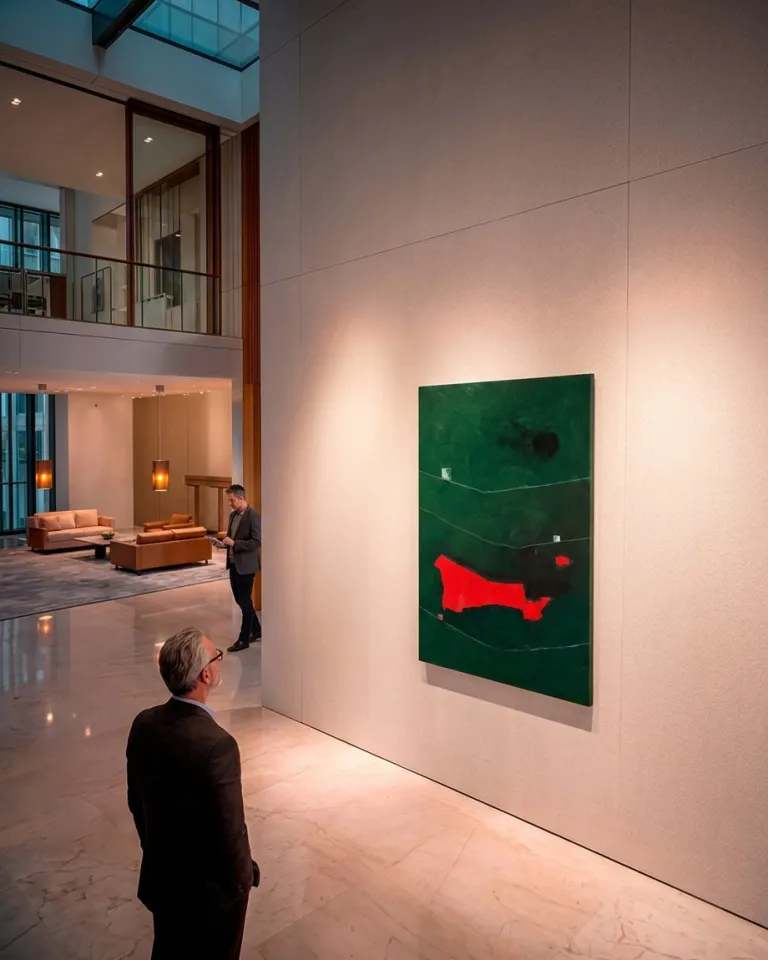
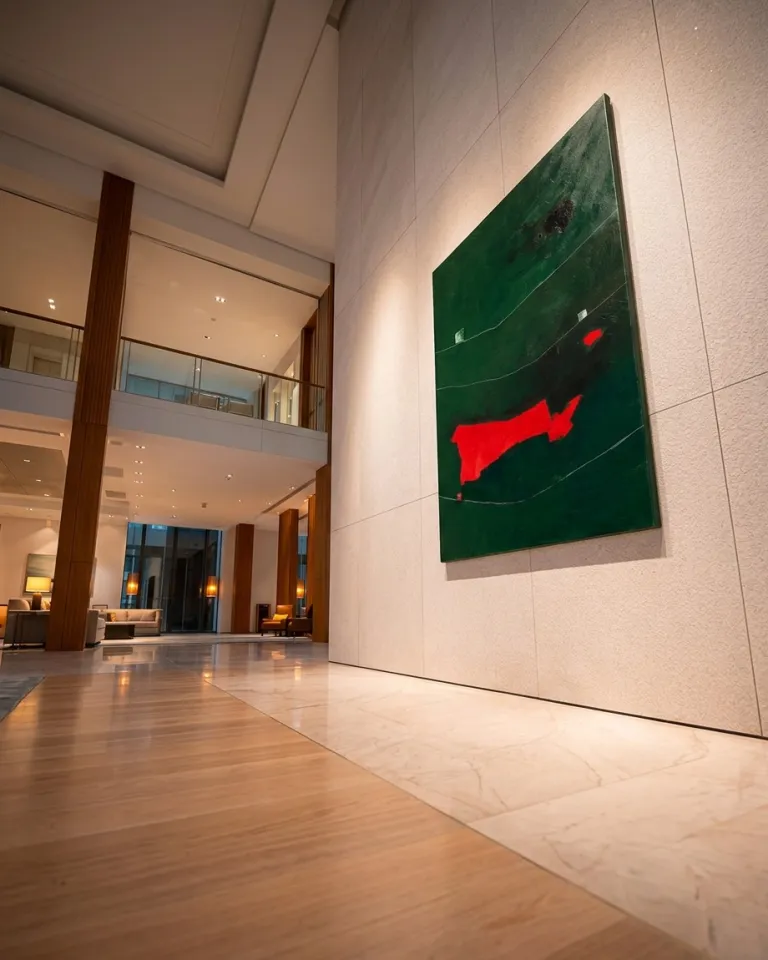
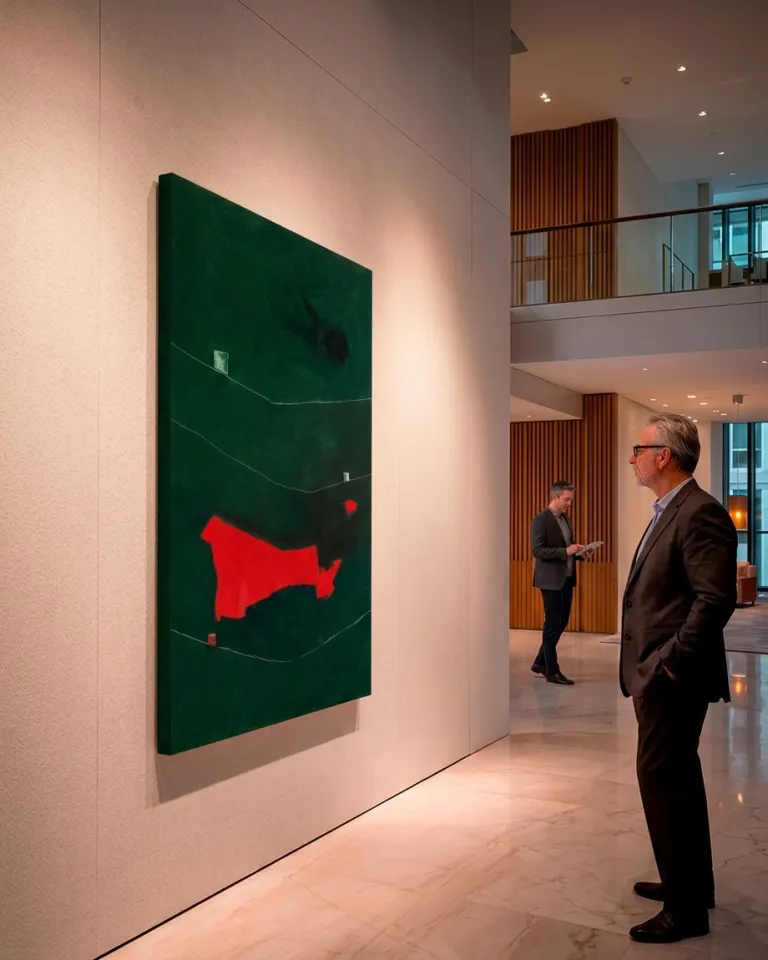
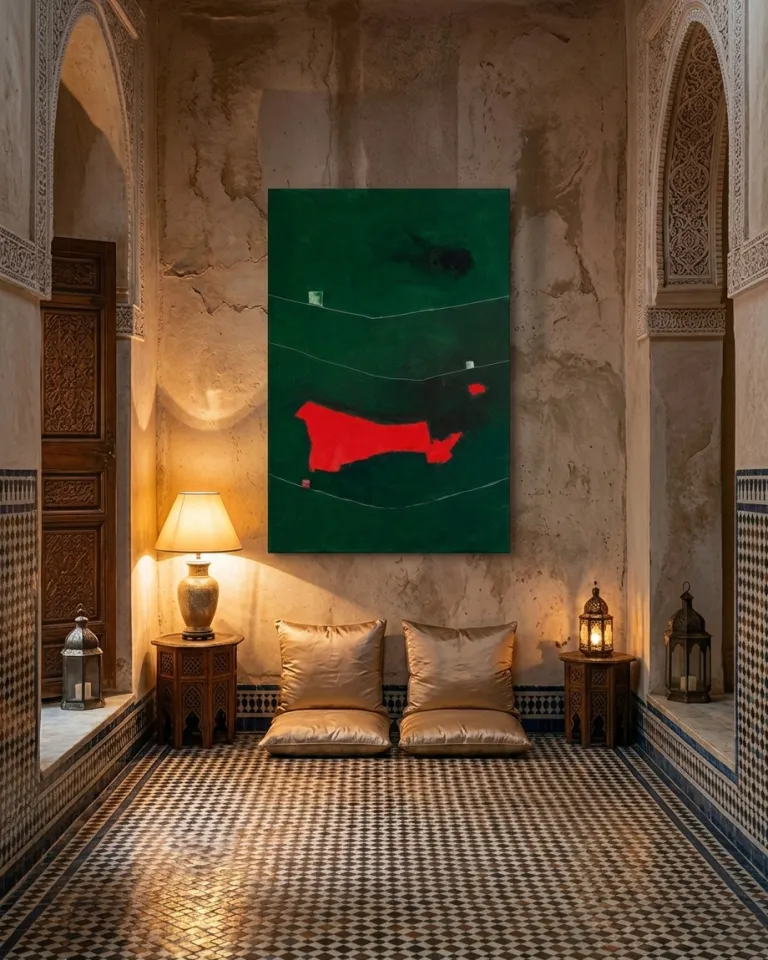
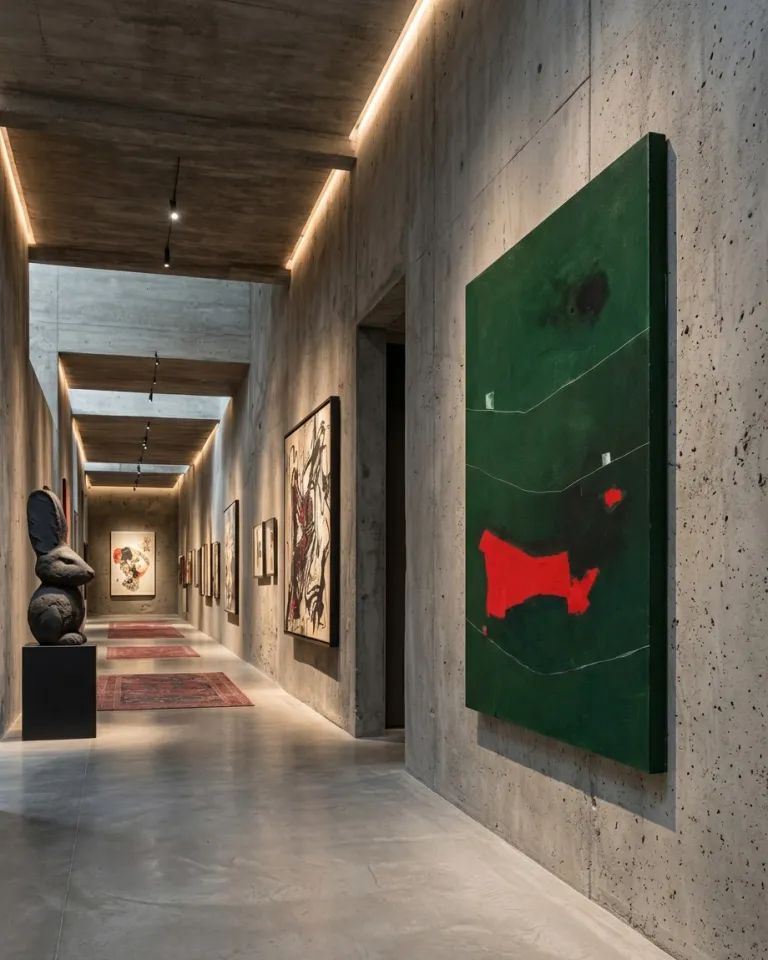
Sogno di un filo teso
From the STRATA series
- Size
- 31.5 × 47.2 in / 80 × 120 cm
- Series
-
STRATA
 Painting series
STRATA
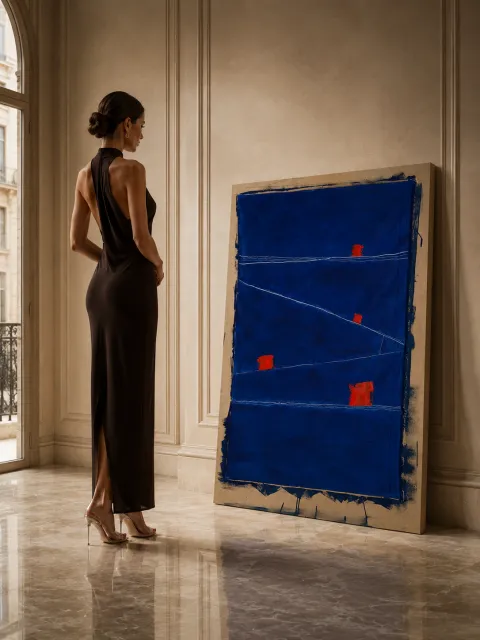
STRATA brings together abstract paintings in which the surface becomes a territory of pressure, cutting and duration. Amid dense chromatic fields, compact blocks and incisions, Maurizio Valch situates memory as a material trace rather than a decipherable narrative. View series
Painting series
STRATA
STRATA brings together abstract paintings in which the surface becomes a territory of pressure, cutting and duration. Amid dense chromatic fields, compact blocks and incisions, Maurizio Valch situates memory as a material trace rather than a decipherable narrative. View series
- Context studies
- 10
Conceptual Note
Movement I: The Tension of the Horizon (The Upper Lines)
Faced with the green immensity of Sogno di un filo teso, space does not present itself as a flat background, but as a dense mass exerting resistance. Two asymmetrical perspectives converge before this suspended territory. On one hand, Jorge Luis Borges, a writer who explored infinite labyrinths, invisible geometries, and the threads of memory that sustain the universe, observes the canvas and deciphers within it an architecture of pure thought. On the other, Jacques Cousteau, an explorer who descended into marine depths to decipher the life beating in the dark and under extreme pressures, perceives the work as a submerged ecosystem where every element struggles against the gravity of the fluid.
For the writer, the two fine lines crossing the upper half of the canvas are paths suspended in the void, Ariadne's threads attempting to bring order to the chaos of an undecipherable territory. However, the oceanographer interrupts this geometric reading: for him, these lines are not abstract, but steel cables subjected to a brutal tension, vibrating under the push of invisible currents. What sound would one of the fine white lines make if it snapped under the pressure of the darkness? Who holds the ends of those threads crossing the canvas from side to side? The green is not a static color; it is a dense air, a mass of cold water that breathes and constrains the white filaments, forcing them to bend slightly in their centers, as if something invisible had settled upon them to measure their resistance.
When I rested my wrist on the green plane, I did not know if I was opening a path in the air or digging into a wall of solid water. Tracing that white line required holding my breath; a millimeter of deviation and the tension would have completely collapsed. I felt the coldness of the dark pigment pushing against my hand, demanding a hand as steady as that of someone walking over an abyss without a net.
Movement II: The Intrusion of the Mass (The Red Spot)
Suddenly, the balance breaks. In the lower half of the painting, a gigantic red mass breaks in like a thermal aggression. The coldness of the green-black clashes with this dense, irregular fire. Borges sees in this spot an unmapped continent, an intrusion of the real and violent in the midst of the rational dream of the lines. Cousteau, almost touching the vibration of the color with his fingertips, interprets it as a volcanic ridge, a wound in the crust that emanates heat and alters the density of the water around it.
How much does the color red weigh when surrounded by a green that seems to breathe? Is the red mass something ascending like a thick helium balloon, or something slowly sinking to the bottom? Gravity here becomes tactile: the red does not float, it asserts itself with the viscosity of blood or cooling lava. The small light-colored squares floating near the lines seem like signaling buoys or the remains of an intellectual shipwreck trying to warn us of the danger of that great incandescent mass. A vibration is generated between the two observers: the mental geometry of the Borgesian labyrinth is deformed by the physical and thermal pressure that Cousteau describes in the depths. The painting is no longer merely looked at; it is suffered in the muscles.
I listen to these two men talk of maps and abysses, and I realize they are right, but only in part. There is an area of the painting, that dark knot where the red tears and mixes with the gloom on the right, which still completely escapes me. While painting it, I felt that the matter was making its own decision, a gravity I had not planned, and even today I wonder what force beats inside there, out of my control.
Movement III: The Lower Abyss
In the lower strip of the work, the darkness becomes almost absolute. Here, the last white line no longer holds rigid: it curves pronouncedly downward, overcome by a gravitational force we do not see but clearly intuit. Borges and Cousteau remain silent. The writer understands that the labyrinth has collapsed under its own weight; the explorer knows we have reached the abyssal trench, where pressure would crush any unprotected body.
The canvas has ceased to be a flat surface of 80 by 120 centimeters to transform into a three-dimensional well where the air is heavy and the color beats. The last sagged line is the limit of our resistance. Something pulls at it from the bottom edge of the frame, a loose end that is lost beyond the physical limits of the work. We are left with the doubt of whether that tense rope will manage to sustain the weight of the red mass, or if, at any moment, the thread will break, letting us fall definitively into the green silence that swallows everything.