

Published work / SITUS
CLIVUS
From the SITUS series
- Medium
- Pintura
- Size
- 31.5 × 51.2 in / 80 × 130 cm
- Series
-
SITUS
 Painting series
SITUS
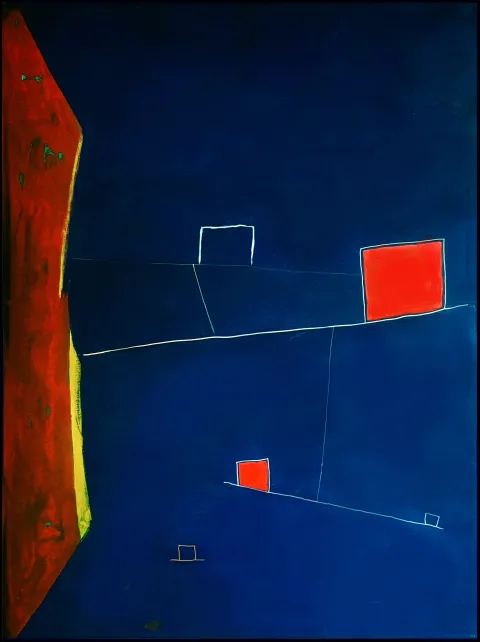
SITUS brings together abstract paintings in which the position of a form, the distance separating it from another, and the activity of empty space construct a territory of relations. Maurizio Valch works with lines, edges, shifts in level, and fields of colour as conditions of presence rather than signs within a closed narrative. View series
Painting series
SITUS
SITUS brings together abstract paintings in which the position of a form, the distance separating it from another, and the activity of empty space construct a territory of relations. Maurizio Valch works with lines, edges, shifts in level, and fields of colour as conditions of presence rather than signs within a closed narrative. View series
- Orientation
- Vertical
- Context studies
- 9
Conceptual Note
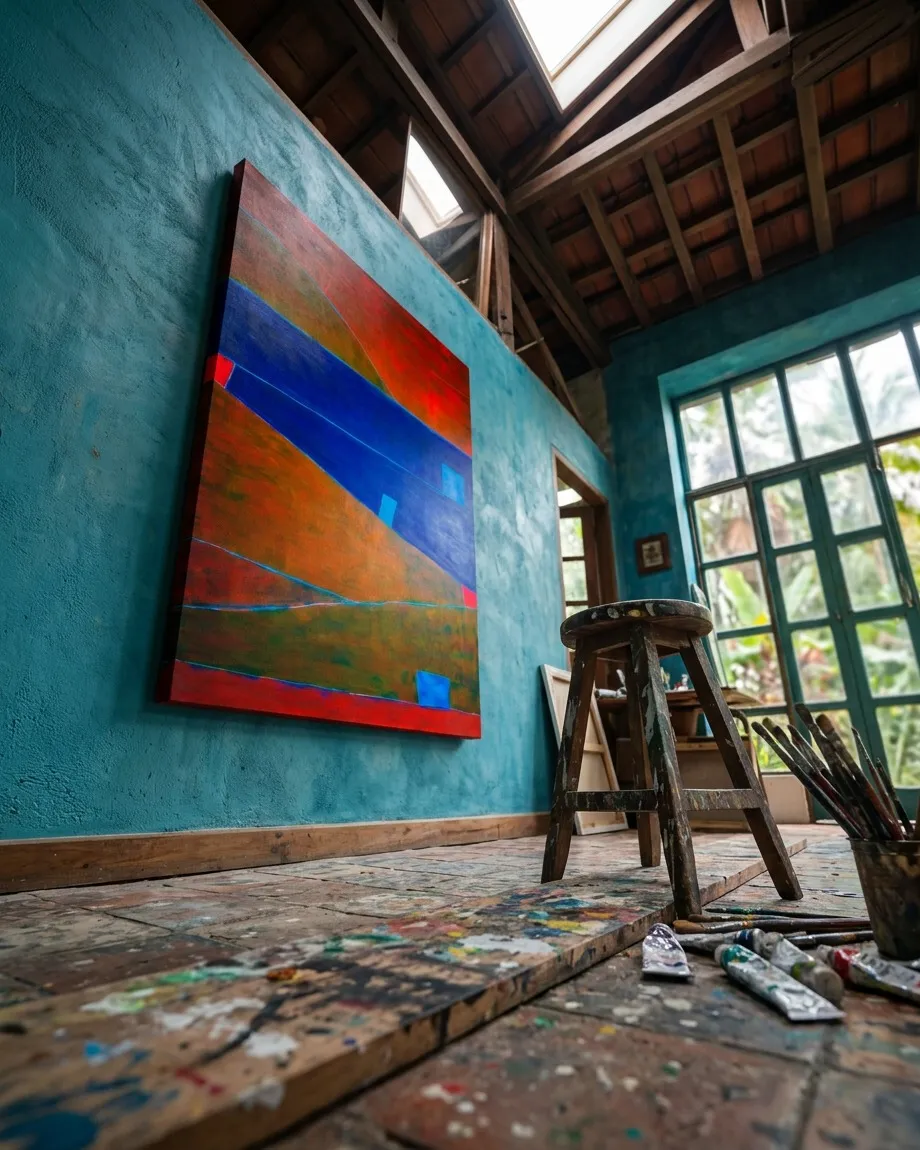
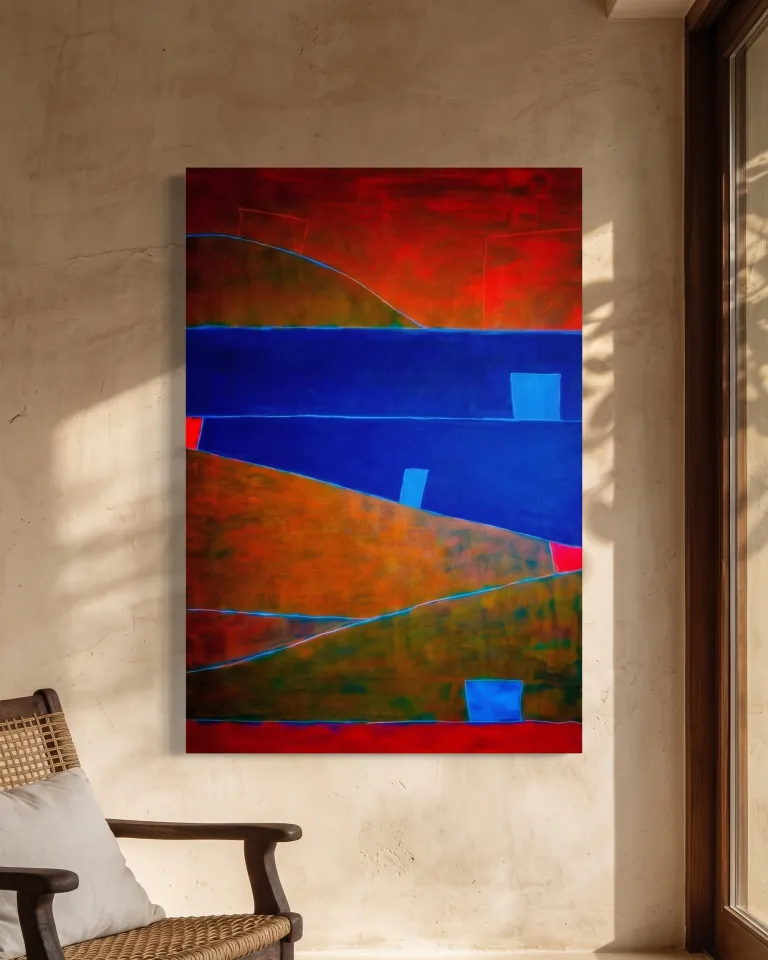
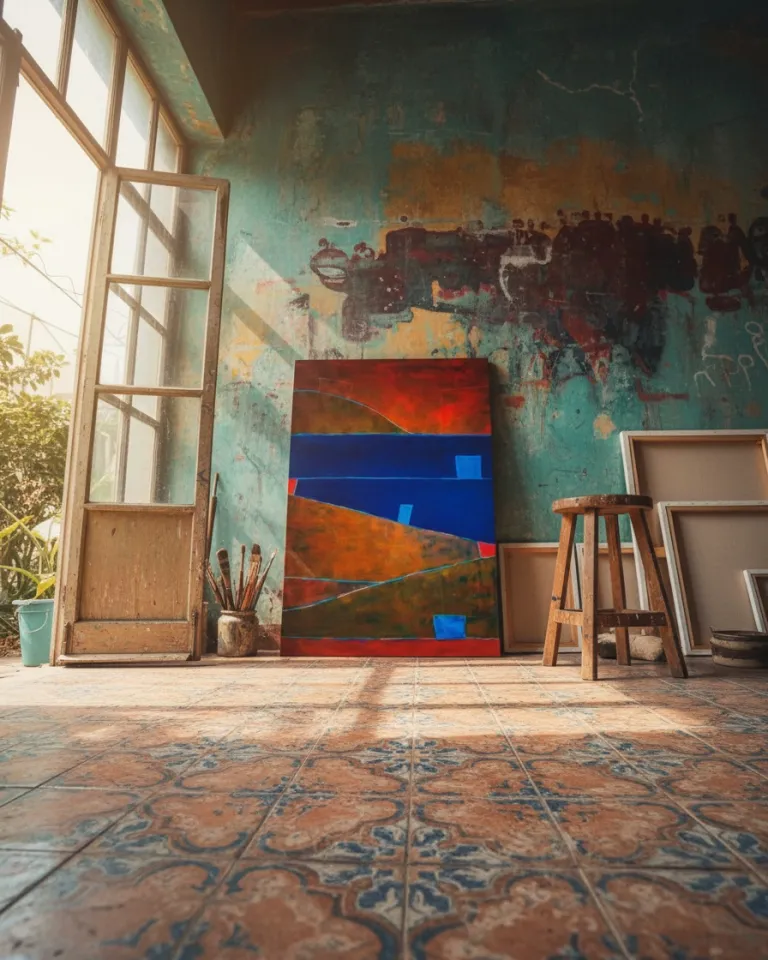
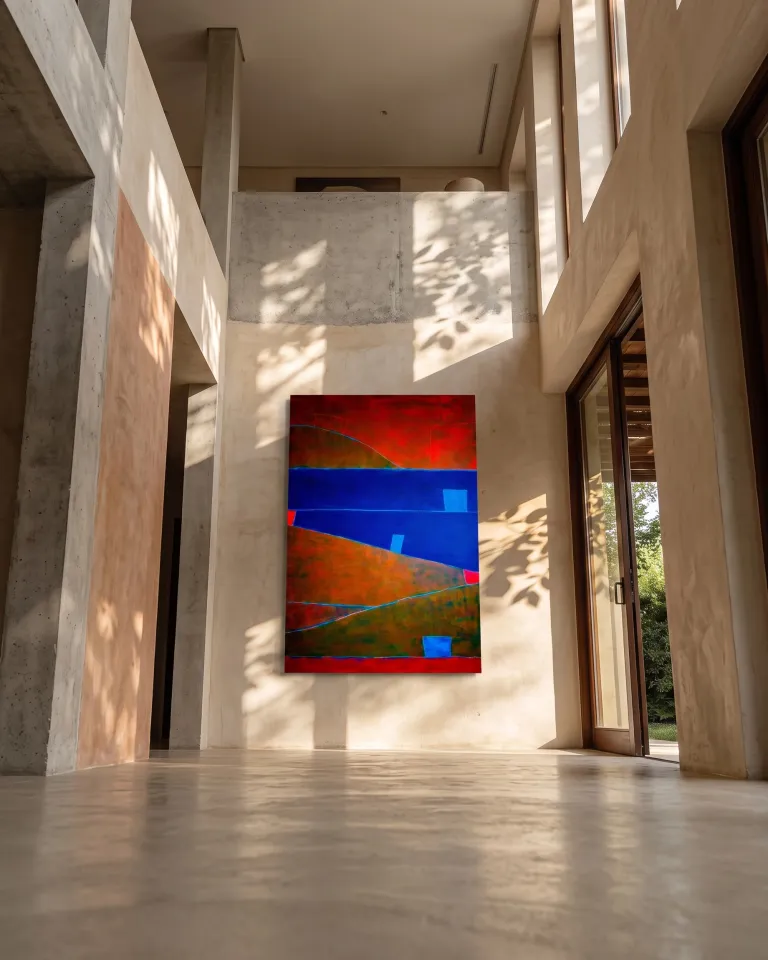
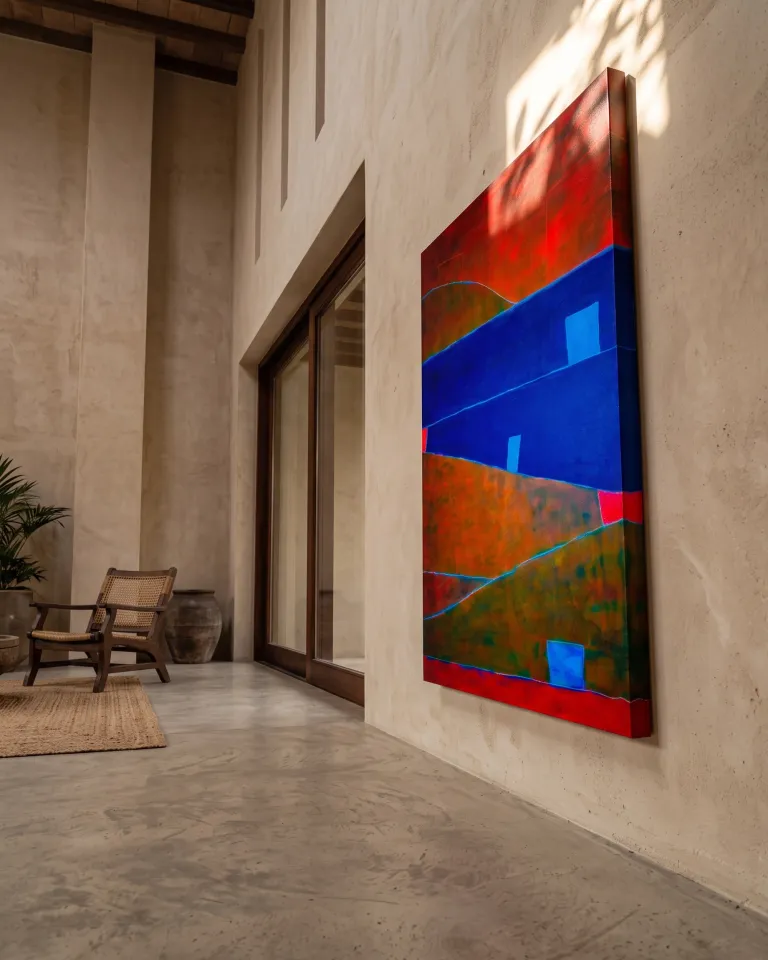
The spatial organization of CLIVUS immediately asserts itself through a geography of inclined planes and slanted horizons that challenge the viewer's stability. Far from offering firm ground, the surface fragments into strata of ocher, dry green, and brown tones that slide downward, pressed by the weight of a sky burning in crimson red and split by a dense central blue abyss. In this topography of decline, belonging is not manifested as a safe harbor or a resting plain; on the contrary, inhabiting this space demands a constant negotiation with gravity. Belonging to this pictorial territory means recognizing oneself as part of a system of sedimentation and sliding, where the only possible stability consists in learning to sustain oneself on the slope, accepting the drift of the planes as the fundamental condition of one's own settlement.
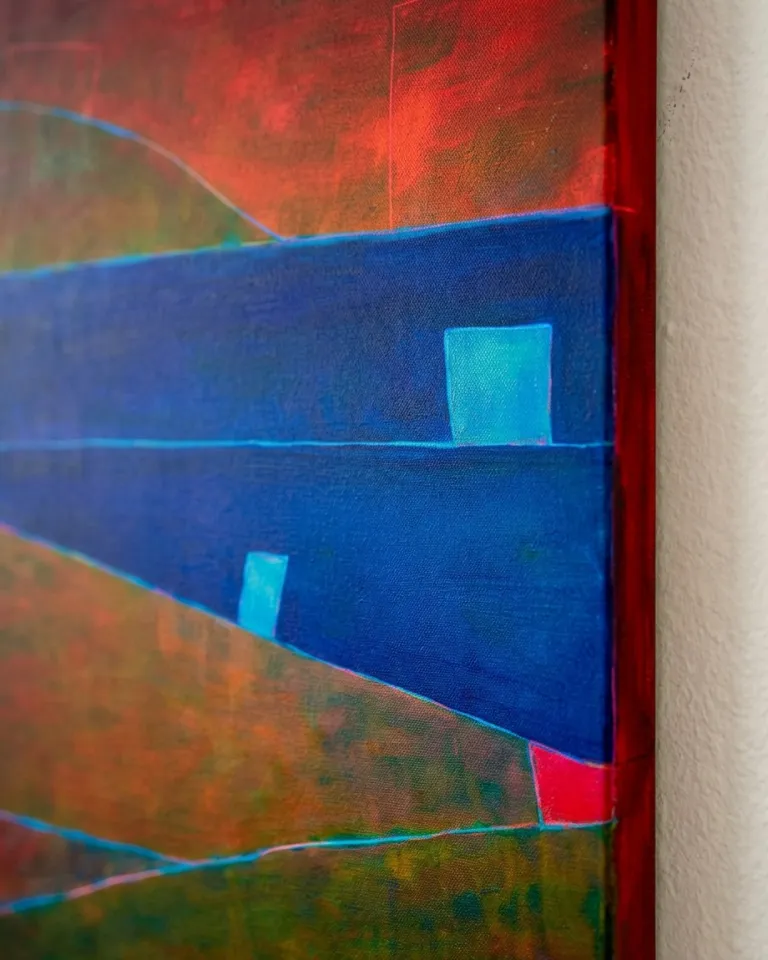
I conceive the surface of the canvas as a field of forces where each layer of oil and acrylic that I accumulate and scrape seeks its own physical resistance. For me, protection does not consist in building airtight walls that isolate the material from the outside, but in the strategic placement of those blocks and monoliths that sustain the push of chromatic sediments. By dragging the palette knife and the brush, I leave marks, burrs, and textures that function as a tactile refuge; they are traces of my own body that contain the dissolution and prevent the paint from falling into the void of pure color. Sealing this space with dense planes is my way of shielding the canvas, offering physical points of support where color, in its implacable advance, finds a limit and a surface where it can accumulate without losing its density.
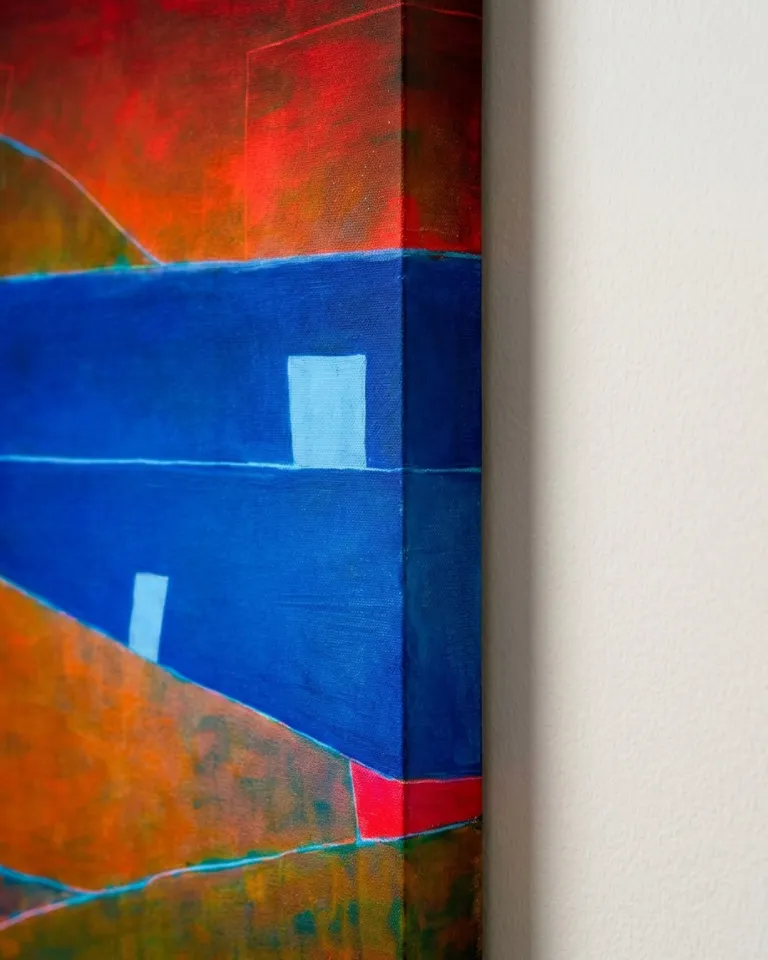
Amid this instability, the light blue monolithic blocks distributed across the different levels of the composition introduce a geometric tension that redefines the space. These are not floating, disconnected shapes, but volumes that assume the inclination of the fields containing them, some settled with apparent firmness and others tilted dangerously on the slope. It is here that trust materializes, understood not as a passive certainty, but as the physical surrender of geometry to the laws of decline. This surrender is reinforced by the small wedges of electric pink and bright red that break into the edges of the strata; these fragments of light act as wedges or stoppers that halt the slide, demonstrating that the tension accumulated at the lateral joints is what sustains the structure and prevents the landscape from collapsing into the external void.
When I sink the metal into the fresh matter to trace those thin, scratched lines that delimit the fields, I am not simply drawing borders; I am opening incisions that reveal the history of the painting. For me, the act of cutting the surface is a search for truth by subtraction, an attempt to reach the bone of the canvas. It is in these scars where I write trust and belonging: scraping away the layers of crimson or ocher to reveal the light of the original support is not a destructive gesture, but the cartography of a shared resistance. Each incised line is a necessary wound, a path of transit that delimits where one stratum breaks and where the next begins, showing that the structure of the painting is held together precisely through its exposed fractures.
Stepping back to contemplate CLIVUS at its actual scale of 130 centimeters in height, leaning against the silent plane of the wall, the work acquires a volumetric, three-dimensional, almost object-like presence. Its thickness of three centimeters and its clean edges project a real shadow on the wall, turning the painting into a physical body that shares our space. In this encounter, the slope ceases to be an imminent threat of falling and is transformed into a tactile, walkable edge. The concepts of belonging, protection, and trust are finally unified in the perception of the viewer, who understands that inhabiting the wound, the decline, and the friction of matter is not a symptom of vulnerability, but the only possible way to experience gravity, weight, and the movement of our own body before the pictorial plane.