
Published work / STRATA
ASCENSUS
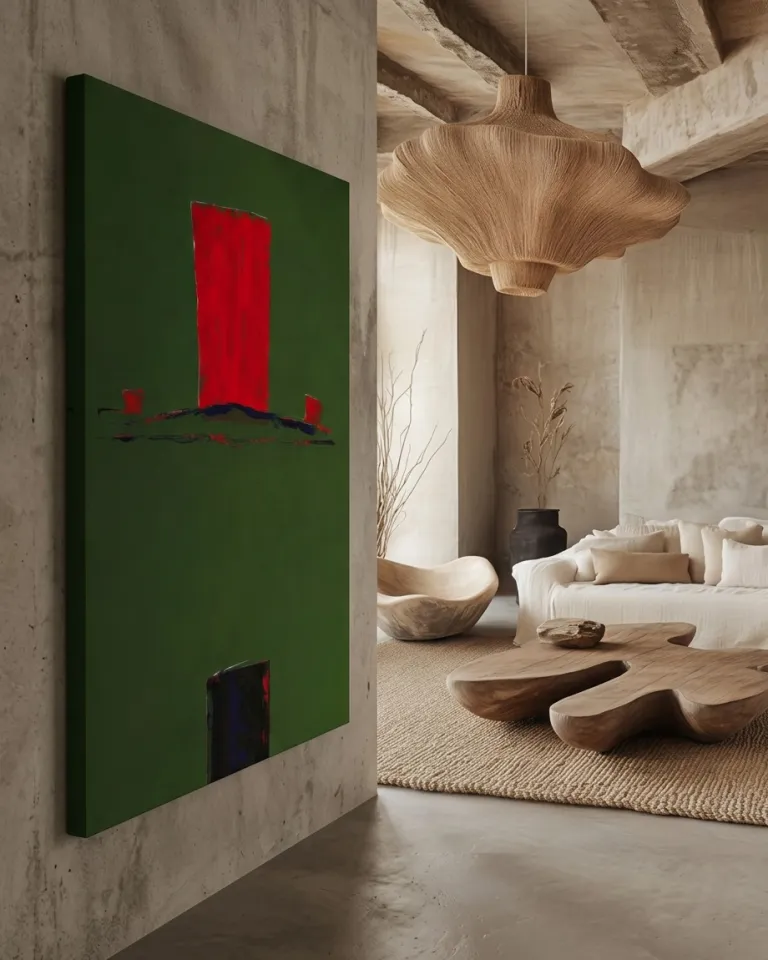
Vertical Abstract Painting by Maurizio Valch from the STRATA Series
- Size
- 31.5 × 47.2 in / 80 × 120 cm
- Series
-
STRATA
 Painting series
STRATA
Maurizio Valch's STRATA series features contemporary abstract painting, showcasing artwork with stratified surfaces. Crafted with acrylic and oil on canvas, this series stands out for its dense chromatic fields and profound incisions, evoking an inner, archetypal territory. View series
Painting series
STRATA
Maurizio Valch's STRATA series features contemporary abstract painting, showcasing artwork with stratified surfaces. Crafted with acrylic and oil on canvas, this series stands out for its dense chromatic fields and profound incisions, evoking an inner, archetypal territory. View series
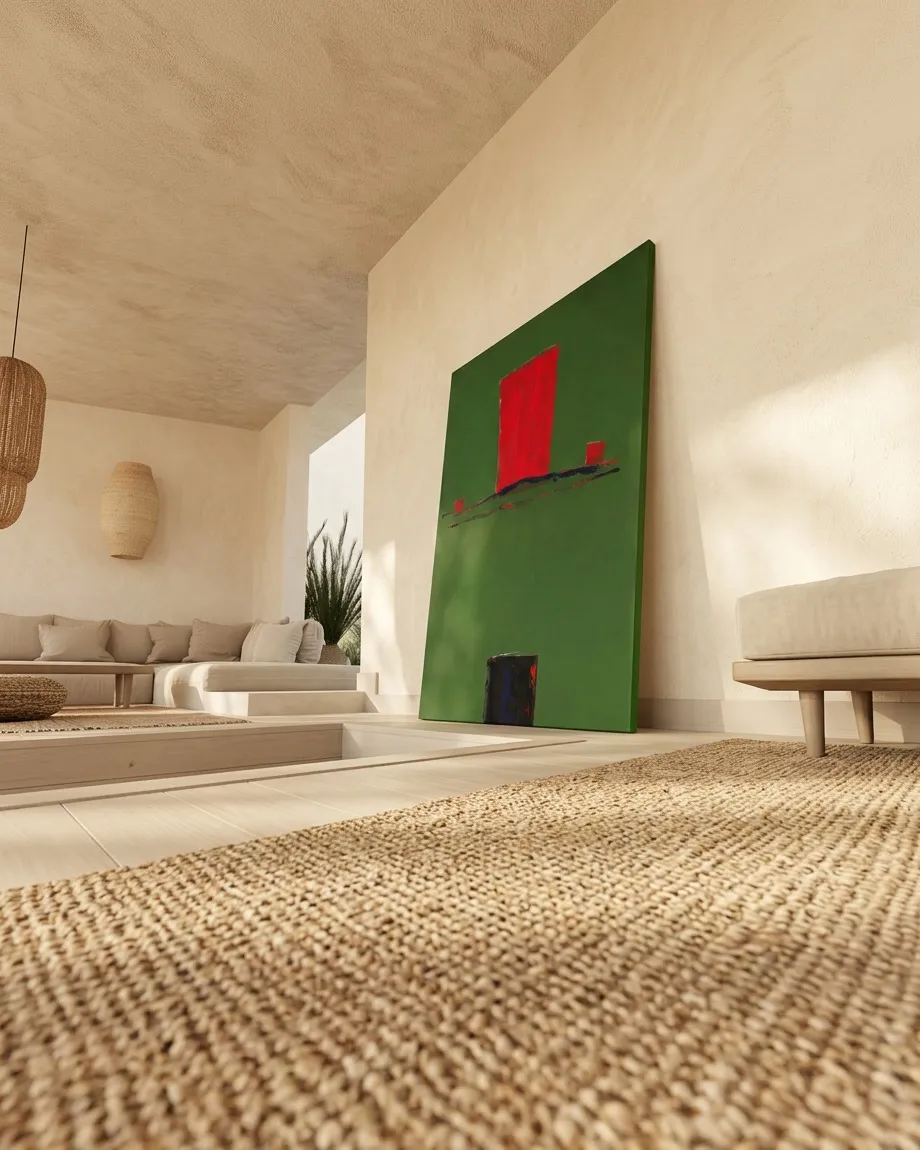
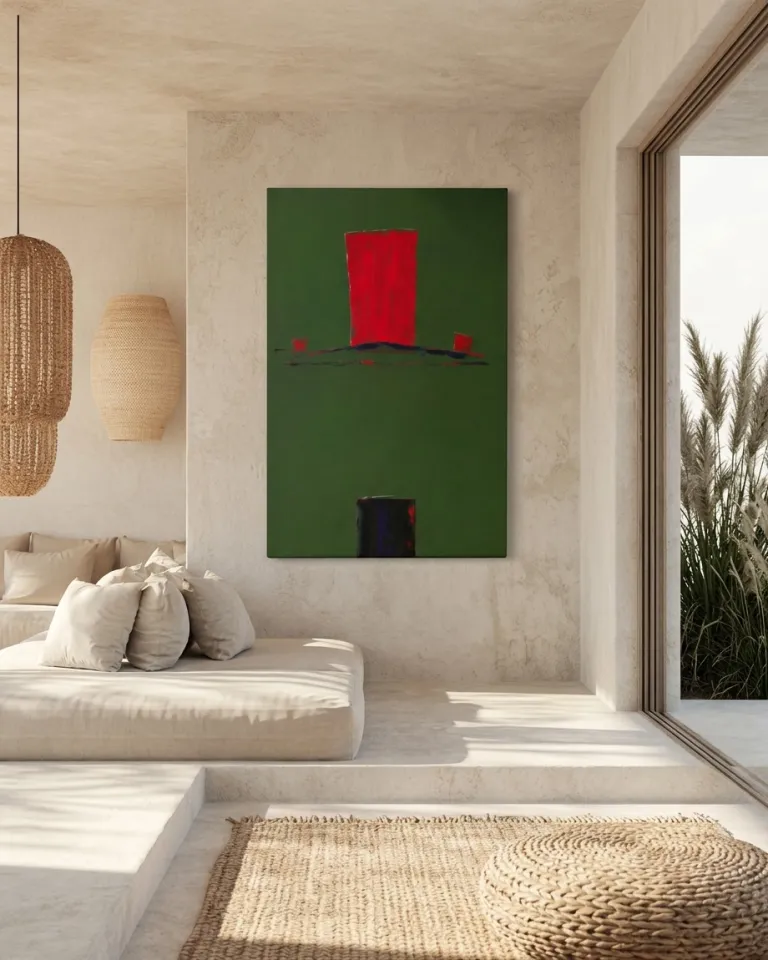
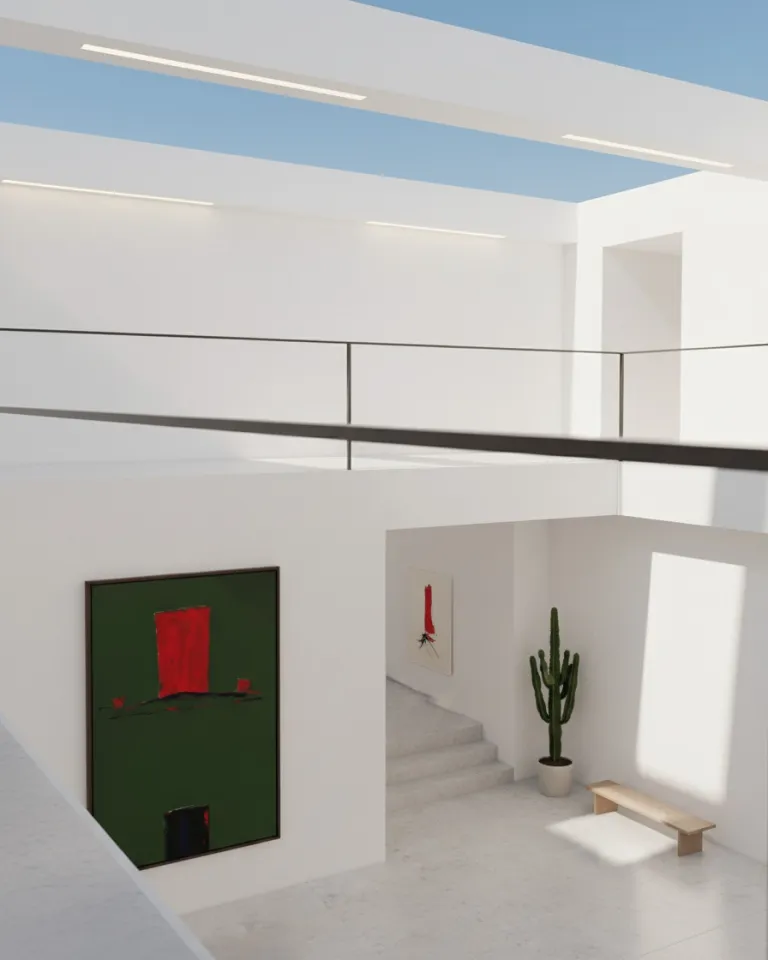
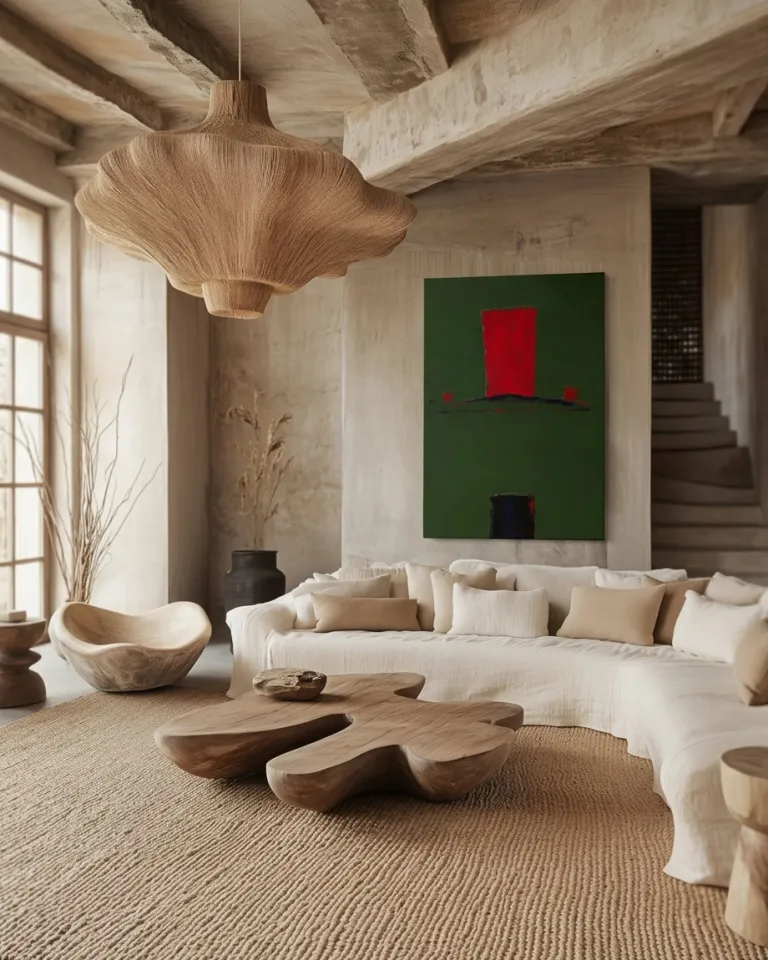
- Context studies
- 7
- Video
- 00:42
Conceptual Note
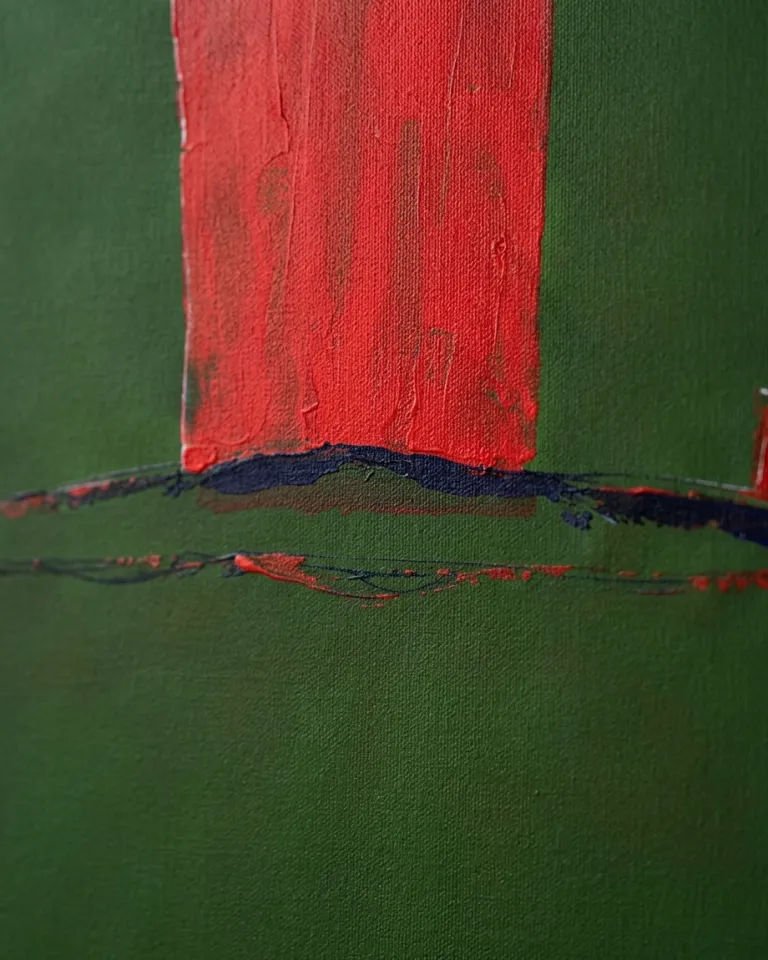
In STRATA XI — ASCENSUS, Maurizio Valch creates a contemporary abstract painting marked by the interaction of solid forms and an expansive vertical plane. Executed in acrylic and oil on canvas, the artwork features a dominant field of deep green, which serves as its foundational layer. Upon this surface, a prominent rectangular form of crimson red emerges in the upper section, notable for its volume and vibrant color. This monolithic structure rests on a dense horizontal band, where dark nuances and reddish touches reveal a textured surface with impasto and scraping. Two smaller red blocks accompany the central form, establishing a visual anchor that reinforces the vertical composition. The material quality of these painted forms lends them an almost architectural presence. At the bottom of the artwork, an isolated dark rectangular block, with subtle glimmers of red and blue, creates a counterpoint that converses with the masses above. This work explores the relationship between the stillness of the color field and the emergence of elements that suggest spatial stratification.
In ASCENSUS, my dialogue with Mark Rothko is manifested in the dominant field of deep green that serves as the painting's foundational layer. This expansive, still color field establishes an immersive atmosphere where the quiet weight of color dictates the spatial experience. The tension between this vast green plane and the emerging monolithic elements intensifies the emotional resonance of the canvas. At the same time, the composition aligns with the lineage of Nicolas de Staël through the compact blocks of color that introduce an architectural presence. The prominent rectangular form of crimson red, accompanied by two smaller red blocks, functions as a visual anchor that reinforces the spatial stratification of the work. These dense masses, along with the isolated dark rectangular block at the bottom, are structurally grounded by a textured horizontal band worked with impasto and scraping.