Published work / VORTEX
VORAGO
VORTEX Series
- Size
- 82.7 × 63 in / 210 × 160 cm
- Series
-
VORTEX
 Painting series
VORTEX
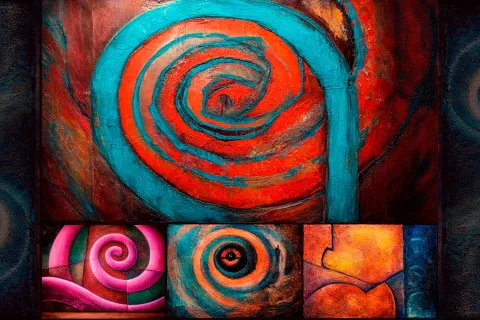
The Maurizio Valch VORTEX series presents an original contemporary abstract painting on canvas. These works, executed in acrylic and oil, explore the dynamics of attraction and transformation through concentric forms and distinctive material textures, creating a visually powerful space. View series
Painting series
VORTEX
The Maurizio Valch VORTEX series presents an original contemporary abstract painting on canvas. These works, executed in acrylic and oil, explore the dynamics of attraction and transformation through concentric forms and distinctive material textures, creating a visually powerful space. View series
- Context studies
- 11
Conceptual Note
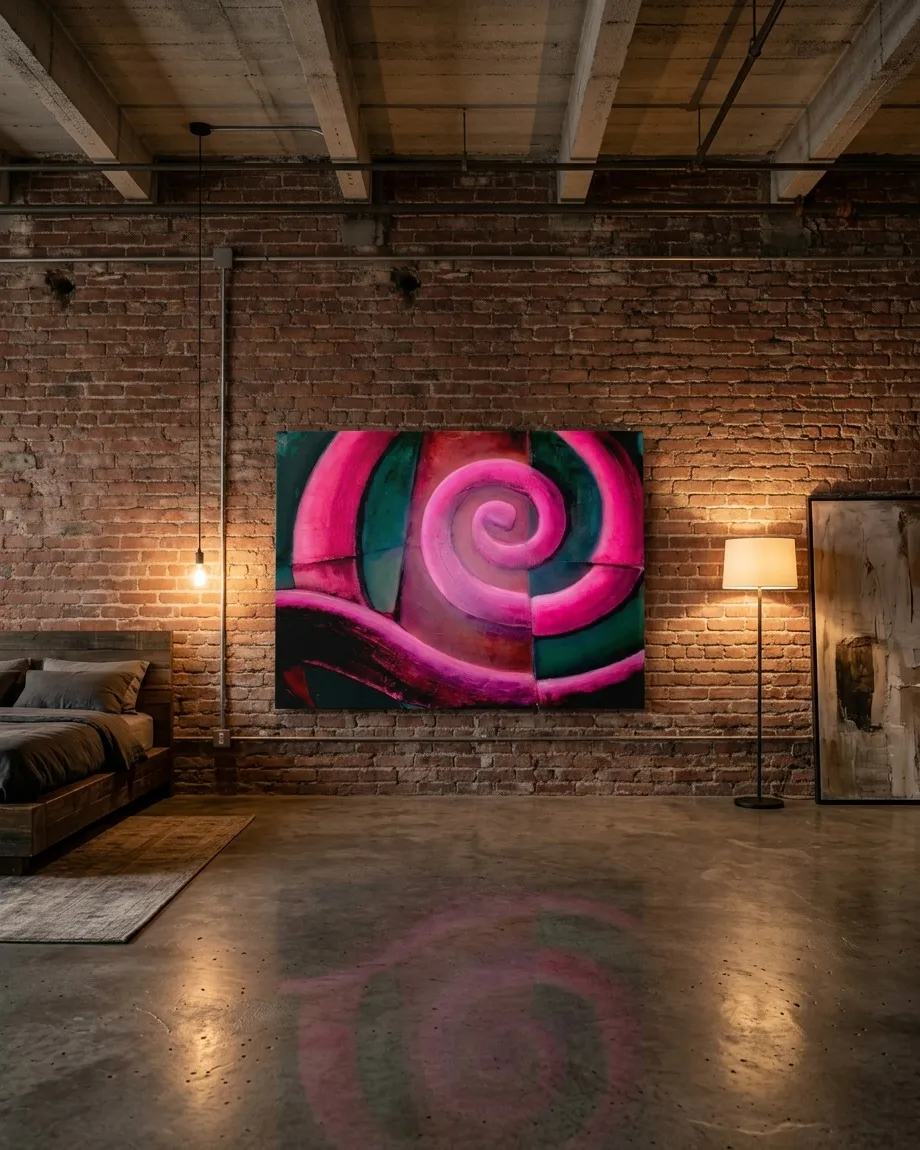
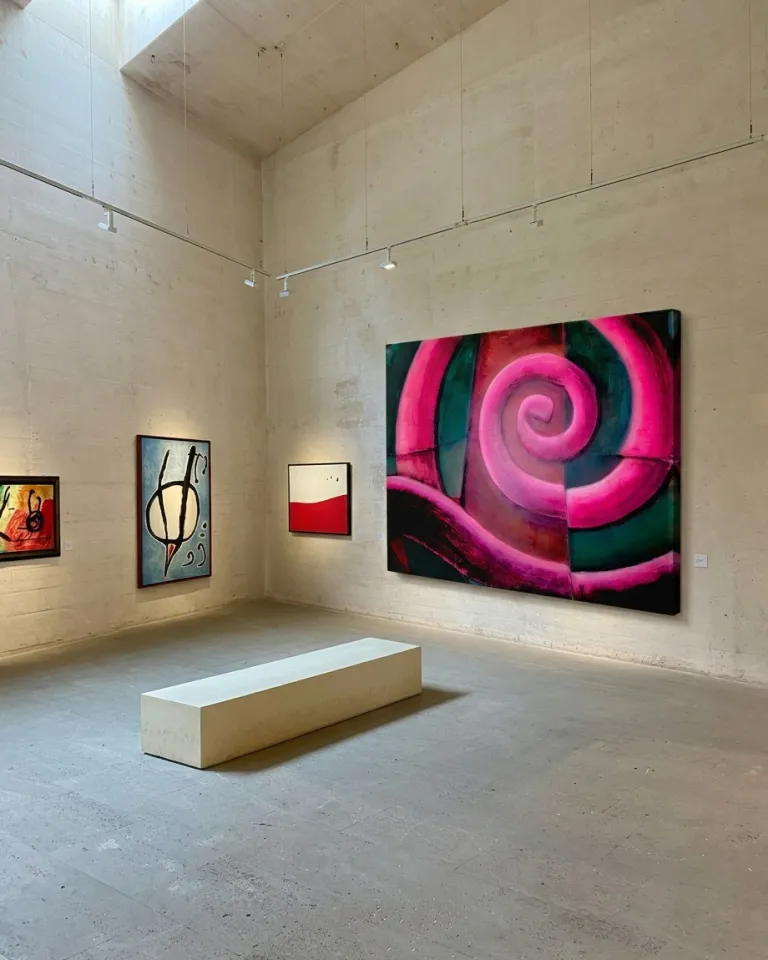
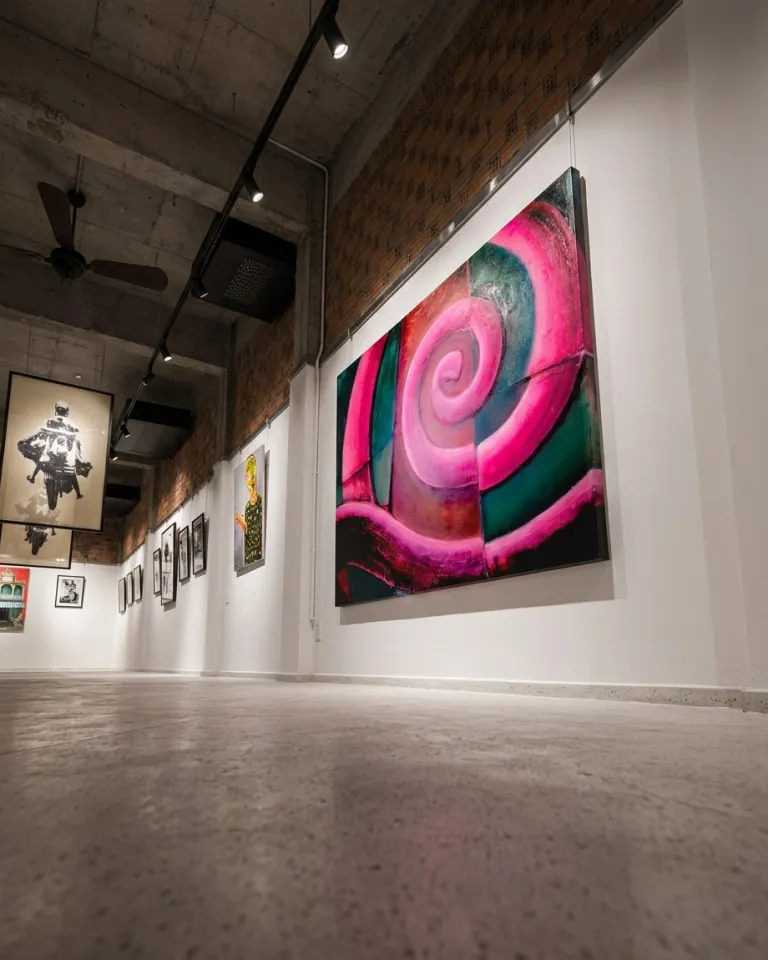
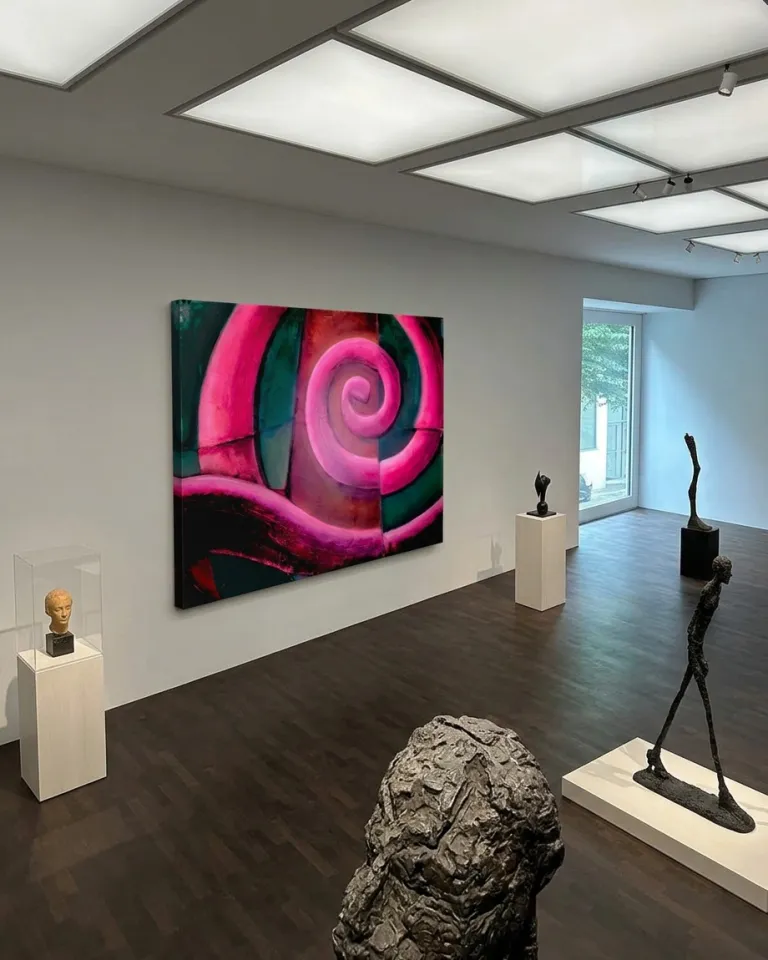
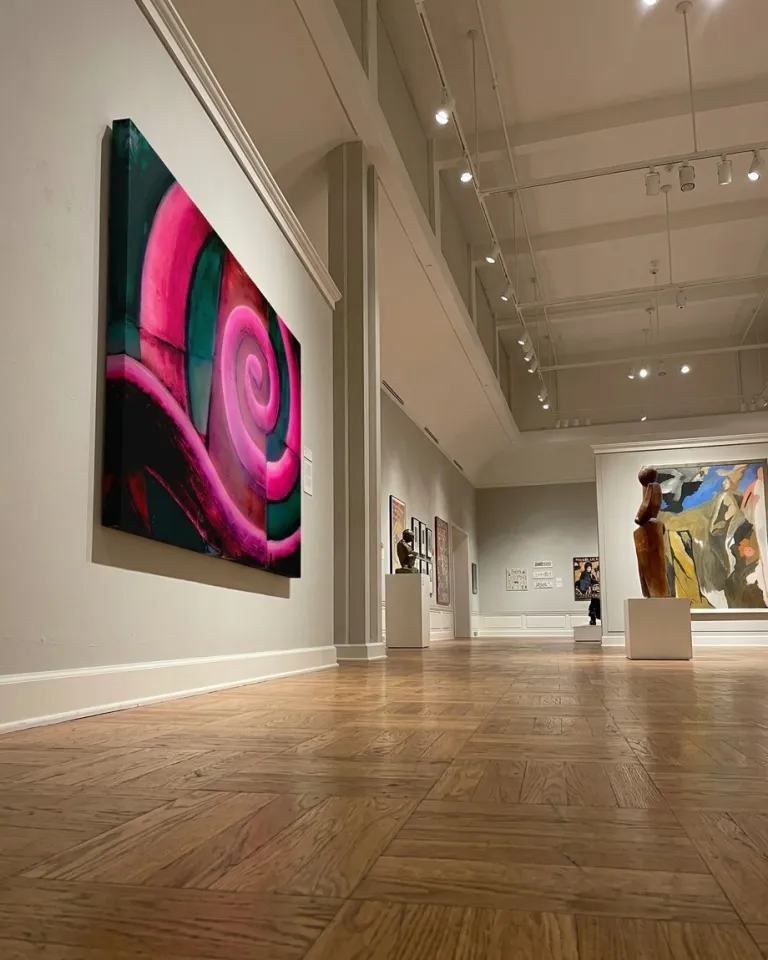
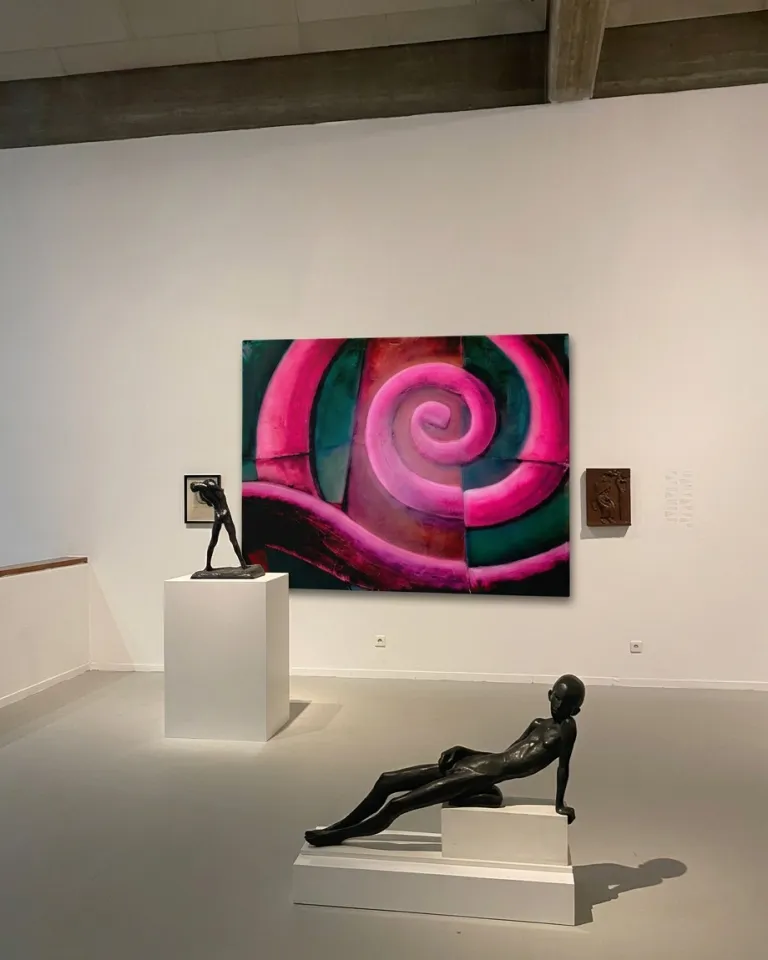
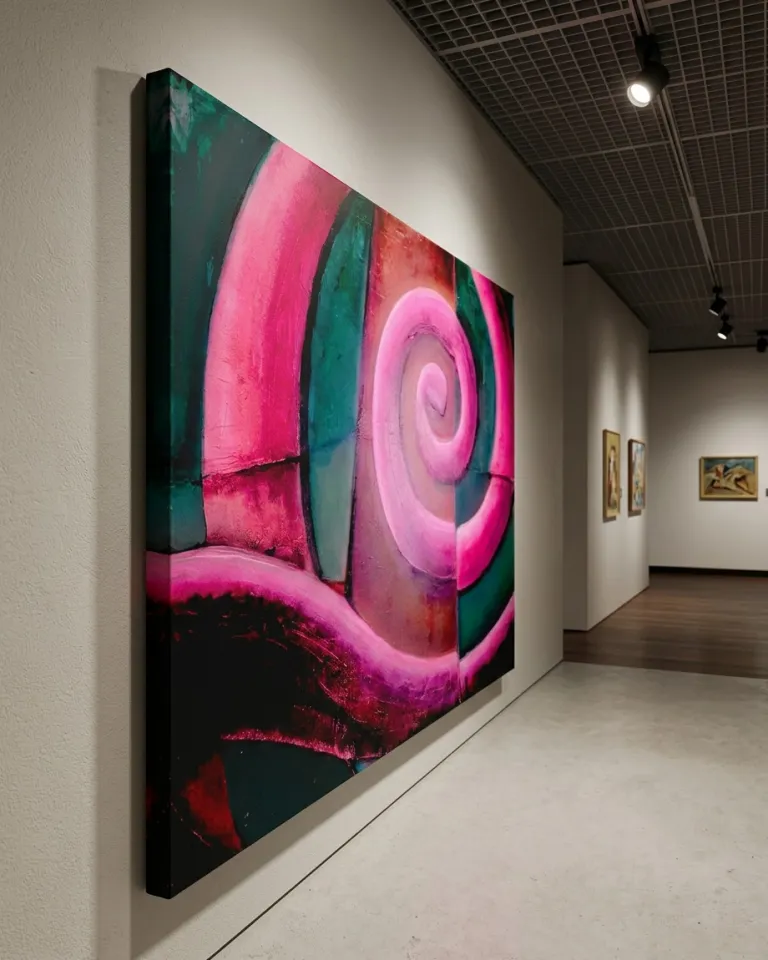
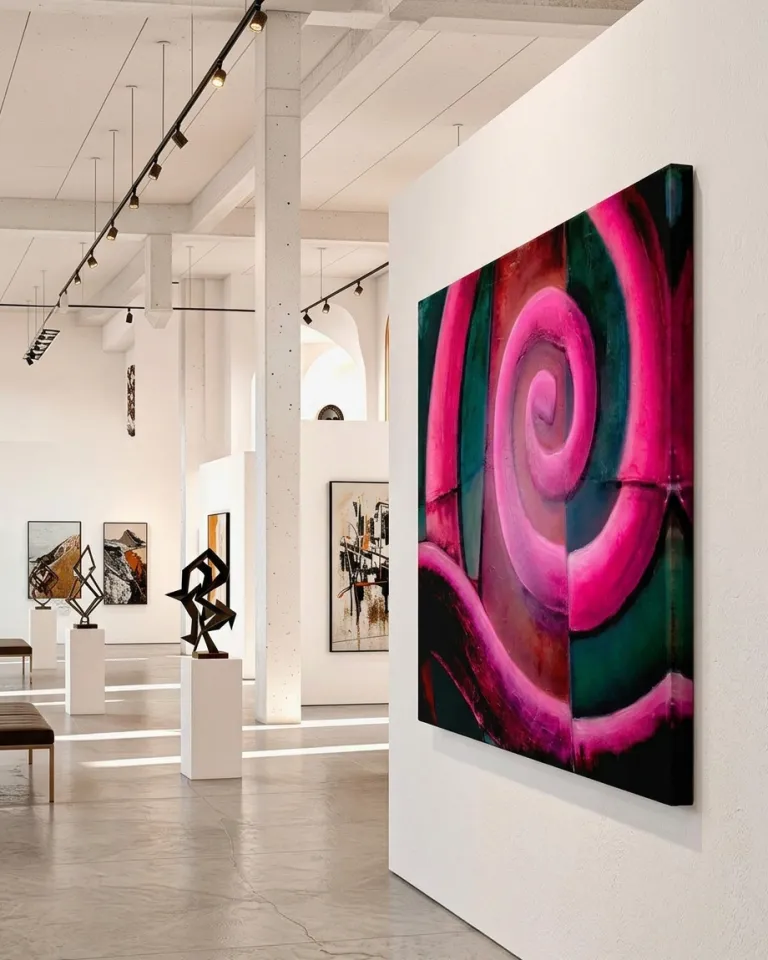
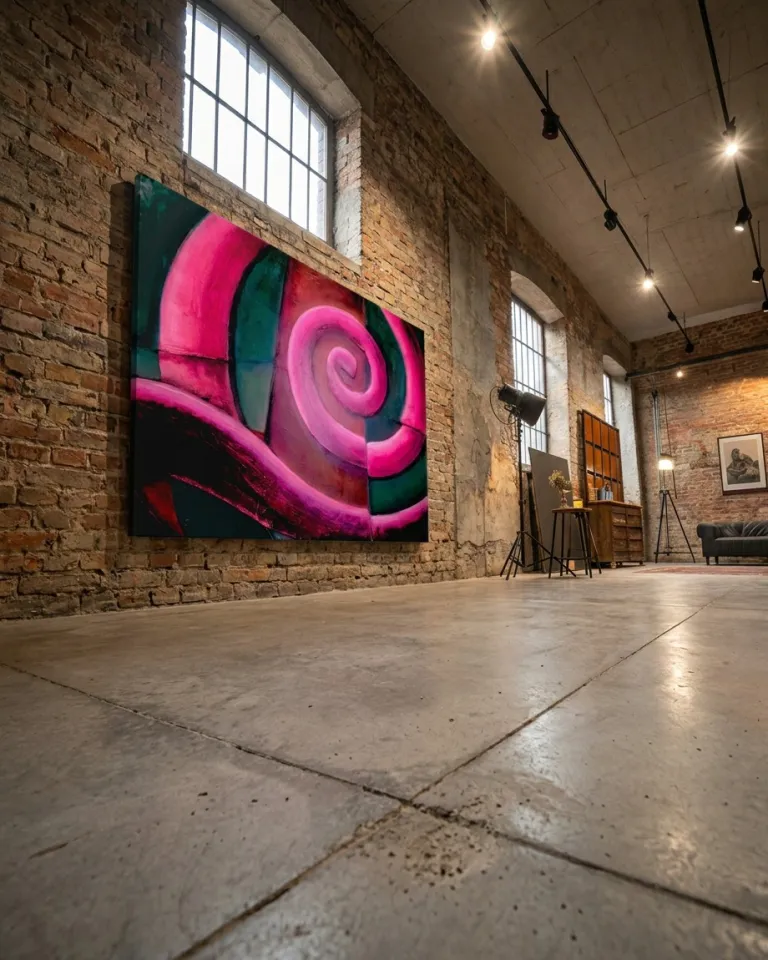
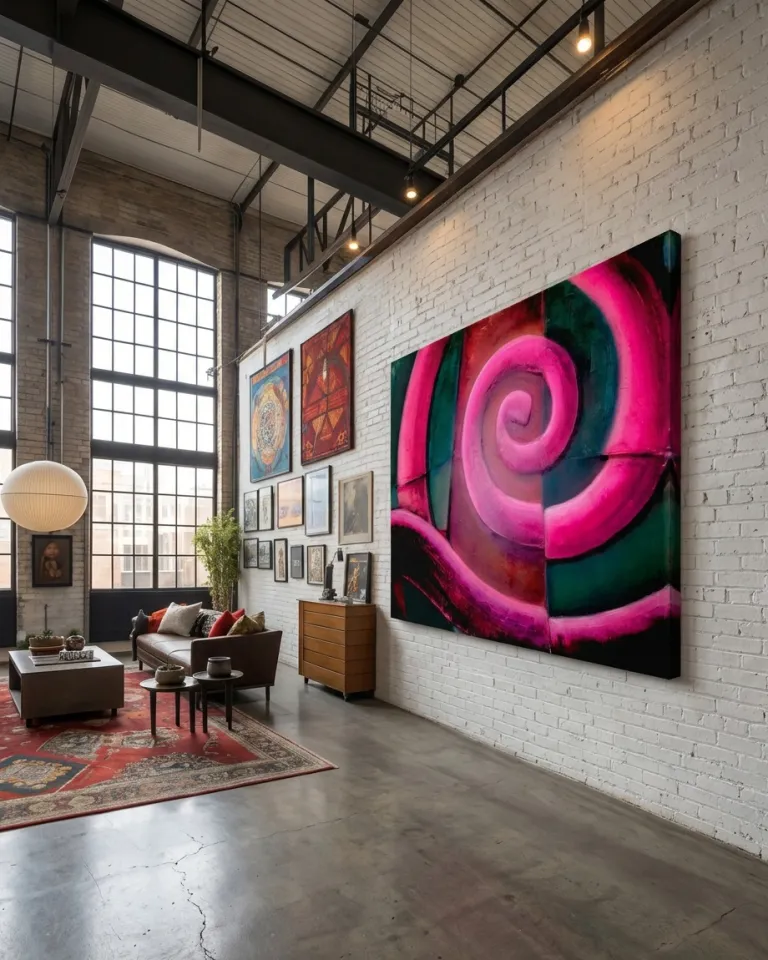
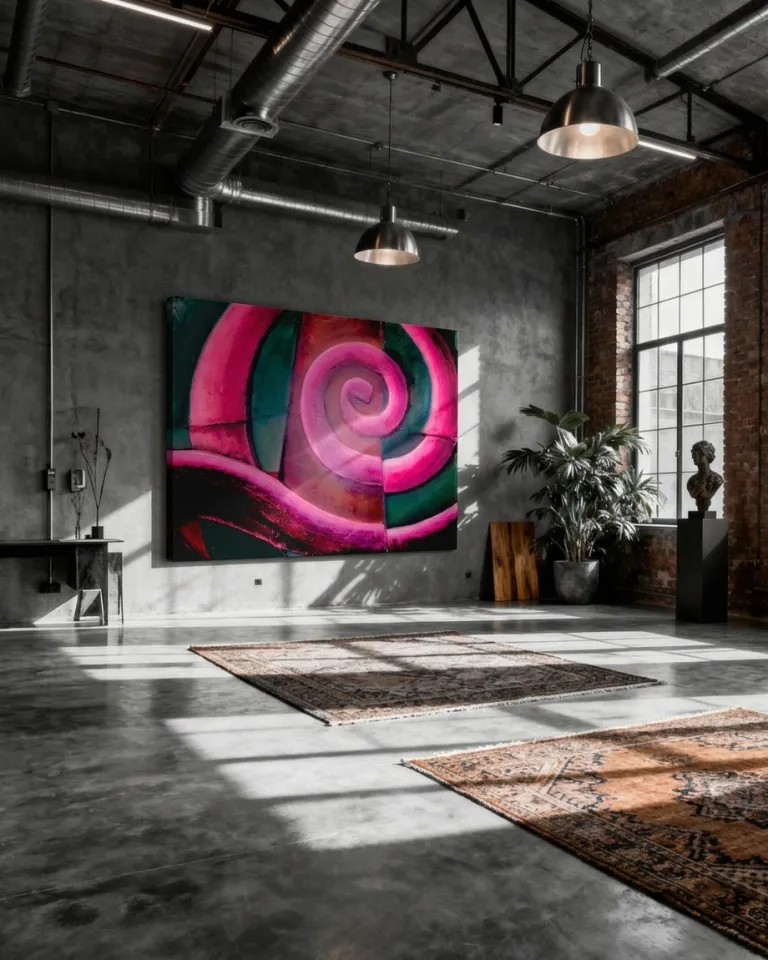
The imposing presence of "VORAGO" manifests in the space as a chromatic wound defying the quietness of the room. A colossal magenta and pink spiral dominates the surface, emerging violently over a background of dark fields where deep greens, charcoal blacks, and veiled carmines dispute the territory. The composition offers no fluid or decorative line; on the contrary, the spiral presents itself as a material, almost three-dimensional block that seems to have been carved by blows or eroded by a tectonic force. The spatial divisions compartmentalizing the background suggest a brutalist structure, a rational scaffolding attempting to contain an essentially disorganized force. Contemplating this friction, the viewer is caught between two interpretations of the circular movement: on one hand, the Jungian concept of the mandala as a process of circumambulation toward the Self—though here the glowing tone and the density of the color suggest instead the destabilizing irruption of the Shadow; on the other, Gurdjieff’s warning about human mechanicalness and lethargy, where the vortex operates as a centripetal whirlpool that absorbs attention and lulls the automaton consciousness, forcing us to ask whether this painting is a trap of inertia or the shock necessary for awakening.
In front of the canvas, time does not pass intellectually, but through the physical weight of my arms and the resistance of the materials. In constructing "VORAGO", I accumulated successive layers of acrylic and oil, dragging the palette knife with force to consolidate the mass of the spiral, seeking for the pigment to stop being color and become flesh, geology. The core of the painting, however, is defined in the destructive act of incision: those deep cuts crossing the surface are not added lines, but wounds inflicted on the fresh matter to reveal the strata of paint hidden beneath the dominant pink. Each groove is a cartographic scar that interrupts the inertia of the rotation, a brake imposed on the whirlwind so the gaze does not slide without resistance into the abyss of the center. By slashing the plane, I arrest the centrifugal acceleration and force the viewer to confront the density of time accumulated in each layer, transforming continuous movement into a suspended and violent tension.
This insistence on marking the surface through incision connects the materiality of "VORAGO" with the earliest creative impulses of humanity in European prehistory. In the circular engravings of the Neolithic and the incisions made on the cave stones of the Mediterranean, the tracing of the spiral did not serve an ornamental purpose, but rather an archaic ritual of territorial demarcation, a need to found order against the chaos of the surrounding nature. Valch’s work reactivates this deep memory of the rocky support, where the turn is a boundary and a declaration of presence. However, historical analysis reveals how this original ritual of containment and cosmic orientation transformed over time into structures of power, confinement, and spatial compartmentalization. In the painting, the orthogonal lines fragmenting the green and black backgrounds act as modern bars, a rational grid trying to domesticate the primitive force of the vortex, showing that every attempt to delimit territory ends up constructing a labyrinth from which it is difficult to escape.
I hear the analytical readings linking my work to psychological archetypes, ancient cosmologies, or systems of spiritual awakening, and though I recognize that these currents inhabit the subconscious of our time, my daily battle is fought exclusively with the autonomy of the painting. For me, this magenta is not a mystical symbol or a representation of anguish; it is a resolute presence, a living, corporal matter demanding its right to exist with the same obstinacy as a block of granite. My production usually seeks the silence and immobility of flat horizons, spaces where the eye can rest in the contemplation of the void, but "VORAGO" imposed a centrifugal speed on me that almost escaped my control in the studio. I had to fight physically against the painting so the whirlwind would not devour the structure, using the palette knife and incisions as necessary anchors to hold an energy that claimed its own tectonic independence outside the limits of the frame.
Sustaining one's gaze before "VORAGO" requires inhabiting a paradox where the physical immobility of the painting constantly collides with the dynamic force suggested by the spiral. The canvas, an imposing plane suspended on the wall, presents itself as a threshold where forms are not completely closed, but in a perpetual process of erosion and reconstruction before our eyes. There are no definitive answers here, nor a peaceful resolution to the conflict between the rational structure dividing the space and the impulse of the pink whirlpool threatening to overflow it. The viewer remains suspended on that blurred boundary where order crumbles and matter reveals its transitory nature, reminding us that every human construction—be it a theory, a city, or an identity—is always exposed to the inevitable pull of its own center of gravity.