
Published work / STRATA
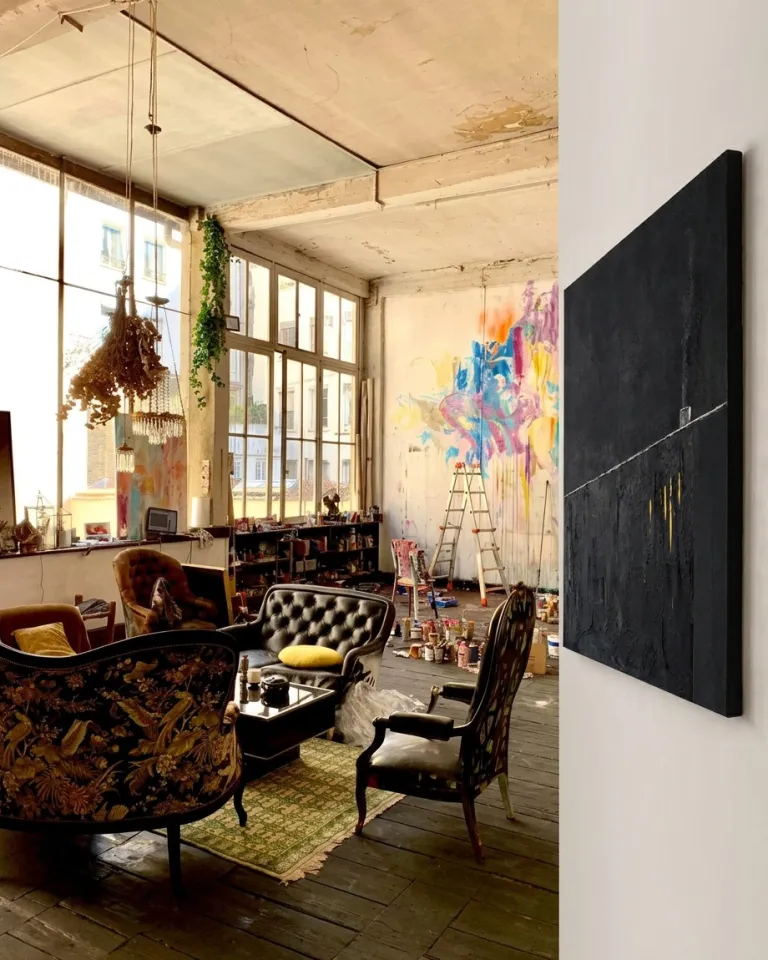
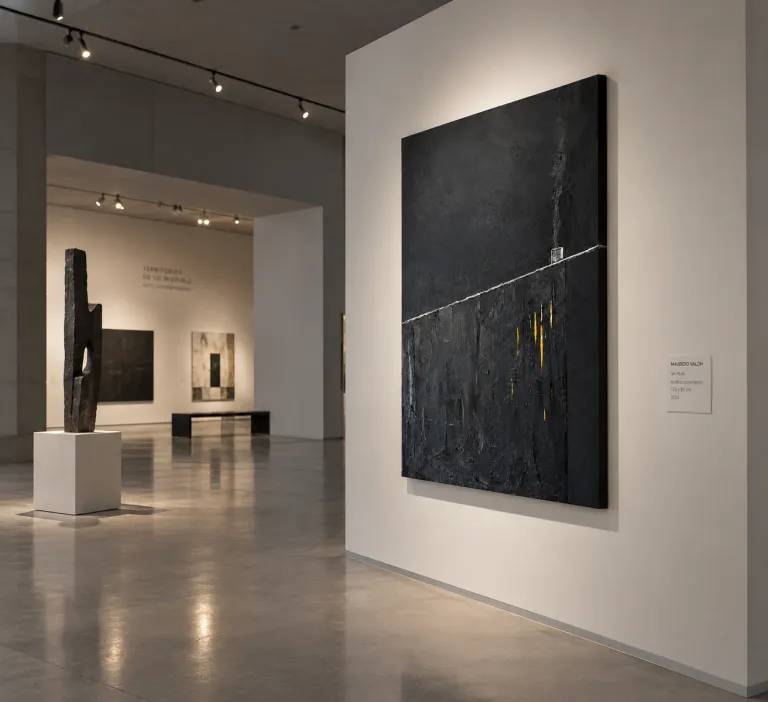
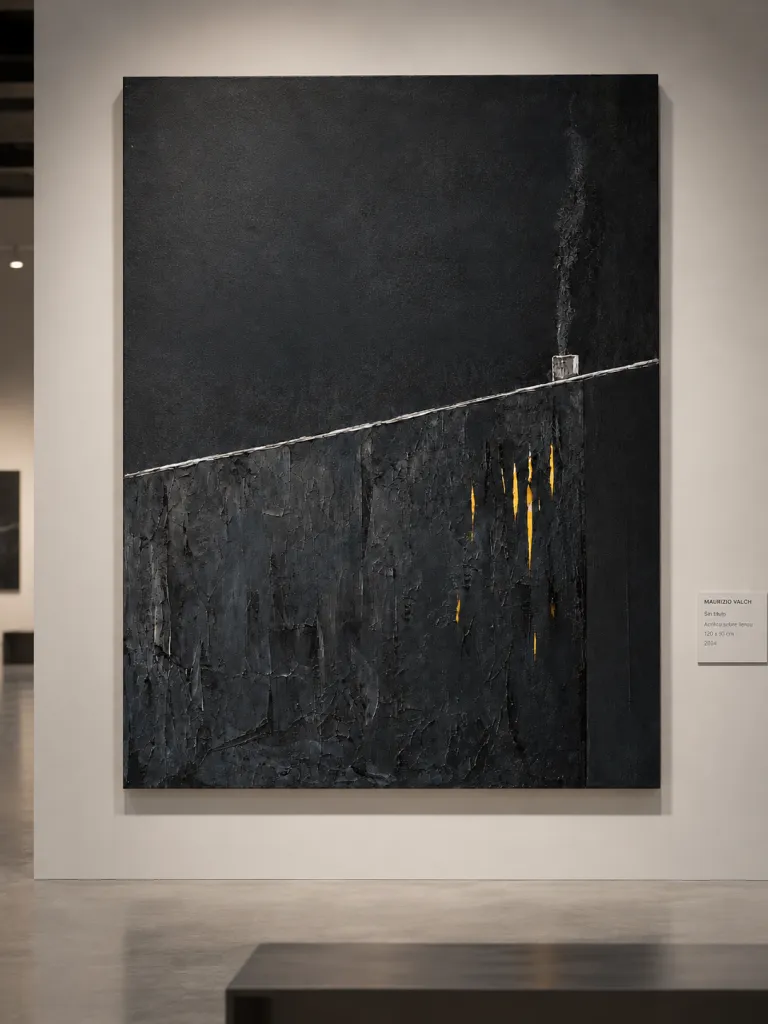
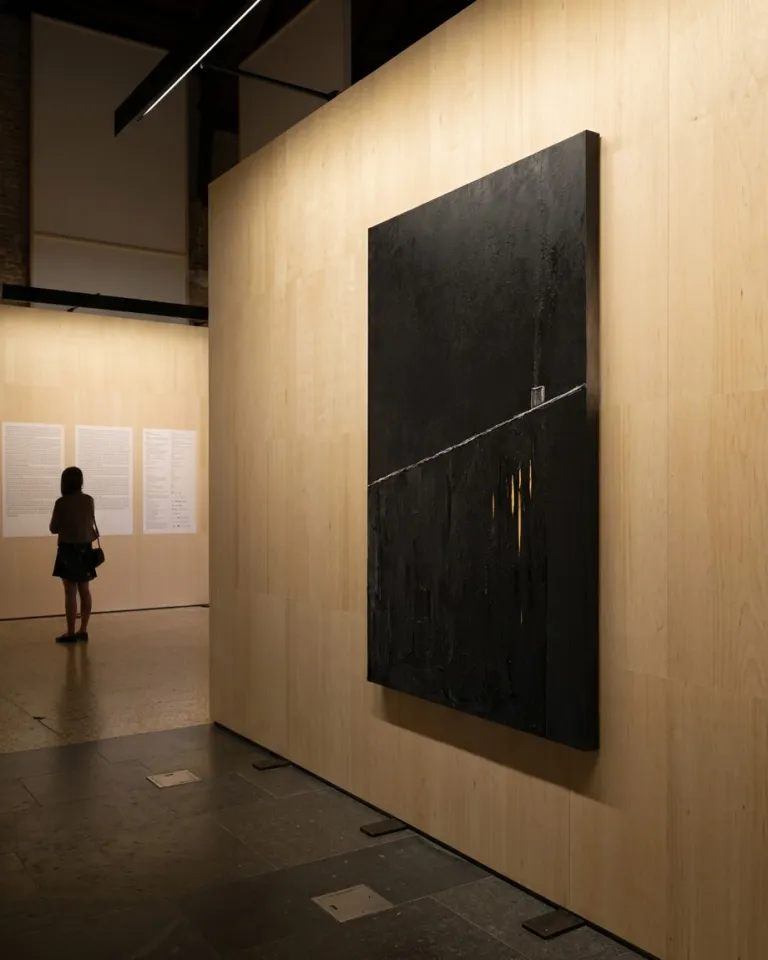
Il confine del fuoco segreto
From the STRATA series
- Size
- 31.5 × 47.2 in / 80 × 120 cm
- Series
-
STRATA
 Painting series
STRATA
STRATA brings together abstract paintings in which the surface becomes a territory of pressure, cutting and duration. Amid dense chromatic fields, compact blocks and incisions, Maurizio Valch situates memory as a material trace rather than a decipherable narrative. View series
Painting series
STRATA
STRATA brings together abstract paintings in which the surface becomes a territory of pressure, cutting and duration. Amid dense chromatic fields, compact blocks and incisions, Maurizio Valch situates memory as a material trace rather than a decipherable narrative. View series
- Context studies
- 9
Conceptual Note
Movement I: The Density of the Abyss (The Below)
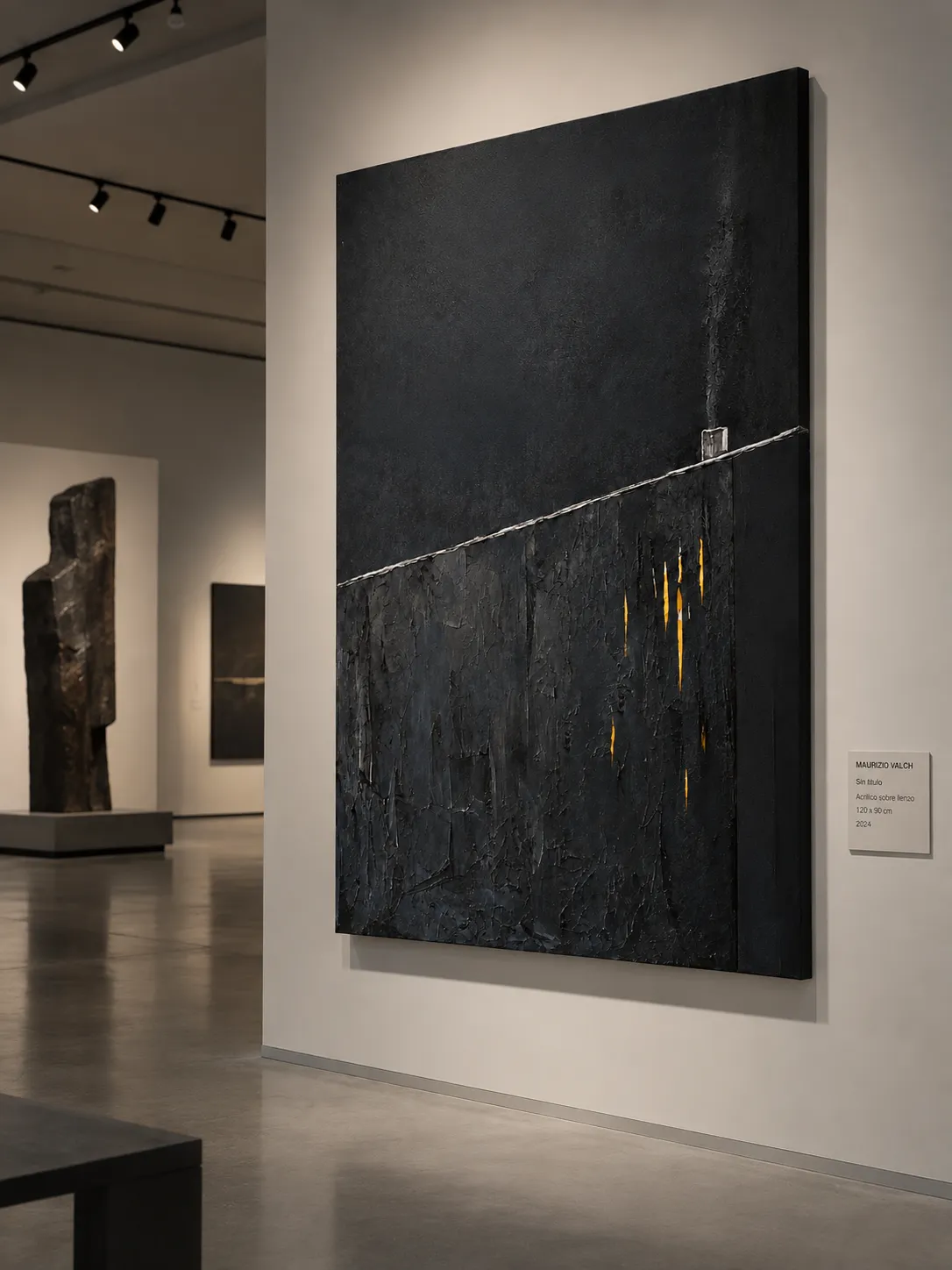
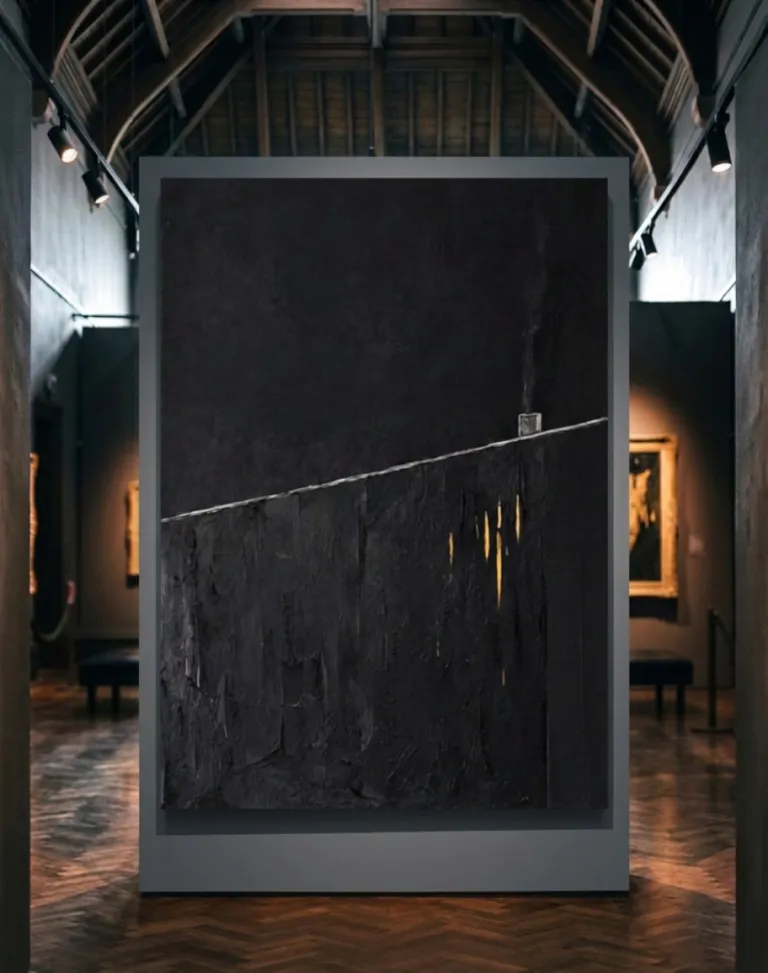
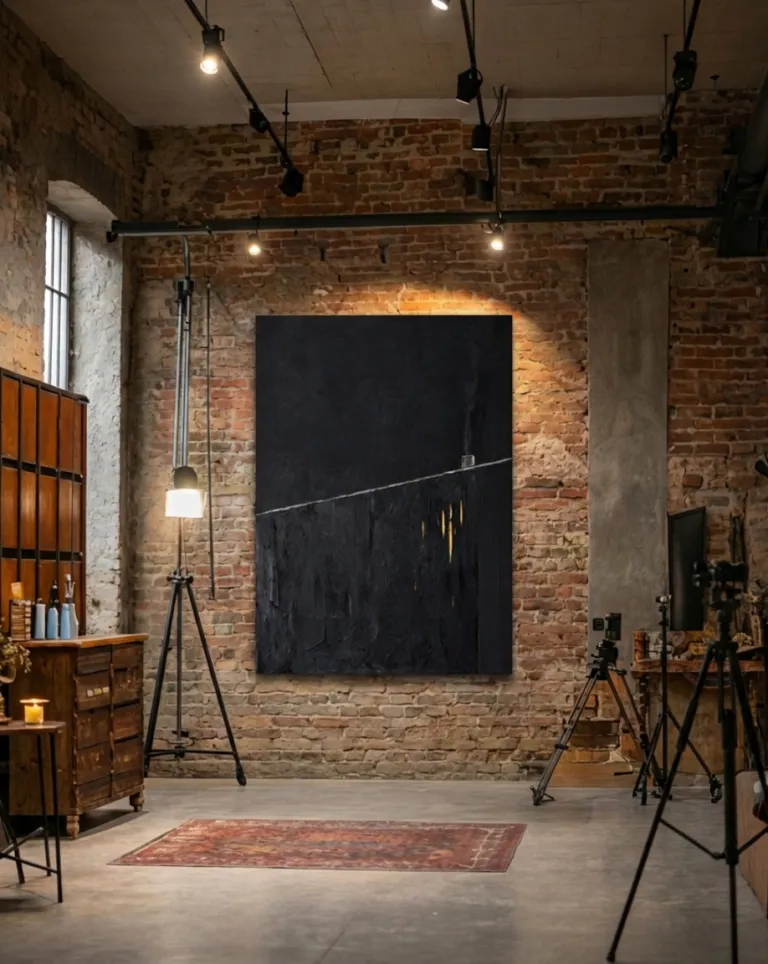
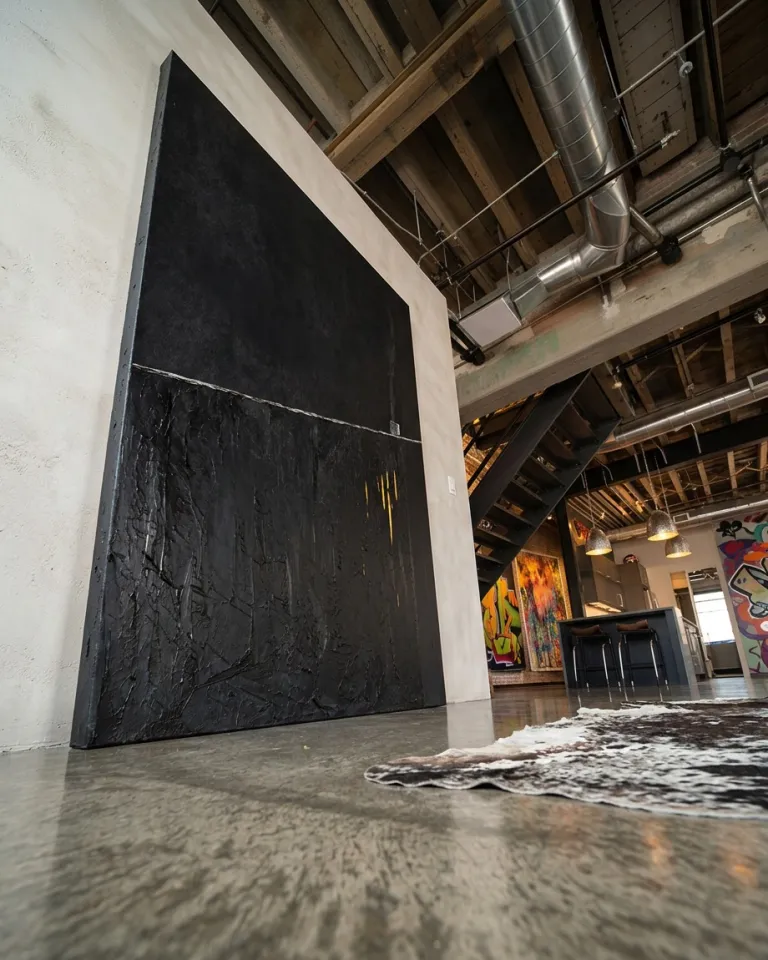
The lower third of Il confine del fuoco segreto asserts itself with the relentless gravity of a geological stratum. It is not a pictorial plane, but a tectonic body that demands a muscular response from the viewer; the jaw tightens and the diaphragm lowers. Black here is not an absence of light, but an accumulation of opaque matter, a dry and wounded mud that has been dragged, flattened, and layered until it acquires the volume of an earthly crust. On this rough base, the matter pulses with a latent, dull heat. Suddenly, the crust breaks: five vertical incisions rip through the density, allowing a burning yellow to ooze out, a sulphurous gold that seems to push from a magmatic depth.
To interrogate this physical wound in the painting, we summon Francisco de Goya, a man who knew the muteness of the world and the violent vibration of dark walls, whose gaze teaches us to listen to the dull pain throbbing beneath surfaces. Pausing before this lower mass, the Aragonese master does not dwell on technique, but on the urgency of concealment. Goya detects a purely animal and visceral truth in this texture: the secret fire is not a luminous ornament, but an internal combustion burning within, an indomitable impulse forced to choke beneath the black impasto, barely managing to breathe, showing its presence only through these narrow fissures in the matter.
I needed the canvas to become a physical wall, an insurmountable obstacle demanding the exertion of my own arms. I accumulated layer upon layer of black, one over the other, wanting the paint to weigh as heavily as a stone wall exposed to the elements. The act of painting became a process of burial, of closure, until I felt an almost violent need to wound that compact surface. Driving the tool in and tearing the dark crust to let the yellow burst forth, I understood that this fire was a secret even to me; I did not plan it, it was simply there, pulsing beneath the weight of the black, waiting for my hand to open the fissure to reveal itself.
Goya clings to that light dripping like boiling fat in the darkness, recognizing the danger of the matter swallowing it entirely. It is the tragic vibration of an instinct resisting burial by silence.
Movement II: The Dividing Line and the Anomaly
Halfway up, the geological density is cut clean by a sharp diagonal, a white and grey vector crossing the canvas from left to right. It is an absolute boundary separating body from nothingness, a taut cord introducing a sudden chill into the gaze.
Upon this dividing line, almost at the far right, sits a minuscule anomaly: a small greyish cube, barely a solitary chimney exhaling a faint wisp of smoke into the void. Before this absurd detail, the gaze becomes childlike, filled with strangeness. It is a child's perspective that emerges before the impossible scale of this object: why is there such a ridiculously small house holding up such an immense and heavy sky? The chimney looks like a forgotten toy on the edge of a cliff. The smoke rising, pale and fragile, seems to tremble with fear, as if knowing that rising a millimeter higher would dissolve it forever into the nothingness above, losing its fragile identity in the vastness of the black air.
To measure the rigor of this boundary, Iannis Xenakis intervenes, an architect of sound who saw in mathematics and physics a way to shape storms and trace lines of pure tension in empty space. For Xenakis, painting is immediately transformed into an analog score. He reads the diagonal not as a cable, but as an infinitely taut string glissando cutting through space with a sharp, sustained frequency. Beneath this vector, the stochastic composer interprets the golden incisions as specific sonic events: clouds of probability, sparks of white noise, or incandescent microsounds that erupt and break the static mass of the lower black hum.
Here both intelligences collide: while Xenakis attempts to structure and measure the canvas's void through geometric vectors and frequency tensions, Goya lets himself be dragged by the tragic and irrational vibration of that yellow light pulsing like a heartbeat of hidden life beneath the wall. Xenakis views the chimney as coordinate zero, the point of origin for a cold air mass; Goya sees it as the last gasp of a suffocating subterranean home.
Movement III: The Black Air (The Above)
Crossing the boundary of the diagonal, language must strip itself of its weight. We enter the upper half of the work: the black air, the smooth void. Here texture disappears; the surface becomes flat, mute, and matte. Sound is completely extinguished. If below we felt the latent warmth of gold, above the skin senses an absolute cold, an atmosphere where gravity no longer operates and where the eye finds no relief to cling to.
I look now at that tiny chimney from a distance and am struck by the doubt that I made a mistake placing it there, suspended on the edge of nothingness. I wonder if that small cube is a refuge against the immensity of the void or, on the contrary, a perfect trap condemning its inhabitant to absolute isolation at the edge of the world. In the end, I realize that the painting took a path foreign to my initial intentions; I was not seeking to build a landscape, but rather, stroke by stroke, the canvas became the topographical map of my own silence, a place where words are no longer needed.
In this upper space, uncertainty reigns. There are no stars, no clouds, no horizon. The wisp of smoke rises and is lost in a plane that refuses to offer answers. Turning the gaze away, the body retains a strange tension: the physical sensation of having walked along the edge of an infinite roof, suspended between a latent fire threatening to burn us from below and an icy void inviting us to dissolve into the silence above.