

Published work / LIMINA
INTERVALLUM
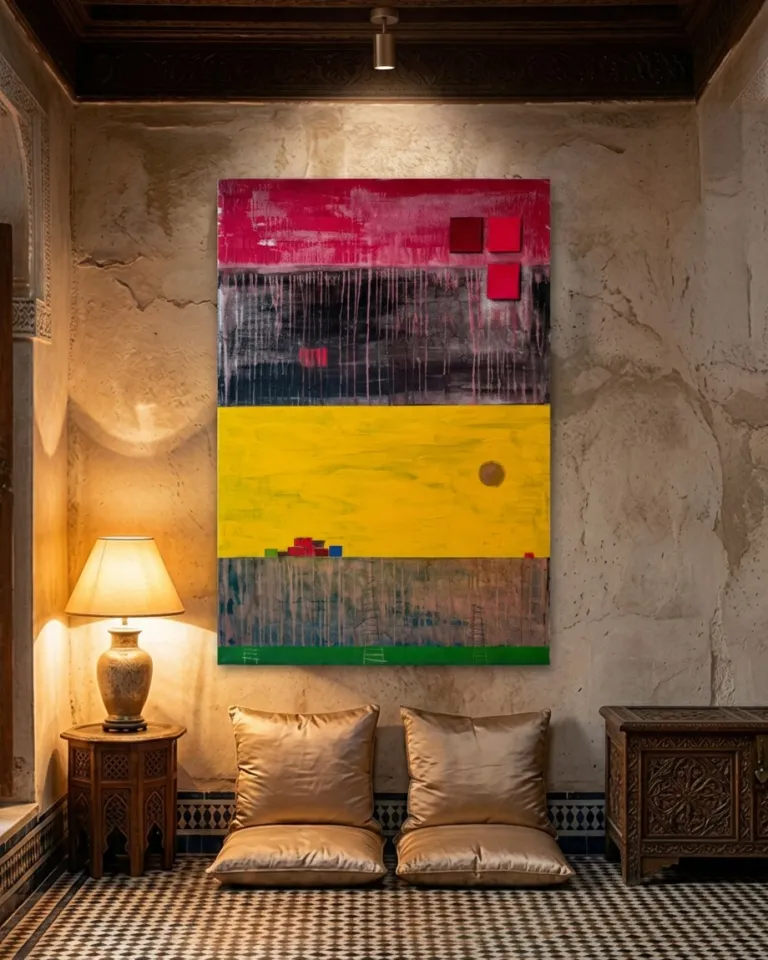
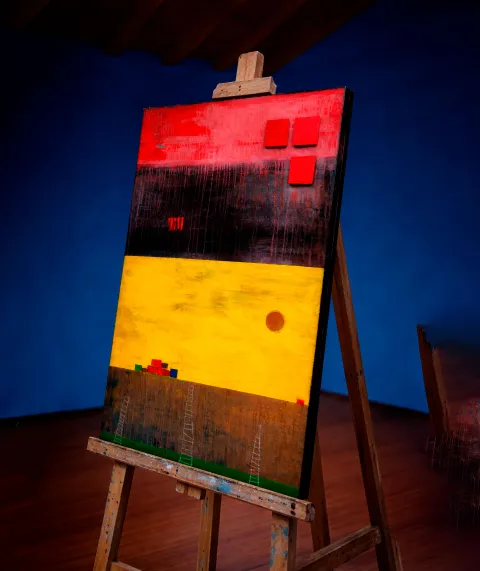
Abstract Composition of Chromatic Fields and Elemental Forms
- Medium
- Acrílico y óleo
- Size
- 31.5 × 47.2 in / 80 × 120 cm
- Series
-
LIMINA
 Painting series
LIMINA
Maurizio Valch's LIMINA series features contemporary abstract paintings, executed in acrylic and oil on canvas. These minimalist and structural artworks explore territories of transit through superimposed planes, horizons, and suspended blocks, building a distinct visual language. View series
Painting series
LIMINA
Maurizio Valch's LIMINA series features contemporary abstract paintings, executed in acrylic and oil on canvas. These minimalist and structural artworks explore territories of transit through superimposed planes, horizons, and suspended blocks, building a distinct visual language. View series
- Orientation
- Vertical
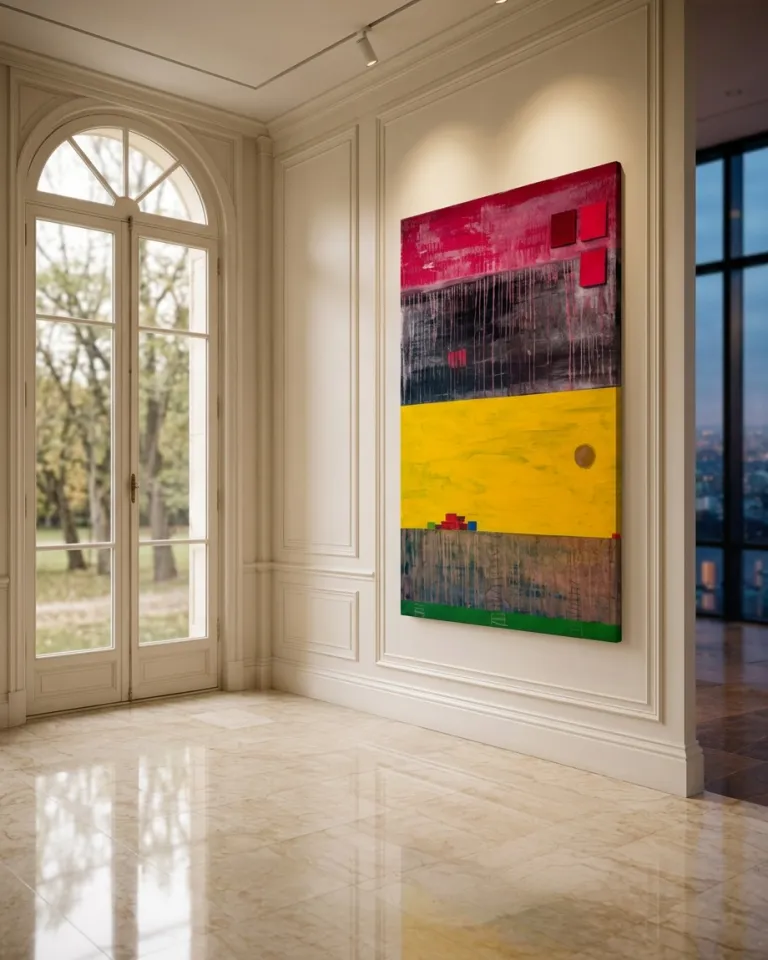
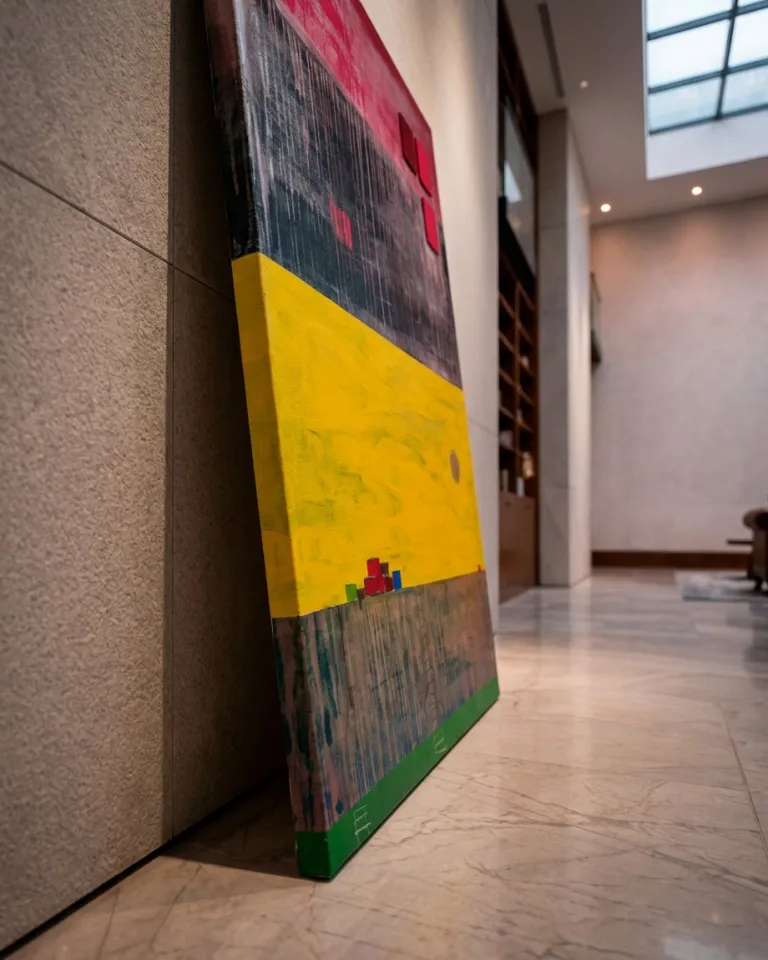
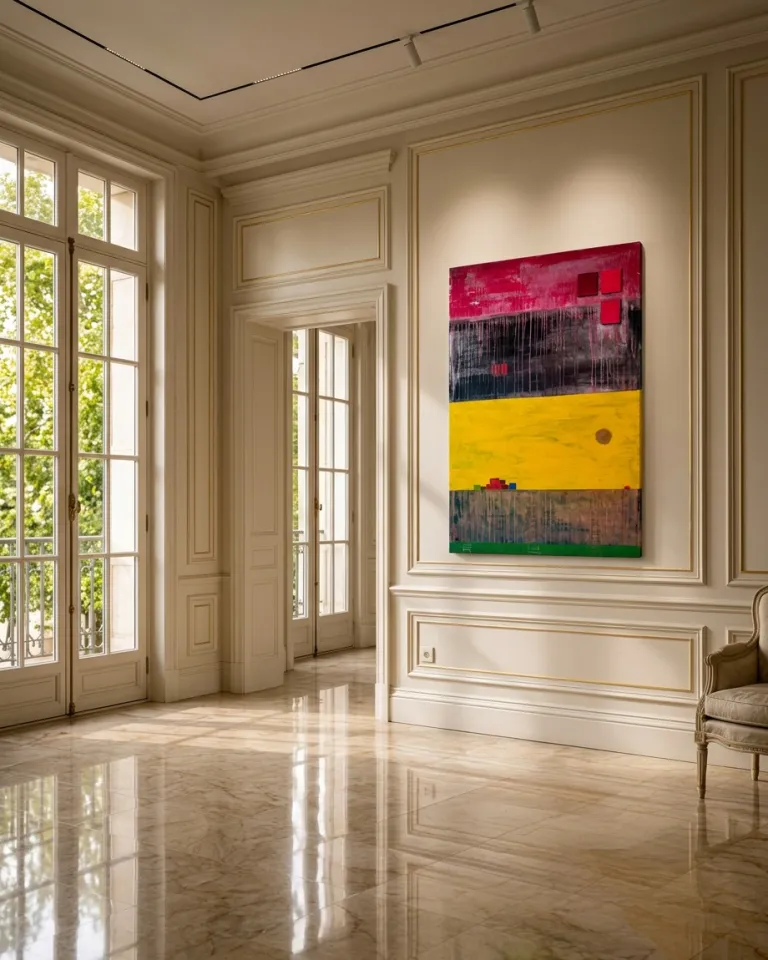
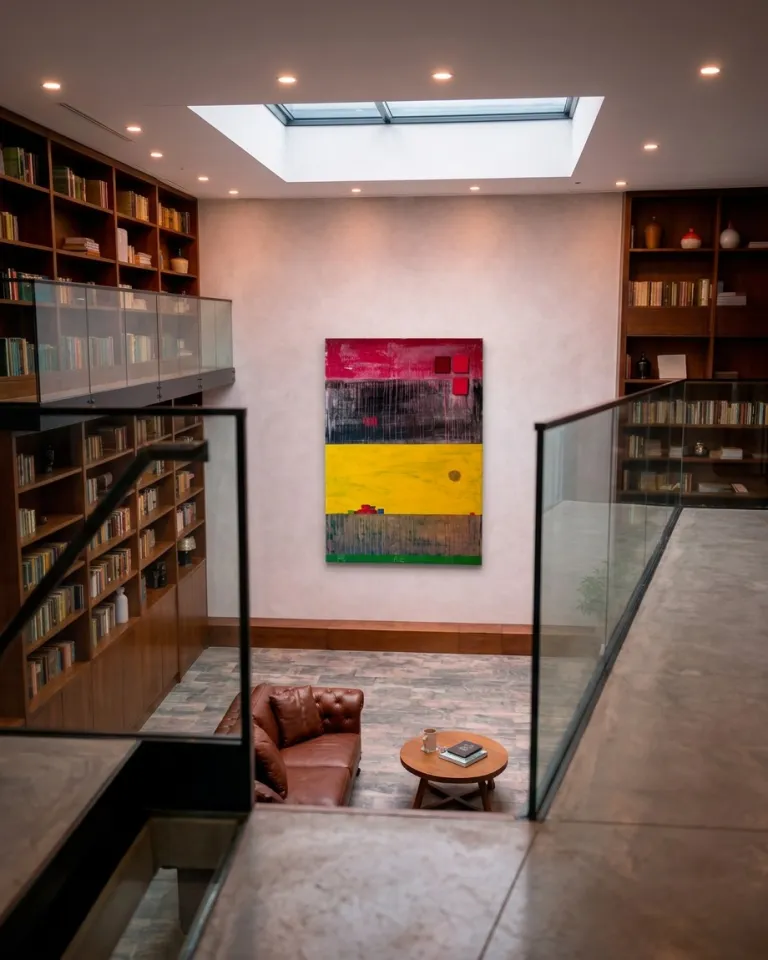
- Context studies
- 10
- Video
- 00:39
Conceptual Note
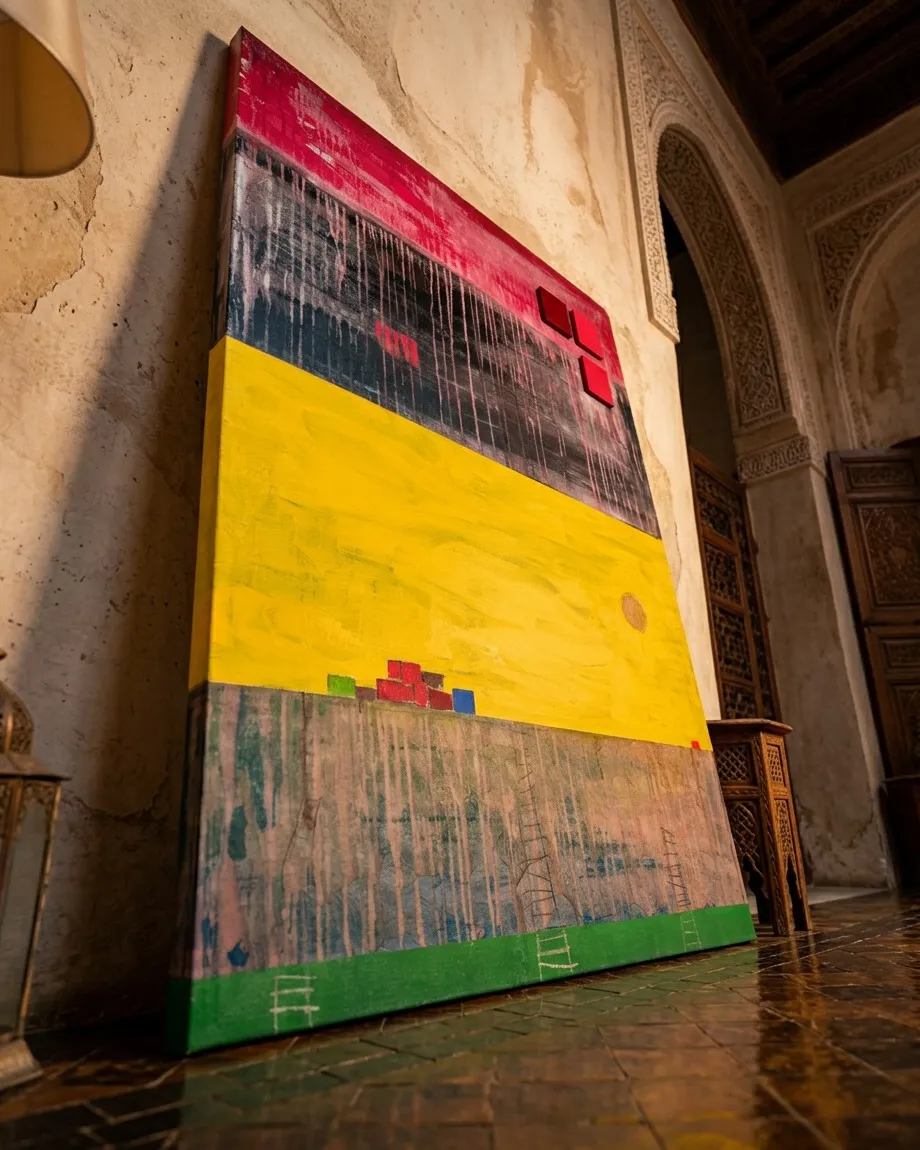
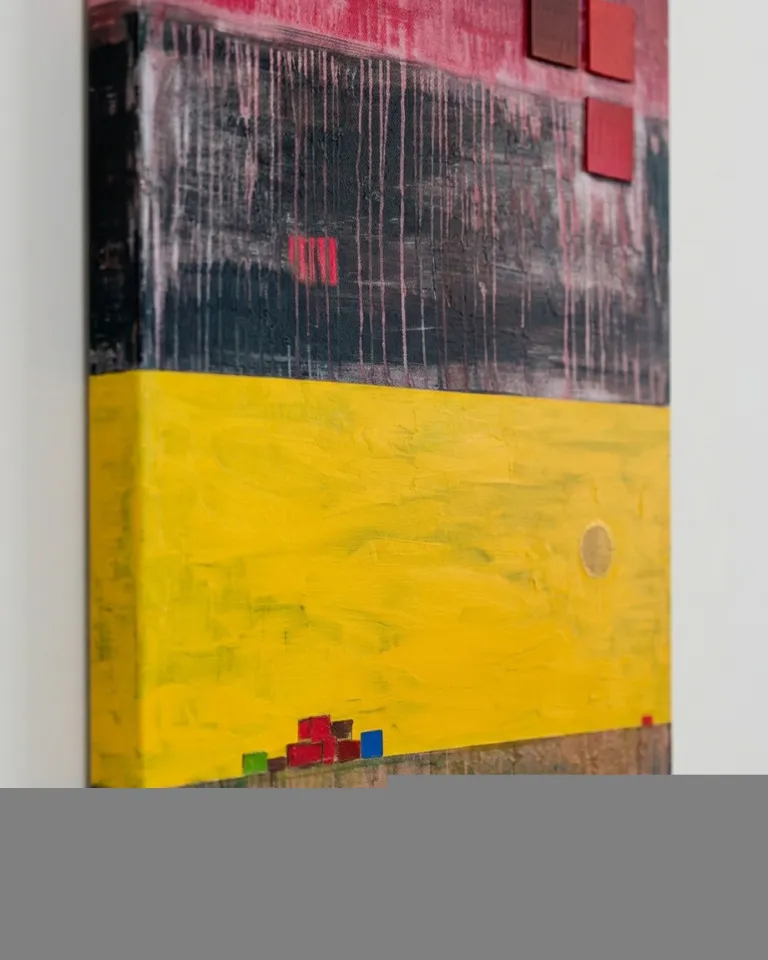
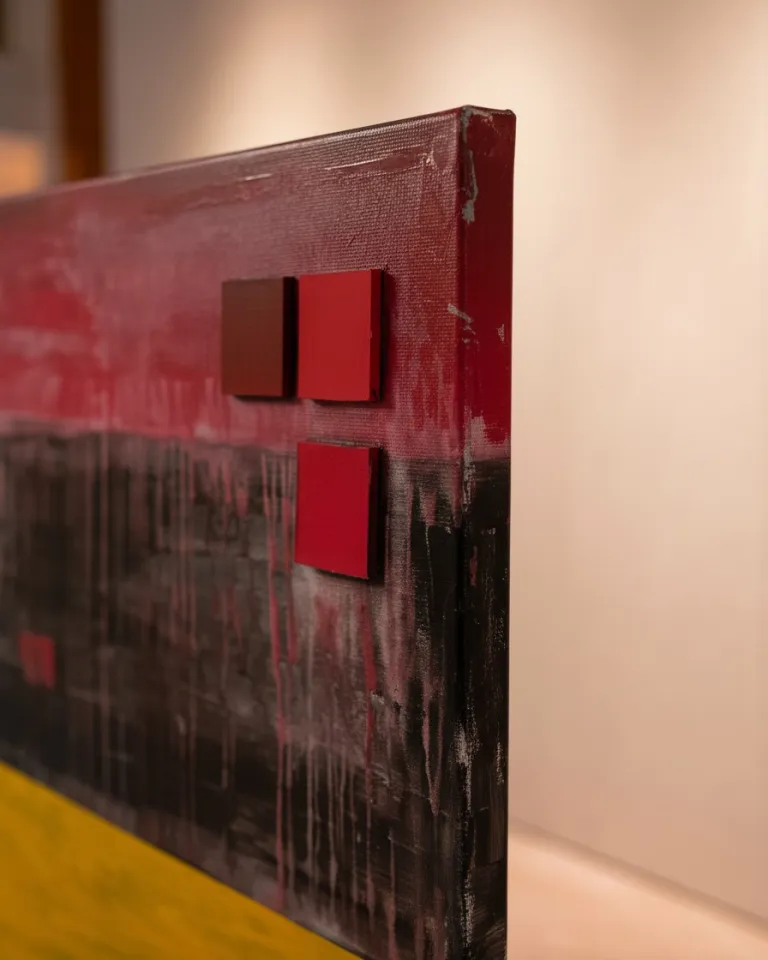
The canvas establishes itself as a foundational territory, divided by expansive chromatic fields stretching into horizontal bands. Each band reveals a distinct exploration of material and its density. The worked surface of each stratum, built through the superimposition of acrylic and oil, along with scraping and incision, forms a dense, evocative pictorial space where memory appears to settle. Small monolithic elements and geometric forms, some elevated from the surface, emerge with a clear structural presence.
The composition generates a vibrant contrast between intense red, deep black, luminous yellow, and earthy tones in the lower band, accentuated by the variable materiality of each stripe. This work establishes a constant visual tension between the apparent stillness of its defined horizons and the fracture introduced by vertical dripping lines in the black segment and stair-like marks in the lowest band. The interplay between these opposing forces invites a visual journey exploring the relationship between spatial order and the emergence of fragmentation.
The blocks dispersed across the yellow and earthy bands, alongside the three-dimensional elements in the upper section, act as markers within this internal landscape. These elemental forms not only add a tactile dimension to the work but also suggest a narrative of construction and erosion, where the memory of place and the appearance of form intertwine in profound stratification. The artwork thus invites contemplation of experience and its transformations without resorting to explicit representation.
Artist influences
The foundational territory of INTERVALLUM is established through expansive chromatic fields stretching into horizontal bands, where the vibrant contrast of intense red, deep black, luminous yellow, and earthy tones builds a dense, evocative pictorial space. This structured juxtaposition of color and space embodies my affinity for Mark Rothko, as the varied material density of each stratum, achieved through scraping, incision, and the superimposition of acrylic and oil, intensifies the emotional weight of these broad zones. Within these expansive divisions, the canvas retains a strong sense of a territorial structure, aligning with the lineage of Richard Diebenkorn through its defined horizons and horizontal bands that suggest an internal landscape of memory and stratification. The apparent stillness of these horizons is set in tension with vertical dripping lines in the black segment and stair-like marks in the lowest band, mapping out distances and spatial divisions. Finally, this internal landscape is activated by small monolithic elements, blocks, and three-dimensional geometric forms dispersed across the yellow, earthy, and upper sections. These elements reflect the spirit of Paul Klee, operating as precise structural markers that introduce a tactile dimension and suggest a narrative of construction, erosion, and emerging form.