

Published work / LIMINA
ADITUS
A visual dialogue between matter, memory, and elemental form.
- Medium
- Pintura
- Size
- 31.5 × 47.2 in / 80 × 120 cm
- Series
-
LIMINA
 Painting series
LIMINA
Maurizio Valch's LIMINA series features contemporary abstract paintings, executed in acrylic and oil on canvas. These minimalist and structural artworks explore territories of transit through superimposed planes, horizons, and suspended blocks, building a distinct visual language. View series
Painting series
LIMINA
Maurizio Valch's LIMINA series features contemporary abstract paintings, executed in acrylic and oil on canvas. These minimalist and structural artworks explore territories of transit through superimposed planes, horizons, and suspended blocks, building a distinct visual language. View series
- Orientation
- Vertical
- Context studies
- 6
Conceptual Note
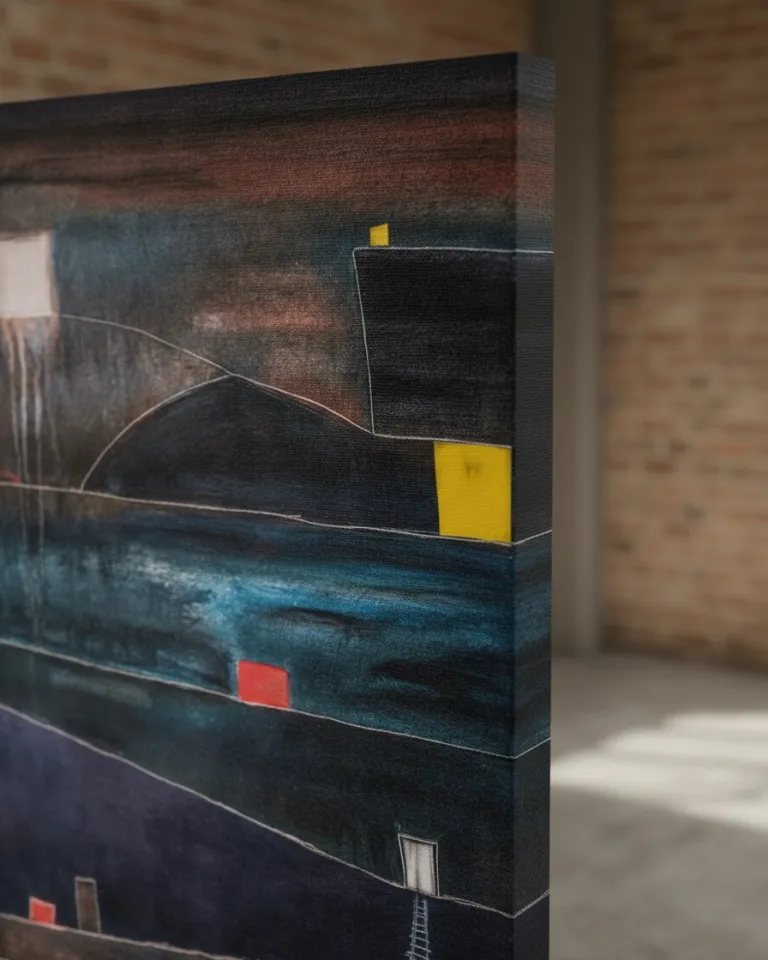
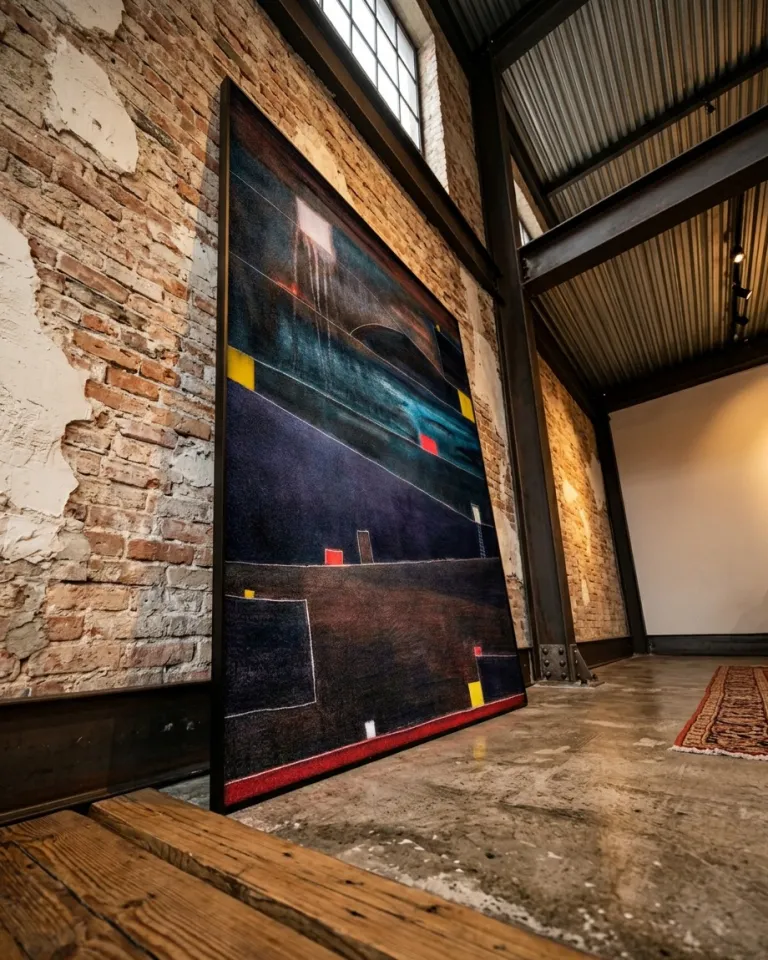
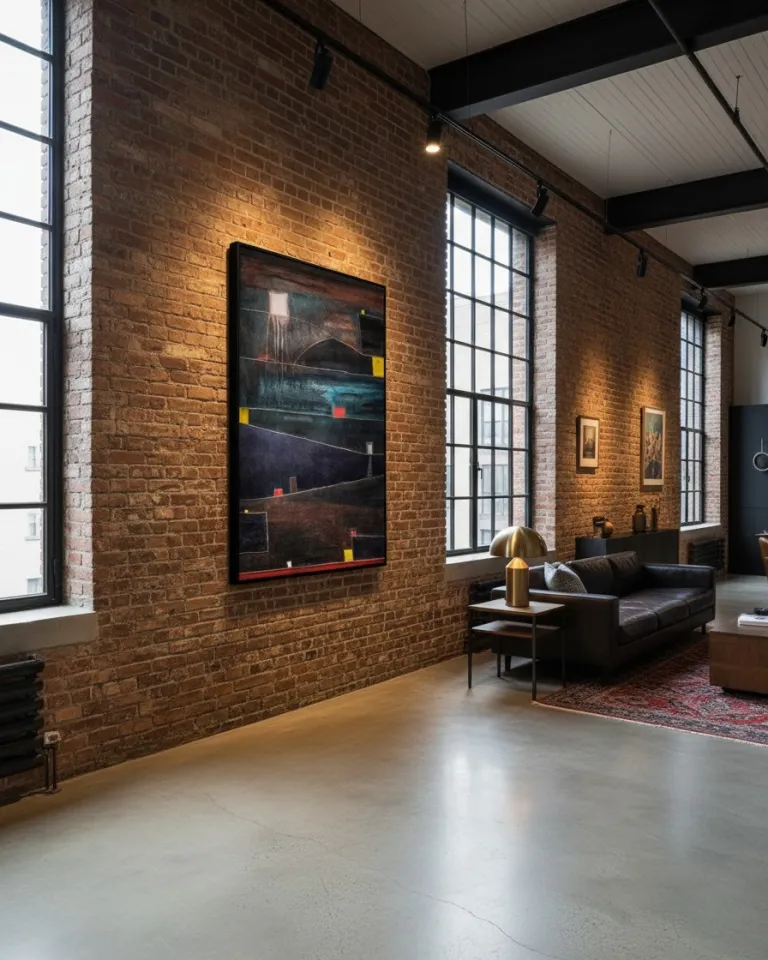
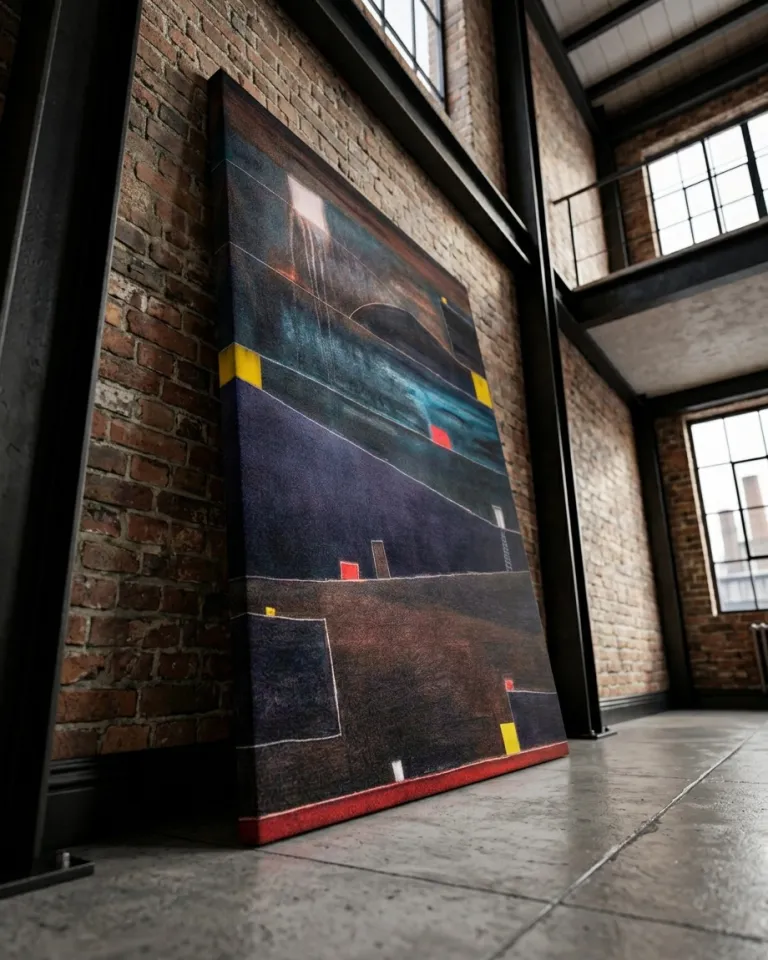
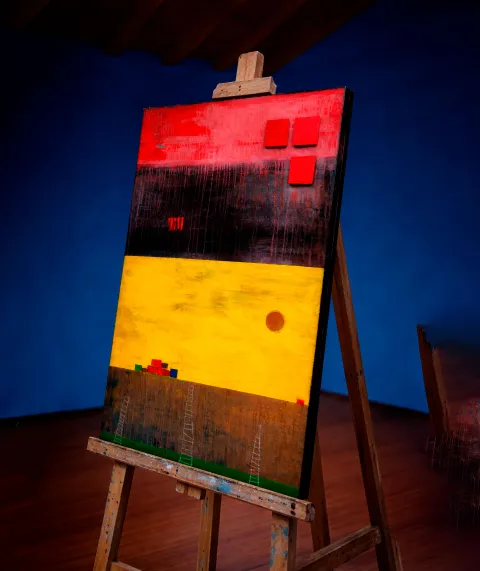
Deep indigo and cyan tones intertwine with earthy browns and intense blacks, establishing a chromatic field of gravity and mystery. Through layers applied with a palette knife and brush, the surface reveals a construction based on an almost geological sedimentation, where pigment accumulates and retains, producing a palpable density. This contemporary abstract painting, with its contained yet expressive color palette, is executed in acrylic and oil on textured canvas.
This material construction is defined by a network of subtle incisions that delineate horizons and divisions. Some are traced with an almost architectural precision, while others emerge organically, like marks of erosion, contributing to the artwork's stratified texture. Rectangular elements of vibrant yellow and crimson red, alongside a suspended white block from which drips descend, act as focal points and markers within this territory. The surfaces suggest a history, a worked skin.
The vertical composition is structured by superimposed horizontal bands, creating a sense of stratified depth, evoking geological or architectural planes extending into the background. In the lower section, a tiny staircase ascends towards a small opening in a dark wall, introducing a subtle element that suggests a transition or a threshold into an unknown space, inviting a more introspective reading. Luminous contrasts between these elemental forms and the dark fields intensify the sense of volume. The artwork's presence is sober and contemplative, radiating an atmosphere of stillness that, nevertheless, contains an underlying tension between order and fracture. It aligns with the artist's LIMINA series, which explores limits and transitions, embodying his vision of territory not merely as landscape but as a primordial surface where memory and transformation manifest through matter, inviting a deliberate and profound observation.
Artist influences
In ADITUS, the deep indigo, cyan, earthy brown, and intense black tones build an immersive chromatic field of gravity and mystery, aligning with my affinity for Mark Rothko. These layered pigments, applied with a palette knife and brush, generate a palpable density and a contemplative atmosphere of stillness that heightens the emotional weight of the space. Across these expansive color fields, the composition integrates a network of subtle, architectural incisions, reflecting the minimal linear divisions I share with Barnett Newman. These precise and organic marks delineate horizons, organizing the stratified depth and transforming the simple structural divisions into active perceptual events. This layout of superimposed horizontal bands and geological planes evokes a territorial structure where horizons and distances extend into the background, resonating with the abstract landscape sensibilities of Richard Diebenkorn. Here, the canvas acts as a primordial surface where the physical layout of the planes registers a sense of territory and memory. Finally, the inclusion of small, focal geometric features, such as the rectangular elements of yellow and crimson, a suspended white block, and a tiny staircase ascending to an opening in a dark wall, connects my practice to Paul Klee. These minimal, primitive architectural signs introduce a vital sense of scale and symbolic ambiguity, transforming the structural limits of the composition into an introspective threshold.