To draw a boundary is to establish a conflict. In the mythical narrative of Genesis, the inheritance of Adam—the first cartographer—does not consist merely of naming beasts and plants, but of dividing the continuity of the living world into manageable plots. By fragmenting experience, a wall is erected: a safe inside and a threatening outside. The danger lies not in the practical utility of this conceptual map, but in the amnesia that occurs when the linguistic map is mistaken for the actual territory it intends to describe.
This conceptual fragmentation colonizes our perception of time. We often inhabit a “sandwich-filling” present: a thin slice of reality trapped between the bread of an unalterable past and an anxiously projected future. In this dualistic scheme, the now lacks thickness; it is merely a fleeting instant. Resistance to inhabiting the present forces consciousness to leap from one experience to another in search of a fluidity that eludes it, precisely because it fails to see that it is already submerged in it.
Natural geography offers another perspective. In No Boundary (1979)—the work of transpersonal psychologist Ken Wilber, published in Spanish as La conciencia sin fronteras by Editorial Kairós—the concept of the boundary is examined. Wilber points out that natural borders, such as a shoreline, are not hostile divisions isolating land from water. On the contrary, the shore is the space of encounter where both interact. The boundary ceases to be a battle line and becomes a membrane of tactile contact.
This perspective draws support from the work of British philosopher Alan Watts, who in The Wisdom of Insecurity (1951) dismantled the dualism between subject and object. Watts explains that the fragmentation of language leads us to believe we “have” a body, as though the subject were a tenant housed in the head, steering a flesh-and-blood mount separate from its environment. By dissolving this demarcation, experience reveals itself as indivisible: perceiving a tree is no different from the experience of seeing it. The observer is not an entity foreign to the process; they are the process of observation itself.
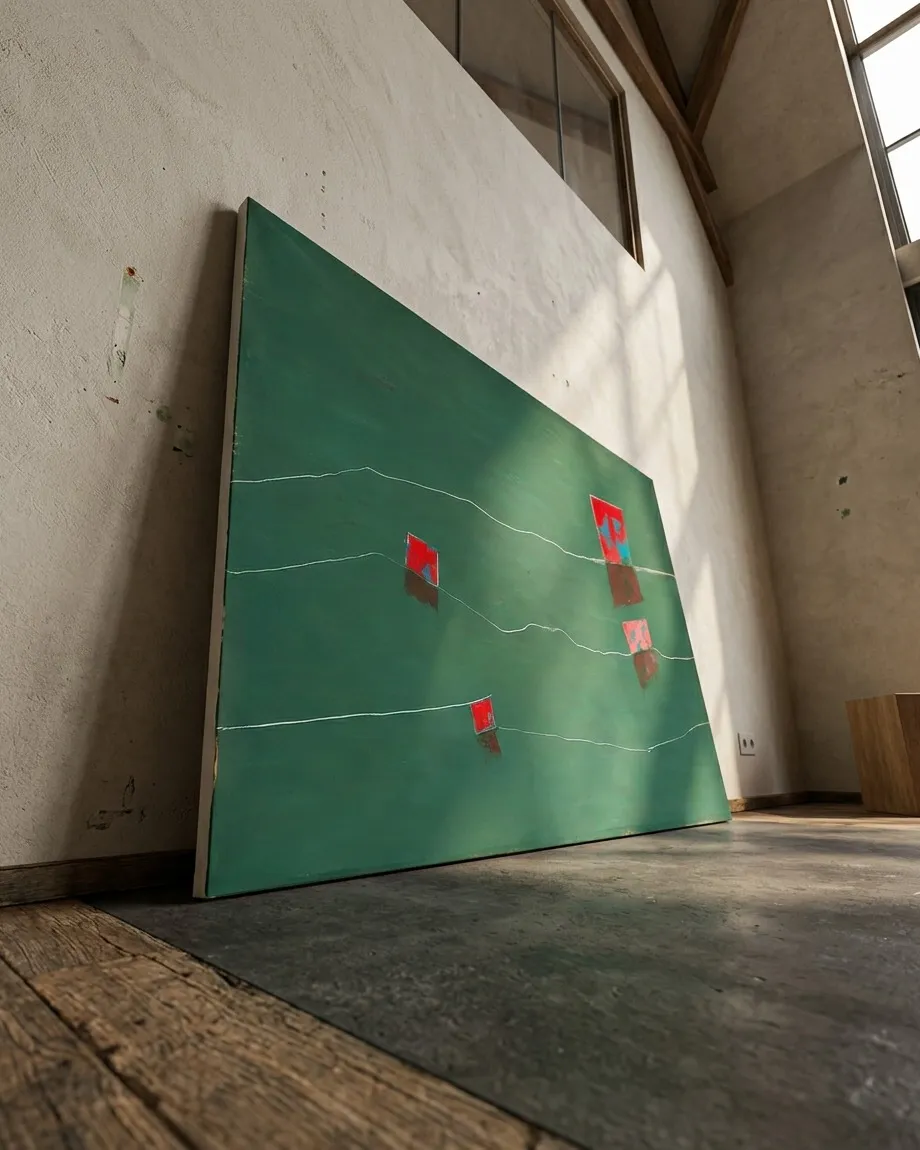
By translating this deconstruction to art, the distance between the viewer and the artwork ceases to be an inert void. The interval becomes an active territory, a zone of somatic resonance where body and matter come into friction. The surface of a painting or the roughness of a sculpture do not block our path, but rather offer themselves as meeting points. The art object is not a static absolute, but a membrane that pulses with sensitive attention, transforming physical separation into continuous contact.
The ultimate encounter occurs when analytical distance collapses. On the transpersonal plane, the body is no longer experienced as a closed container but becomes the space where the environment feels itself. As the rigidity of ego-control yields, perception floods the psychophysical unit. Inside and outside, the voluntary and the involuntary, reveal their implicit identity. Tensions against physical vulnerability dissolve in an organic movement, like the crest and trough of a single wave.
Inhabiting this tactile shore requires abandoning the attempt to manipulate opposites, resting instead in their coincidence. It is not a matter of eliminating the negative pole to sustain an illusion of progress, but of unifying experience with the same surrender with which the coastline allows itself to be washed by the tide. By laying down resistance to the now, the viewer, the artwork, and the space integrate into a single, seamless fabric: a boundaryless weave where everything touched is revealed, ultimately, as the original face of reality.