Published work / PRIMORDIUM
VIA SOLIS
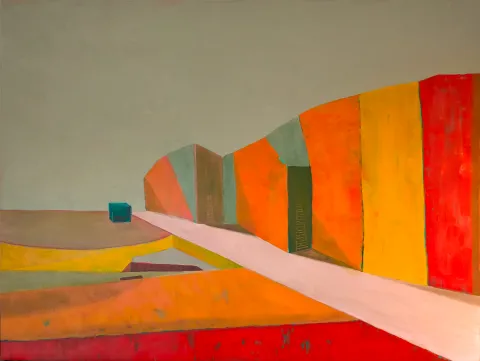
An architectural and territorial abstraction marked by spatial depth and chromatic tension.
- Size
- 47.2 × 31.5 in / 120 × 80 cm
- Series
-
PRIMORDIUM
 Painting series
PRIMORDIUM
Maurizio Valch's PRIMORDIUM series features original contemporary abstract paintings, executed in acrylic and oil on canvas. These artworks are distinguished by their stratified textural surface and explore an originating territory, a primal ground where elementary forms emerge within a nascent space. View series
Painting series
PRIMORDIUM
Maurizio Valch's PRIMORDIUM series features original contemporary abstract paintings, executed in acrylic and oil on canvas. These artworks are distinguished by their stratified textural surface and explore an originating territory, a primal ground where elementary forms emerge within a nascent space. View series
- Orientation
- Horizontal
- Context studies
- 4
Conceptual Note
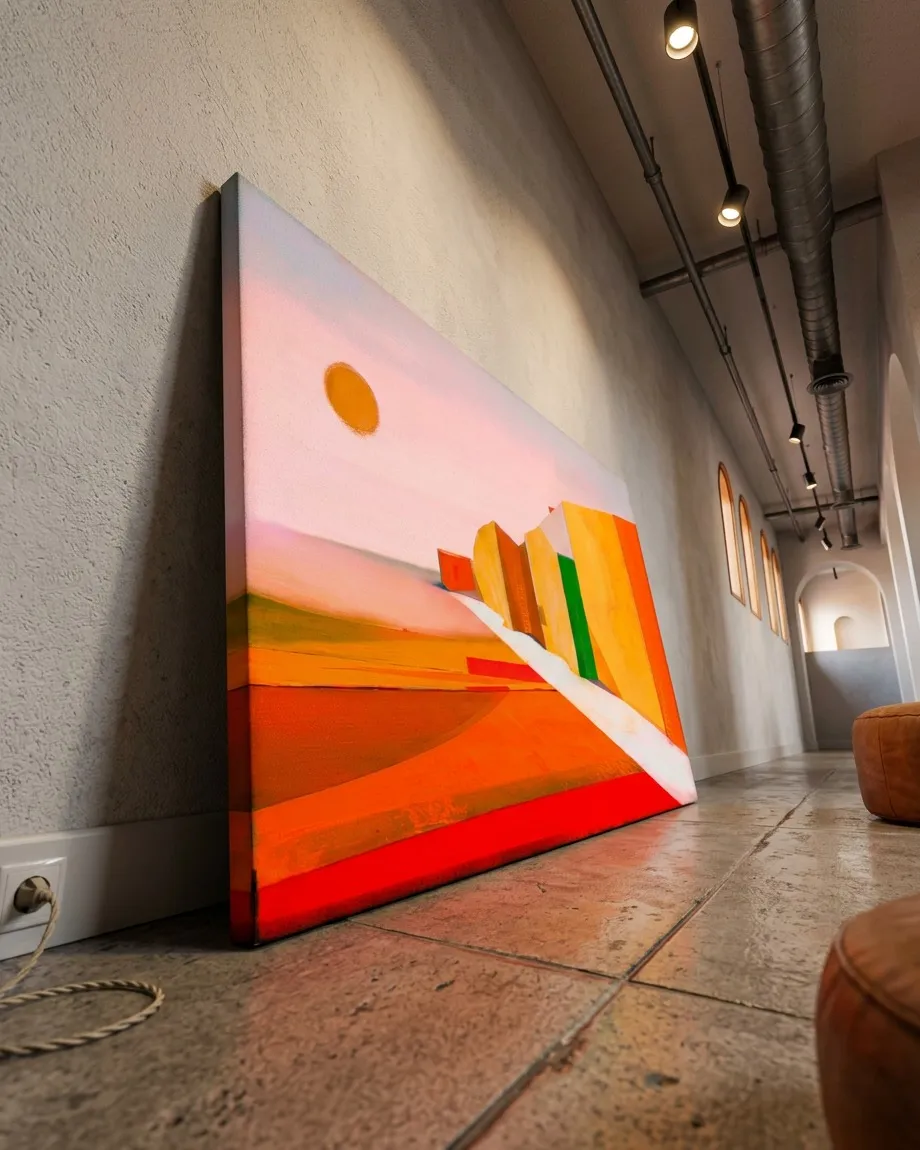
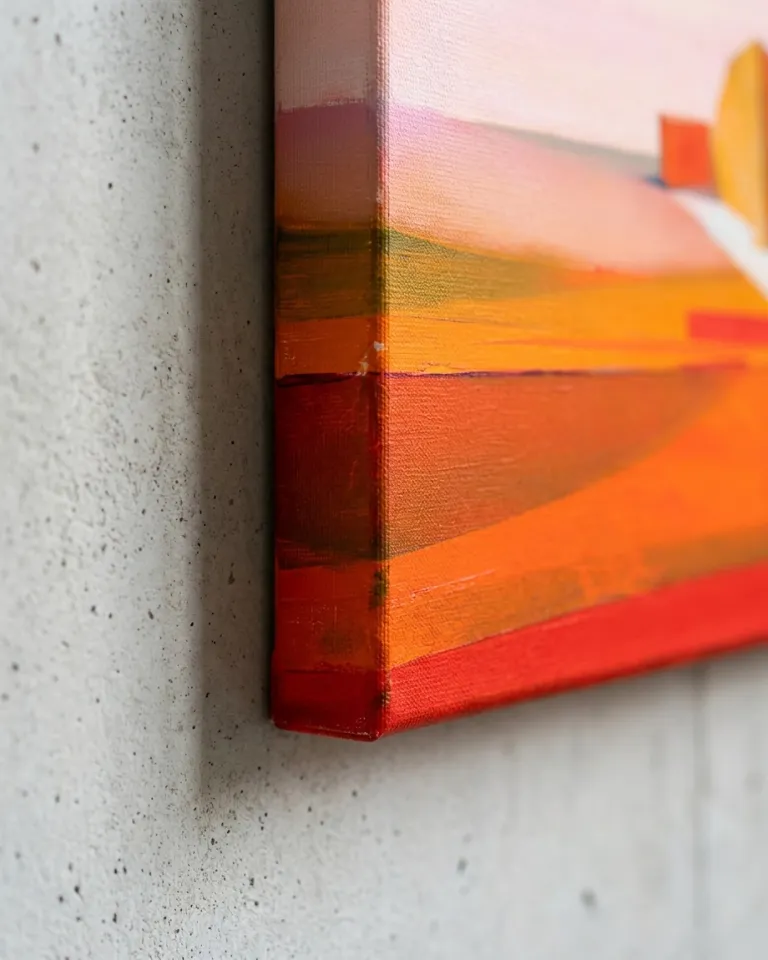
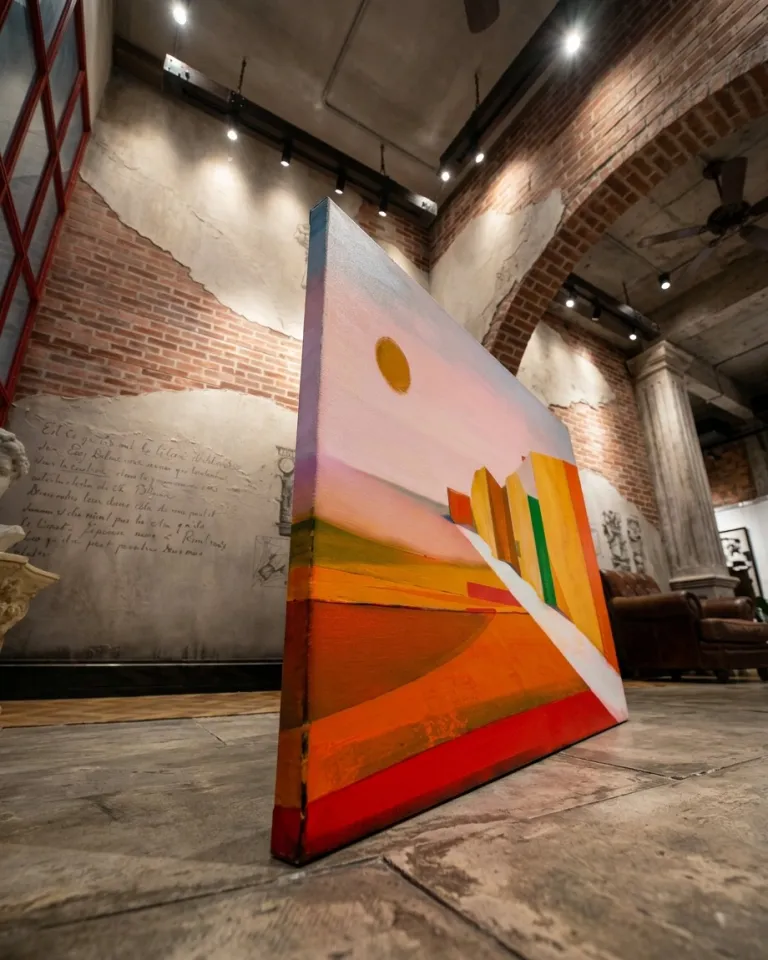
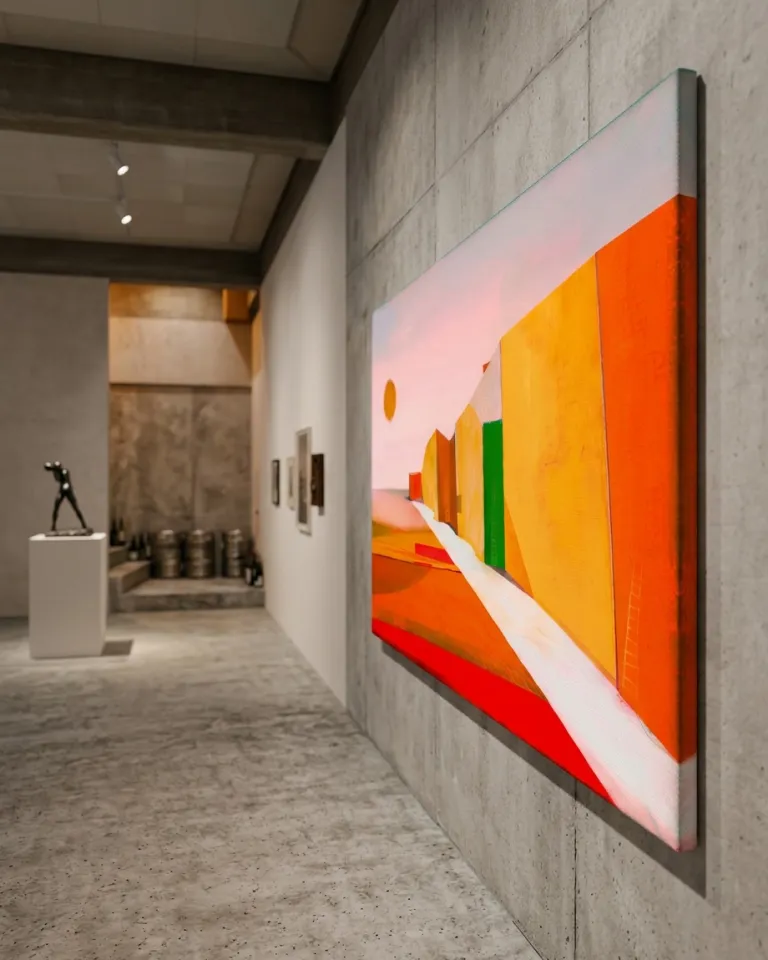
Part of the PRIMORDIUM series, Maurizio Valch’s "VIA SOLIS" is a horizontal painting that exemplifies the artist's structural and brutalist sensibility. The composition is built from large blocks of orange, yellow, and red, arranged to create a profound sense of depth and an expansive horizon. A prominent diagonal path and stepped elements suggest a journey or a threshold, inviting an interpretation that balances stillness with transformation. Layers and textures, achieved through a process combining acrylic and oil with glazes and incisions, give the surface a material quality that evokes divided territories and stratified memories. A circular form suspended in the pale pink sky, along with the subtle presence of ladder-like incisions, adds a silent and meditative dimension to this contemporary abstract painting, executed using acrylic and oil on canvas.
Artist influences
The expansive horizon in VIA SOLIS built from abstract planes of orange, yellow, and red sustains my affinity with Richard Diebenkorn, as these chromatic zones define a clear territorial structure. The layered surface, worked with glazes and incisions, suggests a vast landscape of stratified memories and divided territories, transforming the abstract canvas into a tangible depiction of distance. This structural organization of space is further anchored by my dialogue with Nicolas de Staël, visible in the way the large, compact blocks of color assert a brutalist and architectural sensibility. The presence of a prominent diagonal path and stepped elements within these blocks creates a profound spatial tension, balancing the painting's heavy abstraction with the physical suggestion of a threshold. Finally, the silent, meditative atmosphere of the work is guided by my alignment with Paul Klee, manifested through small, symbolic interventions that disrupt the larger color masses. The circular form suspended in the pale pink sky and the subtle, ladder-like incisions function as primitive signs, introducing a poetic scale and a quiet rhythm to this journey of transformation.