

Published work / SITUS
SINGULA
Presence, position, and distance in the pictorial territory of the SITUS series
- Medium
- Pintura
- Size
- 47.2 × 31.5 in / 120 × 80 cm
- Series
-
SITUS
 Painting series
SITUS
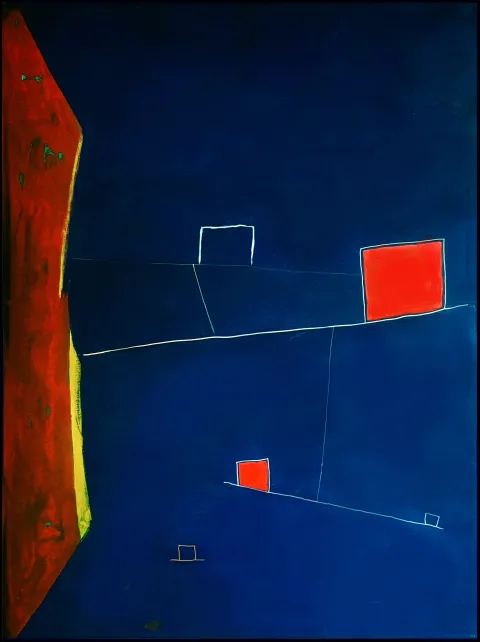
SITUS is a series of contemporary abstract paintings exploring the position, boundaries, and distance between elemental forms. With an approach where negative space is as active as matter, each work functions as a minimalist abstract artwork structured around lines and territorial shifts. View series
Painting series
SITUS
SITUS is a series of contemporary abstract paintings exploring the position, boundaries, and distance between elemental forms. With an approach where negative space is as active as matter, each work functions as a minimalist abstract artwork structured around lines and territorial shifts. View series
- Orientation
- Horizontal
- Context studies
- 8
Conceptual Note
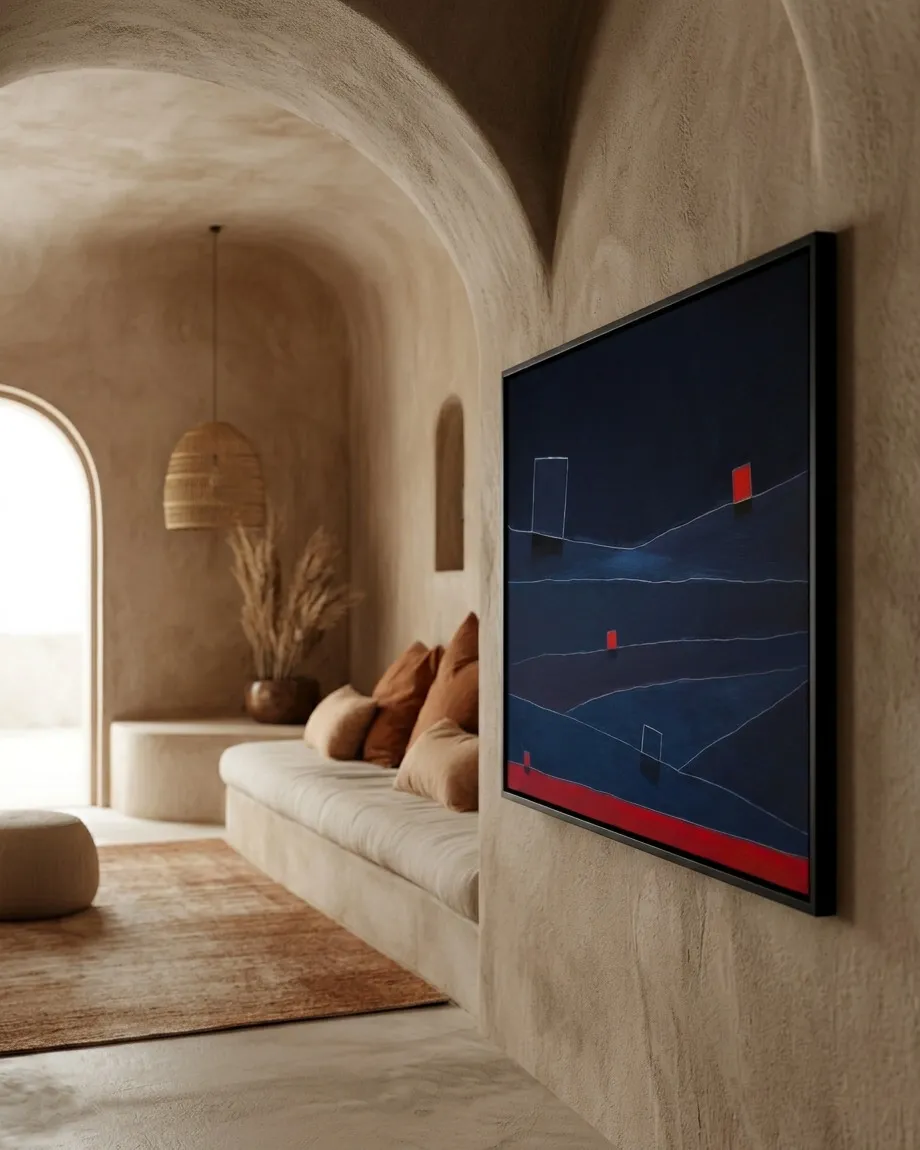
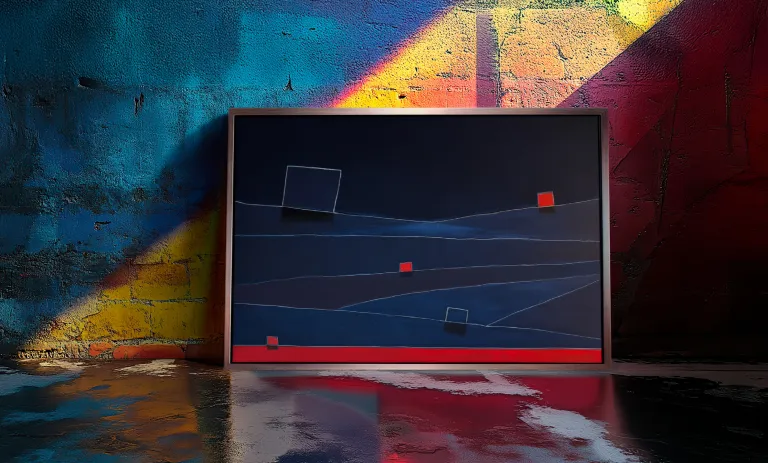
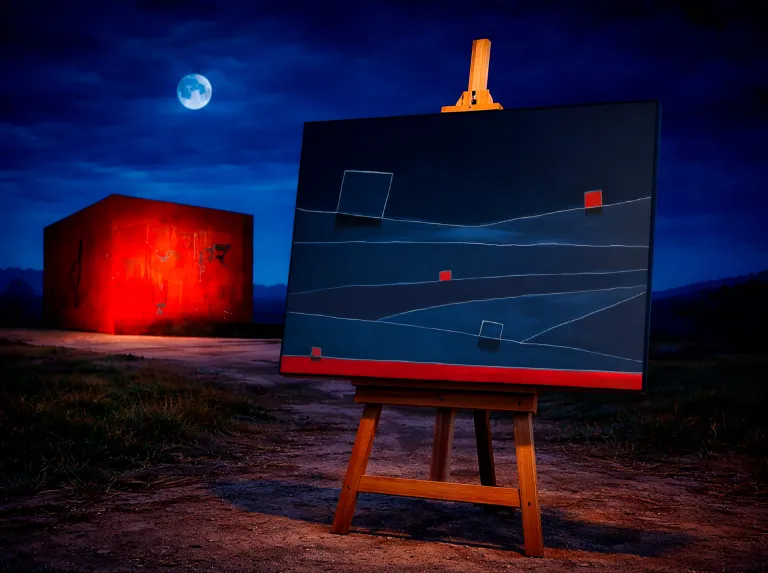
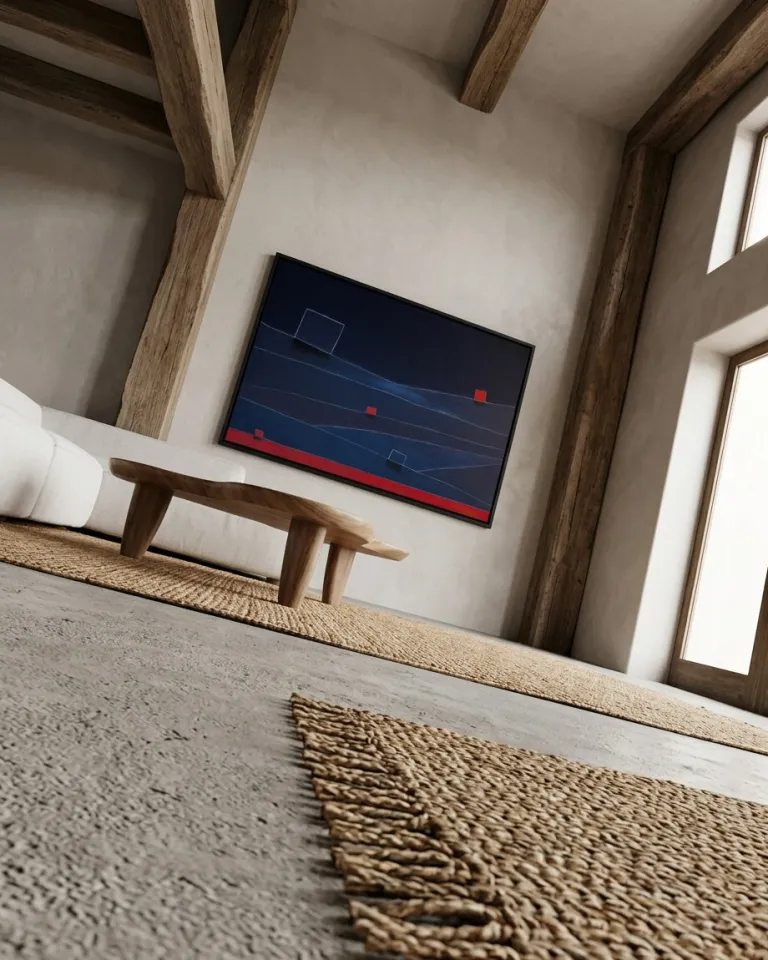
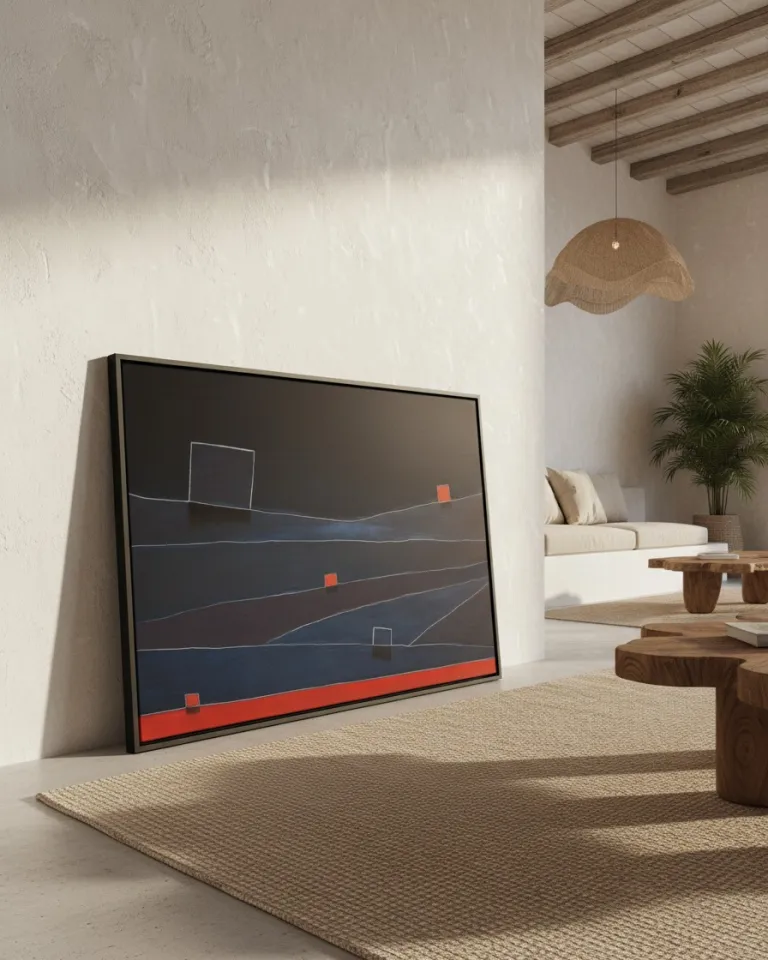
A dominant void of deep navy blue and carbon black defines the main surface, creating a space where visual silence functions as the primary structural force. Within this vast twilight, the viewer is invited to measure the quiet physical distances and subtle tensions established between the few suspended elements.
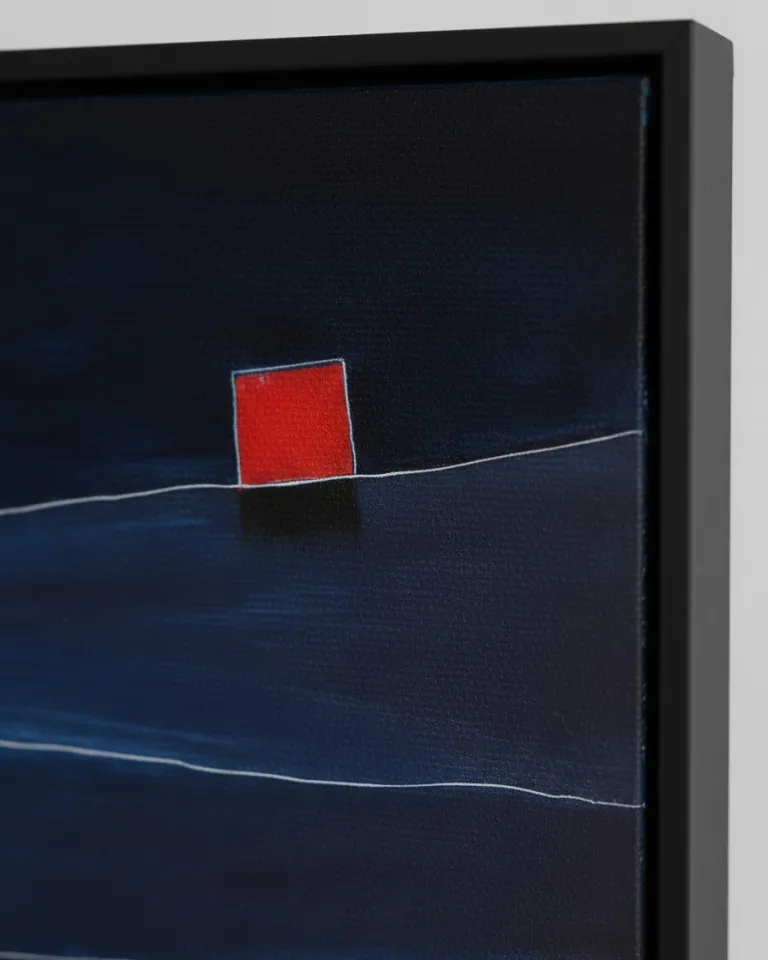
Fine, hand-drawn white lines run horizontally across the canvas, dividing the territory into subtle strata and gentle slopes that evoke abstract horizons. Resting on these linear boundaries are five geometric shapes of varying scales: two appear as open, linear contours, while the remaining three are solid blocks of saturated crimson red, seemingly anchored to the plane by soft underlying shadows. This sparse geometric arrangement contrasts with the bottom edge of the canvas, which is sealed by a dense horizontal band of vibrant red that anchors this contemporary color field painting.
The surface of this original minimalist abstract painting reveals a careful process of layering and glazing, where acrylic and oil are combined to achieve a rich, almost geological texture. The material treatment alternates between the opaque flatness of the geometric blocks and the subtle depth of the darker zones, where traces of scraping and direct incisions remain visible on the support.
By refusing explicit narrative, SINGULA offers a rigorous meditation on place, scale, and coexistence within the SITUS series. The geometric figures, isolated yet connected by a network of horizons, exist as quiet presences in a territory where distance itself defines the relationship between forms.
Artist influences
The dominant void of deep navy blue and carbon black in SINGULA establishes a visual silence that resonates with the atmospheric spaces of Mark Rothko. Within this vast twilight, the large field of color creates a quiet density where the weight of the void is felt through reduced forms, inviting the viewer to measure physical distances. Across this dark expanse, the fine, hand-drawn white lines that horizontally divide the canvas align with the understated linear divisions of Barnett Newman. These subtle strata and gentle slopes structure the color field, turning sparse divisions into perceptual markers that segment the vast territory. This network of horizons also evokes the geographic sensibilities of Richard Diebenkorn, where abstract planes suggest territorial boundaries within the SITUS series. The chromatic zones and linear divisions imply quiet physical distances, anchoring the composition to a sense of place without relying on explicit narrative. Finally, the five geometric shapes resting on these linear boundaries operate similarly to the cryptic signs of Paul Klee, introducing scale and cadence into the composition. Two open contours and three solid crimson blocks function as isolated yet connected figures, establishing a quiet physical dialogue that guides the viewer across the sparse territory.