The human nervous system synchronizes almost automatically with environmental rhythms through entrainment. When listening to a regular pulse, the brain actively predicts the subsequent stimulus with millisecond precision, preparing the body for a physical response. Yet when this rhythmic grid is disrupted, the sudden absence of the expected beat does not produce an inert void, but rather a specific neural activation. Silence itself becomes a stimulus with a physical presence.
Syncopation and the offbeat disrupt the expected meter in opposite ways. Syncopation relies on prolongation: a note initiated on a weak beat extends over the subsequent strong beat, absorbing its natural accent. The listener finds the vibration already established where they expected to anchor their attention. The offbeat, by contrast, operates through direct subtraction: the strong beat is left empty, occupied by silence, and the attack occurs immediately after, on the weak beat. While syncopation suspends the flow by stretching the sound, the offbeat breaks inertia with a clean omission.
In the presence of syncopation or an unexpected silence, the motor areas of the brain continue to activate at the exact millisecond the beat should have occurred. The nervous system generates an internal pulse to compensate for the missing stimulus and sustain the temporal structure. This cognitive effort to restore the absent beat generates the tension characteristic of syncopation: sound moves us not only by what is executed, but by the physical work required to complete its vacancies.
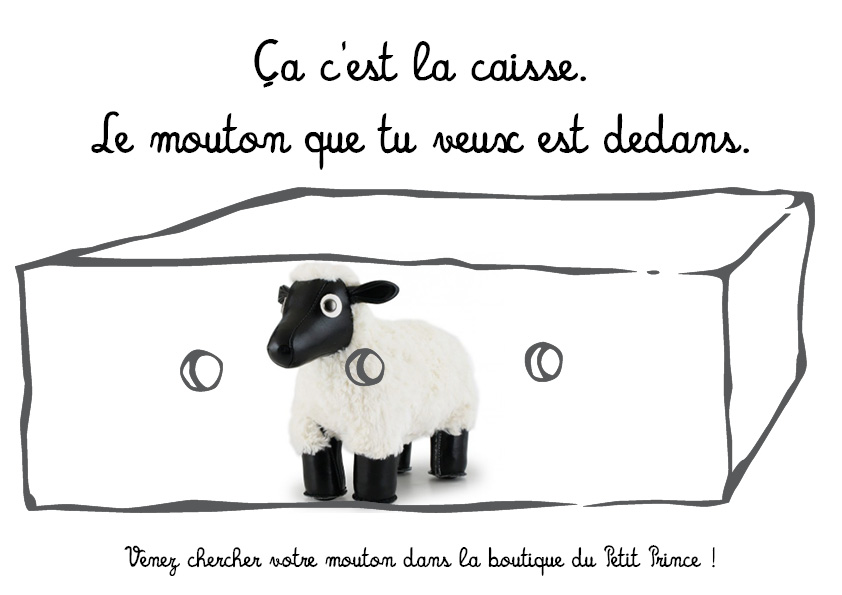
This same logic operates through formal subtraction in literature. In Antoine de Saint-Exupéry’s 1943 classic, The Little Prince—whose structure and language are clearly presented in the Fundación ONCE adaptation—the aviator lost in the desert attempts to draw a sheep. After successive attempts are rejected for being rams or being sickly, he draws a closed box with three air holes and claims that the animal is inside. The empty box shifts the focus of representation toward the active imagination. This iconic illustration, preserved on the official Antoine de Saint-Exupéry website, demonstrates that the strict boundary of the wooden box is not an inert vacancy, but a space of projection for the viewer.
The process establishes a bond. Just as the fox in the novel teaches us that it is the time spent on a rose that makes it important, the listener connects with the work through the effort invested in its pauses. Silence does not disrupt the relationship; it is the territory where the recipient’s active participation sustains the structure.
This temporal elasticity also defines thumri, a semi-classical vocal genre of Northern India that enjoys greater lyrical and expressive freedom than khyal, its strictly classical counterpart. In his performance of the piece "Ab ratiyan kidhar gawaye" ("Where did you spend the nights?"), available on the Hindustani classical music platform Ragya, vocalist Pandit Arun Dravid—a master trained in the traditional Jaipur-Atrauli gharana and a direct disciple of the legendary singer Kishori Amonkar—demonstrates this freedom by dilating syllables and stretching time. The legacy of this tradition and the complexity of its teachings can be explored in an interview Dravid gave to Scroll.in.
Dravid develops the composition over the scale of Raga Bhairavi, a melodic framework with a devotional atmosphere that traditionally closes recitals. He employs meend—continuous glides between notes—and expressive delays in phrasing. By postponing the attack of the words, he momentarily suspends the tal, or rhythmic cycle. This dilation holds the listener in an expanded present, waiting for the tension to resolve at the sam, the first beat of the cycle where voice and percussion meet once again. The pleasure of resolution does not stem from mechanical regularity, but from anticipation.
In this economy of listening, what is essential remains inaudible to the ear: the weight of what is withheld sustains the vibration of what is executed. Absolute regularity lulls consciousness; the break forces us to inhabit the present with redoubled attention. Syncopation, delay, and strategic silence do not destroy order; they demand presence. The echo that survives in the empty interval does not belong to the sound that has ceased, but to the body and the imagination that sustain the structure.