Genesis recounts that one of the first tasks assigned to Adam was to name the creatures inhabiting Eden. At its root, this foundational work did not consist in inventing words, but in drawing the first symbolic boundaries on the canvas of experience: deciding what was a fruit and what a stone, dividing the continuous flow of nature into useful classes and categories. Ken Wilber, in his classic 1979 book, No Boundary, warns that every boundary line is always a potential battle line. By dividing the territory of reality, the cartographer simultaneously invents the adversary. In the creator's studio, this Adamic fascination is repeated every time a formal outline solidifies into a defensive retaining wall, a trench built to protect a style, a brand, or an identity.
Creative conflict is no different from that original fragmentation. Artists often become obsessed with boundaries: the strict framing of the canvas, the recognizable signature, the inviolable structure of the concept. It is frequently forgotten that the lines on a map are conventions of contact, not absolute barriers. By making the border rigid, the play space becomes militarized, and the creative process is transformed into a self-defense campaign. What began as a sensitive gesture to define a form ends up operating as a protective shield, isolating the creator from unexpected environmental accidents and reducing the work to a bunker designed to protect a predictable self.
This division takes on a painful presence in the fracture between intellect and somatic experience—a divorce that Francis of Assisi summarized when referring to his own physical body as “Brother Ass.” When the creator attempts to govern the artistic process solely through the tyranny of the voluntary ego, the body and its sensory immediacy are relegated to the other side of the fence, treated as mechanical tools to be spurred or silenced. This muscular and psychological resistance imprisons intuition, and the artist begins to experience the material—be it canvas, sound, or clay—as hostile territory, failing to perceive that external resistance is merely a projection of their own dissociated physicality.
It is within this paralysis that the famous clinical metaphor Wilber recovers from psychophysical therapies and bioenergetics becomes meaningful: the individual who persistently pinches themselves without realizing it. Feeling the sharp, stinging pain of the pinch, they complain bitterly of a mysterious suffering and seek remedies from their surroundings, wondering why the affliction does not subside. In artistic practice, creative blocks or technical frustration rarely stem from real limitations of talent; instead, they arise from a pattern of muscular and conceptual holding—a “holding pattern”—that creators actively inflict upon themselves. The trench is not a geographical accident; it is a continuous muscular effort sustained to keep the boundaries of identity safe.
Those who unconsciously pinch themselves do not need to learn complex relaxation techniques or wage a crusade against pain; they simply need to realize that the hand doing the pinching is their own. Attempting to dissolve a creative block through sheer willpower is as futile as trying to stop pinching oneself by clenching the fist tighter. The true movement of liberation does not consist in overcoming resistance on its own terms, but in recognizing the hand that raises the fence to invent an enemy to fight. By bringing this defensive effort into consciousness, the muscular energy held in the conflict relaxes spontaneously, making way for effortless action.
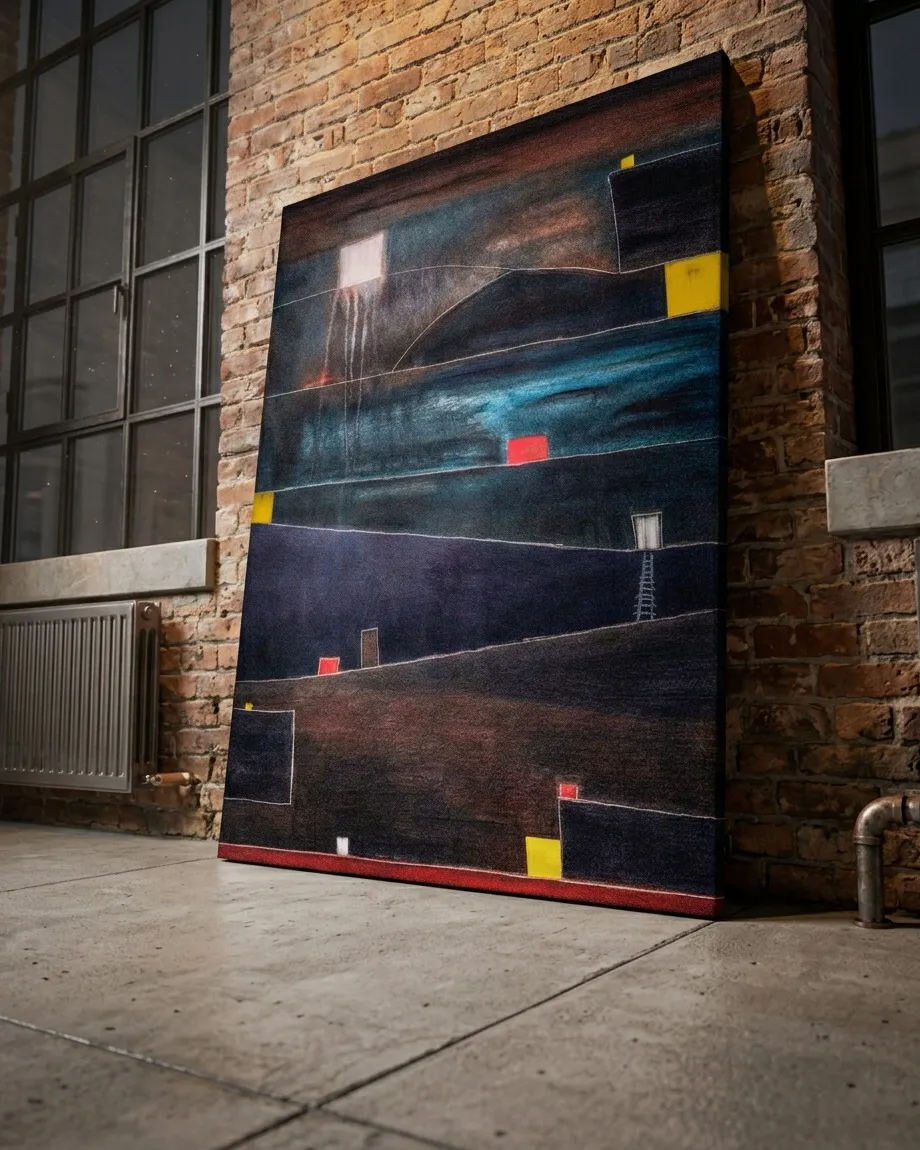
By dismantling the architecture of the trench, the artwork undergoes a radical shift. It ceases to be a border dividing a subjective interior from an objective exterior, revealing itself instead as a shared membrane of friction—a tactile shoreline where the rigid dualities between the observing subject and the observed object dissolve. The creator abandons voluntary resistance and yields to a space of dis-identification where there is no longer an isolated subject manipulating an inert object, but a continuum of pure presence. With no trenches left to defend, the work ceases to be a territory of exclusion and becomes the meeting ground where the world and the artist return to their original unity.