The exhaustion of conceiving existence as a constant chain of battles and achievements often goes unnoticed beneath the veneer of self-realization. Wearing the seeker’s armor becomes habitual; the traveler feels compelled to justify every step with an impending accomplishment. This narrative finds its classic blueprint in The Hero with a Thousand Faces (1949), where the American mythologist Joseph Campbell systematized the monomyth: a universal journey of departure, initiation, and triumphant return bearing a boon that restores order. When mapped onto individual psychological fatigue, this structure reveals its flipside: the pursuit of validation becomes a circular trap that drains vital energy and postpones peace.
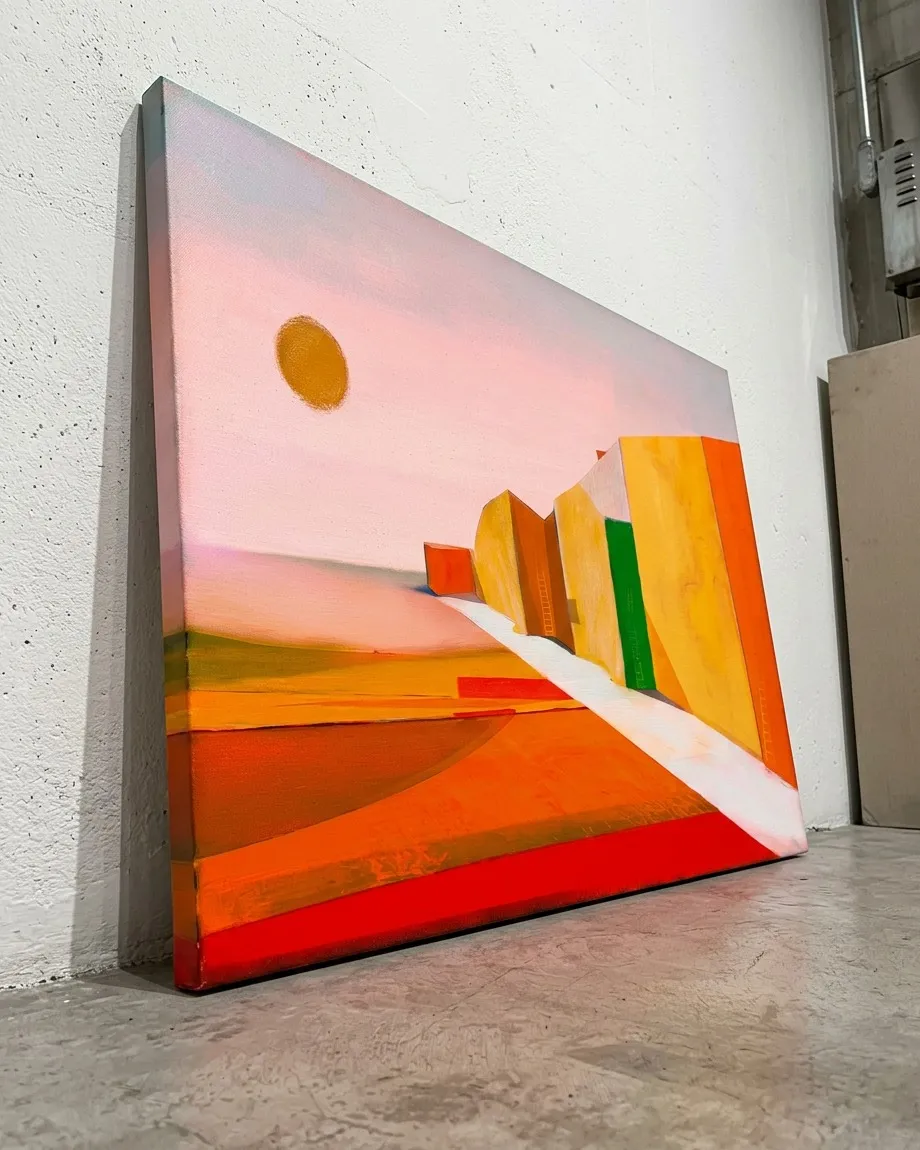
Faced with the demands of this ascending march, the painting Via Solis —from Maurizio Valch's PRIMORDIUM series— demands a drastic halt. A white path cuts diagonally across a warm plane dominated by dense ochres, yellows, and reds. This path does not lead to a coronation palace or a triumphant homecoming; it opens into clean geometric forms, silent monoliths rising beneath a sun suspended in a pale sky. There is no narrative of victory in this abstract geography; there is permanence, temperature, and a silence that neither demands explanations from the viewer nor offers rewards to the traveler. The vertical structures in the work function as boundaries that turn the gaze back toward one's own thoughts.
At this point, the artist’s spoken-word poem introduces a dimension of disarmament. While traditional epics demand that the hero remain upright, the ambient recording proposes a dissolution of personal hierarchy. The poem unfolds as an invitation to shed the persona:
«The air carries the scent of sea and sand, the constellations and the moon still reveal themselves. Cries echo like open violin notes, and you are free, free. It is dawn and you are free from nights and sorrows. Free, you can become fresh earth once more. To feel like a nebula of the same planet. You are free. You can be the virtue of the earth, to sing and dance with a thousand souls in pain.»
Liberation from nights and sorrows is not achieved by defeating an enemy, but by surrendering the self that required the quest to sustain its identity. By suggesting that the traveler can finally «become fresh earth once more», the poem dismantles the verticality of Campbellian triumph. To return to the earth is to reclaim horizontality—to realize that the journey's end is not to rise above the world, but to find the possibility of «singing and dancing with a thousand souls in pain», dissolving the distance that the victorious persona imposes.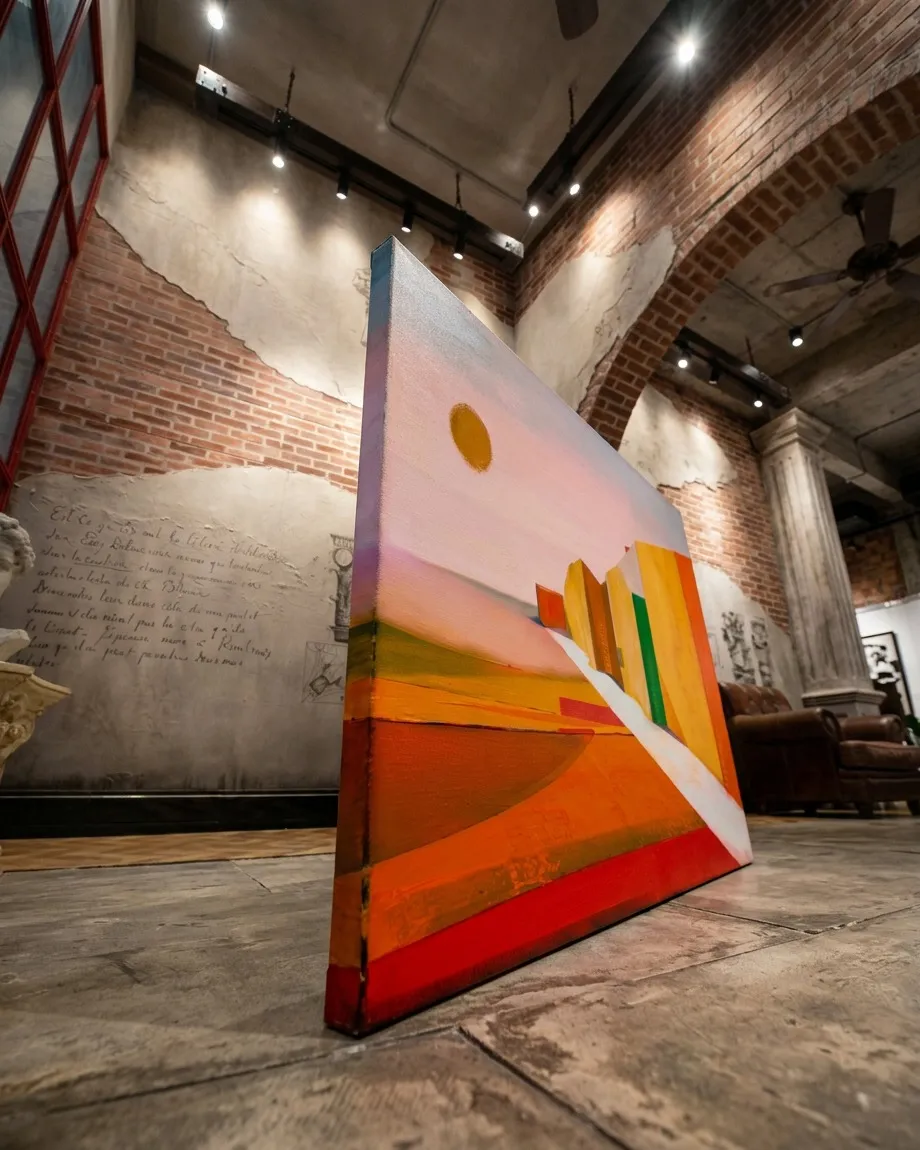
This movement finds an echo in the sobriety of Fratres, a seminal work by Estonian composer Arvo Pärt. Characterized by its austerity, silences, and the use of repetitive structures, the piece moves forward stripped of dramatic embellishment. Much like in Valch's painting, the sound does not seek to impress with virtuosic display, but rather invites us to inhabit the stillness of an elemental structure.
The traveler’s maturity is not found in the returning trophy, but in the ability to let the armor fall by the side of the white path. When the urgency to prove one's worth before an invisible court ceases, the mental landscape stops being a territory occupied by interpretations and becomes a place where one simply is. Under the suspended sun of the painted matter, the traveler discovers that the true end of the journey is the voluntary relinquishing of the persona that forced them to keep marching.