Series · 2026–Present
INCARNATE
Portraiture as the manifestation of an existence without likeness
About this series
In INCARNATE, Maurizio Valch rethinks the boundaries of representation through layered surfaces, blocks of color, and physical incisions that reject biographical illustration to embody the multiplicity of existence.
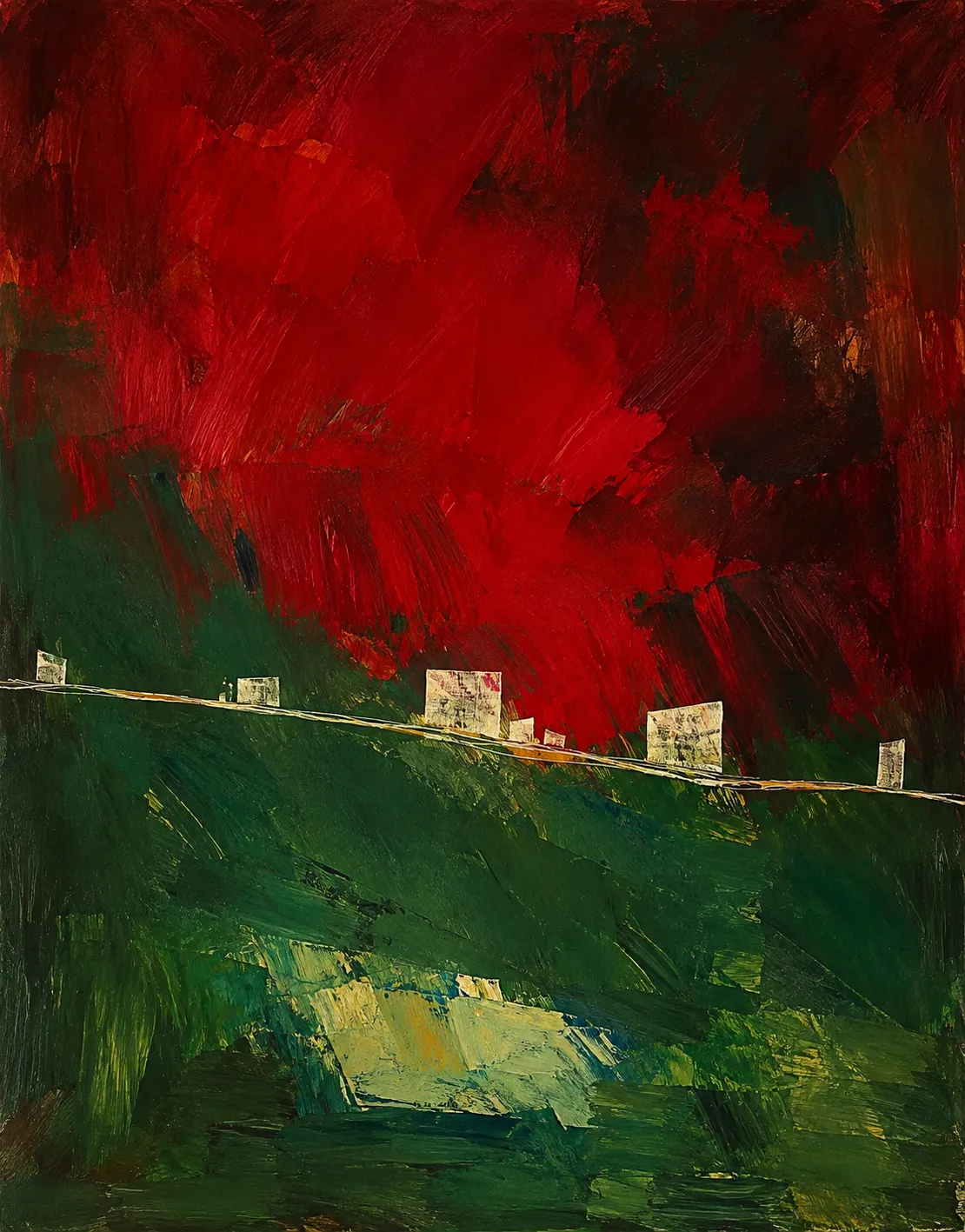
The INCARNATE series emerges as a turning point in the artistic practice of Maurizio Valch, shifting his investigation of physical and geographical territory toward the pure manifestation of a singular existence. In this body of work, portraiture abandons the historical demand for likeness and anatomical reproduction to become a purely pictorial fact. Valch proposes that a being is not exhausted by their appearance or by the constructed narrative of their identity; on the contrary, existence unfolds as a space where accumulated memory, latent conflict, and silence simultaneously coexist. The paintings in this series do not illustrate a biography; instead, they behave as material bodies that occupy their own place in the world.
This rethinking of portraiture is fueled by the artist's persistent suspicion of the psychological overinterpretation that often suffocates both art and life itself. True to the observation that 'the fact ends up buried beneath its interpretations,' Valch avoids turning the canvas into a closed system of symbols where each color or form equates to a specific mental state. Drawing inspiration from material dialogues that recall the eroded surfaces of Antoni Tàpies and the tectonic density of Alberto Burri, the surface in INCARNATE is worked through successive layers of acrylic and oil that are subsequently scraped, pressed, and reduced. The canvas is treated as a skin that retains the trace of its own temporal development, showing that identity is not a static unity but a sedimentation of experiences.
The visual language of the series is organized through color fields, frequently dominated by restrained and dark tones, which enter into tension with monolithic blocks and the central element of his painting: the incision. These incised marks, physical cuts, and fissures upon the material do not function as ornamental strokes, but as cracks through which the underlying stratum breathes. Like the dense chromatic masses of Nicolas de Staël, the blocks of color in INCARNATE act as compact presences, small nuclei of resistance and gravity that organize the spatial tension of the work. The contrast between the stillness of these masses and the vibration of the incisions creates a composition suspended between quietude and fracture, inviting the observer to hold their gaze before the inaccessibility of each existence.
The relationship that INCARNATE establishes with the names, literary quotes, or historical references that accompany the works is never one of subordination. A title or a poetic fragment may open a channel of resonance with the painting, but they do not determine its ultimate identity. The work stands autonomously, presenting itself to the viewer as a territory where certainty dissolves in favor of silent contemplation. By renouncing the analytical domesticating of the figure, Valch opens a space where the painting does not attempt to impress with superficial effects, but rather invites thought to recognize its own limits, guarding the mystery of that which remains latent and never manages to fully express itself.
Tags
Contemporary abstract painting;Territorial abstraction;Brutalist minimalism;Oil on canvas;Acrylic painting;Color fields;Physical incisions;Contemporary art from Spain;Maurizio Valch;Textured surfaces;Abstract portraiture;Elemental geometry
Series works
Works in this series