

Published work / MARE SOMNIORUM
LUX REMOTA
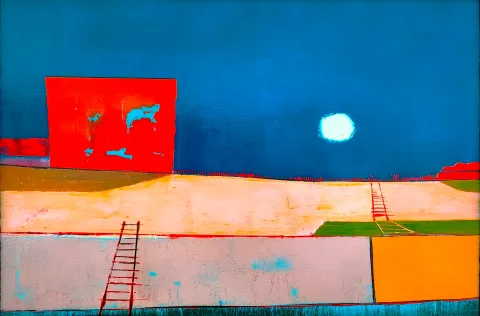
Abstract Painting "LUX REMOTA" from the MARE SOMNIORUM Series
- Size
- 47.2 × 31.5 in / 120 × 80 cm
- Series
-
MARE SOMNIORUM
 Painting series
MARE SOMNIORUM
Maurizio Valch's MARE SOMNIORUM series presents original territorial abstract paintings. Created with acrylic and oil on canvas, these artworks explore an oneiric space of horizons and expansive planes, revealing an atmosphere of contemplation and serene strangeness. View series
Painting series
MARE SOMNIORUM
Maurizio Valch's MARE SOMNIORUM series presents original territorial abstract paintings. Created with acrylic and oil on canvas, these artworks explore an oneiric space of horizons and expansive planes, revealing an atmosphere of contemplation and serene strangeness. View series
- Context studies
- 10
Conceptual Note
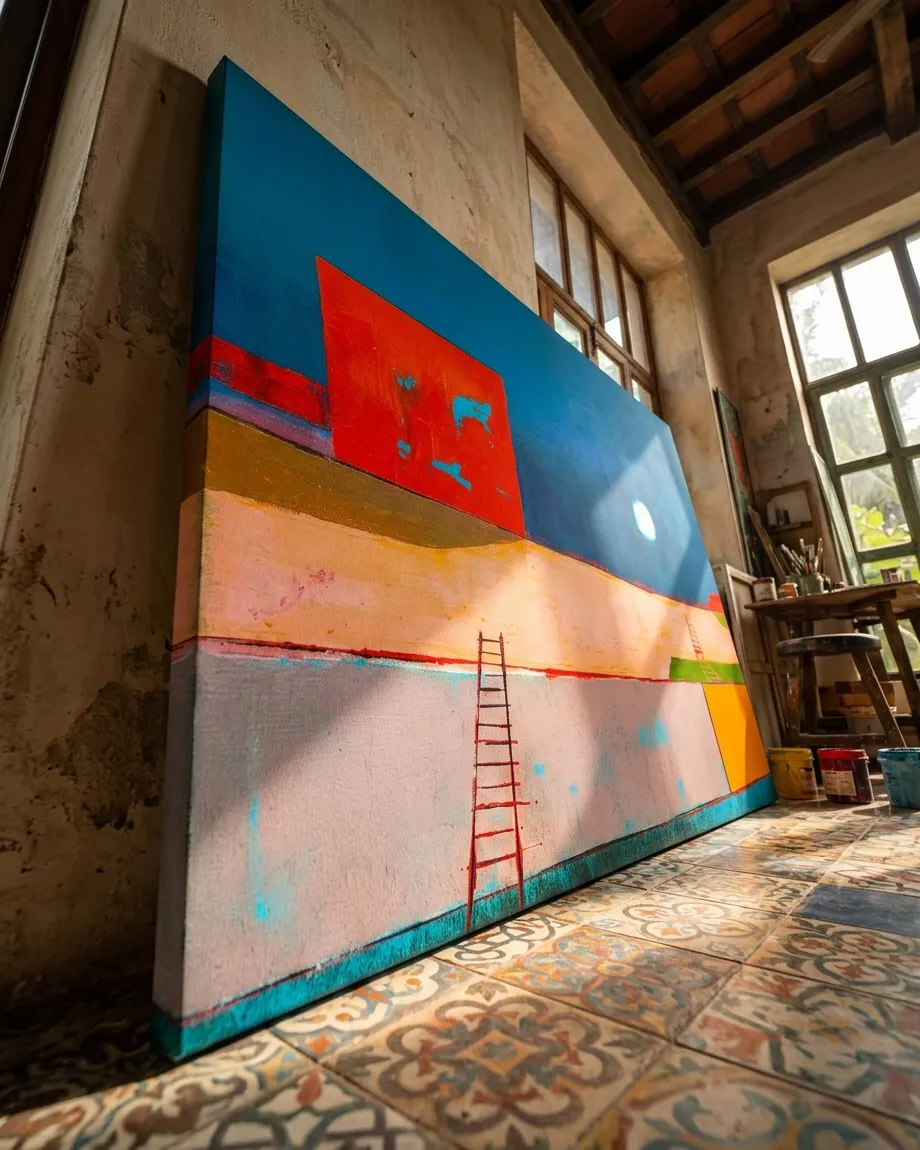
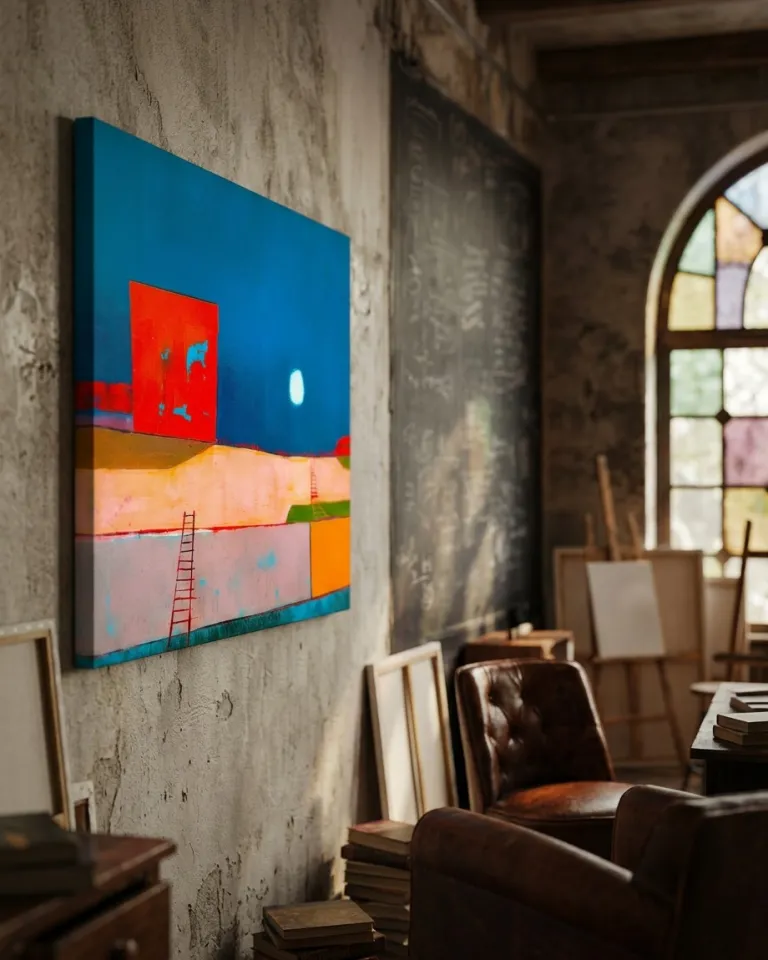
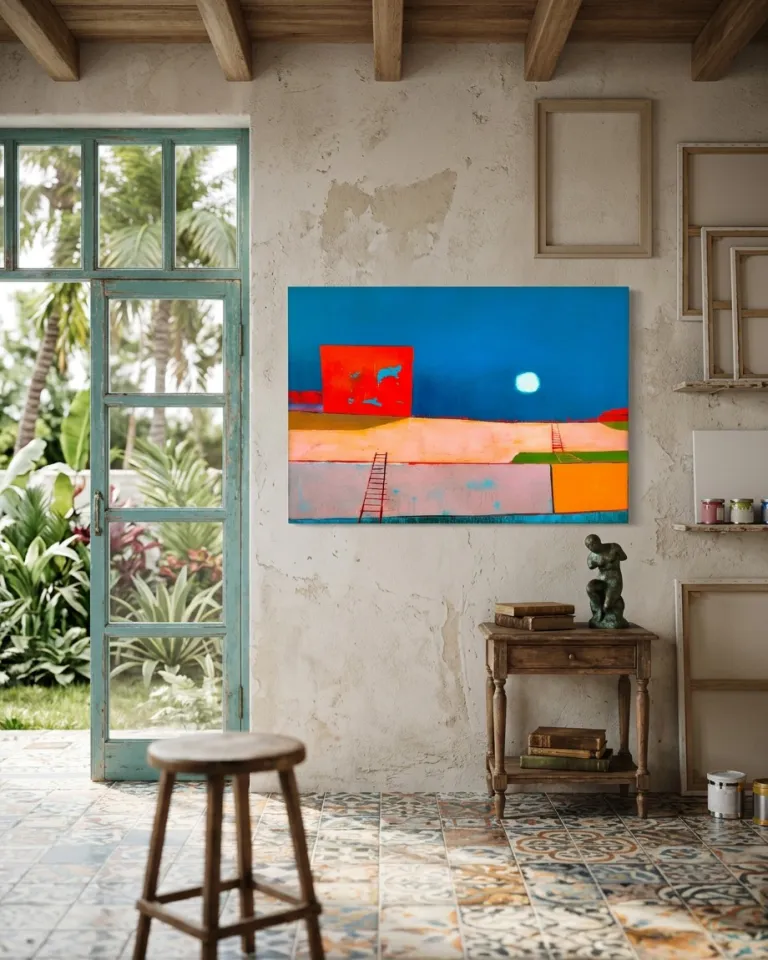
“LUX REMOTA,” a painting by Maurizio Valch from the MARE SOMNIORUM series, offers a contemporary abstract composition. On the canvas, Valch establishes a visual territory with vibrant color blocks and distinct spatial divisions. The deep blue of the sky contrasts with an intense red block in the foreground and a diffused light appearing on the right, creating a structured spatial tension.
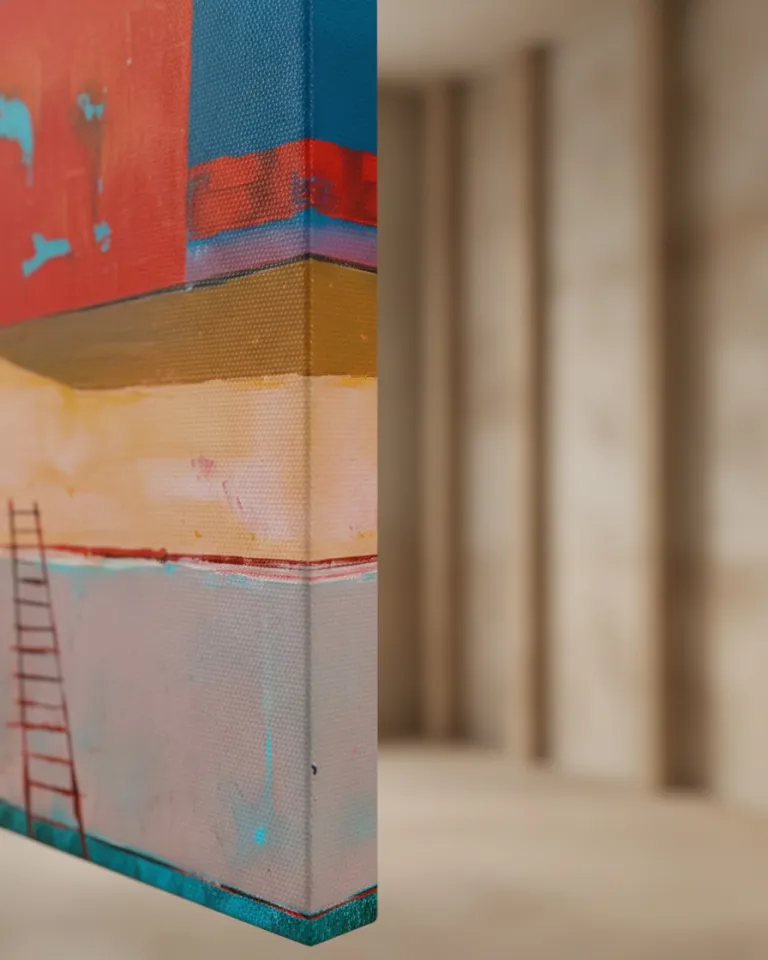
The artist works with acrylic and oil on canvas, building the surface with layers of color, scraping, and incisions to achieve a perceptible, material texture. Structural elements, such as the two thin stairs subtly integrated into the composition, suggest thresholds or passages, reinforcing the sense of a contained space in transformation.
“LUX REMOTA” exemplifies Valch's territorial abstract painting, characterized by a tension between stillness and movement, depth and surface. This work embodies a sober and structural visual language, aligning with minimalist and brutalist abstraction. It presents an open spatial reading, where the composition functions as territory, matter, or a site of emergence.
Artist influences
In LUX REMOTA, the composition functions as a visual territory where abstract planes and chromatic zones evoke a clear sense of landscape. The deep blue of the sky and the intense red block in the foreground define a structured, territorial abstract painting that balances depth and surface. This dialogue with Richard Diebenkorn is visible in how these distinct spatial divisions establish horizons and distances, transforming the canvas into a site of emergence. This tension between stillness and movement continues through the work's material construction, aligning with the lineage of Nicolas de Staël. The vibrant blocks of color, built up with acrylic and oil through layering, scraping, and incisions, function as compact, material structures on the canvas. The contrast between the foreground's intense red block and the diffused light appearing on the right creates a sober, structural visual language that maintains a recognizable spatial tension. Within this structured territory, the two thin stairs subtly integrated into the composition serve as small geometric presences that suggest thresholds or passages. Drawing from the structural sensibilities of Paul Klee, these subtle linear elements introduce scale and rhythm into the otherwise minimalist and brutalist abstraction. By functioning as primitive architectures, these stairs invite an open spatial reading, transforming the flat surface into a space of potential transition.