

Published work / EMERSIO
CUSTODES
Emergent Architectures
- Size
- 31.5 × 47.2 in / 80 × 120 cm
- Series
-
EMERSIO
 Painting series
EMERSIO
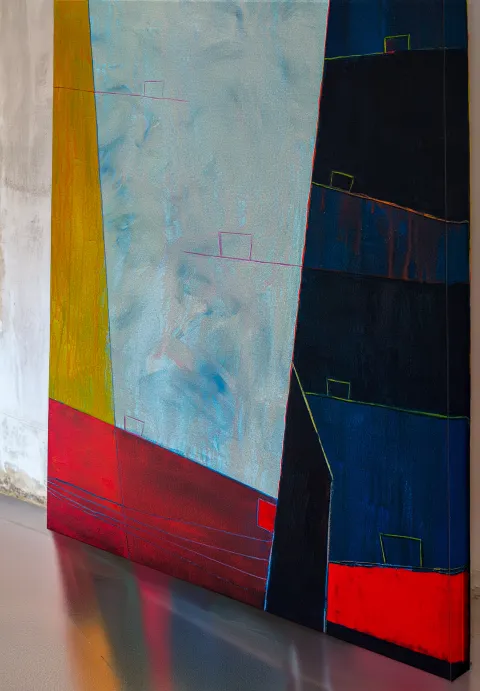
Maurizio Valch's EMERSIO series features original contemporary abstract painting. Crafted with acrylic and oil on canvas, these works explore the moment forms emerge from the territory, creating a territorial and minimalist abstraction through textured and stratified surfaces. View series
Painting series
EMERSIO
Maurizio Valch's EMERSIO series features original contemporary abstract painting. Crafted with acrylic and oil on canvas, these works explore the moment forms emerge from the territory, creating a territorial and minimalist abstraction through textured and stratified surfaces. View series
- Context studies
- 8
Conceptual Note
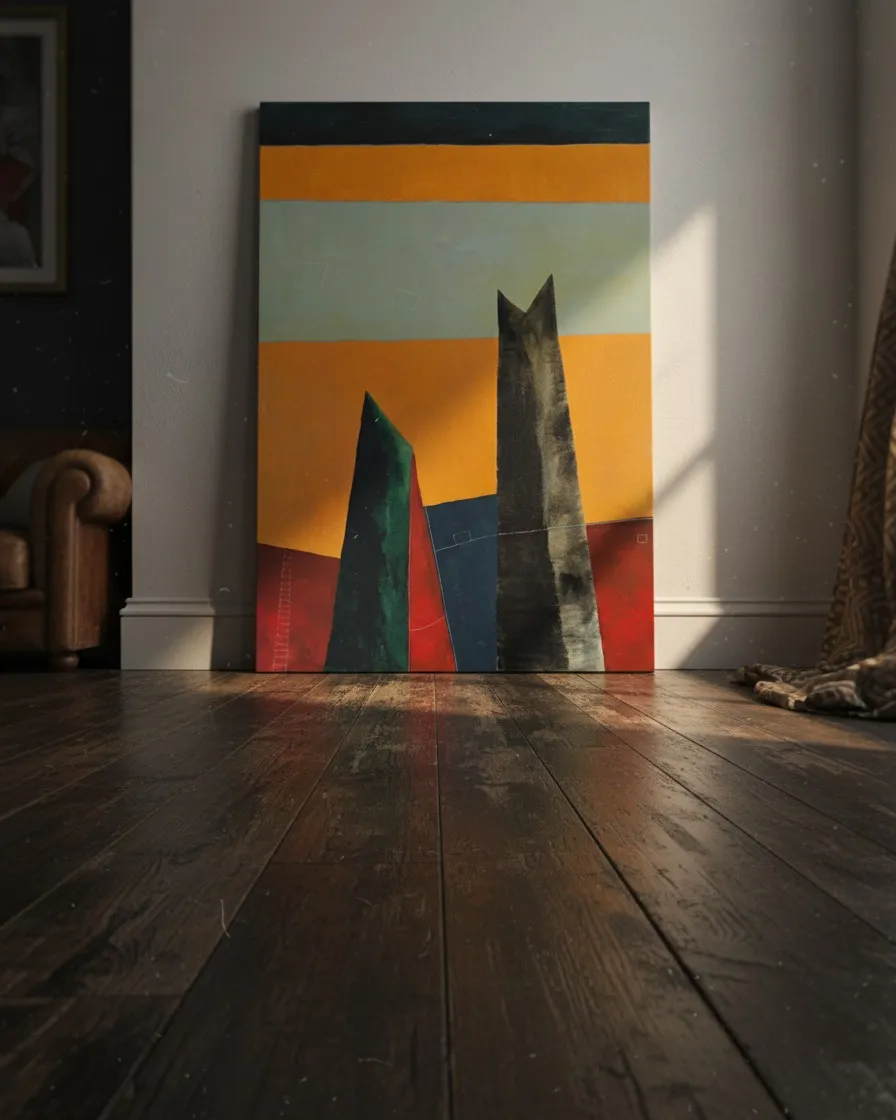
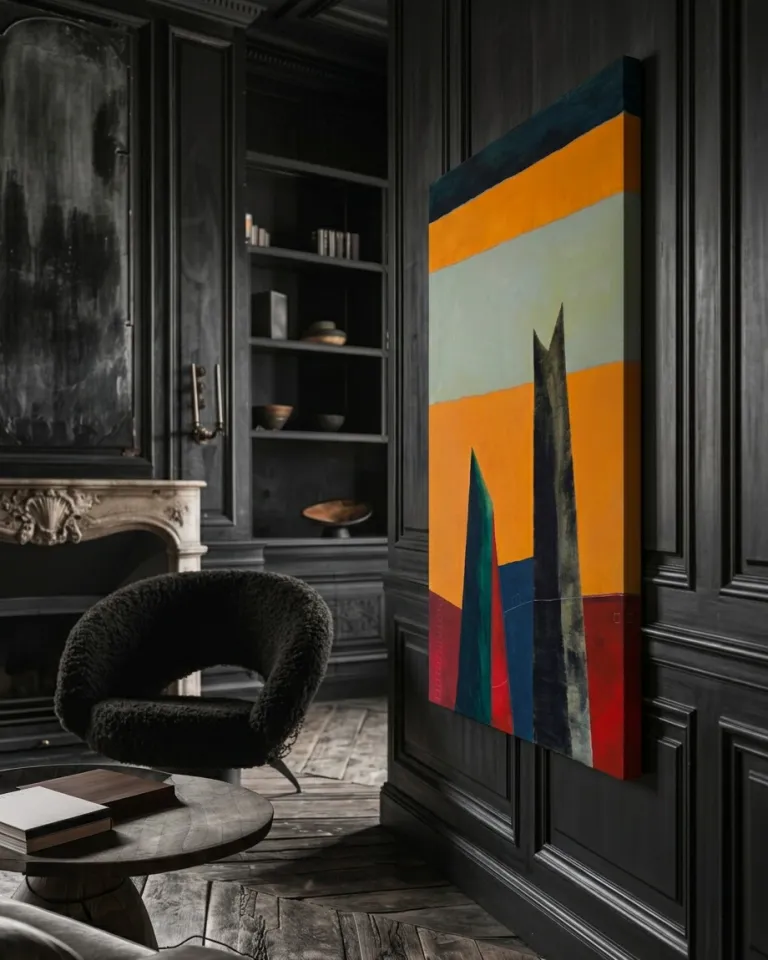
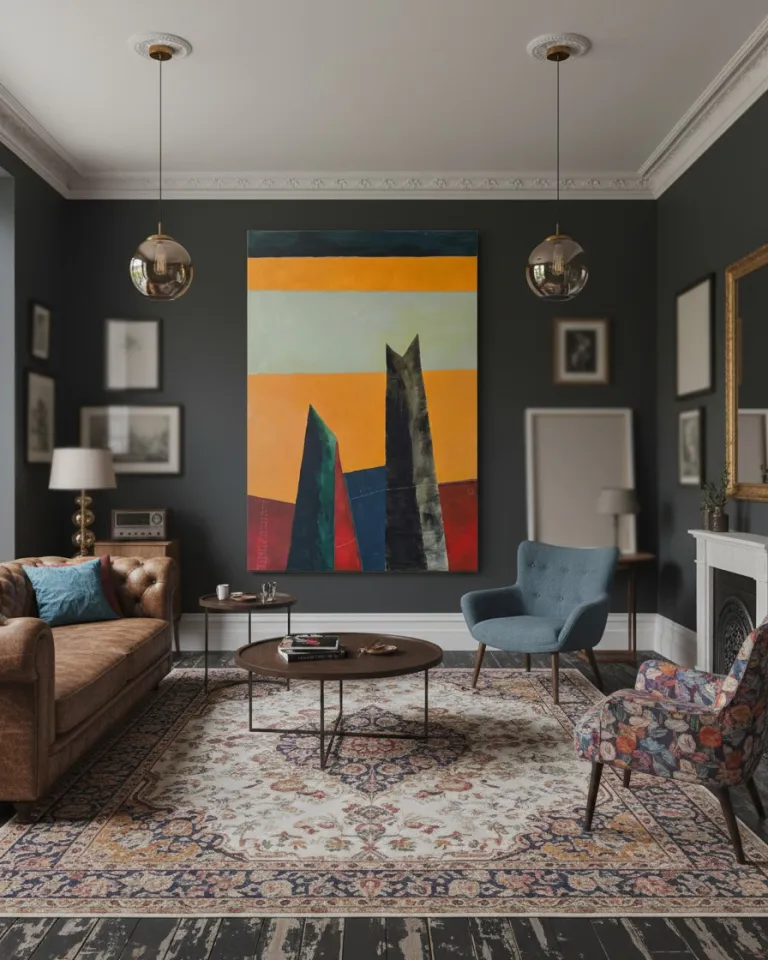
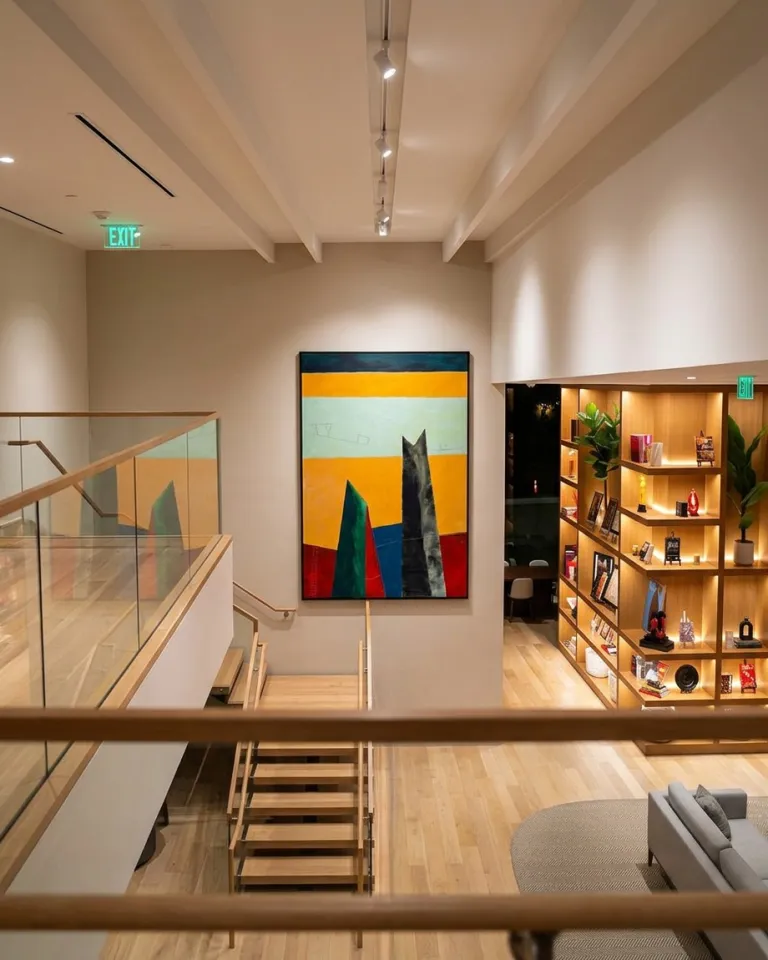
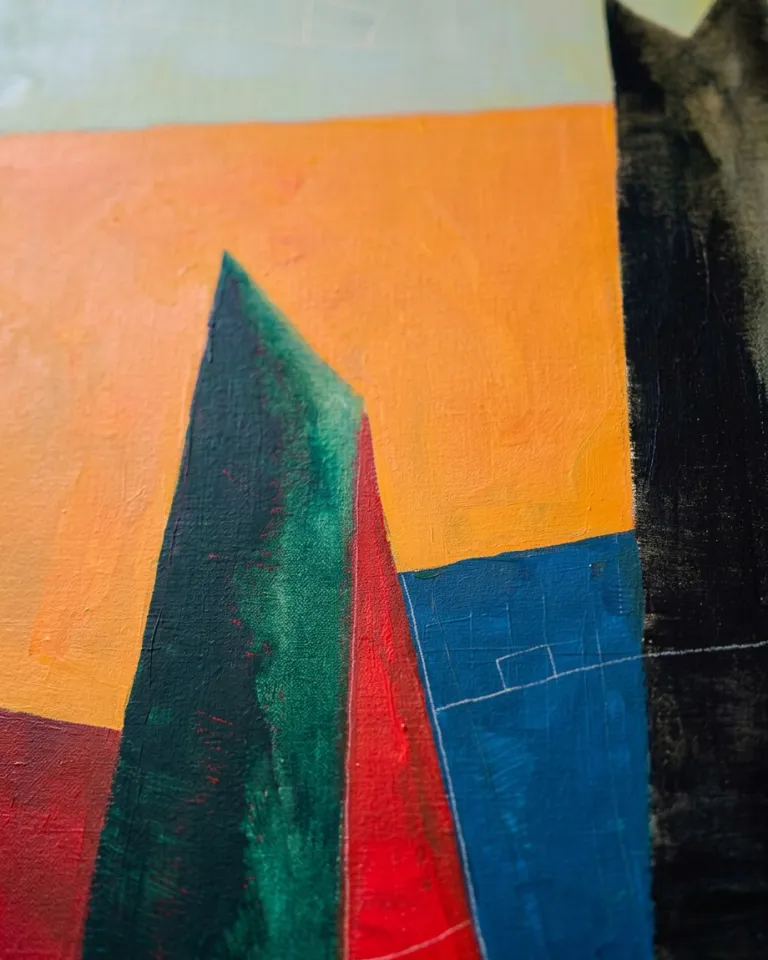
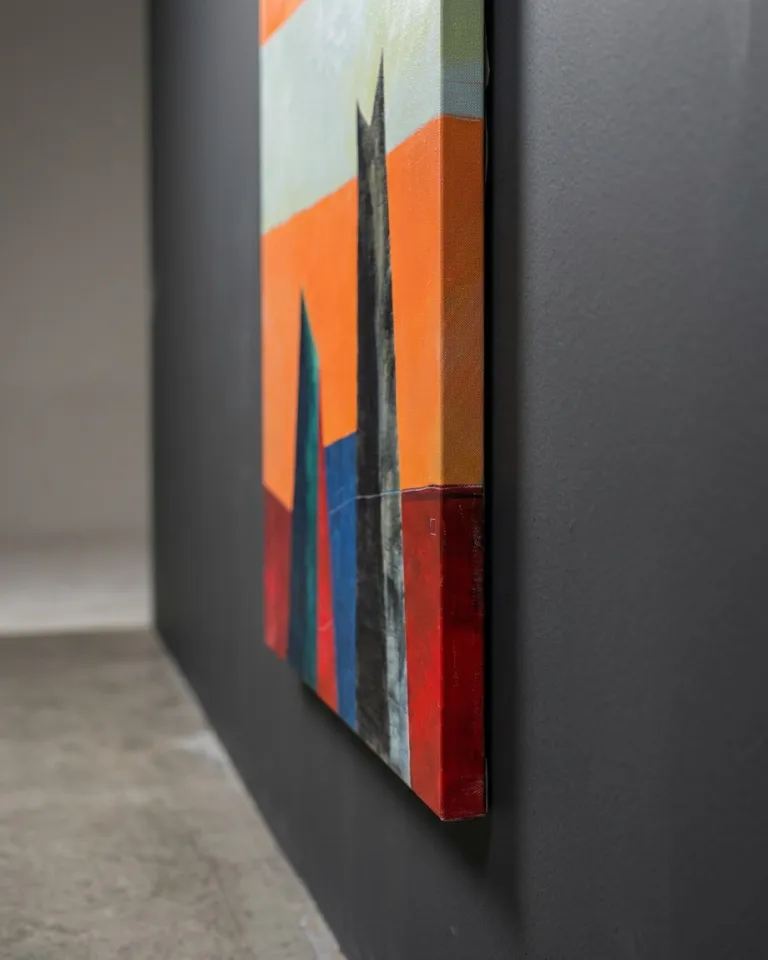
CUSTODES unfolds a visual dialogue between painting and architecture, suggesting structures rising from primordial ground. The composition is organized into horizontal fields of vibrant orange and pale blue-green, forming a luminous horizon from which angular, monolithic presences emerge. Rendered in dark green, red, deep blue, and textured black, they stand with a solidity that contrasts with the atmospheric lightness of the background.Dense impasto, scraping, and incisions give these forms an almost geological surface and reveal accumulated layers beneath the paint. In contrast, translucent glazes lend the sky a sense of distance and suspension. As part of the EMERSIO series, the work explores the threshold of appearance: the moment when form begins to separate from its surrounding territory. These primary structures seem to guard a space in transformation, creating an atmosphere of monumental stillness and inviting reflection on the foundations through which our environment takes shape.
Artist influences
In CUSTODES, the dialogue between expansive color and monumental stillness aligns with the legacy of Mark Rothko, whose influence is felt in the luminous horizon formed by horizontal fields of vibrant orange and pale blue-green. These translucent, glazed expanses of sky establish a sense of suspension, transforming the background into an immersive spatial field. This atmospheric color division transitions into a structured territory reminiscent of Richard Diebenkorn, where abstract planes are anchored to a suggested landscape. The work establishes horizons and territorial distances through the contrast between the light background and the dark, emerging forms, embodying a threshold where pure abstraction meets a primordial geographic structure. Rising from this landscape are the monolithic, angular shapes that echo the spatial tension of Nicolas de Staël. Rendered in dark green, red, deep blue, and textured black, these compact blocks of dense impasto, scraped and incised to reveal underlying layers, assert an architectural solidity that anchors the entire composition.