Context study / COACTUS
COACTUS — Context Study
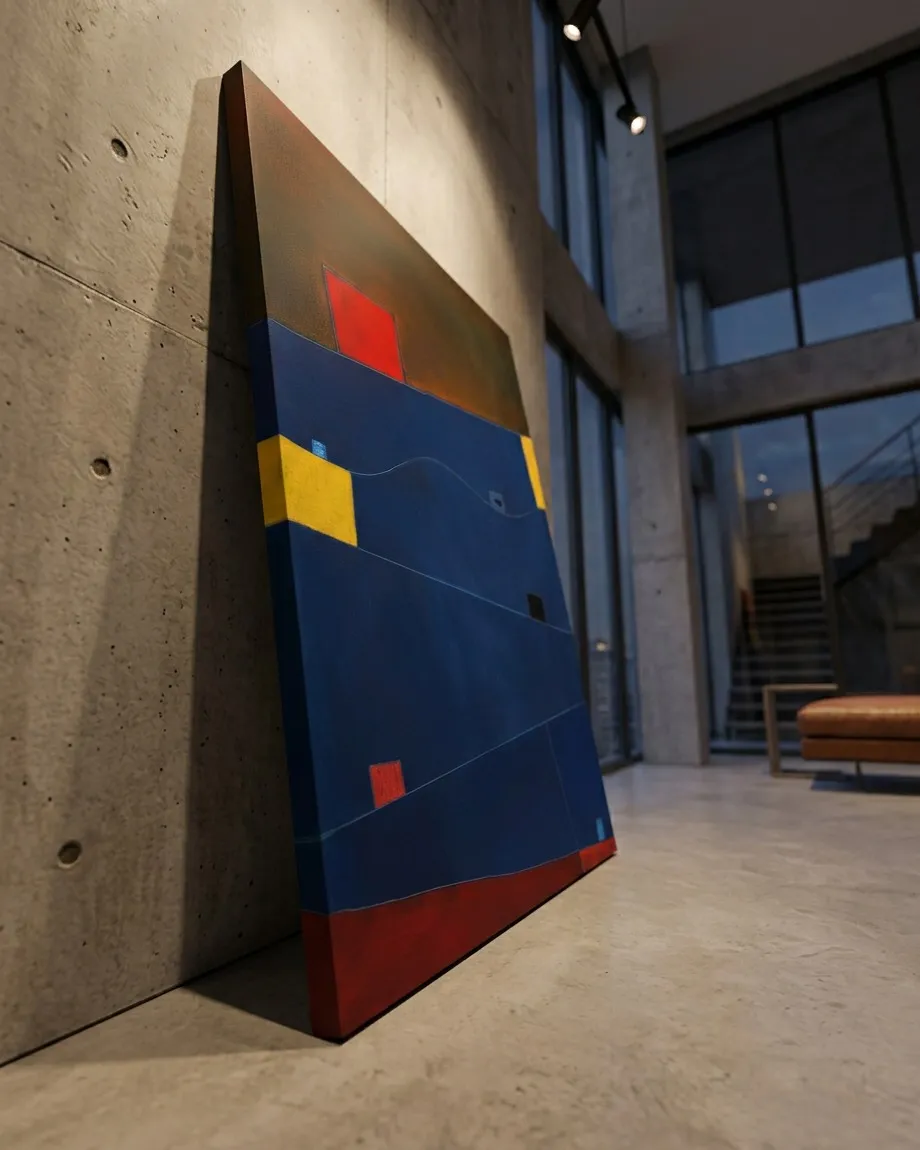
A luminous yellow block stands out sharply on the left edge, interrupting the transition between the deep indigo blue field and the cool gray surface of the raw concrete wall. Under a warm, focused light descending from the double-height ceiling, the acrylic and oil pigments reveal their tactile differences, alternating soft glazes with the subtle relief of layered paint. The canvas structure is organized by oblique incisions and extremely thin lines that fragment the surface into zones of quiet restraint, crowned by a crimson square set against a dark brown upper section. Resting directly on the polished cement floor, the 80 by 120 cm vertical painting gains a distinct physical presence through an extreme low-angle perspective that accentuates its three-centimeter deep edge. This low placement integrates the canvas into the silent space of the room, drawing the eye back to the isolated glow of the small yellow lateral block.
- Original artwork
- COACTUS
- Actual dimensions
- 80 × 120 cm / 31.5 × 47.2 in
- Presentation
- Digital contextual visualization
Context references
original painting · abstract art · minimalist style · acrylic and oil on canvas · textured surface · indigo blue · crimson red · yellow · vertical orientation · portrait format · XL scale · original indigo blue abstract painting · minimalist acrylic and oil canvas art · vertical color field painting for collectors · textured abstract art for modern interior design
About this visualization
This visualization places the artwork within an architectural context to help collectors and viewers imagine its presence in a real space. It is an interpretive reference, not an exact reproduction: the original work remains the sole authority for scale, color, surface and material presence.