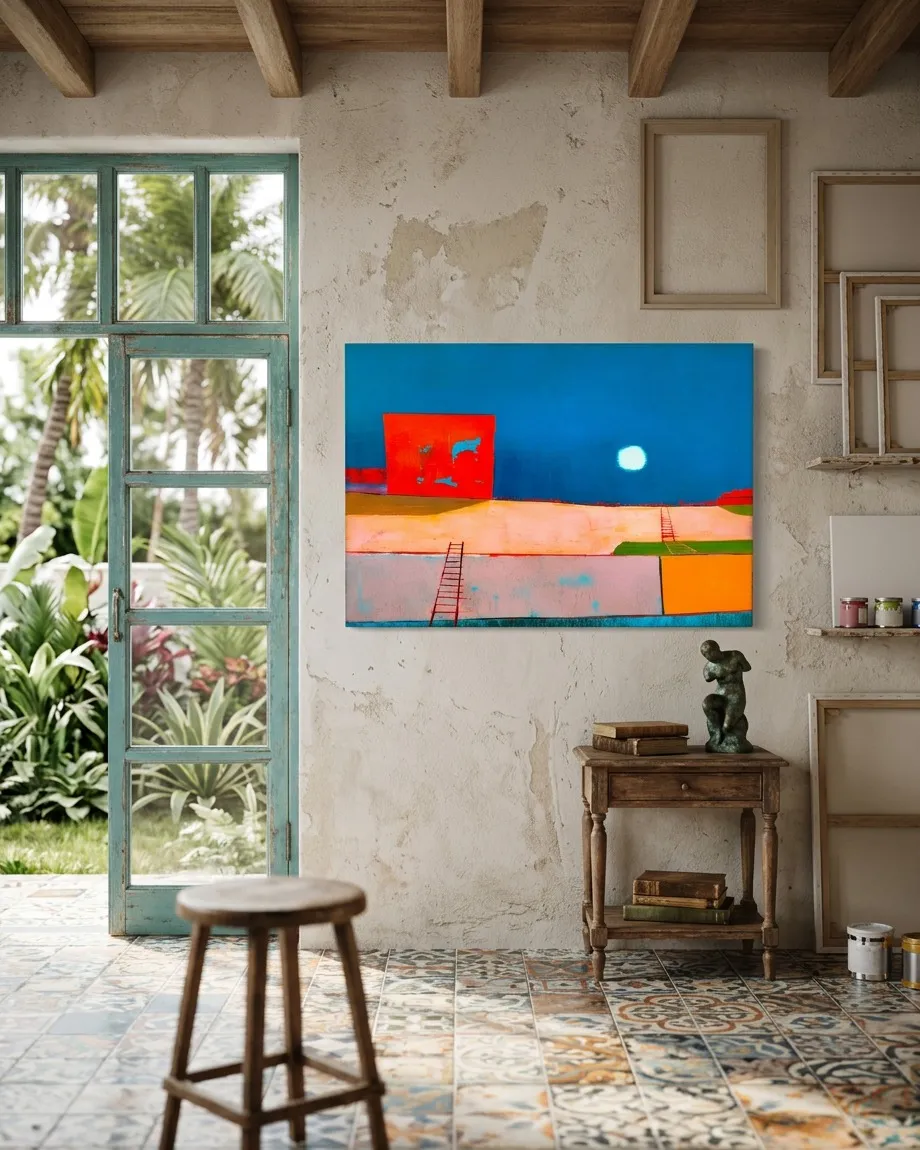
Context study / LUX REMOTA
LUX REMOTA — Context Study
The composition of 'LUX REMOTA' is articulated around a horizontal division that separates a vibrant blue sky-like field from a stratified terrain. This sharp yet evocative horizon line introduces a visual tension between the chromatic vastness of the upper section and the structured complexity of the lower part. A monolithic crimson block, with a tactile surface, anchors the left side of this terrestrial territory, while fine, incised ladder-like forms suggest progression or a threshold across the pale pink, orange, and green color planes. The application of acrylic and oil builds a subtle materiality in the expansive fields and a contained density in the red block, inviting the observer into a quiet space where the white light above the horizon seems to hold an expectant stillness.
- Original artwork
- LUX REMOTA
- Actual dimensions
- 120 × 80 cm / 47.2 × 31.5 in
- Presentation
- Digital contextual visualization
Context references
Original abstract painting · Maurizio Valch contemporary artwork · Minimalist abstract art on canvas · XL territorial abstraction artwork · Brutalist painting with color fields · Horizontal blue and crimson abstract painting · Painting with horizon and blocks · Textured and incised art for collectors · Buy contemporary abstract art · Original artwork for interior design · Painting with spatial divisions · Large format abstract painting · Contemporary art with chromatic contrast · Painting with monolithic forms and ladders
About this visualization
This visualization places the artwork within an architectural context to help collectors and viewers imagine its presence in a real space. It is an interpretive reference, not an exact reproduction: the original work remains the sole authority for scale, color, surface and material presence.