Context study / STRATA XIII — FISSURA
STRATA XIII — FISSURA — Context Study
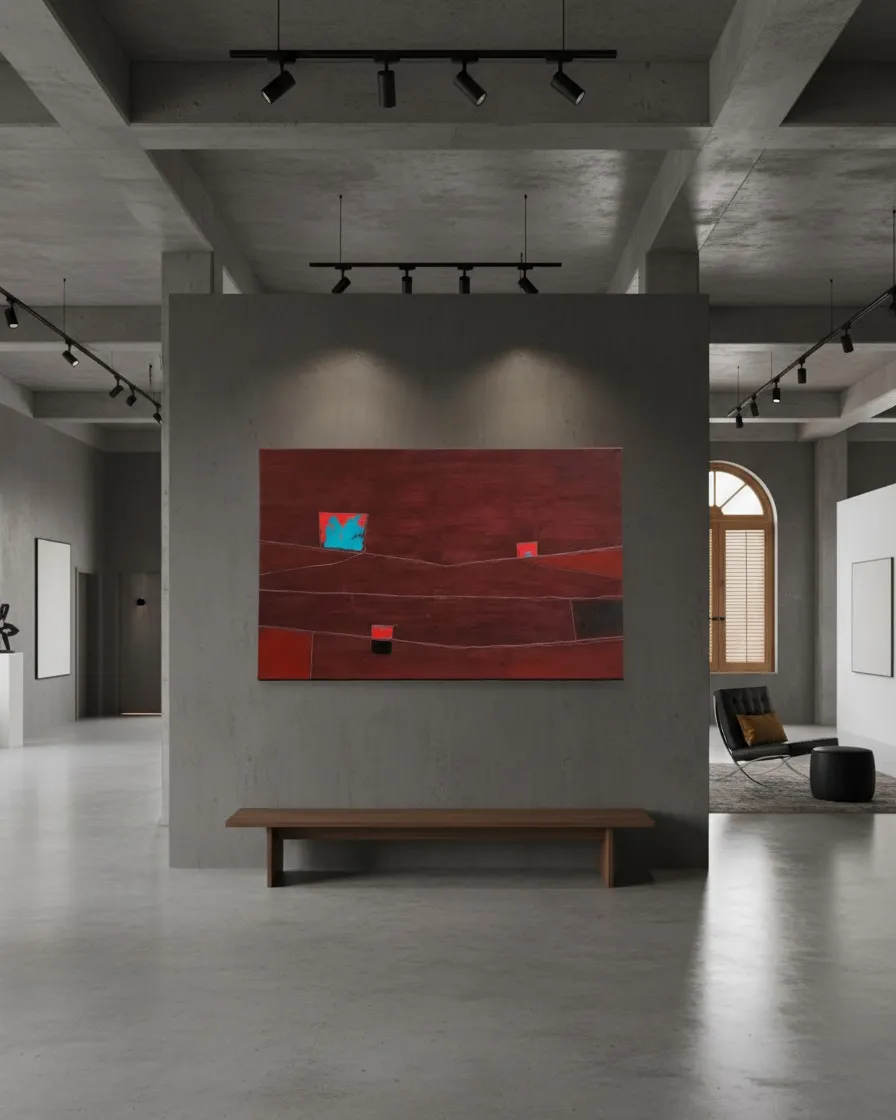
Focused light illuminates the surface of STRATA XIII — FISSURA, revealing an expansive deep crimson color field that stretches horizontally. Across this vast expanse, fine white lines, some defined and others more subtle, trace divisions and strata that organize the pictorial space. Rectangular color blocks, in a vibrant turquoise towards the left, an orange-red, and a dark tone towards the right, emerge with precise presence. The interplay of acrylic and oil builds a rich materiality of glazes and impasto, where light accentuates the incised marks. The artwork projects a structural stillness that invites observation of the pictorial territory.
- Original artwork
- STRATA XIII — FISSURA
- Actual dimensions
- 120 × 80 cm / 47.2 × 31.5 in
- Presentation
- Digital contextual visualization
Context references
original abstract painting for sale · contemporary abstract art for collectors · Maurizio Valch large format painting · minimalist territorial abstract artwork · brutalist acrylic and oil painting · crimson and turquoise abstract art · horizontal color field painting · abstract art with incised lines · XL painting for modern interiors · buy structural abstract art · textured crimson canvas art · contemporary abstract art for architects · Maurizio Valch STRATA series painting · abstract artwork with dark blocks
About this visualization
This visualization places the artwork within an architectural context to help collectors and viewers imagine its presence in a real space. It is an interpretive reference, not an exact reproduction: the original work remains the sole authority for scale, color, surface and material presence.