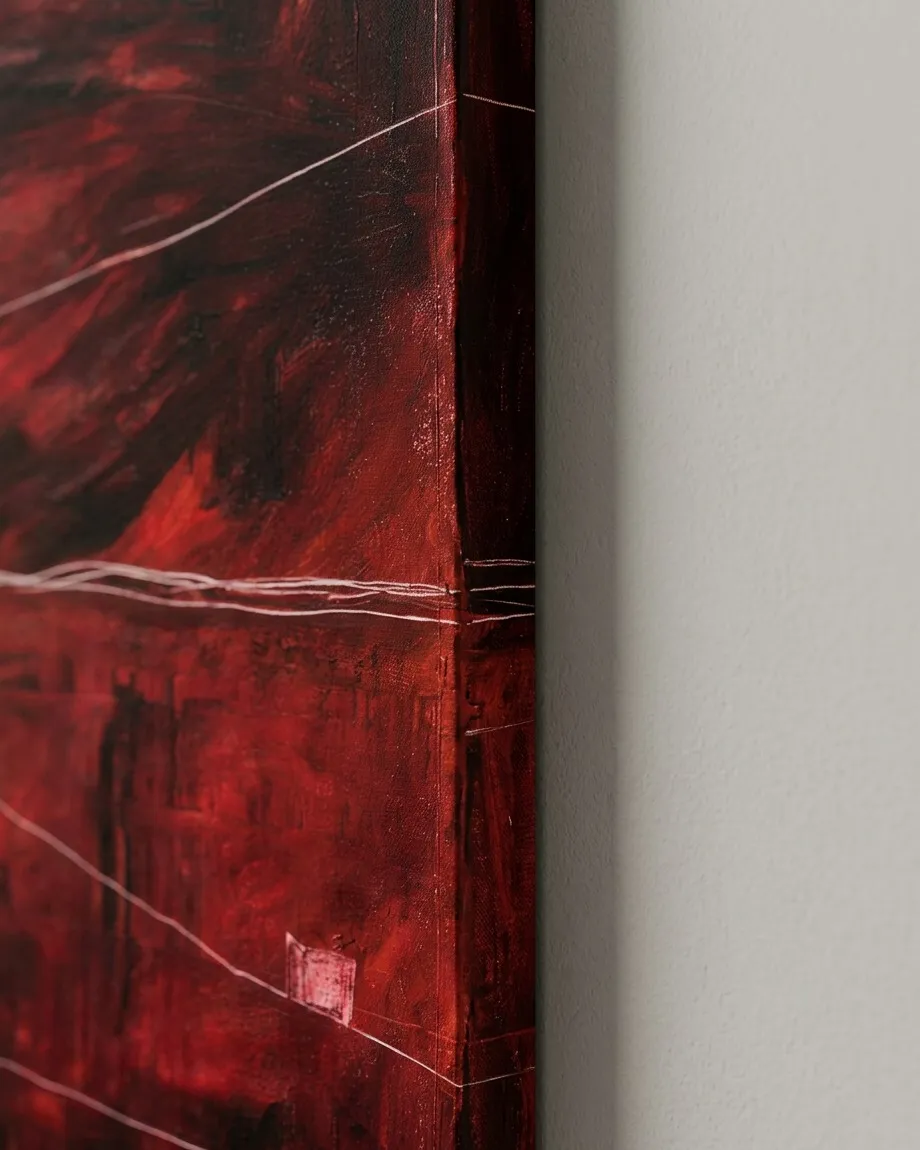
Context study / STRATA VI — DISPERSA
STRATA VI — DISPERSA — Context Study
This image focuses on the canvas edge of Maurizio Valch’s "STRATA VI — DISPERSA," revealing the physical continuity of the painting. The stretcher's depth is evident, with deep red and burgundy tones wrapping from the front surface onto the side. Light-colored incised lines cross the main plane and subtly curve along the edge, emphasizing the composition's stratified nature. The rich, material texture, visible on both the front and side, attests to the use of acrylic and oil. This material perspective underscores the artwork as a sculptural object and a condensed territory, its presence defined by structure and surface density. A discreet shadow on the neutral wall accentuates its volume and inherent materiality.
- Original artwork
- STRATA VI — DISPERSA
- Actual dimensions
- 80 × 120 cm / 31.5 × 47.2 in
- Presentation
- Digital contextual visualization
Context references
Original abstract painting · Contemporary wall art · Material abstract art · Acrylic and oil painting on canvas · XL vertical artwork in red · Textured abstract painting · Abstract art for collectors · Painting with incised lines · Maurizio Valch artworks · Contemporary territorial abstraction · Textured burgundy red painting · Structural abstract painting · Buy large abstract painting · Contemporary art for architects · Crimson toned painting · STRATA series painting
Collector note
This visualization presents the artwork at its declared physical scale in an architectural context. The original work remains the authority for color, surface, dimensions and material presence.