Context study / STRATA IV — DECLIVIS
STRATA IV — DECLIVIS — Context Study
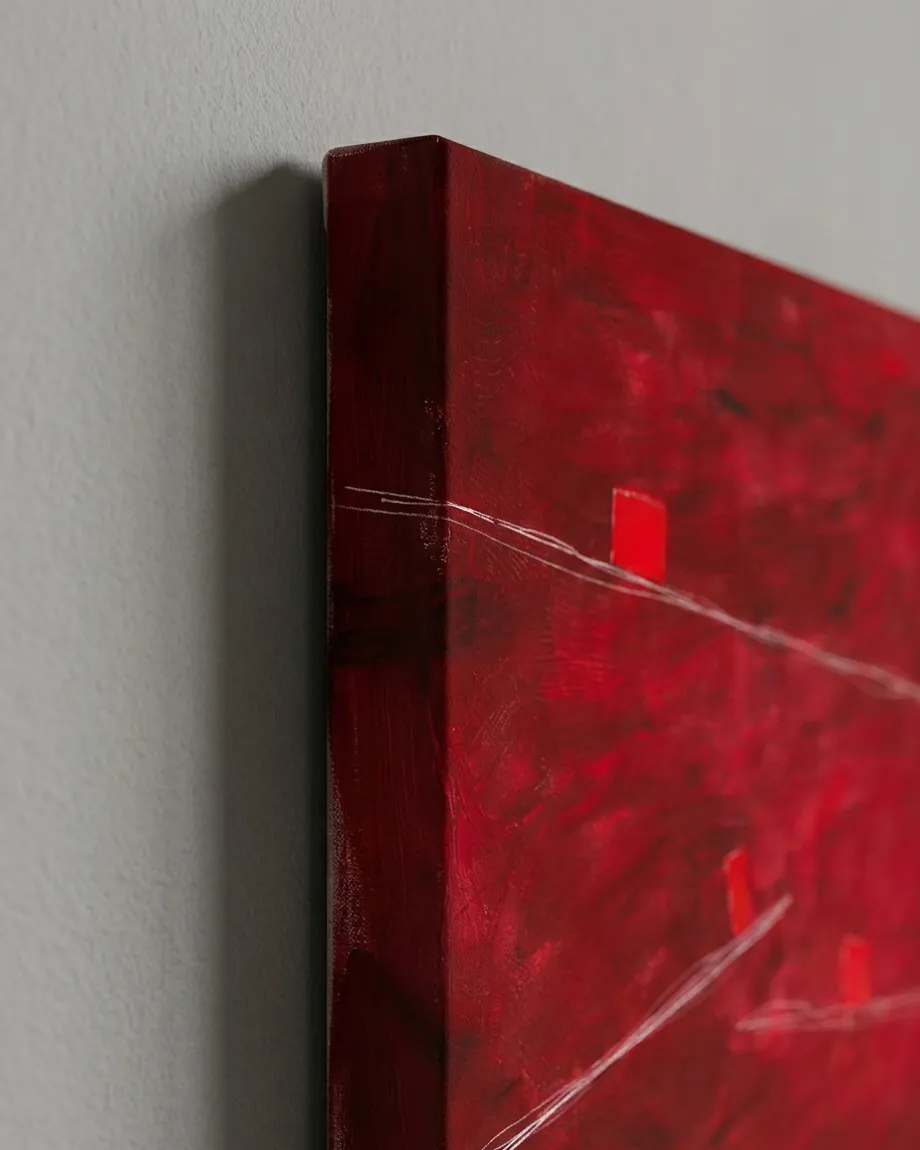
This close-up of 'STRATA IV — DECLIVIS' emphasizes the artwork's physical presence as an object. The 3 cm deep canvas subtly lifts from the wall, creating a shadow that defines its volume and highlights the crimson color extending across its edges. This intimate perspective allows for an appreciation of the brushwork and incisions that continue from the front surface, inviting a tactile reading of the painting. The vibrant red palette interacts with the subtle texture of the background wall, establishing a dialogue between the wall's solidity and the color's density. The composition frames a precise and contained viewing experience.
- Original artwork
- STRATA IV — DECLIVIS
- Actual dimensions
- 80 × 120 cm / 31.5 × 47.2 in
- Presentation
- Digital contextual visualization
Context references
Original abstract painting for sale · Contemporary abstract art original · Minimalist abstract canvas art · Acrylic and oil abstract painting · Brutalist style painting on canvas · XL vertical format abstract art · Crimson red abstract artwork · Textured surface abstract painting · Buy contemporary art for collection · Abstract painting for interior design projects · Vertical abstract painting acrylic and oil · Deep red textured contemporary canvas · Abstract art with stratified layers · Large vertical abstract artwork for sale · Modern minimalist art crimson · Maurizio Valch abstract painting original
About this visualization
This visualization places the artwork within an architectural context to help collectors and viewers imagine its presence in a real space. It is an interpretive reference, not an exact reproduction: the original work remains the sole authority for scale, color, surface and material presence.