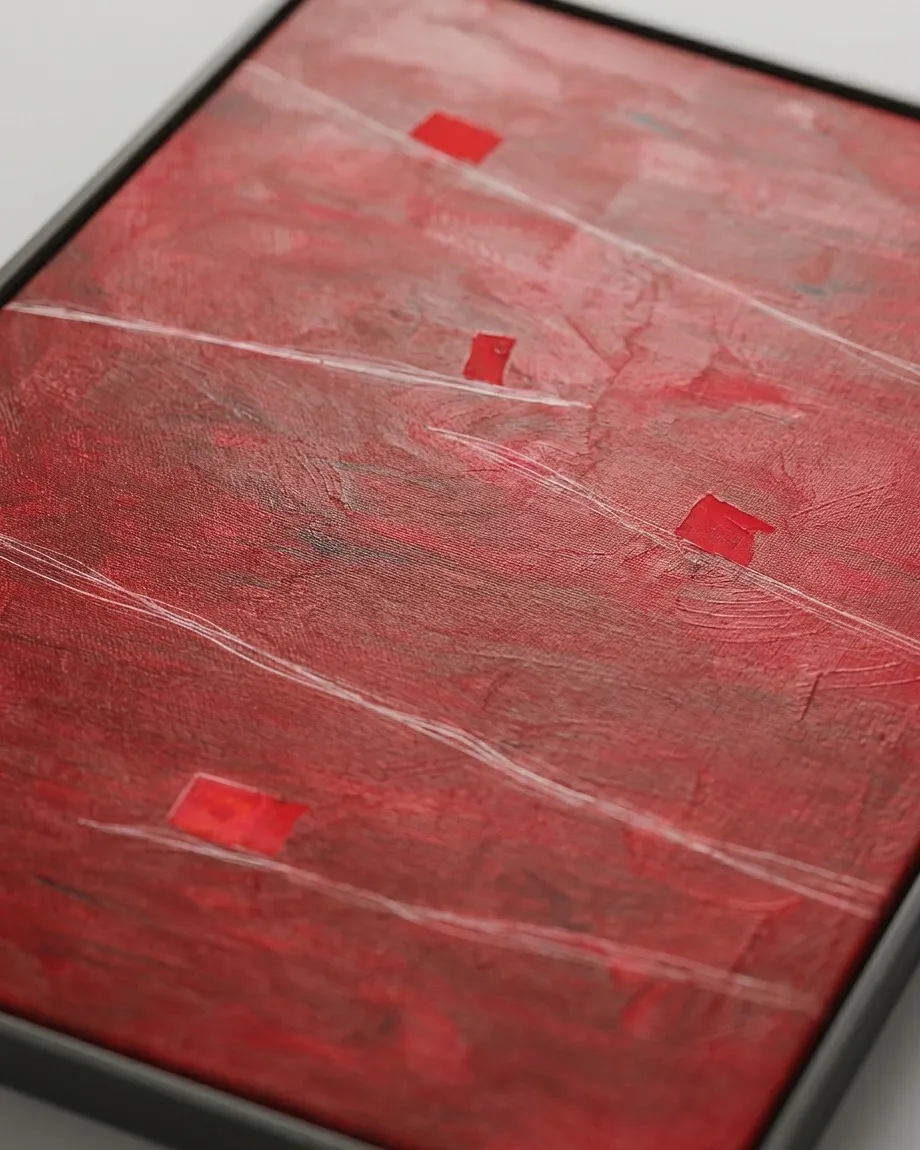
Context study / STRATA IV — DECLIVIS
STRATA IV — DECLIVIS — Context Study
Soft light gently illuminates the surface of Maurizio Valch’s abstract painting, 'STRATA IV — DECLIVIS,' revealing its intricate materiality. The subtle side lighting accentuates the relief of the brushstrokes and the depth of the white incisions, emphasizing the interplay between the intense red pigment and the marks that traverse it. Each stroke and every layer of acrylic and oil become visible, suggesting a process of construction and erosion. This close perspective allows appreciation of how the vibrant crimson field, a distinctive element in the artist’s work, is structured by these interventions. The four more saturated red color blocks appear to emerge from the canvas’s depth, asserting their presence over the incised lines that define and connect them. The artwork conveys a contained and contemplative atmosphere, inviting an intimate reading of its surface. The subtle interaction of light on textures transforms every detail into a testament to the creative process and the material solidity of the pictorial territory.
- Original artwork
- STRATA IV — DECLIVIS
- Actual dimensions
- 80 × 120 cm / 31.5 × 47.2 in
- Presentation
- Digital contextual visualization
Context references
Original abstract painting · Contemporary abstract acrylic oil painting · Crimson red painting · Textured and impasto artwork · Vertical abstract painting · Maurizio Valch acrylic on canvas · Minimalist territorial art · Buy abstract painting for collection · Abstract painting with incised lines · Artwork with red blocks and stratified surface · Art for interior designers and architects · Textured vertical abstract acrylic and oil painting · Original Maurizio Valch contemporary minimalist art · Intense red painting with incisions and geometric forms · Territorial abstraction with materiality and depth · Contemporary brutalist painting for modern spaces
About this visualization
This visualization places the artwork within an architectural context to help collectors and viewers imagine its presence in a real space. It is an interpretive reference, not an exact reproduction: the original work remains the sole authority for scale, color, surface and material presence.