Context study / COACTUS
COACTUS — Context Study
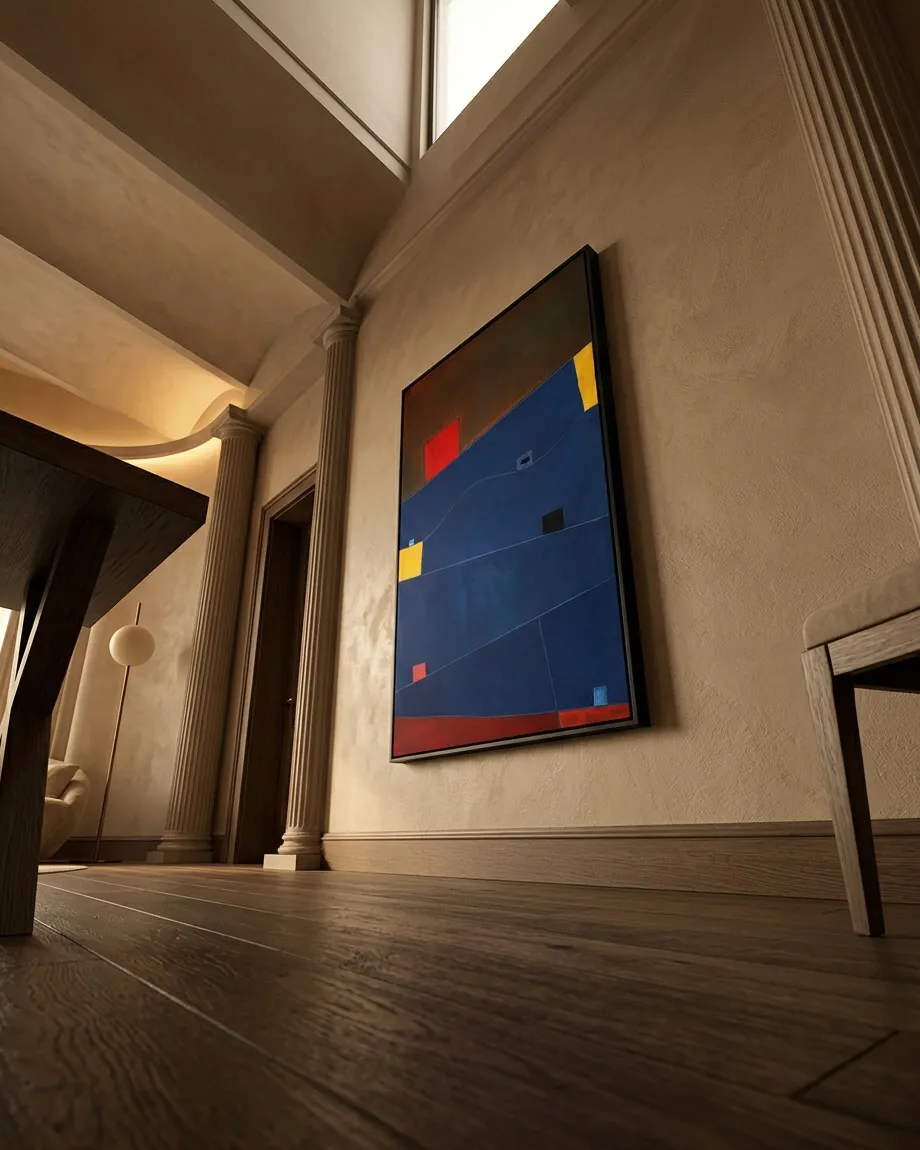
A distinct oblique partition divides the dark brown upper plane from the expansive indigo blue surface that governs the composition. Under low, warm lighting that highlights the grain of the plaster wall, the color fields alternate the density of oil paint with the lightness of acrylic glazes. The structure of the 80 by 120 cm canvas is organized by yellow bands at the edges and a raised crimson quadrant, while thin linear incisions obliquely cross the central area. Viewed from an extreme low-angle perspective at floor level, the three-centimeter-thick stretcher bars integrate with sobriety into a high-ceilinged space with fluted columns. The relationship between the painted geometry and the vertical lines of the surrounding architecture establishes a silent physical correspondence, where tonal variations suggest an internal geography in constant balance. The visual journey concludes by following the path of the fine incised lines, guiding the eye between the limits of the support.
- Original artwork
- COACTUS
- Actual dimensions
- 80 × 120 cm / 31.5 × 47.2 in
- Presentation
- Digital contextual visualization
Context references
original abstract painting · acrylic and oil on vertical canvas · 80 x 120 cm · indigo blue · crimson red · yellow · textured surface · minimalist brutalist style · SITUS series · contemporary abstract painting for sale · buy original acrylic and oil artwork · indigo blue and red abstract canvas
About this visualization
This visualization places the artwork within an architectural context to help collectors and viewers imagine its presence in a real space. It is an interpretive reference, not an exact reproduction: the original work remains the sole authority for scale, color, surface and material presence.