Context study / STRATA XIII — FISSURA
STRATA XIII — FISSURA — Context Study
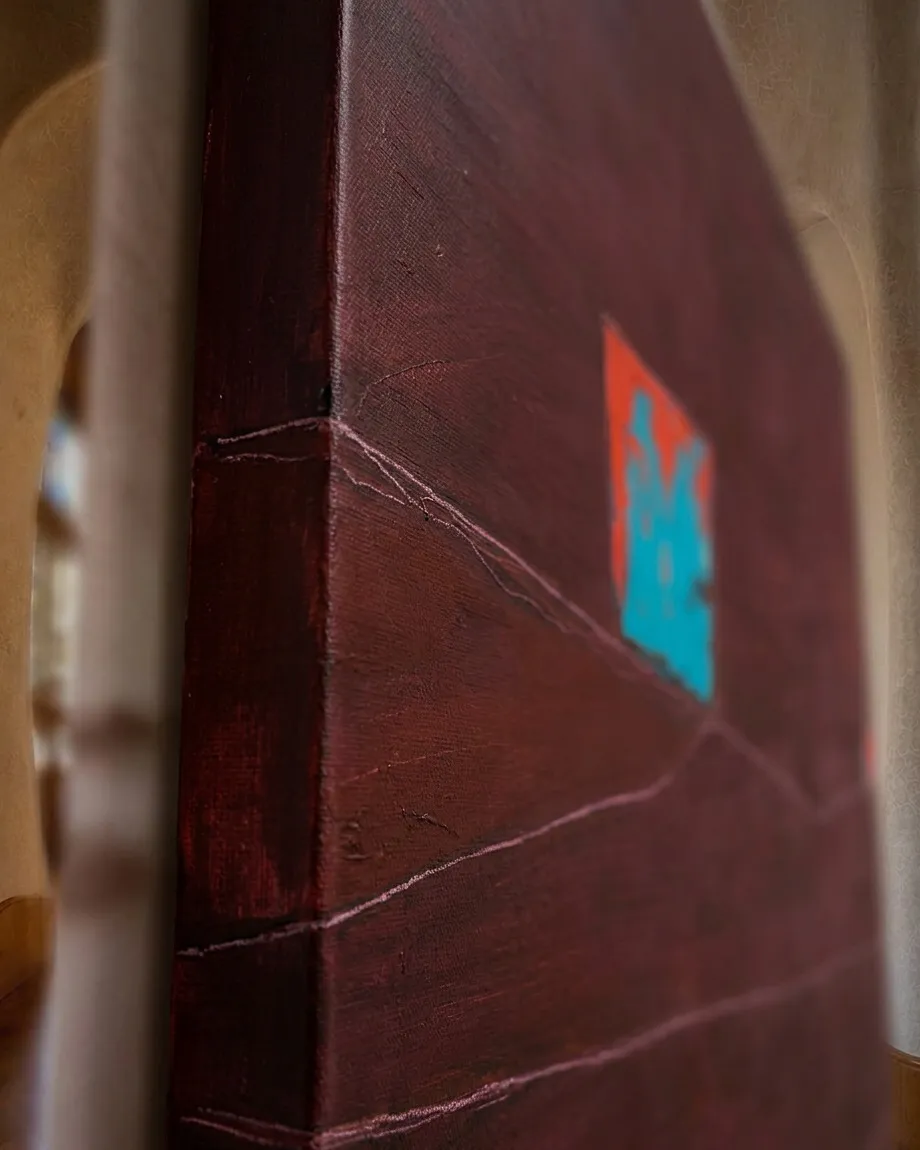
From this close perspective, light illuminates the painting's edge, revealing the intense crimson that wraps the canvas. This deep hue extends across the visible weave, building layers that suggest material density and a subtle surface sheen. Fine, pale, irregularly flowing incisions emerge from the color field, some reaching the edge, hinting at divisions or thresholds. A bright turquoise rectangular block, outlined in a reddish tone, disrupts the background's continuity with a sharp presence. The canvas's palpable texture, alongside these marks, constructs an abstract geography that anchors the piece with a contained presence against the curved wall in the background. The interaction of pigment and surface gives the artwork a distinctly tactile quality.
- Original artwork
- STRATA XIII — FISSURA
- Actual dimensions
- 120 × 80 cm / 47.2 × 31.5 in
- Presentation
- Digital contextual visualization
Context references
contemporary abstract painting · Maurizio Valch original artwork · acrylic and oil painting on canvas · large minimalist abstract art · horizontal red and turquoise painting · brutalist textured painting · art for contemporary collectors · buy territorial abstract artwork · crimson painting with incisions · textured canvas modern art · abstract artwork for interior design · contemporary art for architects · large format abstract painting · abstract red painting with blue accents
About this visualization
This visualization places the artwork within an architectural context to help collectors and viewers imagine its presence in a real space. It is an interpretive reference, not an exact reproduction: the original work remains the sole authority for scale, color, surface and material presence.