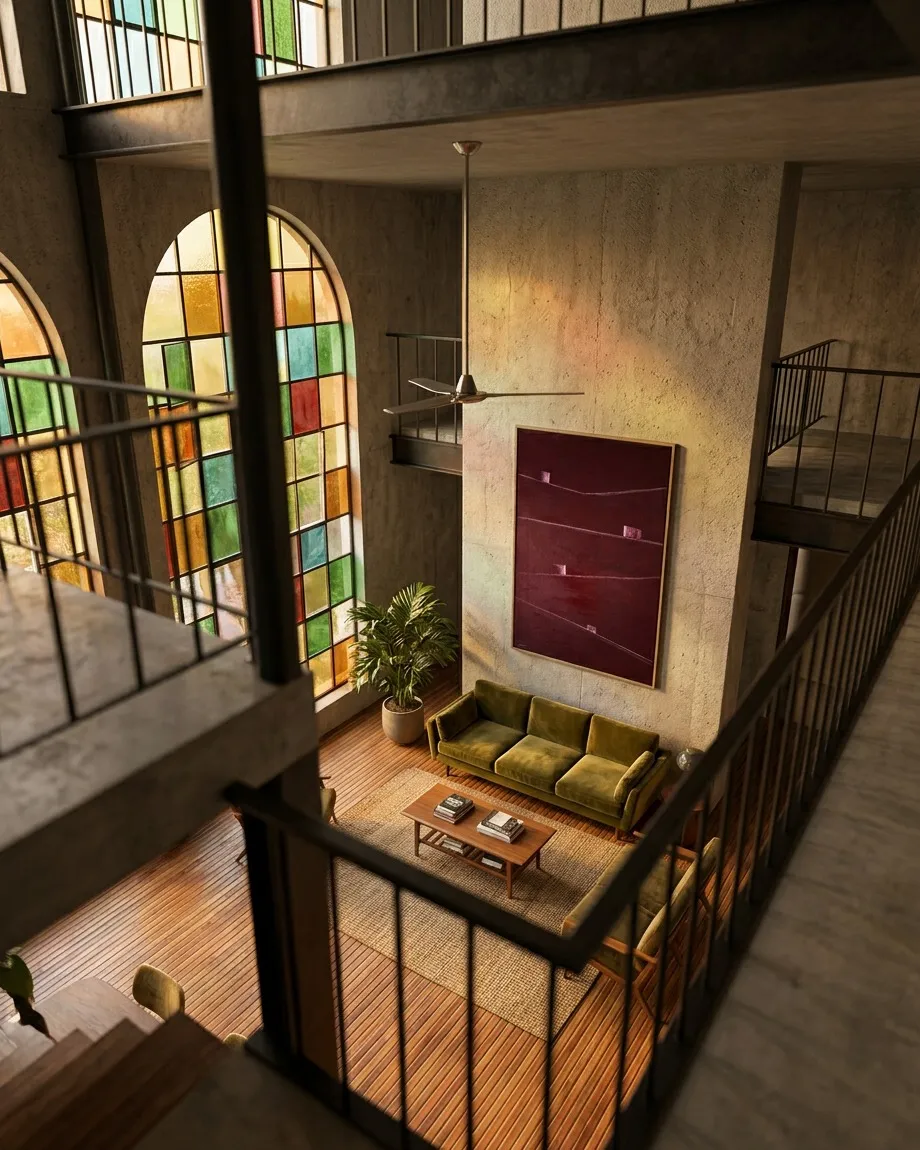
Context study / Strata IX — VESTIGIA
Strata IX — VESTIGIA — Context Study
Strata IX — VESTIGIA is a contemporary abstract painting by Maurizio Valch, created with acrylic and oil on canvas. Its surface reveals a complex material painting quality. The deep crimson field, modulated by layers and glazes, evokes a sedimentation of time and color. Small, lighter rectangular forms emerge intentionally across this surface, suggesting ancient marks or vestiges. Fine horizontal incisions traverse the composition with a precision reminiscent of tectonic lines. The interplay of light accentuates the canvas's topography, enhancing the chromatic depth and subtle texture. This vertical format artwork projects a structural and contained presence, engaging with the surrounding architectural space and inviting a contemplative reading of its visual stratified texture and material density.
- Original artwork
- Strata IX — VESTIGIA
- Actual dimensions
- 80 × 120 cm / 31.5 × 47.2 in
- Presentation
- Digital contextual visualization
Context references
Contemporary abstract painting · Original Maurizio Valch artwork · Vertical minimalist art · Red brutalist painting · Textured crimson painting · XL abstract art for living room · Buy acrylic oil painting · Artwork with incisions · Stratified material painting · Abstract art for collectors · Vertical format painting for interiors · Red abstract painting for modern architecture · Contemporary art by Maurizio Valch for sale · Artwork with deep texture and color · Crimson territorial abstraction · XL painting for large spaces
About this visualization
This visualization places the artwork within an architectural context to help collectors and viewers imagine its presence in a real space. It is an interpretive reference, not an exact reproduction: the original work remains the sole authority for scale, color, surface and material presence.