Placed / Strata Series 2026
Crossing Lines Territory
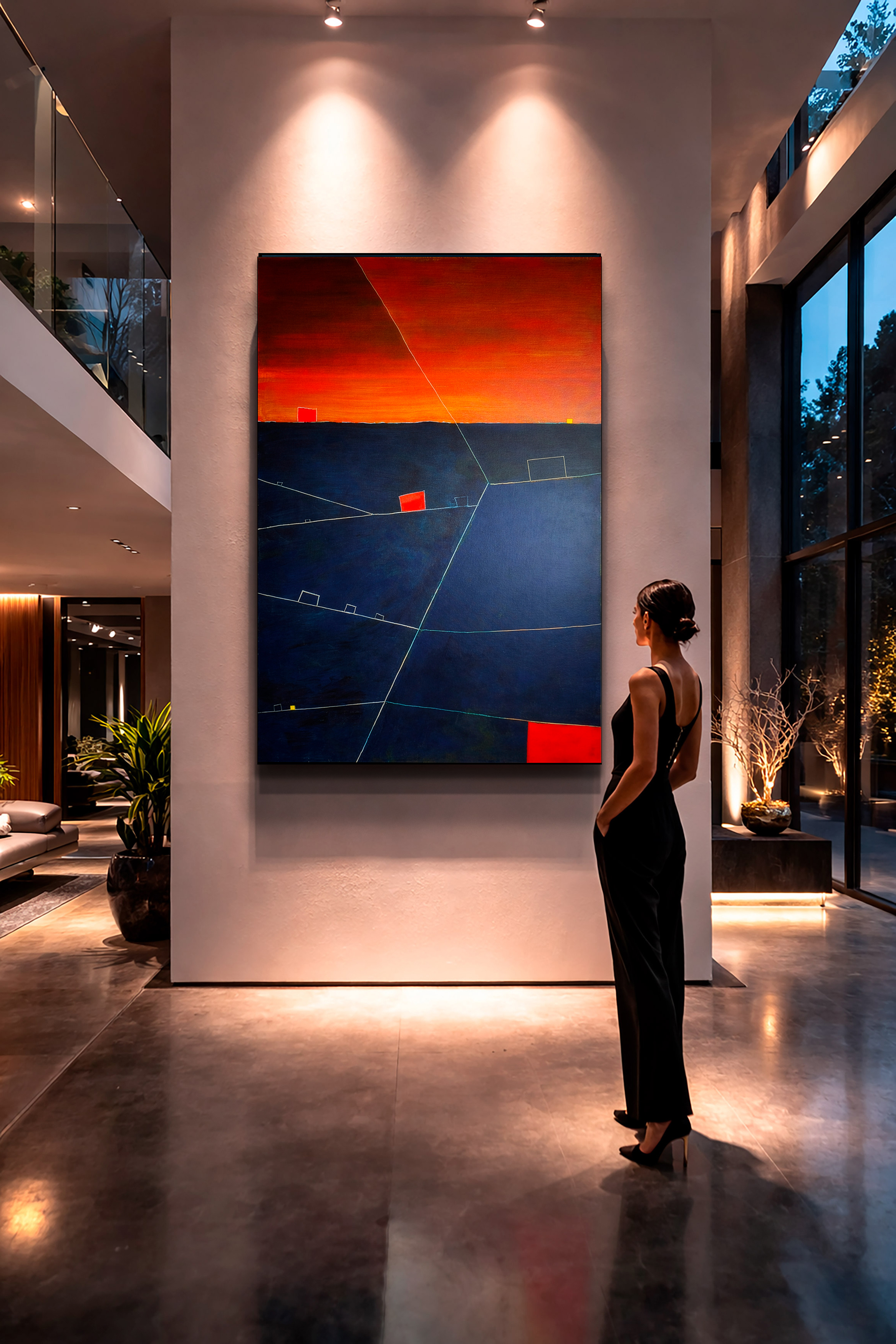
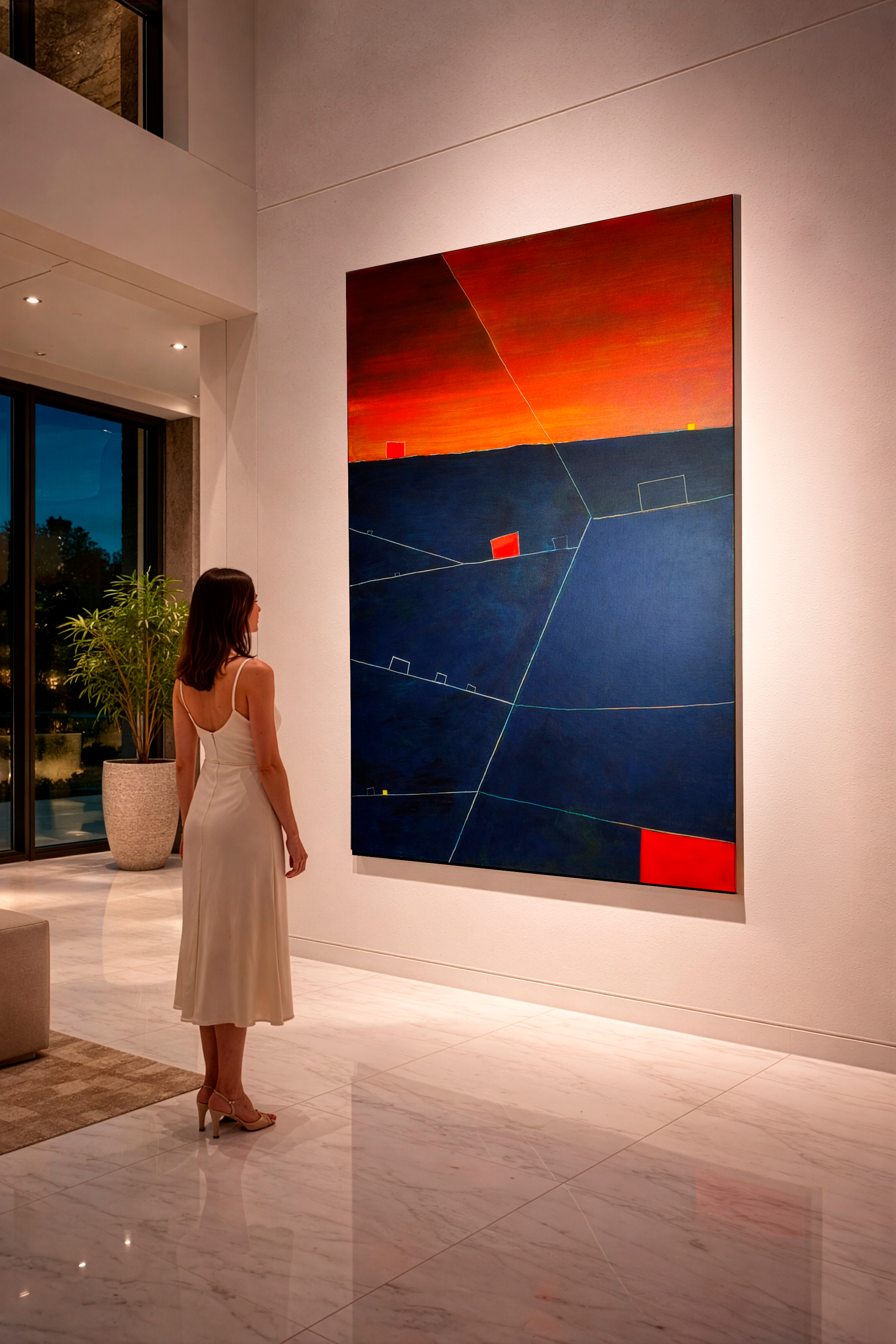
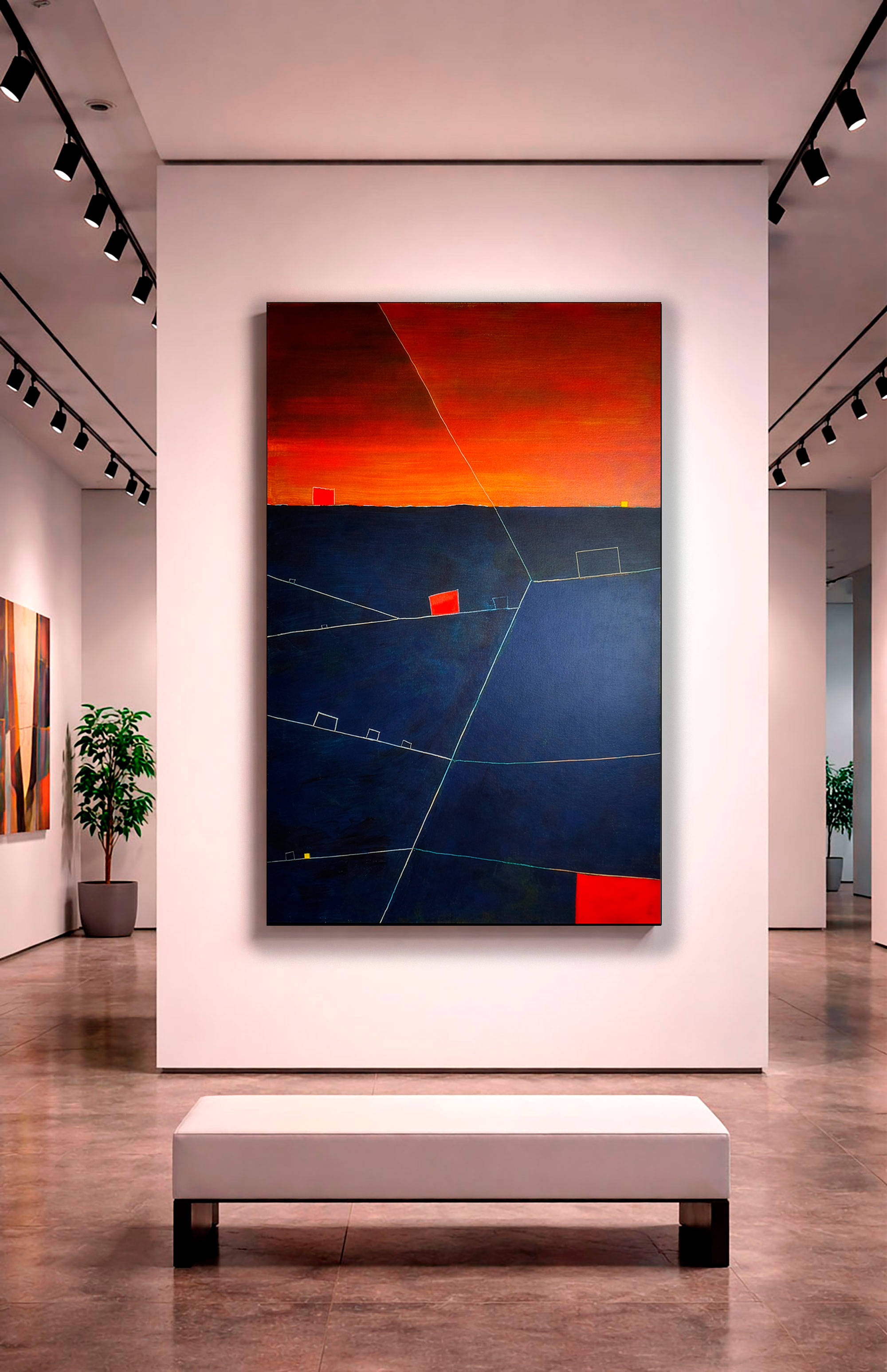
Crossing Lines Territory is an original structural metaphysical painting by Maurizio Valch. Built through a deep blue field, a radiant red-orange upper horizon and a network of crossing linear divisions, the work presents a symbolic landscape where territory is shaped by tension, direction and emergence. Small geometric markers appear across the surface as points of orientation, while the intersecting lines organize the image into a quiet but charged spatial field. This contemporary abstract painting explores the relationship between territory and thought, combining horizon, structure and symbolic passage within a reduced visual language.
- Year
- 2026
- Medium
- Acrylic on canvas
- Size
- 120 x 160 x 5 cm 47.2 x 63 x 2 in
- Orientation
- Vertical
- Status
- Placed
- Placement trace
Conceptual Note
In Crossing Lines Territory, the landscape is understood not as a descriptive view, but as a field of relations. The work is structured through lines that cross, divide and redirect the surface, creating a symbolic territory where space becomes thought and tension becomes form. The red-orange upper field introduces intensity and atmospheric presence, while the large blue body of the painting stabilizes the composition. Small red and yellow geometric presences function as markers within the territory, suggesting emergence, orientation and silent movement. Within Maurizio Valch’s broader language of Structural Metaphysical Painting, this work explores how crossing lines can transform landscape into a metaphysical structure. The painting becomes a territory of passage, interval and perception.
Studio Information
This painting began from the idea of a field crossed by tension lines. The structure developed through a large blue plane and a strong upper horizon, allowing the linear movements to organize the space without overloading it. The intersecting lines were essential from the beginning. They create direction, division and internal movement, turning the landscape into a territory of relations rather than a fixed scene. The small geometric forms were added as points of emergence. They introduce scale and rhythm, acting like signs placed within a larger field of silence. In this work, the painting became more reduced and more precise. What matters is not description, but the way horizon, line and form create a territory that feels both external and interior.