Day and Night in the Metaphysical Landscape
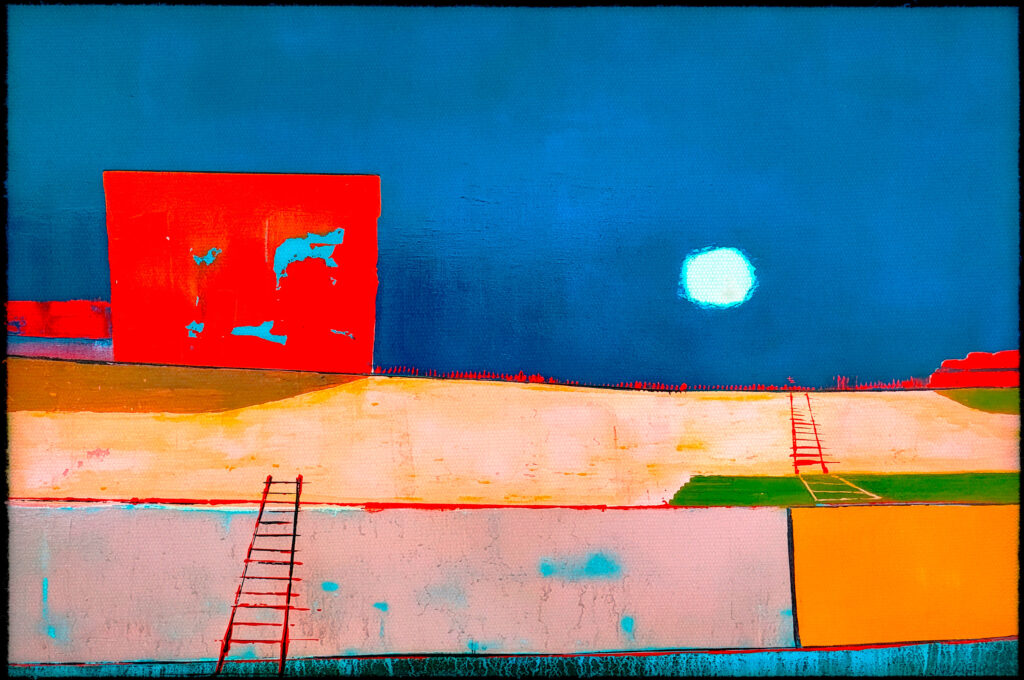
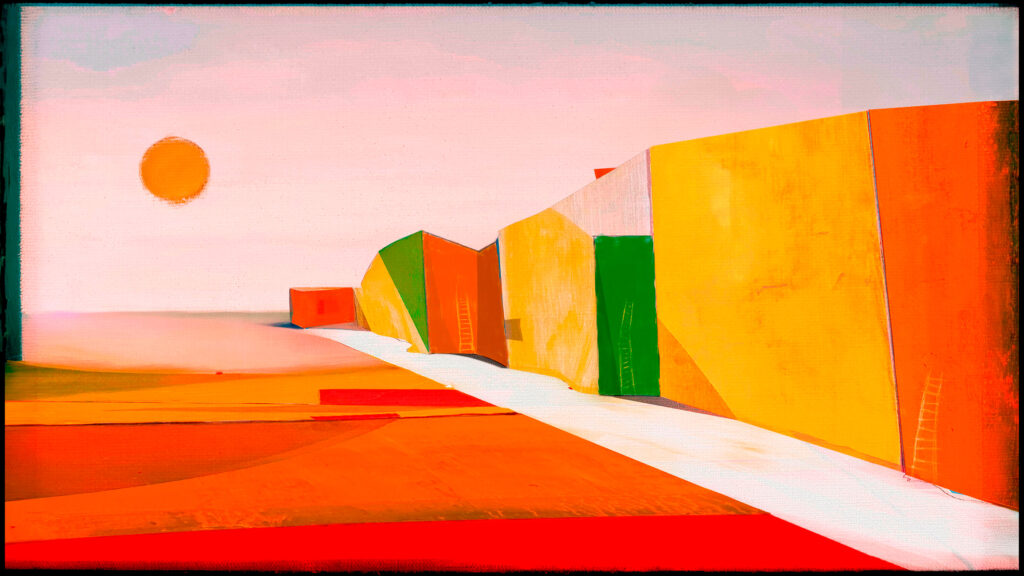
In my paintings the landscape often appears under two perceptual conditions: day and night.
These two states do not represent different places.
They are two ways of perceiving the same metaphysical territory.
During the day, the structure of the landscape becomes visible.
Architectural volumes emerge from the terrain, revealing the geometry of the space and the silent order that organizes the environment. The horizon becomes clear, the planes of the terrain unfold, and the monolithic forms appear almost geological — as if they were formations arising directly from the earth.
At night the same territory transforms.
The architectural structures remain, but the space becomes quieter and more contemplative. The landscape is no longer read through structure but through presence. The horizon dissolves into a darker field and the monoliths become solitary markers within a vast field of silence.
In this way, the paintings explore a shift in perception rather than a change of location.
The territory is the same.
What changes is the state of consciousness through which it is perceived.
These works belong to the broader body of paintings where Maurizio Valch investigates what he describes as metaphysical territories — spaces where architecture, landscape and individual awareness intersect.